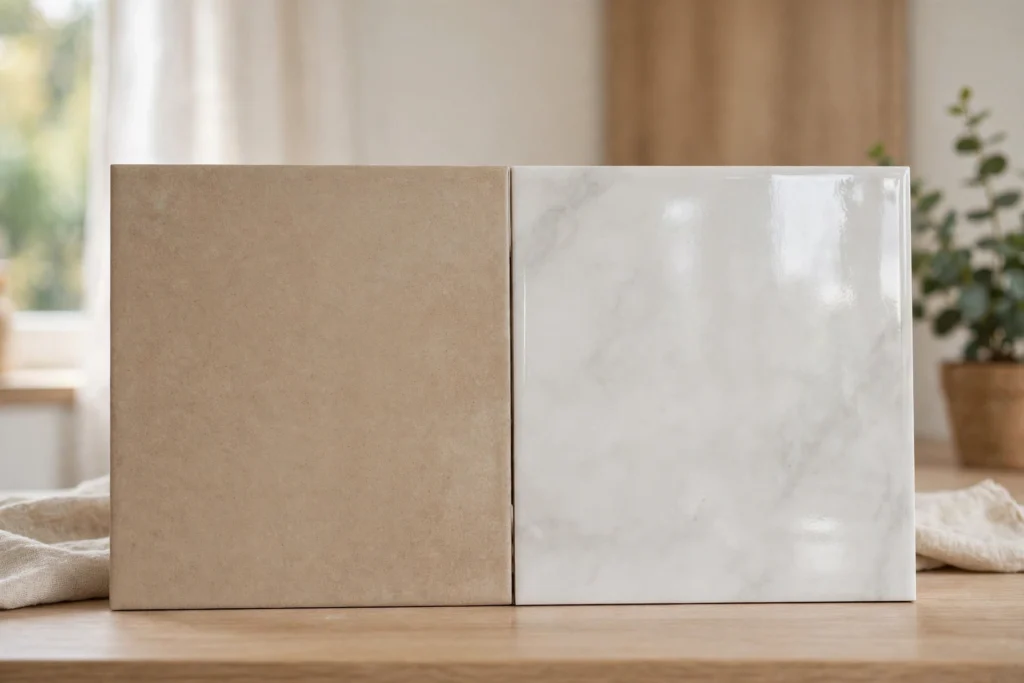
What is the difference between ceramic and porcelain? Ceramic and porcelain tiles look very similar in a shop, and that similarity causes a lot of confusion. Both are made from clay and come in a huge range of colours and patterns, yet they are not the same product. Choosing the wrong one can mean a floor that chips or a surface that struggles in a wet spot.
This guide answers the question in plain language: what is the difference between ceramic and porcelain? It explains how each tile is made, why porcelain is denser and less porous, how they compare on hardness, finish, cost and care, and where each one works best in a home. By the end, you should be able to walk into a tile shop, read a label with confidence, and pick the right tile for the room you are planning.
The Short Answer: What Is the Difference?
What is the difference between ceramic and porcelain? The difference between ceramic and porcelain is that porcelain is a denser, harder and less porous type of ceramic tile, made from finer clay and fired at a higher temperature. Ordinary ceramic tiles are softer and more porous, which makes them lighter and often cheaper, but also less suited to heavy wear, constant wetness and freezing weather.
That single difference explains almost everything else in this guide. Porcelain’s density makes it stronger underfoot, more resistant to water and stains, and better outdoors, while ceramic’s softer body makes it easier to cut and usually cheaper, and perfectly good for walls and light-use floors. Neither tile is better in every situation; the right choice depends on where the tile will go and how hard it will be used.
How Ceramic Tiles Are Made
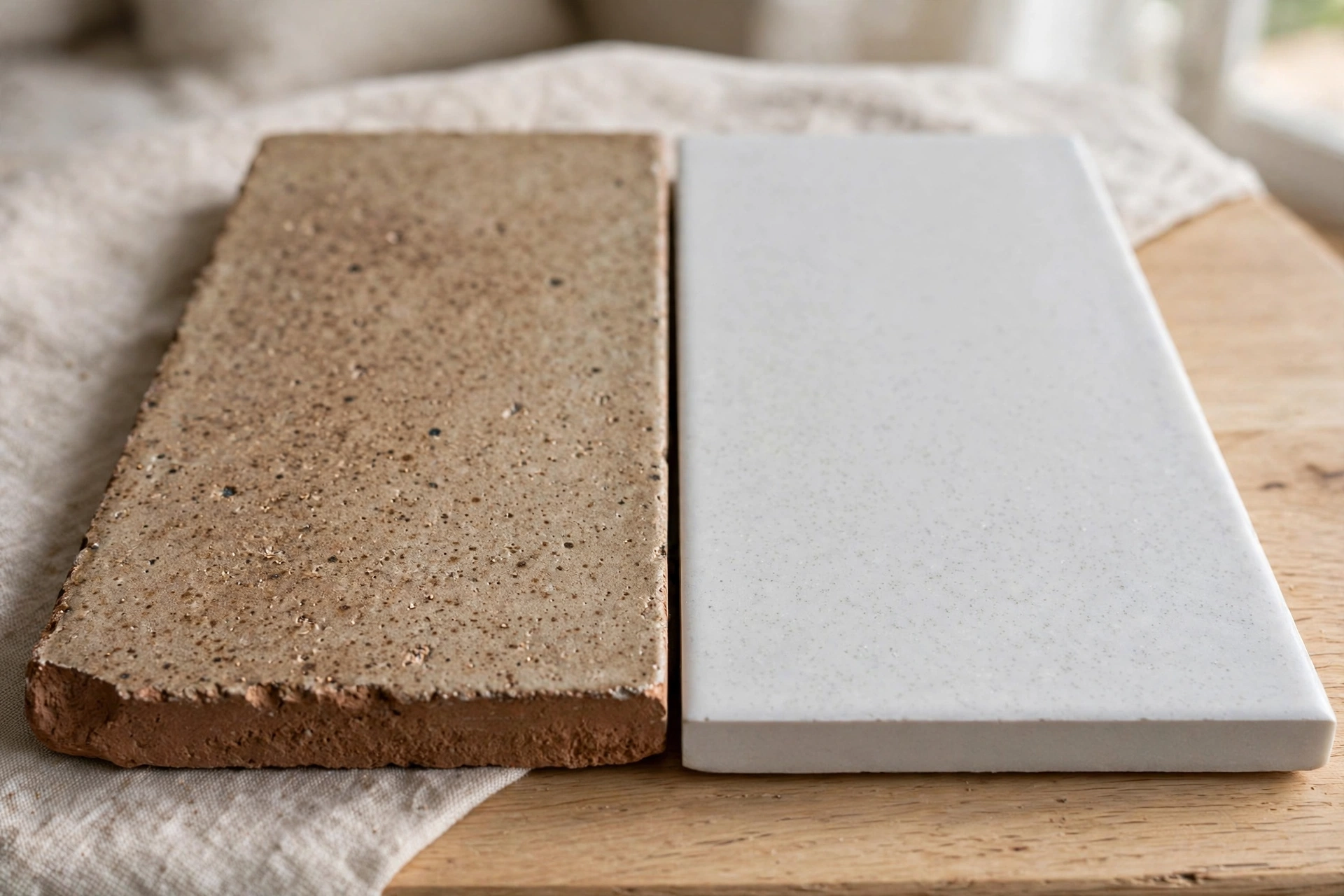
Ceramic tiles are made from natural clay mixed with minerals and water, shaped into tiles, dried, and then fired in a kiln until hard. Most ceramic wall and floor tiles are then coated with a glaze, a thin glass-like layer that gives the tile its colour and pattern and seals its surface against stains.
The clay used for ordinary ceramic tiles is coarser and the firing temperature lower than for porcelain, which leaves the tile body more porous, meaning it contains tiny air pockets that can absorb water. That is not a fault; it is simply how this kind of tile behaves. The glaze on top does most of the protective work, which is why glazed ceramic tiles can look perfect on a wall for decades, even though the body underneath is relatively soft and absorbent.
How Porcelain Tiles Are Made
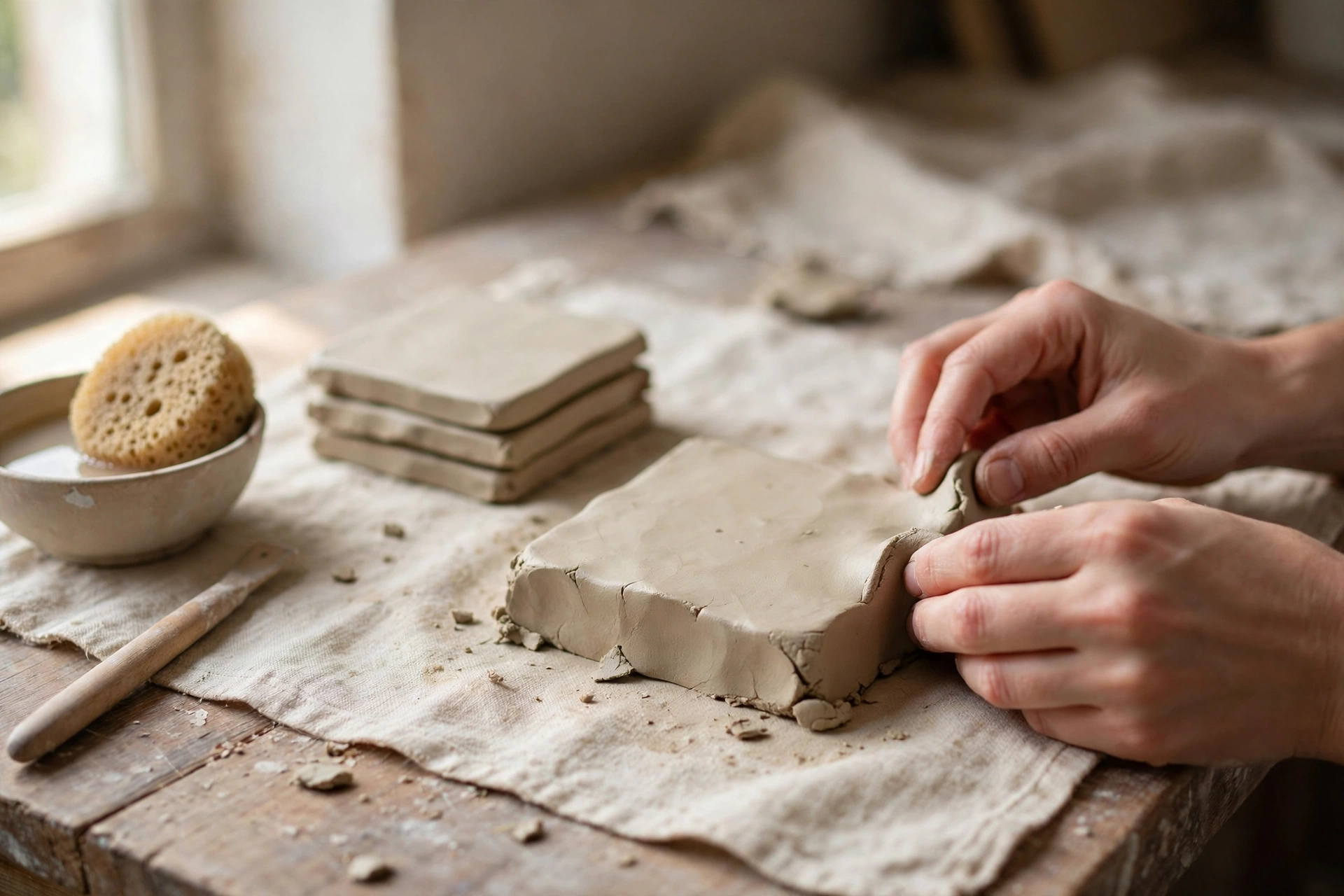
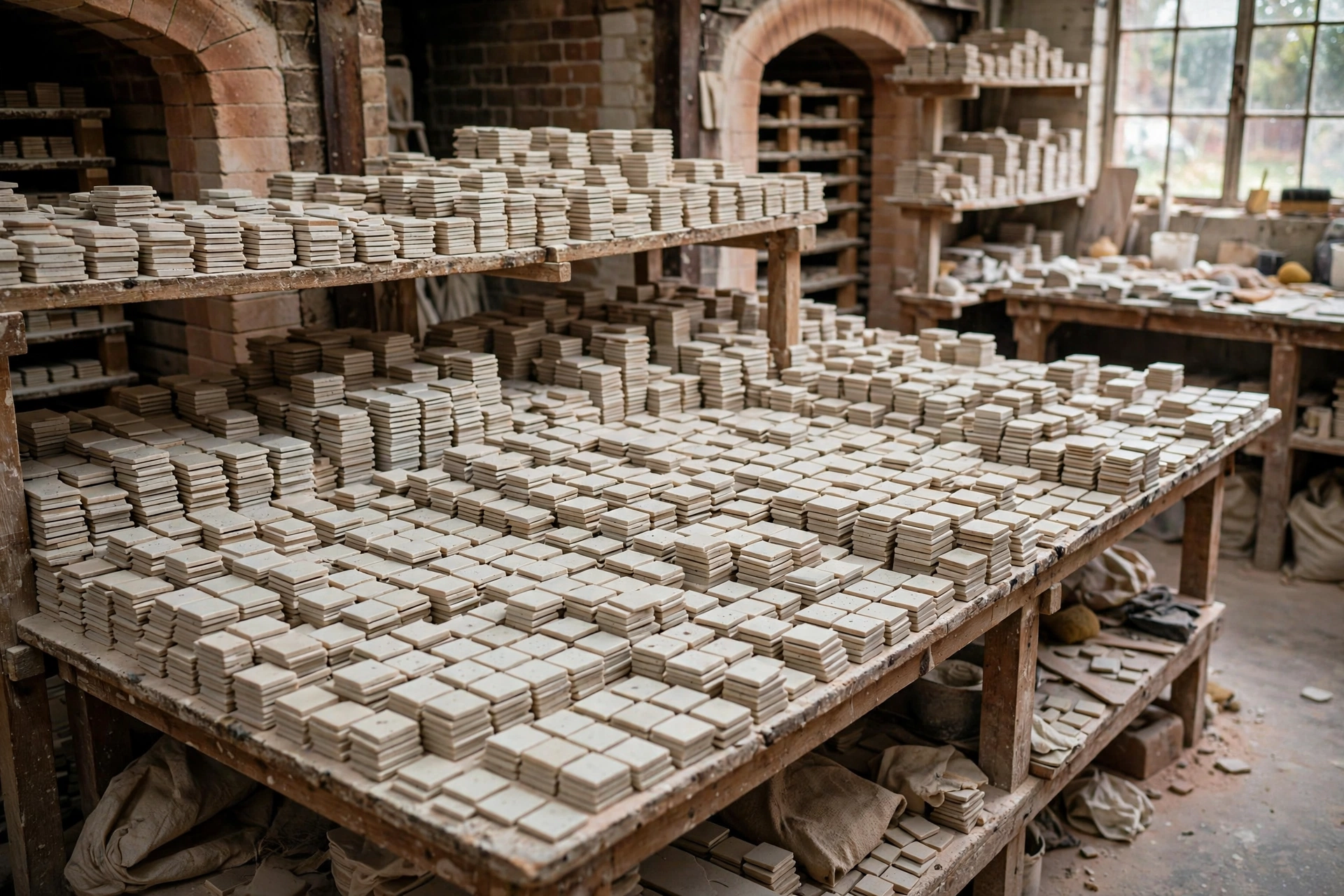
Porcelain tiles are also made from clay, but the clay is finer and more refined, and the tile is pressed more firmly and fired at a higher temperature than ordinary ceramic. That combination squeezes out more air and fuses the material into a denser, harder body that absorbs far less water than standard ceramic.
Because the body itself is so dense, porcelain tiles can be made in glazed and unglazed forms, and even unglazed porcelain resists water and stains far better than unglazed ceramic would. Some porcelain tiles are coloured all the way through the body, so a small chip is less noticeable than on a glazed tile, where a chip can reveal a different-coloured body underneath. This denser making process is also why porcelain tiles are usually heavier and harder to cut than ceramic tiles.
Density and Water Absorption
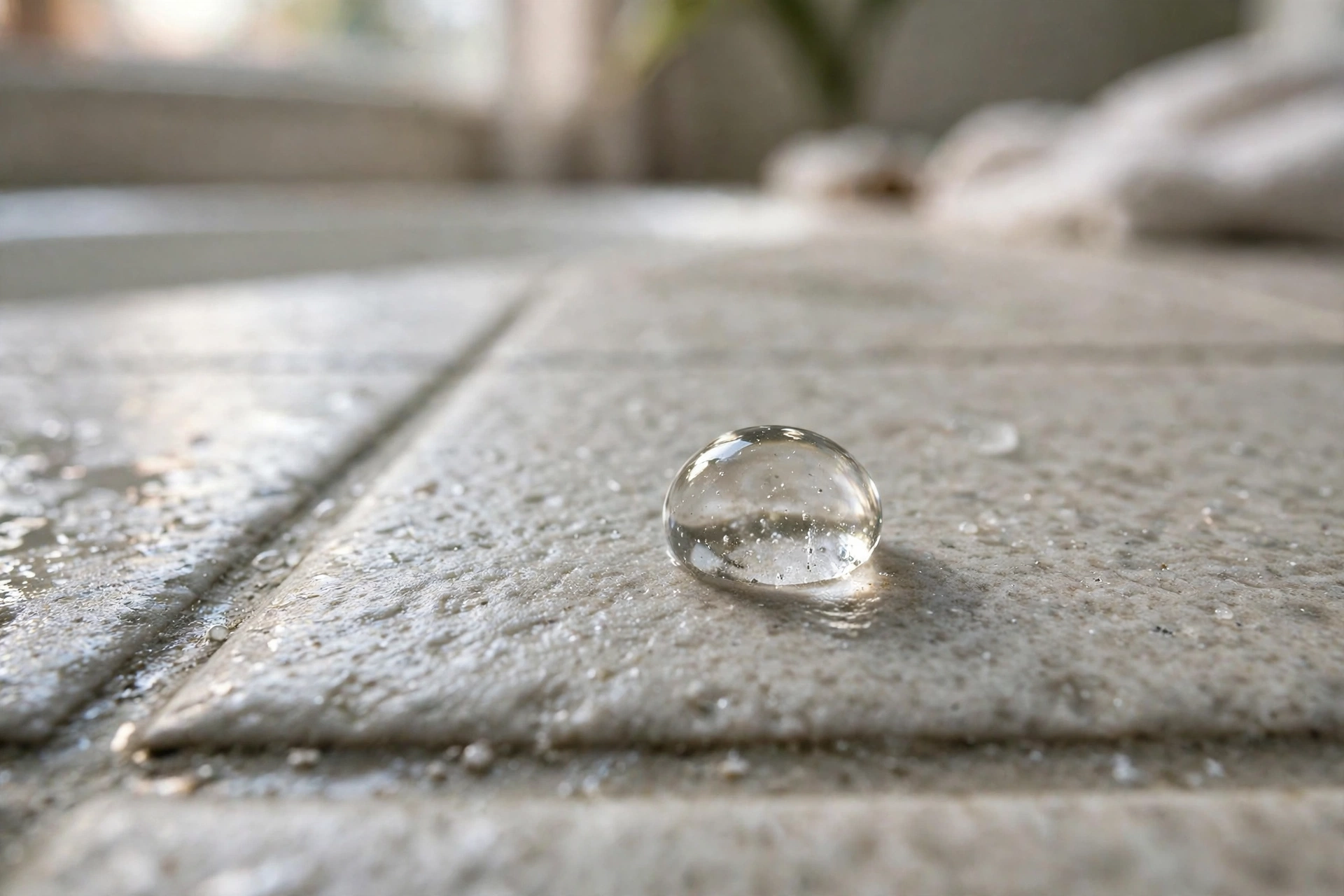
Density and water absorption are the most important technical differences between ceramic and porcelain, because they affect almost every practical quality of the tile. Porcelain is denser, which means its body has fewer tiny pores, so it absorbs much less water than ordinary ceramic, and that lower absorption makes it more resistant to stains, frost damage and long-term wear.
A ceramic tile, especially an unglazed one, can soak up a noticeable amount of water, which matters in wet rooms and outdoors. On a wall, where the tile rarely sits in standing water, this matters little, because the glaze protects the surface. On a floor, in a shower, or outside, where water can sit on the tile or seep into grout joints, the denser, less absorbent porcelain body is a clear advantage. When comparing products, the water absorption figure on the tile’s own specification is worth checking, because individual products vary by maker.
Hardness and Durability
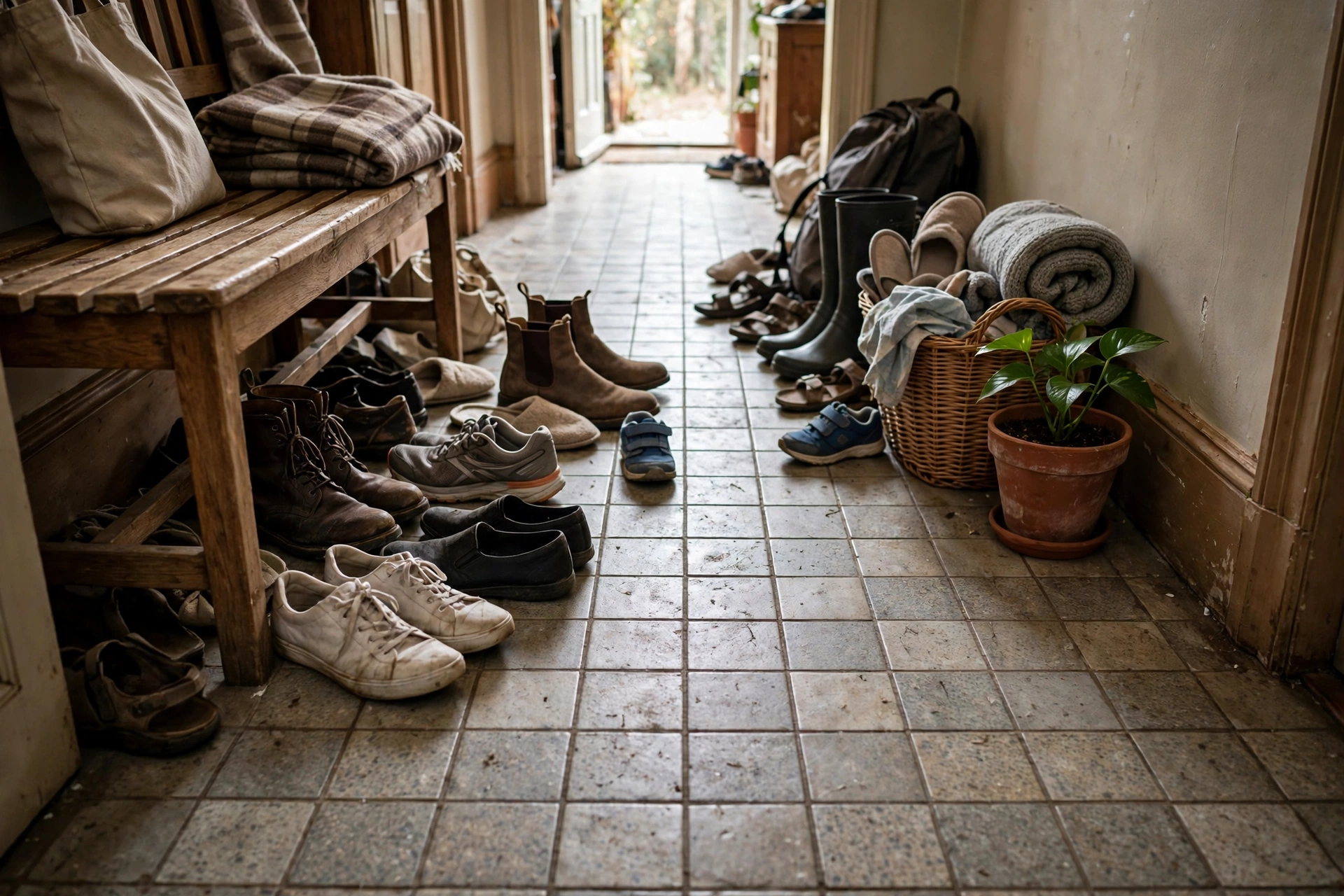
Hardness and durability follow directly from density: porcelain tiles are generally harder and more durable than ordinary ceramic tiles, so they resist scratches, chips and heavy foot traffic better. That is why porcelain is the usual choice for busy floors, entrance halls and commercial-style spaces in a home, where shoes, furniture and dropped objects test the surface every day.
Ceramic tiles are softer, so they can chip or scratch more easily under the same treatment, and their glaze can wear in very high-traffic areas over many years. That does not make ceramic a poor tile; it makes it a tile best matched to gentler use. A ceramic tile on a kitchen wall, a bathroom wall, or a light-use bedroom floor may never show wear at all, because walls and quiet floors ask very little of a tile. Matching the tile’s hardness to the wear it will actually face is the sensible way to choose.
Glazed and Unglazed Finishes
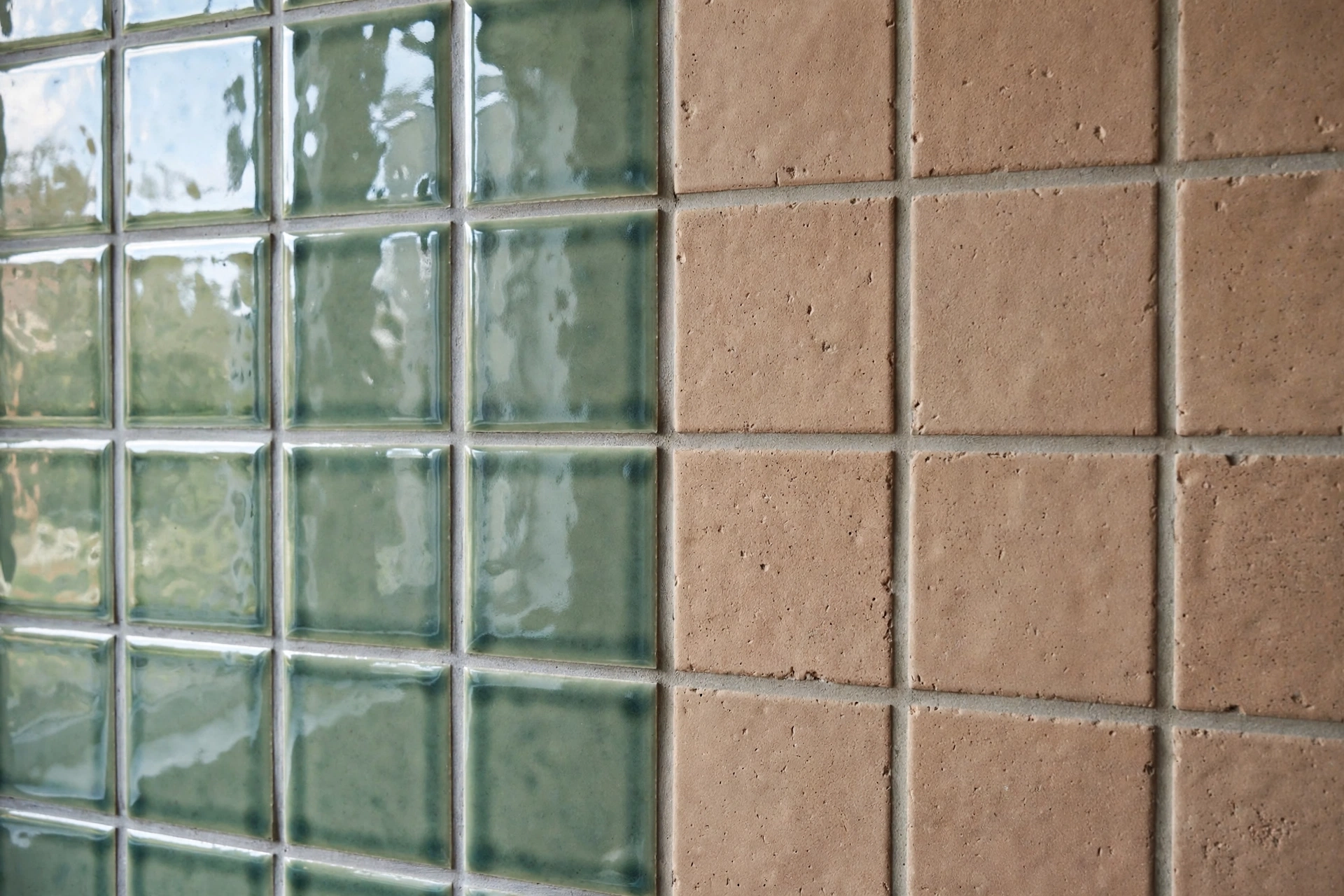
Glazed and unglazed finishes describe the surface of a tile, not its body, and both ceramic and porcelain tiles can be glazed. A glazed tile has a glass-like coating that carries its colour and pattern and seals the surface for easy cleaning. An unglazed tile has no coating, so its colour comes from the body itself.
Unglazed tiles are usually made from porcelain, because an unglazed ceramic body would be too porous for most uses. Unglazed porcelain suits floors where grip and a natural, through-body colour matter, and a chip shows less because the colour runs through the tile. Glazed tiles, by contrast, offer a wider range of colours and patterns, including realistic stone and wood looks, but a deep chip can expose the body colour beneath the glaze. The finish you choose should suit the room: glazed for easy cleaning, unglazed where grip and chip-hiding matter most.
Ceramic vs Porcelain at a Glance
The table below brings the main differences together in one place, so you can compare ceramic and porcelain quickly before shopping. Remember that these are general differences, and individual products vary by maker, so always check the specification of the tile you are actually buying.
| Feature | Ceramic tile | Porcelain tile |
|---|---|---|
| Clay and firing | Coarser clay, lower firing temperature | Finer clay, higher firing temperature |
| Density | Less dense, more porous | Denser, far less porous |
| Water absorption | Higher, especially unglazed | Much lower |
| Hardness and durability | Softer, suits lighter use | Harder, suits heavy use |
| Best for | Walls, light-use floors | Floors, wet areas, outdoors |
| Cutting | Easier to cut | Harder to cut, needs a good cutter |
| Weight | Lighter | Heavier |
| Cost | Usually lower | Usually higher |
Best Uses: Floors and Walls
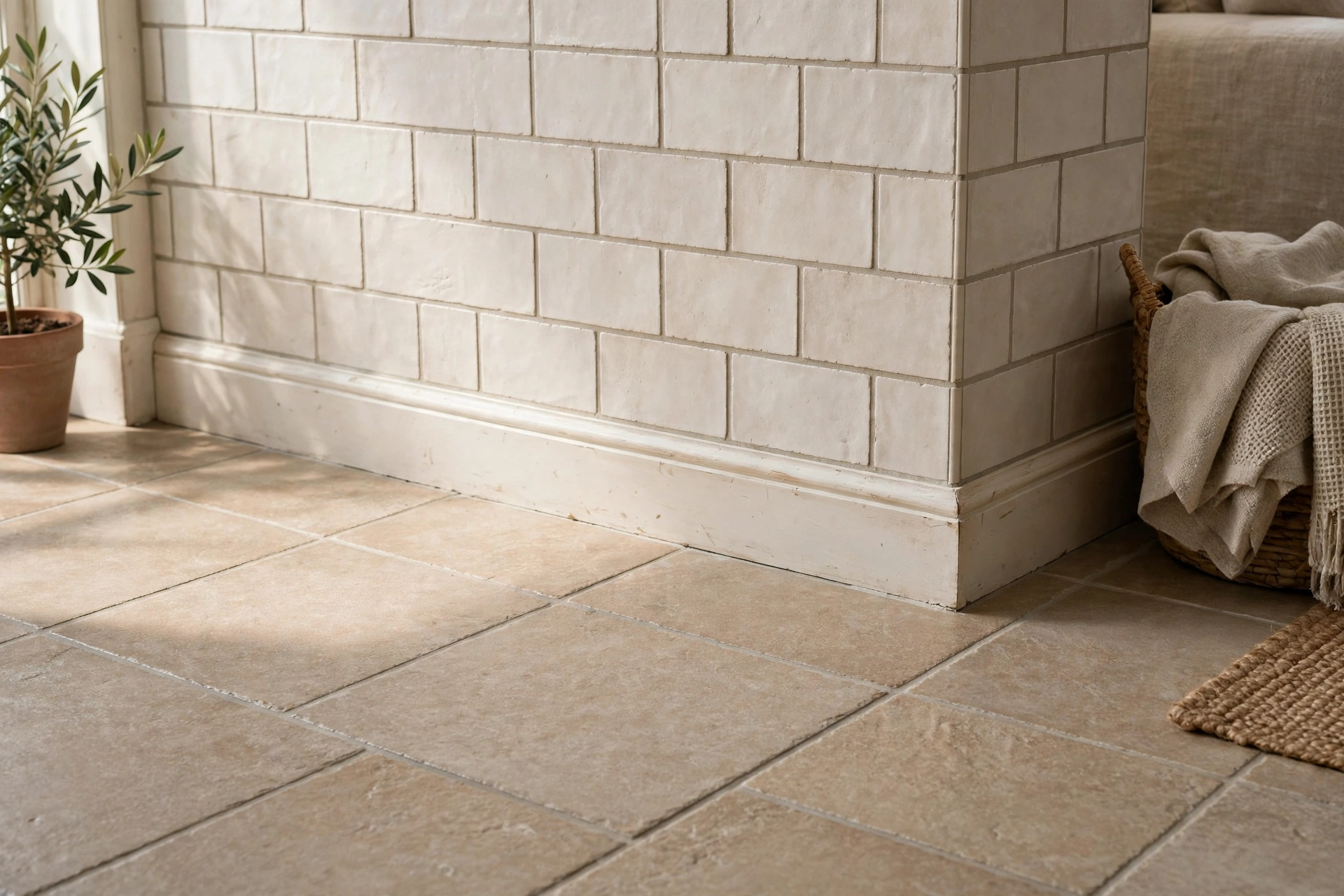
For floors, porcelain is usually the safer choice, because floors take foot traffic, furniture, dropped objects and spills, and porcelain’s hardness and low absorption handle all of that better. A busy hallway or kitchen floor shows the benefit over years, resisting scratches and stains a softer ceramic floor might show sooner.
For walls, ceramic is usually more than good enough, and often the smarter buy. Walls take almost no wear, so ceramic’s softness is no disadvantage, and its lighter weight makes it easier to fix to a wall, especially in large formats. Ceramic wall tiles also come in a very wide range of colours, sizes and finishes at a lower cost, which is why most kitchen backsplashes and bathroom walls use ceramic. Using porcelain on a wall is fine too, but it is rarely necessary unless the wall is in a very wet area.
Kitchens, Bathrooms and Wet Areas
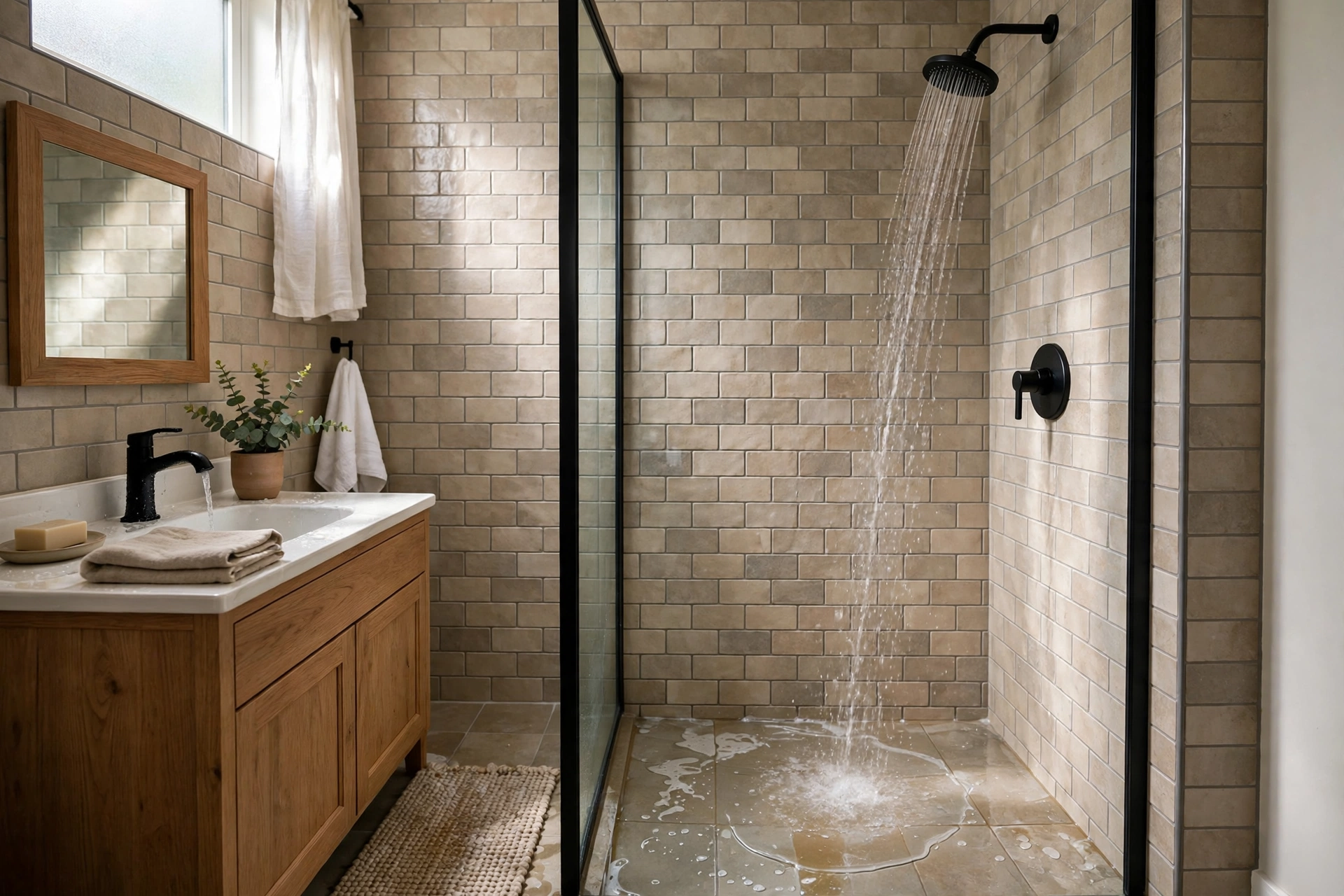
Kitchens and bathrooms test tiles with water, steam, splashes and frequent cleaning, so these rooms are where the ceramic-porcelain difference matters most. Porcelain is the usual recommendation for bathroom and kitchen floors, because its low absorption resists water seeping in through grout joints and helps the floor cope with constant dampness and cleaning.
On kitchen and bathroom walls, ceramic tiles work beautifully, because the wall itself is rarely soaked, and the glaze keeps the surface easy to wipe clean. In a shower, though, where tiles sit in running water daily, porcelain is the safer choice for both walls and floor, since its dense body is less likely to absorb moisture over time. Whichever tile you choose, the grout and sealing matter too: even the best tile will suffer if grout joints are left unsealed and water sits in them.
Outdoor Use
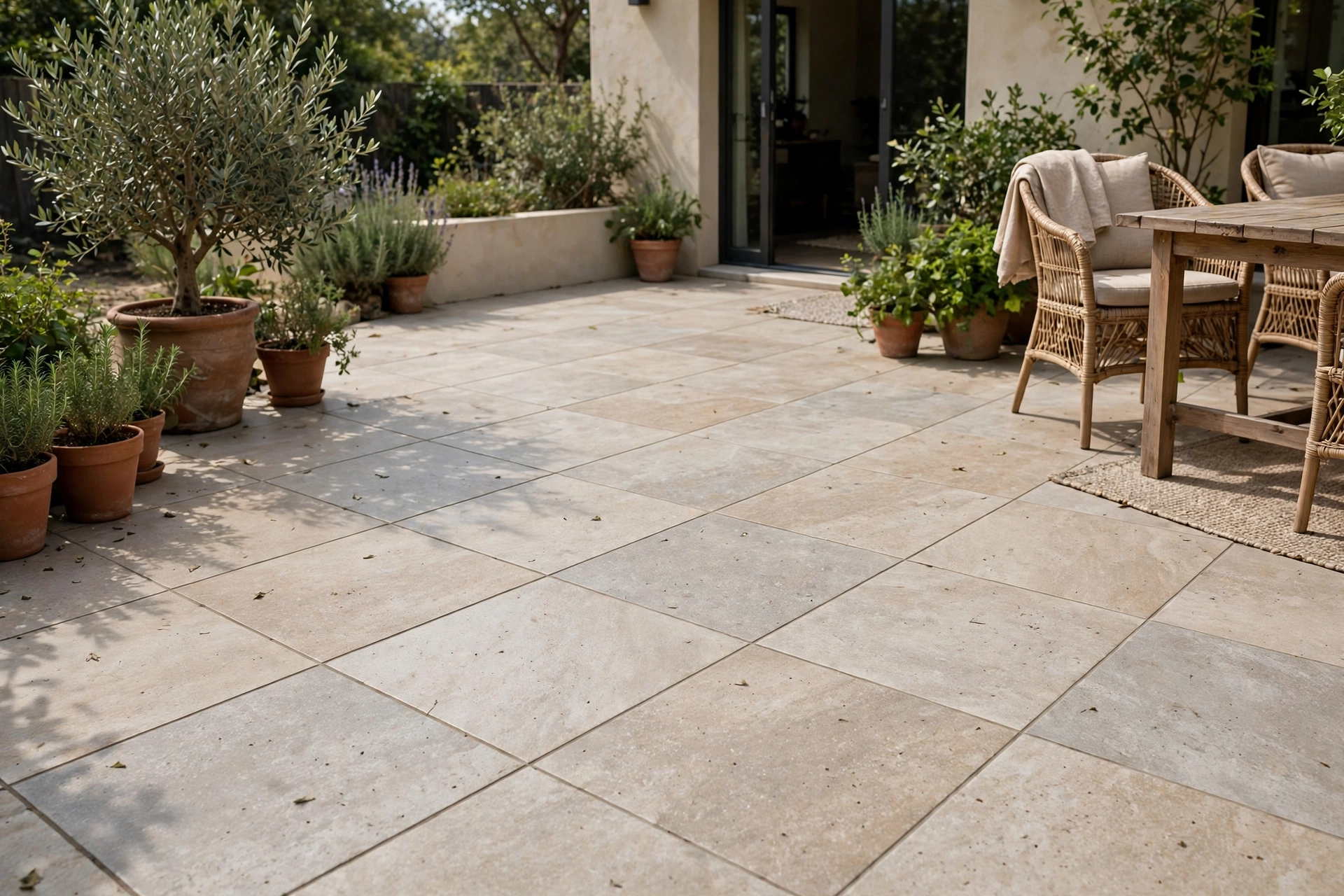
Outdoor use is the clearest case for porcelain, because outdoor tiles face rain, frost, temperature swings and dirt. Porcelain’s low water absorption means far less water enters the tile body to freeze, expand and crack it in cold weather. That frost resistance makes porcelain the standard choice for patios and paths.
Ordinary ceramic tiles are generally not recommended outdoors, especially where winters bring frost, because their more porous body can absorb water that then freezes and damages the tile. Some ceramic products are rated for outdoor use, but they are the exception, and their rating should be checked on the product specification rather than assumed. For any outdoor project, choose a tile rated for exterior use, with a textured surface for grip, and porcelain will almost always be that tile.
Cost Factors
Cost is one area where ceramic usually wins, because its simpler clay and lower firing temperature make it cheaper to produce, and those savings usually reach the buyer. A ceramic wall tile often costs noticeably less than a comparable porcelain tile, which makes ceramic attractive for large wall areas where porcelain’s extra toughness would add cost without adding benefit.
Porcelain costs more for several reasons: finer raw materials, higher firing temperatures, greater density and weight, and the harder cutting tools needed to install it, which can raise fitting costs too. The honest way to compare cost is over the life of the tile, not just the price on the shelf. A cheaper ceramic floor that chips or stains in a busy hallway may need replacing sooner, while a pricier porcelain floor in the same spot may last far longer, making the total cost similar or lower.
How to Tell Them Apart and Choose
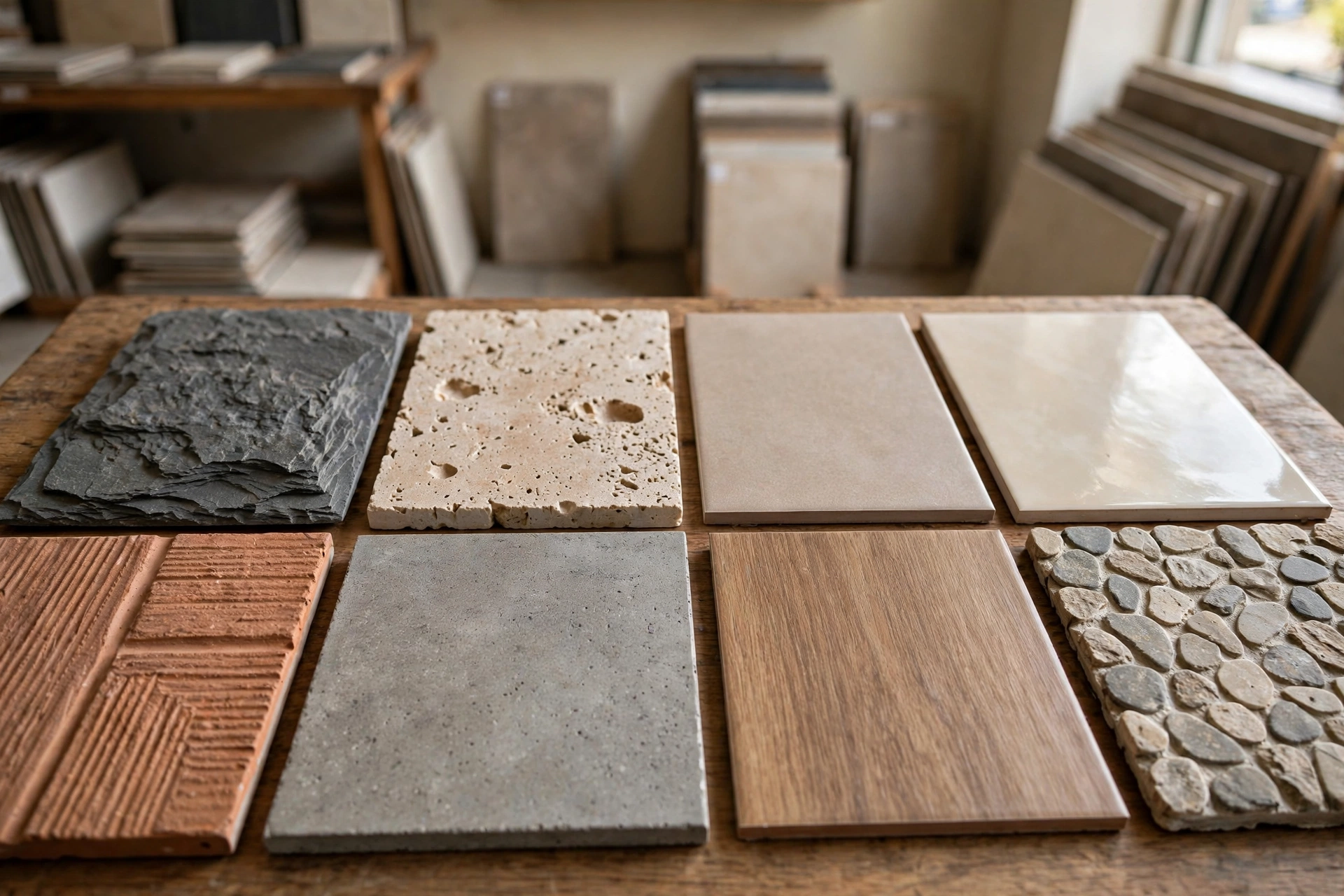
Telling ceramic and porcelain apart in a shop is easier than it looks, because the product label and a few simple checks give the answer. Porcelain tiles are usually labelled as porcelain, with a very low water absorption rate on their specification, while ceramic tiles show a higher rate. If the label is missing, ask the seller.
Follow these steps when choosing between them:
- Decide where the tile will go: wall, light-use floor, busy floor, wet area or outdoors.
- Check the label for the tile type and its water absorption rating.
- Look at the back of the tile: porcelain is usually denser and finer-grained, while ceramic is lighter and more porous-looking.
- Consider the finish: glazed for easy cleaning, unglazed porcelain where grip matters.
- Match the tile to the wear: porcelain for floors and wet areas, ceramic for walls and quiet rooms.
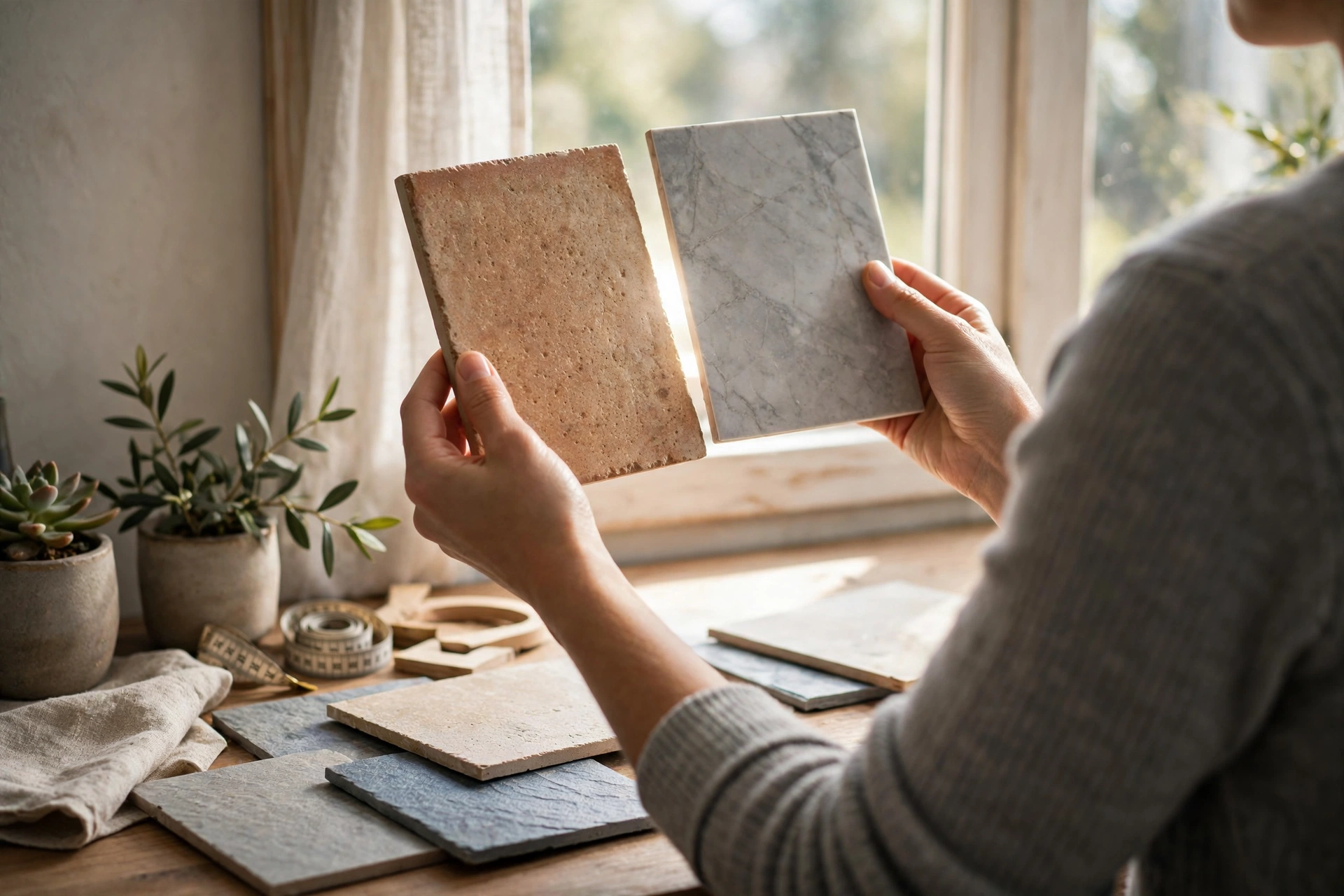
- Get a sample home and check its colour in your own light before ordering the full quantity.
This short routine prevents the most common error, which is buying on looks alone. Two tiles can look identical in a shop and behave very differently in a bathroom, a hallway or a garden, so the label and the room should decide, not the pattern.
Conclusion
What is the difference between ceramic and porcelain? Porcelain is a denser, harder, less porous kind of ceramic tile, fired hotter from finer clay, and that density makes it stronger, more water-resistant and better suited to floors, wet areas and outdoors. Ceramic is softer, lighter, easier to cut and usually cheaper, suiting walls and light-use floors.
Neither tile is better in every room, and the best choice is the one matched to the job: porcelain where wear, water or frost will test the tile, ceramic where the wall or quiet floor will not. Check the label, think about the room, and choose the tile whose strengths match the place it will live.
Frequently Asked Questions
Is porcelain better than ceramic tile?
Porcelain is harder, denser and more water-resistant than ceramic, so it suits floors, wet areas and outdoors better, but ceramic is fine and often cheaper for walls and light-use floors.
Can ceramic tiles be used on floors?
Yes, ceramic tiles can be used on floors with light to moderate foot traffic, but porcelain is the better choice for busy floors, entrance halls and rooms that stay wet.
Is porcelain tile waterproof?
No tile is fully waterproof, but porcelain absorbs far less water than ceramic, so it resists moisture, staining and frost damage much better, especially when grout joints are sealed.
How can I tell if a tile is porcelain or ceramic?
Check the product label and its water absorption rating, as porcelain shows a much lower rate, and ask the seller if the label is unclear, since looks alone rarely give the answer.
Is porcelain tile worth the extra cost?
Yes, for floors, wet areas and outdoors, where its durability and water resistance repay the higher price, but for walls the extra cost of porcelain is often unnecessary.
Disclaimer: This article is provided for general information only. It is not professional tiling, building, or installation advice, and it does not promote any brand, product, or service. Tile types, ratings, and suitability vary by product and manufacturer, so always check the specification of the tile you are buying and seek qualified advice before tiling, especially for wet areas, outdoor use, or underfloor heating.
Thanks for visiting Clearise Cleaning Services! Discover more helpful tips and expert cleaning insights by exploring our related categories.