
A garage is often the largest plain room in a home, and its colour changes how it feels every time the door opens. A dark, bare garage can feel cold and cramped, while a bright, well-chosen colour can make the same space feel cleaner, larger and far more pleasant to work in.
This guide answers the question in plain language: what colour to paint a garage? It covers the best colours for parking, workshops and converted rooms, how light and dirt should shape your choice, the difference between floor and wall paint, popular colour families, matching the house exterior, testing colours, and the mistakes to avoid.
The Short Answer: What Colour to Paint a Garage?
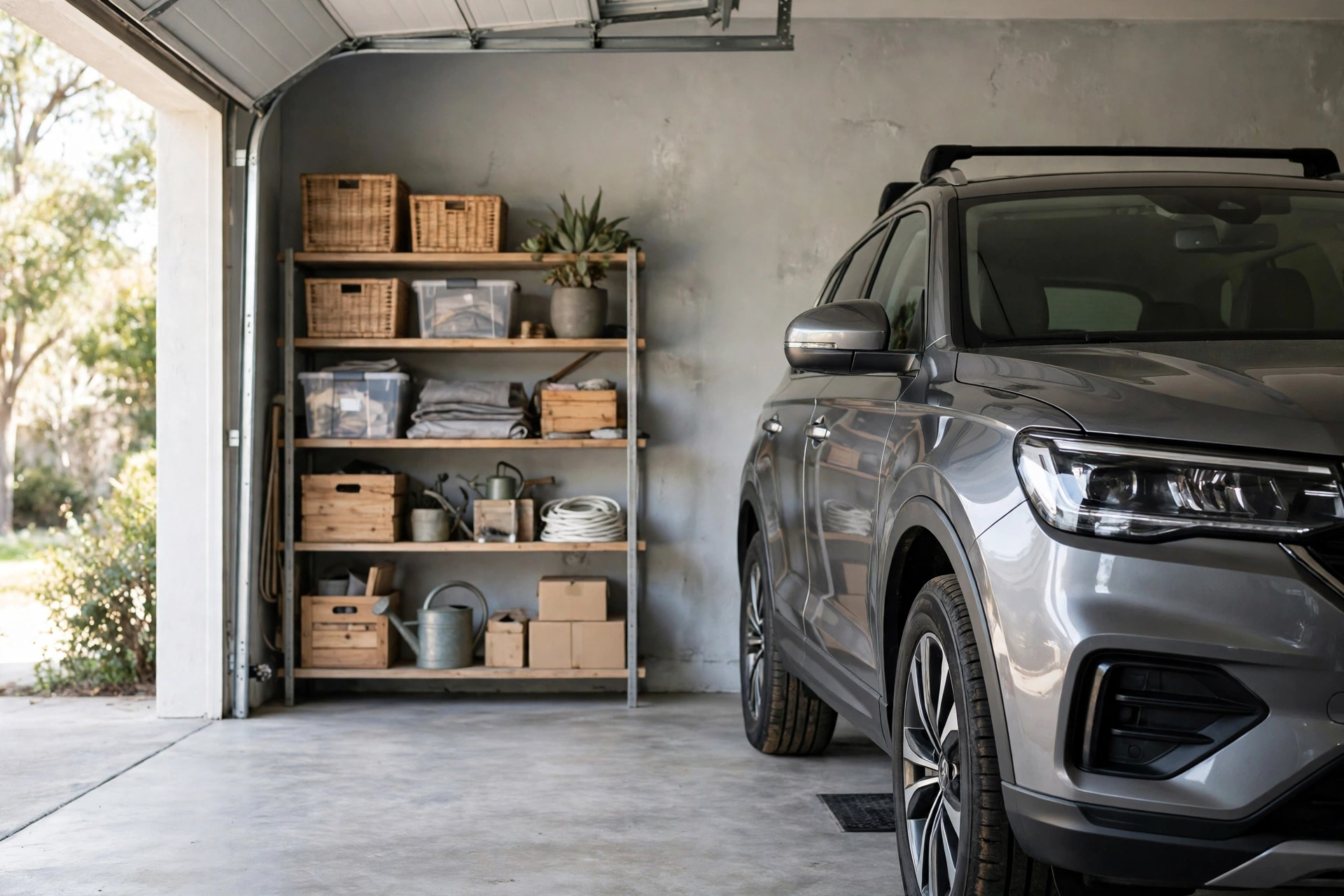
For most garages, a light neutral such as white, off-white or light grey is the safest choice, because it reflects light, makes the space feel larger, and shows dirt less obviously than a dark colour in a dim room. A mid-grey is the best balance for a garage, since it hides scuffs better than white while keeping the space bright.
That short answer suits a garage used mainly for parking and storage. A workshop may suit a slightly darker, tougher finish on the lower walls, and a converted garage used as a room should be treated like any other living space, with colours chosen for comfort rather than for hiding dirt. The rest of this guide helps you adjust the answer to your own garage.
Best Garage Colours by How You Use It

The best garage colour depends first on how the garage is used, because a parking garage, a workshop and a converted room ask very different things of their walls. A colour that suits a quiet parking space may look wrong in a busy workshop, and a workshop colour may feel gloomy in a room where people spend evenings.
For parking and storage, light neutrals work best: white, off-white, light grey or pale beige brighten a space that often has only one small window. For a workshop, mid-grey or a warm greige is practical, because tools, tyres and workbenches mark walls, and a mid-tone hides those marks while still reflecting some light. For a converted garage used as a bedroom, office or playroom, choose as you would for any room: soft, calm colours that suit the furniture and the light, since dirt-hiding matters far less than comfort.
Light and Brightness: Why Colour Changes How a Garage Feels
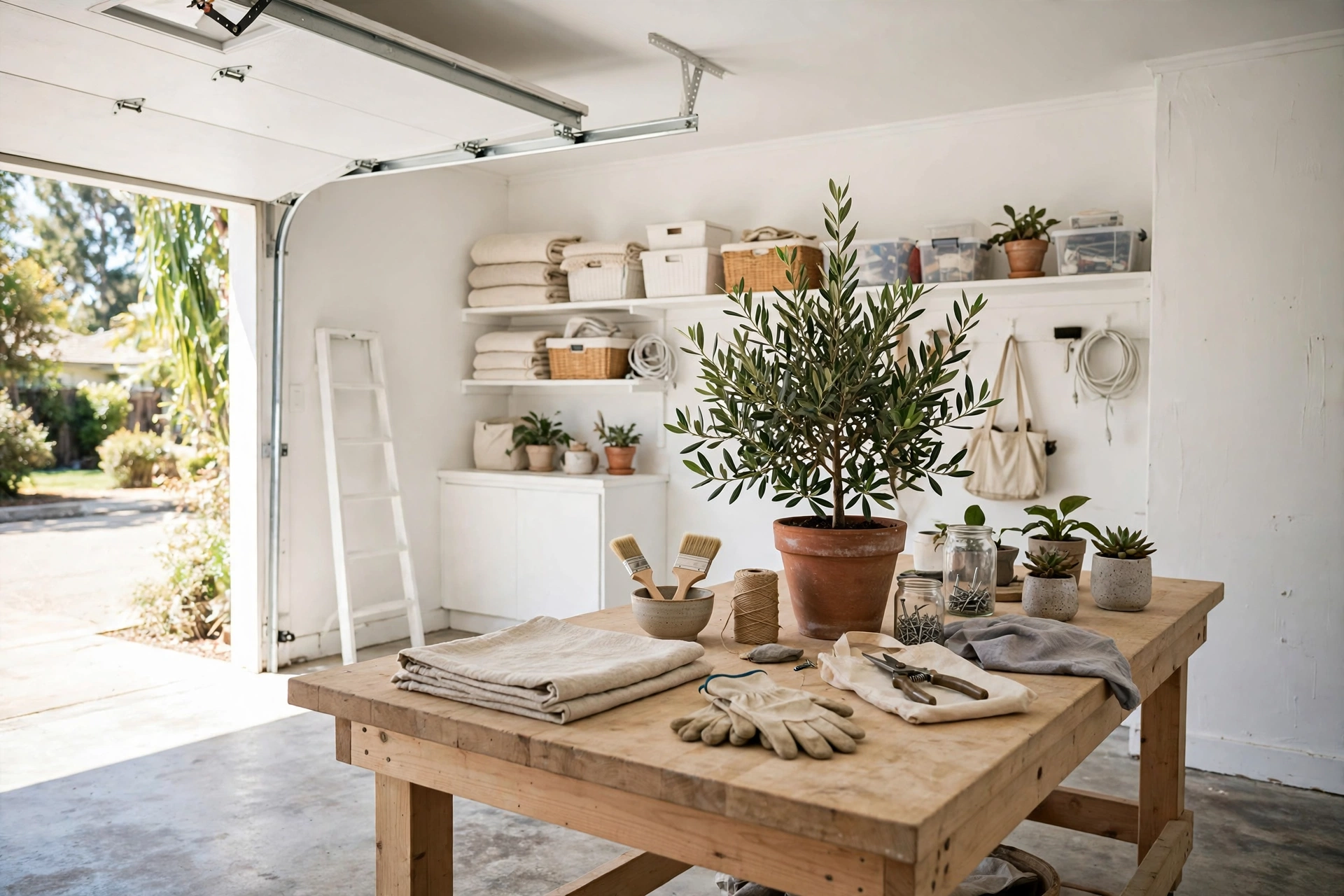
Garages are usually darker than other rooms, with small windows, a large door that stays shut, and often only one or two light fittings, so wall colour has a bigger effect here than in a bright living room. Light colours bounce the available light around the room, while dark colours absorb it, making the same garage feel smaller and gloomier.
This is why white and pale grey are so popular for garages, even for people who dislike white elsewhere in the home. A pale wall can make a single bulb feel like more light, and it makes it easier to find tools, read labels and spot a leak or a spill. If your garage has no windows at all, lean lighter still, and pair the colour with better lighting rather than hoping a dark colour will look cosy. Dark colours can work in a garage with large windows and strong lighting, but in a dim garage they usually make the space feel like a cave.
Dirt, Scuffs and Marks: What Each Colour Hides
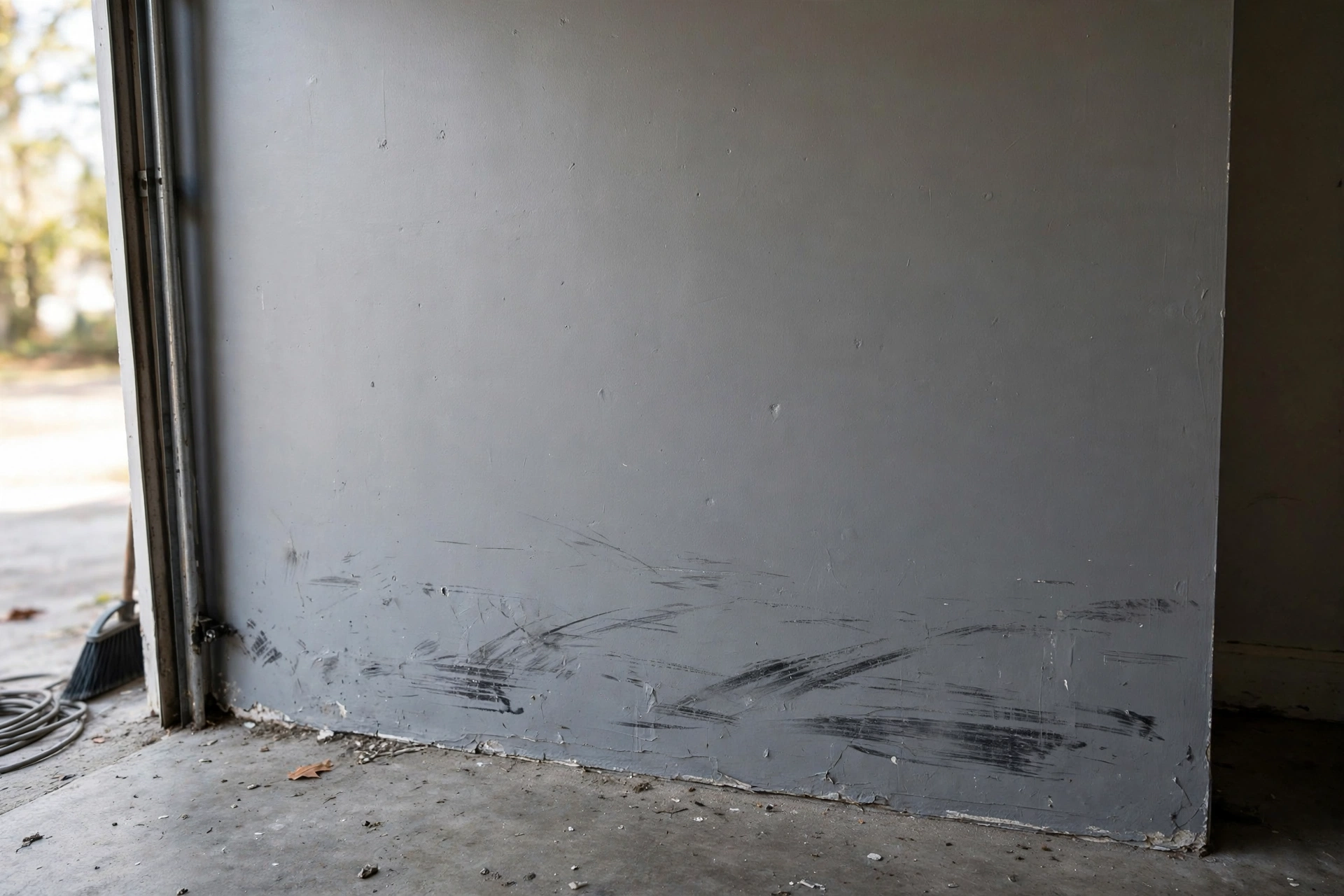
Every garage collects dirt, tyre marks, scuffs from boxes and bicycles, and splashes from wet cars, so the colour you choose will either hide those marks or show them clearly. Pure white shows every scuff and splash, while very dark colours show dust, cobwebs and light-coloured marks just as clearly, so neither extreme is the most forgiving choice.
Mid-tones are the practical middle ground. A mid-grey, warm greige or soft taupe hides a mix of dark scuffs and light dust better than white or black, which is why workshops and busy family garages often use them. The lower part of the wall takes the most abuse, so some homeowners paint the lower walls a darker, washable colour and the upper walls a lighter one, keeping the brightness while hiding the worst marks where they happen. A washable finish matters as much as the colour itself, because a washable mid-grey wall can simply be wiped clean.
Garage Floor Paint vs Wall Paint
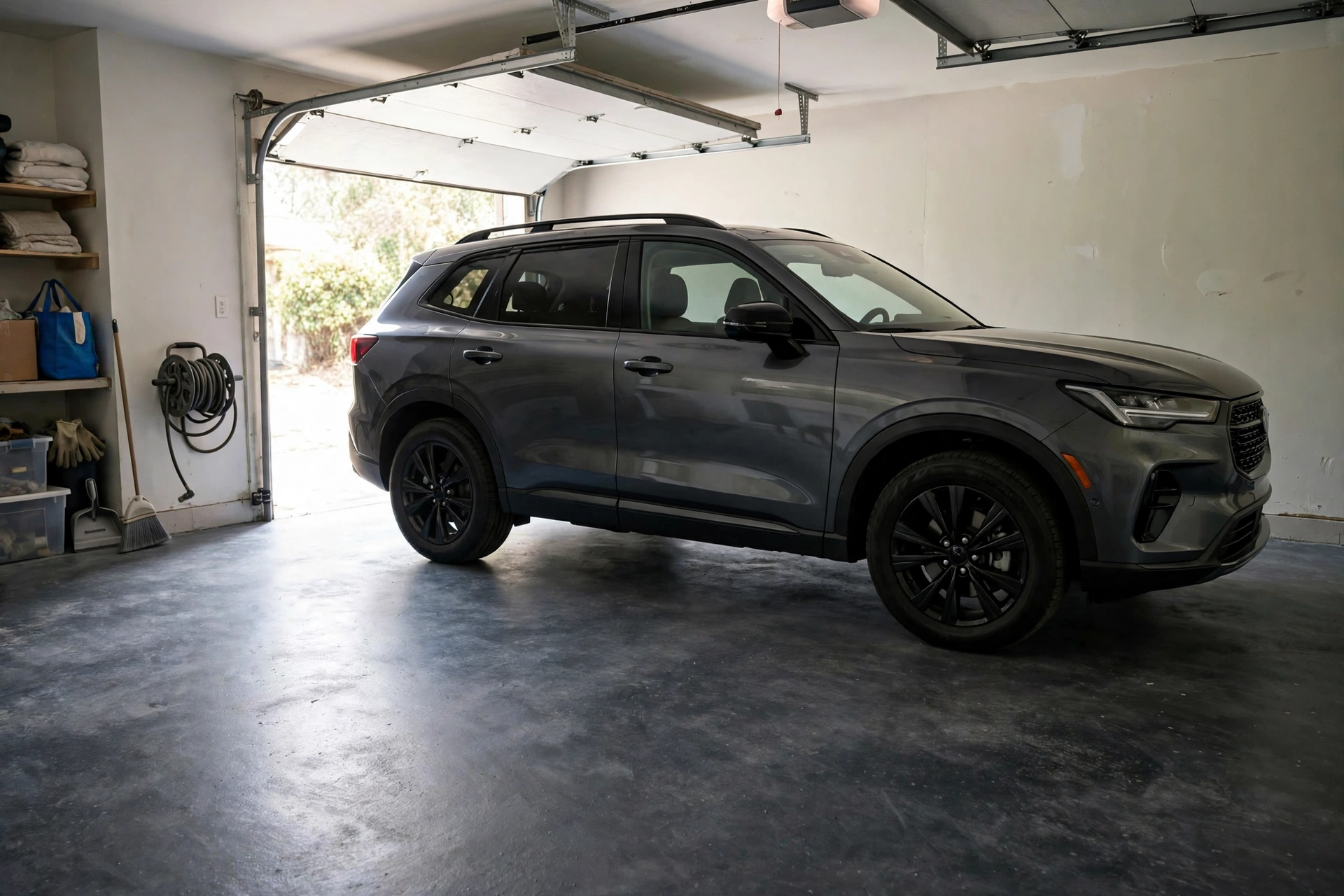
Garage floor paint and wall paint are made for different jobs, and using the wrong one in the wrong place is a common cause of peeling, flaking and disappointment. Wall paint is made to cover vertical surfaces and look even, while floor paint is made to survive tyres, foot traffic, oil drips and dragging boxes.
A garage floor needs a tougher, more chemical-resistant coating than a wall, and it usually has a different finish, often with a slight texture for grip. Wall paint on a floor will wear away quickly under tyres and may peel where oil or water sits. Floor paint on a wall is possible but unnecessary, and it can look heavy and uneven on a large vertical surface. Choose the paint for the surface it will live on, read the product label for each, and remember that the floor colour can differ from the wall colour: a darker grey floor with lighter walls is a classic, practical combination.
Popular Garage Colour Families and Their Effects
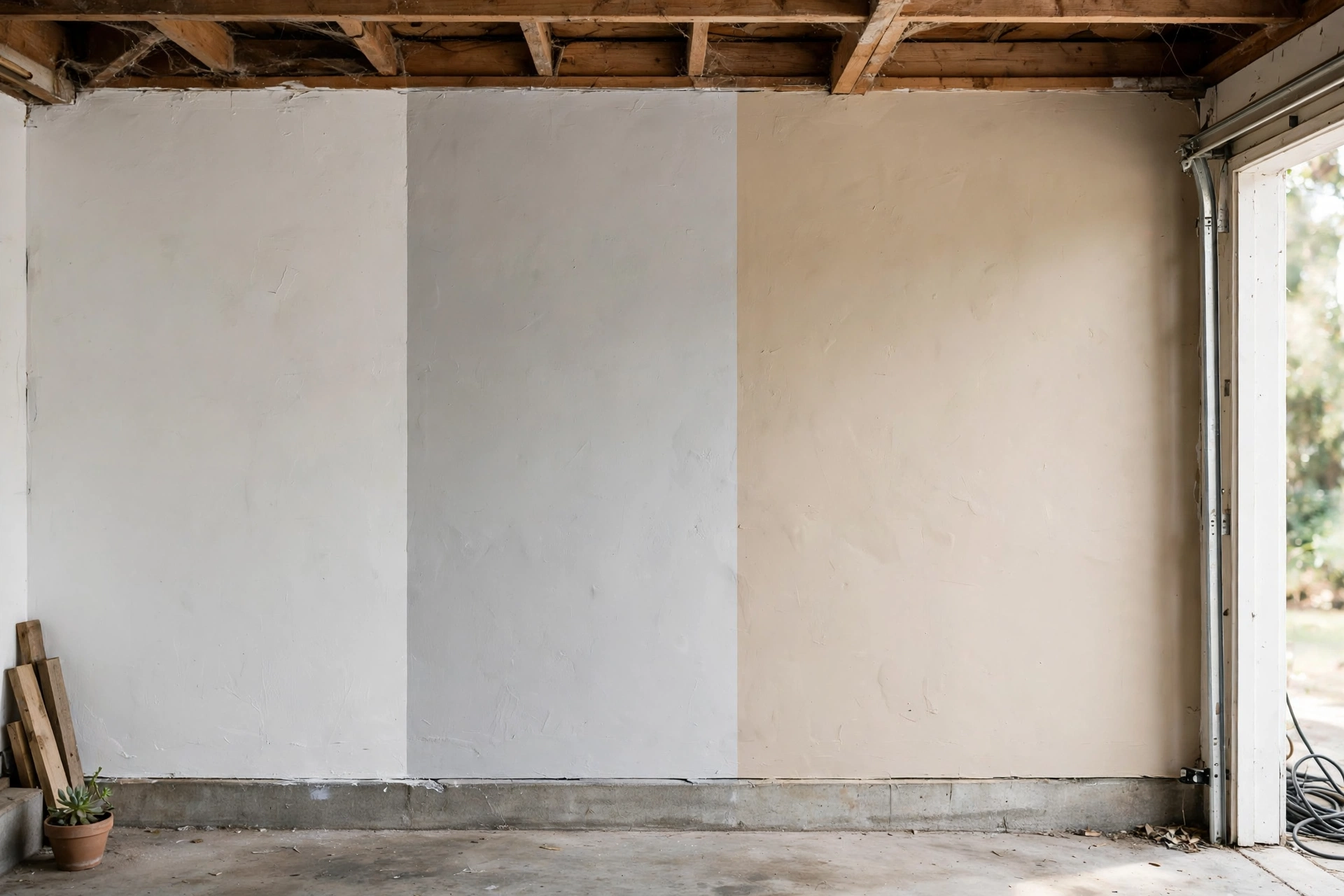
Garage colours fall into a few broad families, and each family changes the feel of the space in a different way, so it helps to compare them side by side before choosing. The table below gives a simple starting point, and the right choice still depends on your light, your use and your taste.
| Colour family | Feel in a garage | Best for | Things to watch |
|---|---|---|---|
| White and off-white | Bright, clean, spacious | Parking, storage, dark garages | Shows scuffs and splashes clearly |
| Light grey | Bright, modern, calm | Most garages, workshops | Can look cold without warm lighting |
| Mid-grey and greige | Practical, balanced, forgiving | Busy workshops, family garages | Needs good lighting to avoid gloom |
| Warm beige and taupe | Warm, soft, welcoming | Converted rooms, attached garages | Can look yellow under poor light |
| Dark grey and charcoal | Bold, dramatic, modern | Feature walls, well-lit garages | Absorbs light, shows dust |
| Bold colours (blue, green, red) | Personal, energetic, striking | Feature walls, hobby workshops | Can date quickly and tire the eye |
White and pale grey remain the most popular garage colours for a simple reason: they solve the garage’s main problem, which is darkness. Mid-grey and greige suit people who want a practical working space, while bold colours work best as an accent on one wall rather than across the whole garage, so the space stays bright and the colour stays a pleasure rather than a regret.
Matching the Garage to Your House Exterior
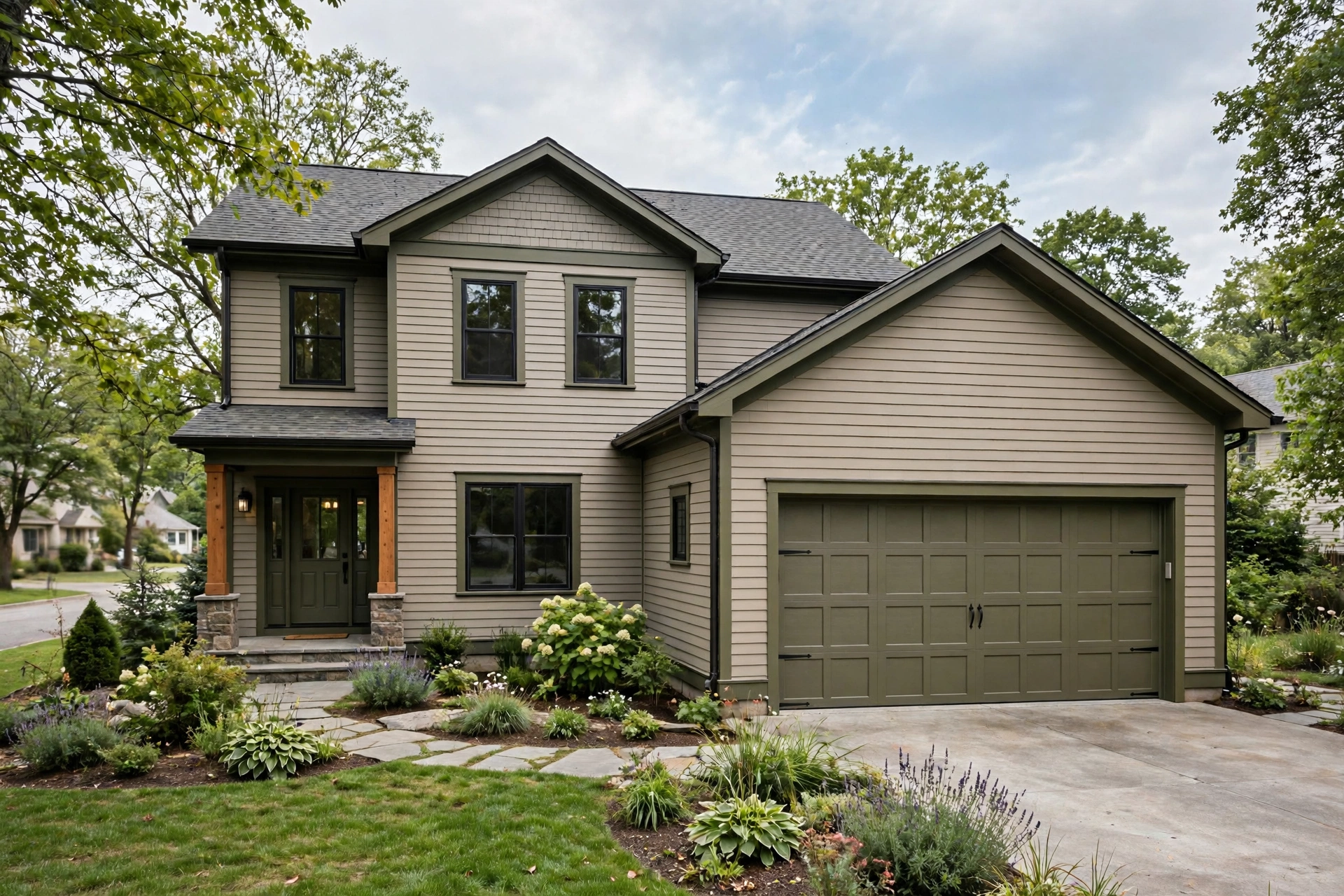
A detached garage can be painted in almost any colour you like, but an attached garage, especially one facing the street, should sit comfortably with the rest of the house. A garage colour that clashes with the brick, siding or front door can make the whole house look less cared for, even when the garage itself is well painted.
The simplest approach is to echo a colour already on the house: the trim colour for the garage walls, a shade close to the house walls for the garage door, or a neutral that matches the roof or driveway. If the house is white or cream, a white or pale grey garage looks natural. If the house is brick, a warm neutral that picks up a tone in the brick usually works better than a stark white. The garage door deserves special thought, because it is the largest single surface on the front of many homes, and a door colour that matches the front door or the trim ties the whole front together.
Testing Garage Colours Before You Commit

Testing a garage colour before committing is worth the small effort, because garage light is very different from shop light, and a colour that looks perfect on a small card can look wrong across a whole wall. A test patch on your own garage wall, seen in your own light, tells you more than any catalogue photograph.
Paint a large test patch, or paint a board you can move around the garage, and look at it with the door open, with the door shut, and under the garage lights in the evening. Notice how the colour changes: a grey can look blue in daylight and green under artificial light, and a warm beige can look yellow in a dim garage. Live with the test patch for a day or two before buying the full quantity, and test the floor colour against the wall colour at the same time, since the two are seen together. This simple step prevents the most common garage painting regret: a colour that looked right in the shop but feels wrong at home.
Preparing and Choosing Paint for a Garage
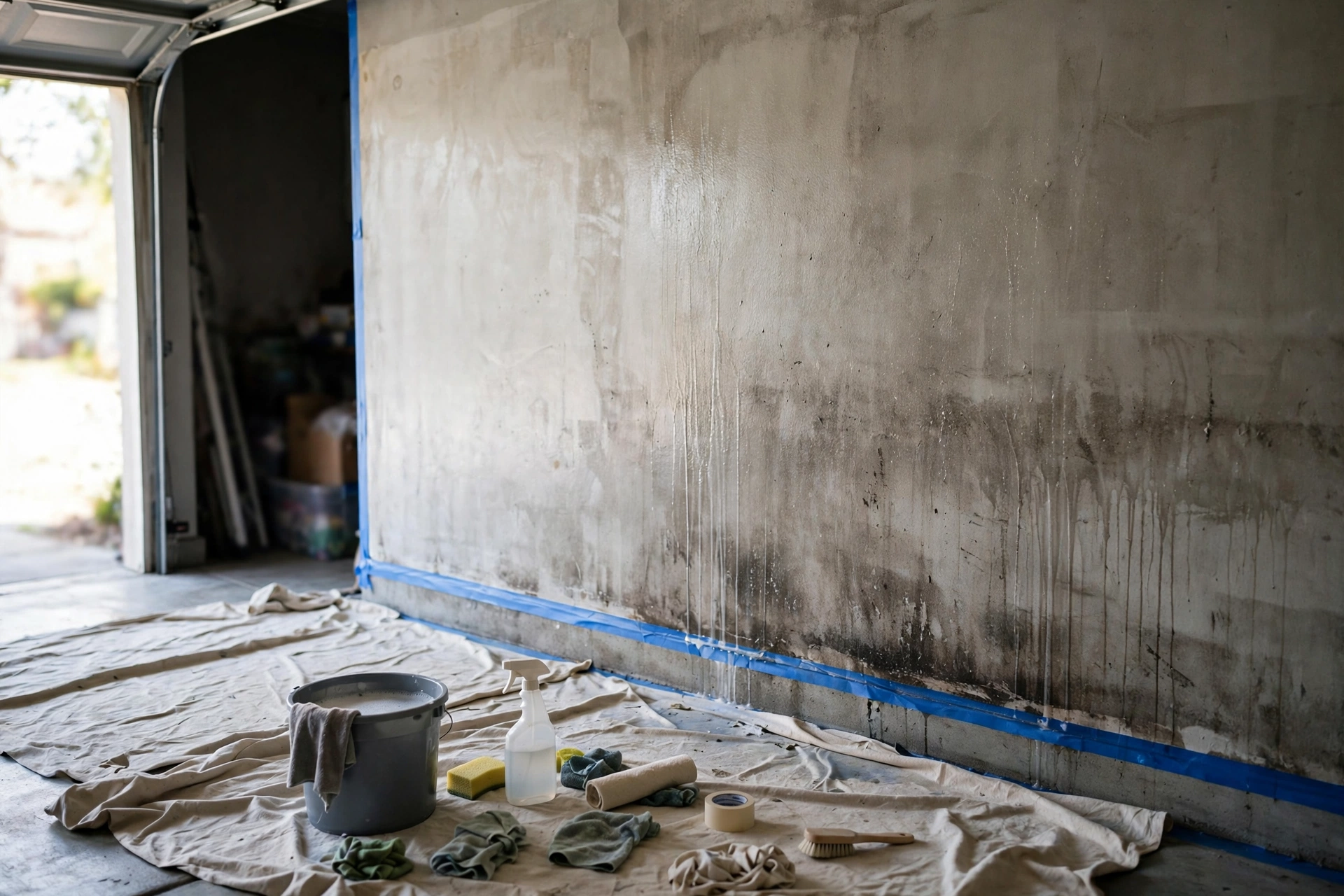
Preparing a garage for paint means cleaning the walls, fixing damage, and choosing a paint made for garage conditions, because garage walls are often dusty, stained and rougher than indoor walls. Paint applied over dust, grease or flaking old paint will not stick well, however good the colour is.
Start by sweeping and brushing the walls down, washing off grease near the parking area and any mould or damp marks, and letting the walls dry fully. Fill cracks and holes, sand them smooth, and prime bare or repaired areas so the topcoat covers evenly. For walls, a washable interior paint in an eggshell or satin finish is a practical choice, since it can be wiped clean. For floors, use a paint or coating made for concrete garage floors, following its own label, and allow proper drying time before driving on it. Ventilate the garage while painting and drying, and keep the door open when it is safe to do so.
Garage Colour Choice Checklist
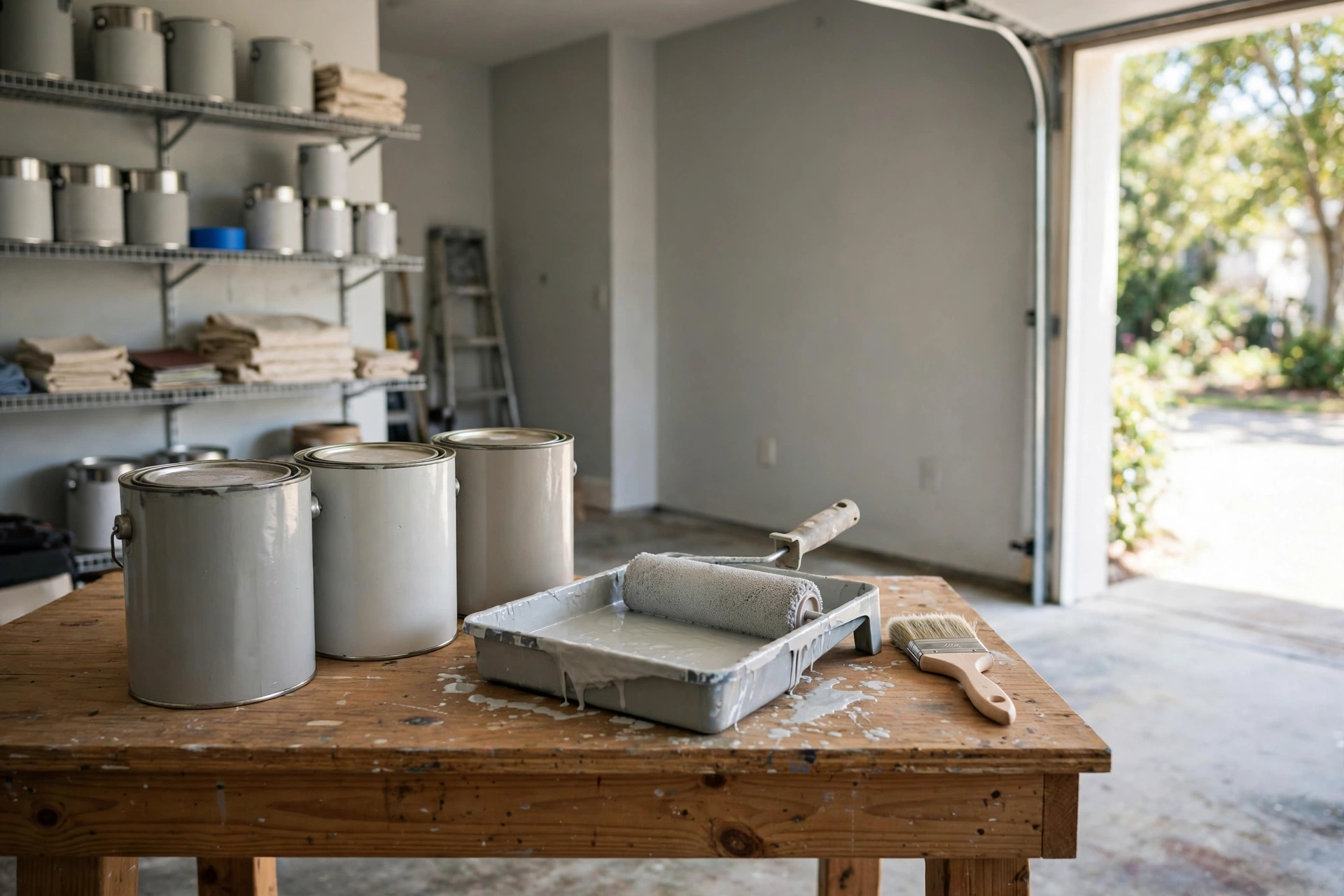
A garage colour choice checklist turns the advice in this guide into a short routine you can work through before buying paint, and it catches the errors that cause most regrets. It takes only a few minutes, and it is worth doing even for a small garage.
Work through the list in order:
- Decide how the garage is used: parking, workshop, storage, or converted room.
- Check the light: windows, door position, and existing light fittings.
- Choose a wall colour family, leaning lighter for dark garages and mid-toned for busy workshops.
- Choose a floor colour separately, usually darker than the walls for practicality.
- Match or echo the house exterior, especially for an attached, street-facing garage.
- Test the colours on your own walls in daylight and under garage lighting.
- Check the paint type: washable wall paint for walls, floor coating for floors.
- Confirm the quantity for two coats, plus a little spare for touch-ups.
A colour chosen against this checklist is far more likely to look right once it covers the whole garage. If any answer is uncertain, pause and test again rather than guessing.
What About the Garage Door Colour?
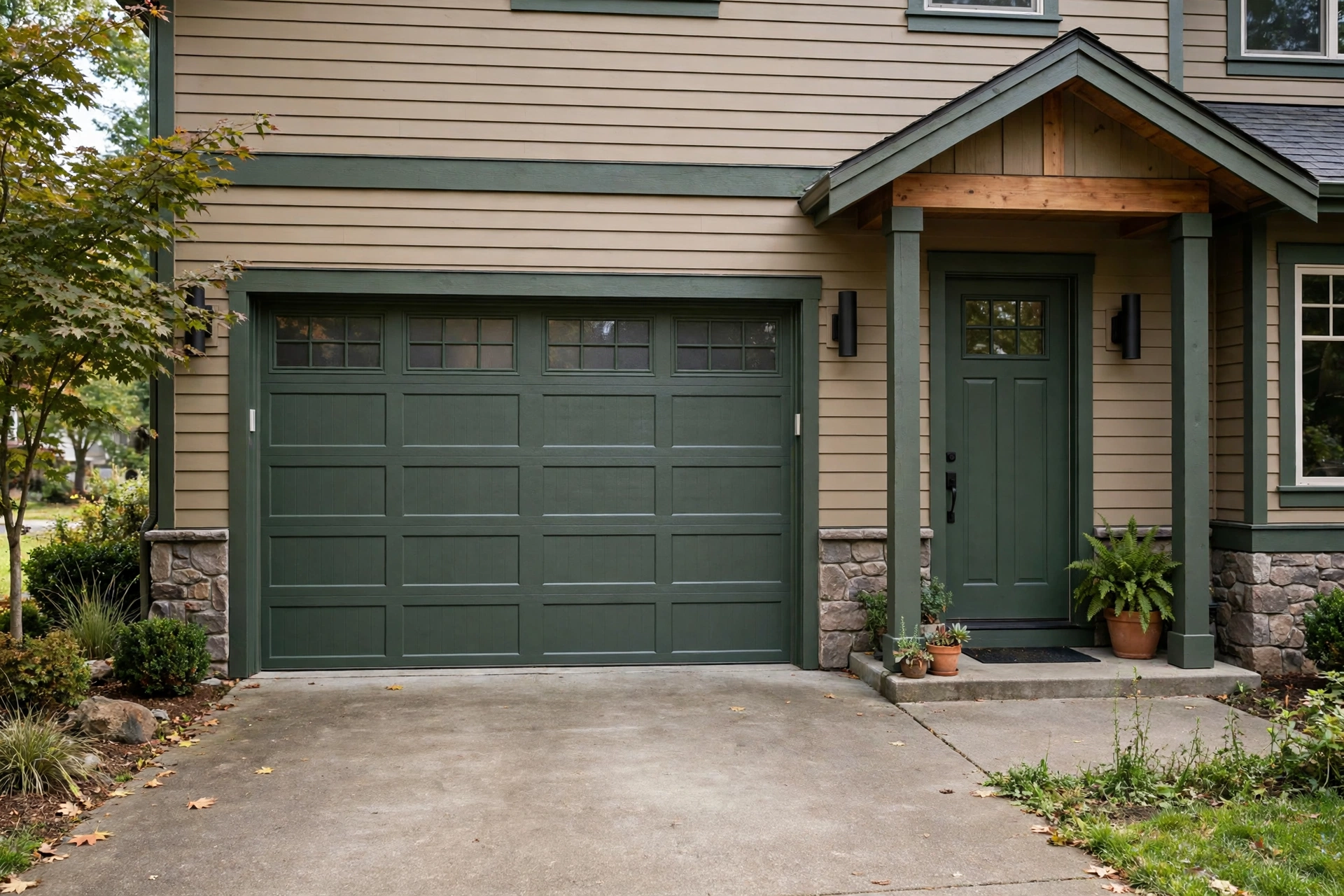
The garage door colour matters more than many people expect, because the door is often the largest surface on the front of a house, and it is the first thing visitors notice. A door that matches the house trim or front door looks deliberate and tidy, while a door in a clashing colour can dominate the front of the home.
For most homes, the safest garage door colours are the house trim colour, a shade close to the house walls, or a classic neutral such as white, off-white, grey or black, depending on the house style. A bold door colour can work as a feature on a modern home, but it should be a deliberate choice that suits the front door and the overall style, not a leftover tin of paint. If the garage is detached or at the back of the property, the door colour matters less, and practical concerns such as hiding dirt and matching the garage interior can take priority.
Common Mistakes When Painting a Garage
The most common mistake when painting a garage is choosing a colour from a small card in a brightly lit shop, without testing it in the garage’s own dim, uneven light. A colour that looks fresh in the shop can look cold, yellow or gloomy on a garage wall, and repainting a whole garage is a large job.
Other mistakes are easy to make too. Using wall paint on the floor leads to peeling under tyres, while skipping cleaning and preparation leads to paint that flakes from dusty or greasy walls. Painting a dark colour in a windowless garage makes the space feel smaller, and painting over damp or damaged walls without fixing the cause first means the problem returns through the new paint. Finally, many people forget the ceiling and the door: a bright ceiling helps the whole garage feel lighter, and a door colour that clashes with the house undermines an otherwise good job.
Conclusion
What colour to paint a garage? For most garages, a light neutral such as white, off-white or light grey for the walls, with a darker, tougher floor colour, is the safest and most practical combination. It brightens a dark space, makes the garage easier to work in, and sits comfortably with most houses.
Adjust that answer to your own garage: mid-grey or greige for a busy workshop, soft room colours for a converted garage, and a door colour that matches the house trim or front door. Test the colours in your own garage light, prepare the walls properly, and use the right paint for walls and floors. Done that way, a freshly painted garage feels cleaner, brighter and far more useful.
Frequently Asked Questions
What is the best colour to paint a garage?
Light grey, off-white or white is best for most garages, since these colours brighten a dark space, make it feel larger, and suit parking, storage and workshop use alike.
Should a garage be painted white or grey?
White suits dark, windowless garages best because it reflects the most light, while light or mid-grey suits busy workshops better because it hides scuffs and dirt more forgivingly.
What colour should a garage floor be?
A darker grey is usually best for a garage floor, since it hides tyre marks, oil and dirt, while a lighter wall colour above it keeps the whole garage feeling bright.
What colour should I paint my garage door?
Match the garage door to the house trim or front door where possible, or choose a classic neutral such as white, grey or black that suits the style of your home.
Can I use normal wall paint in a garage?
Yes, washable interior wall paint suits garage walls well, but garage floors need a coating made for concrete floors, since ordinary wall paint peels under tyres and traffic.
Disclaimer: This article is provided for general information only. It is not professional painting, building, or design advice, and it does not promote any brand, product, or service. Paint types, colours, and suitability vary by product, region, and home, so always check the guidance on the specific product and seek qualified professional advice before painting, especially for damp walls, damaged surfaces, or converted garages.
Thanks for visiting Clearise Cleaning Services! Discover more helpful tips and expert cleaning insights by exploring our related categories.