Daytime janitorial services work best when your business needs cleaning support while employees and customers are present. After-hours service suits spaces that need uninterrupted vacuuming, restroom cleaning, and floor care once people leave. A combined schedule often works well for busy facilities that need daytime upkeep and a more complete cleaning after closing.
The right choice depends on your operating hours, foot traffic, security needs, and the tasks your building requires. Neither schedule automatically delivers better cleaning. What matters is whether the crew can complete the agreed work safely and without interfering with your business.
When we plan janitorial services in San Diego, we look at how a space operates throughout the day. An office with a quiet evening window needs a different schedule from a retail store, shared workspace, or facility that runs around the clock.
What Does Daytime Janitorial Service Include?
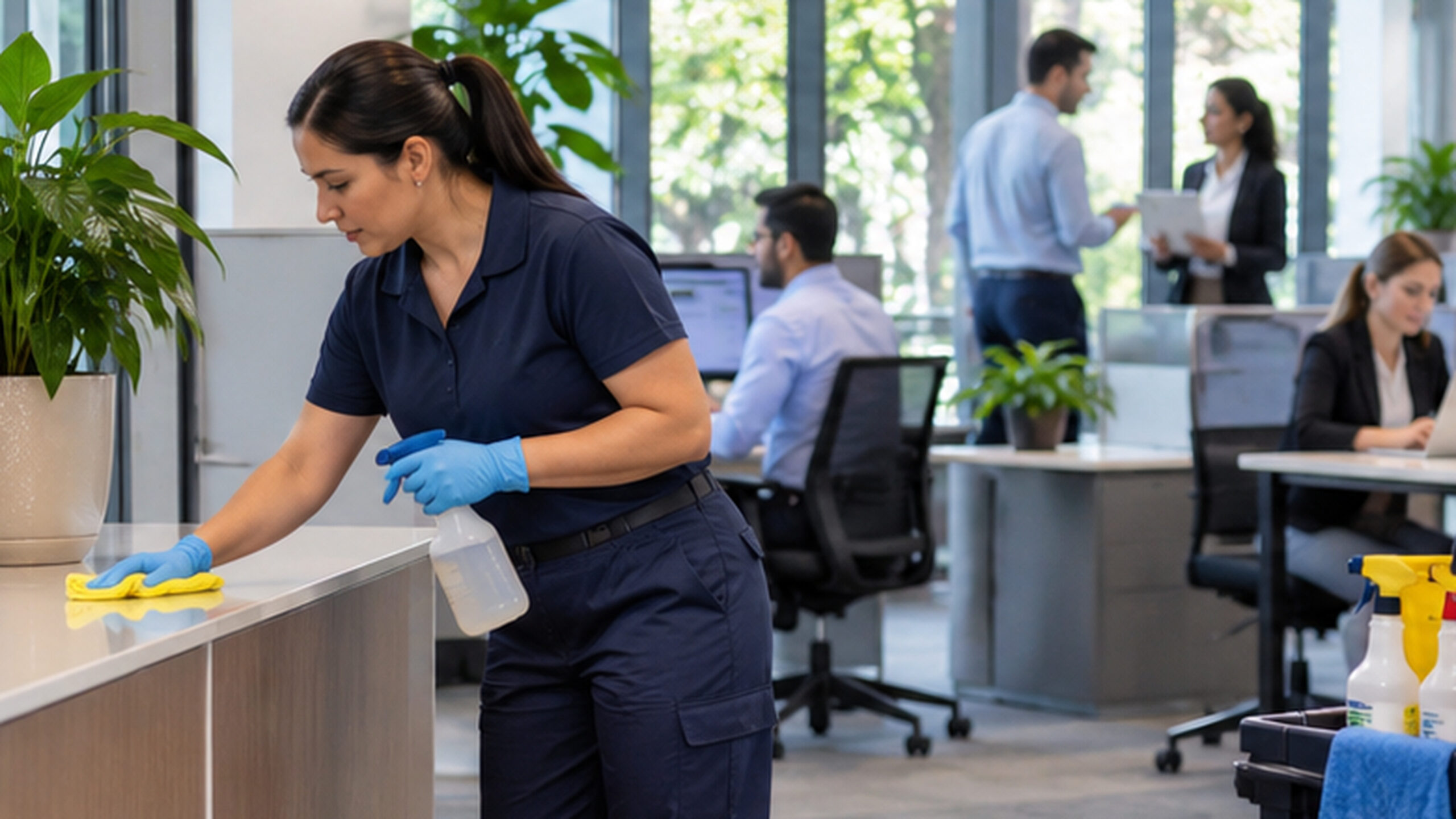
Daytime cleaning takes place while your business operates. A cleaner may visit during a quieter period, or a day porter may remain on site for an agreed shift.
These services often focus on maintaining conditions as people use the building. Tasks may include removing restroom trash, restocking soap and paper products, wiping shared surfaces, and responding to ordinary spills.
For example, cleaning a restroom before opening does not guarantee it will remain presentable through a busy afternoon. Daytime support helps address the mess and supply shortages that develop during use.
However, a short daytime visit differs from a dedicated porter service. Your agreement should explain the visit length, coverage areas, response expectations, and tasks included.
What Does After-Hours Janitorial Service Include?
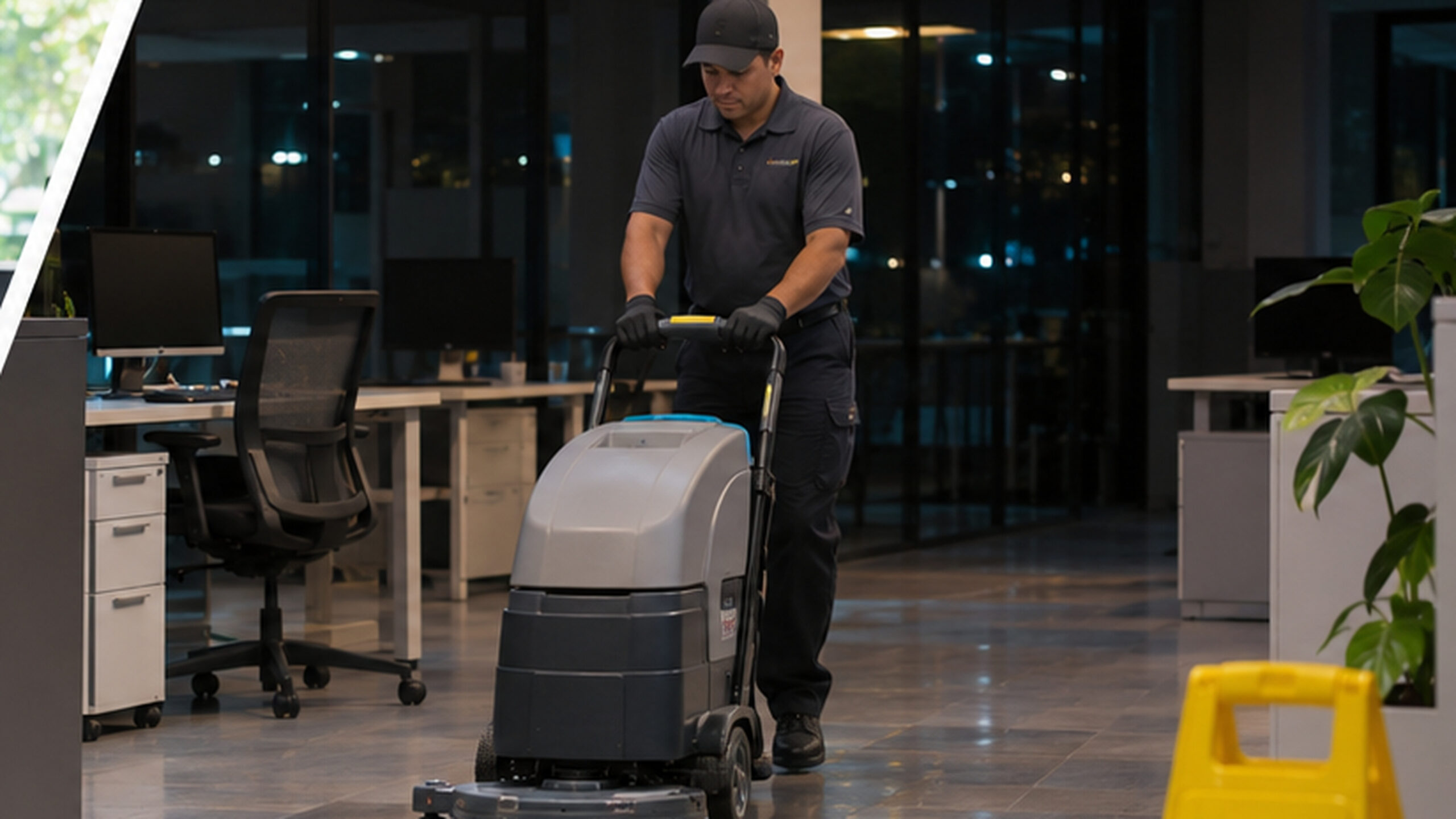
After-hours cleaning usually begins once employees and customers leave. Depending on the business, that may mean an evening shift, overnight work, or early-morning service before opening.
The crew can move through empty areas with fewer interruptions. This makes it easier to vacuum carpets, clean work areas, service restrooms, and mop suitable floors.
Some periodic tasks, such as carpet extraction or floor refinishing, may also fit an unoccupied window. These services often require separate scheduling and pricing because they involve additional equipment, drying time, or curing time.
“After hours” should reflect your building’s actual occupancy. If employees regularly work late, the cleaning plan needs to account for them rather than assume every room becomes empty at closing.
When Daytime Cleaning Makes More Sense
Daytime service offers the most value when a building needs attention before the next scheduled full cleaning.
Your Restrooms See Heavy Use
Customer-facing businesses can run through supplies quickly. Full bins, wet counters, and empty dispensers affect comfort even when the restroom received a thorough cleaning earlier.
A daytime schedule allows staff to check these areas at intervals based on actual use. We recommend matching those checks to busy periods rather than choosing an arbitrary time.
Your Business Needs Prompt Spill Response
A drink spill in a lobby or breakroom should not sit until an evening crew arrives. Daytime cleaners can help manage ordinary spills within their agreed duties.
Businesses still need an immediate reporting and area-protection process. Specialized hazards, including certain chemical or bodily-fluid spills, may require trained personnel and procedures beyond routine janitorial work.
You Need Direct Communication
Having cleaners present makes it easier to report a missed area or changing need. A facility manager can show the crew a problem instead of relying only on written messages.
Clear priorities remain important. Frequent last-minute requests can interrupt scheduled work and leave other areas unfinished.
When After-Hours Cleaning Is a Better Fit
After-hours service works well when cleaning would disrupt the activities that happen during business hours.
Employees Need Quiet Work Areas
Vacuuming near phone calls, meetings, or focused desk work can create distractions. Cleaning after staff leave reduces that conflict.
It also gives the crew easier access to shared areas. Employees should secure documents and personal items so cleaners can reach the surfaces included in the contract.
Customers Need Clear Access
Mopping a busy entrance or cleaning the only restroom can affect customer access. After-hours work gives the crew more freedom to clean these spaces.
The schedule must still provide enough time for floors to dry before people return. Closing the business does not remove the need for barriers, warning signs, and safe work practices.
Cleaning Requires Equipment or Extra Time
Larger floor machines and detailed cleaning can be difficult to manage around people. An unoccupied period may offer better access and fewer interruptions.
Before scheduling the work, confirm how long the area must remain unavailable. A short overnight window may not suit every treatment.
Compare the Schedules Against Your Building’s Needs
This comparison can help you identify the main trade-offs:
| Business need | Daytime service | After-hours service |
| Restroom upkeep during busy periods | Provides support while facilities are in use | Prepares facilities for the next day |
| Ordinary spill response | Available during agreed coverage hours | Requires a separate daytime response plan |
| Noise-sensitive work | Needs coordination around occupied areas | Allows noisy tasks after staff leave |
| Secure access | Can work while authorized staff are present | Requires entry, alarm, and lockup procedures |
| Detailed floor care | May require closing individual areas | Often easier, with adequate drying time |
When comparing janitorial services in San Diego, use your busiest areas and most disruptive cleaning tasks to guide the decision. The total building size alone will not tell you which schedule fits.
Consider Security and Building Access
After-hours cleaning requires a clear access plan. Decide who receives keys or access codes, which rooms remain restricted, and how the crew handles alarms.
Set written instructions for entry, lockup, and reporting an unsecured door. Identify an emergency contact who can respond during the cleaning shift.
Daytime service may reduce the need to give cleaners independent building access. However, occupied facilities still contain sensitive information and restricted areas.
We recommend clear boundaries for both schedules. Cleaners should know which desks they may wipe, which equipment they may touch, and which rooms require permission to enter.
Plan for Safe Products and Ventilation
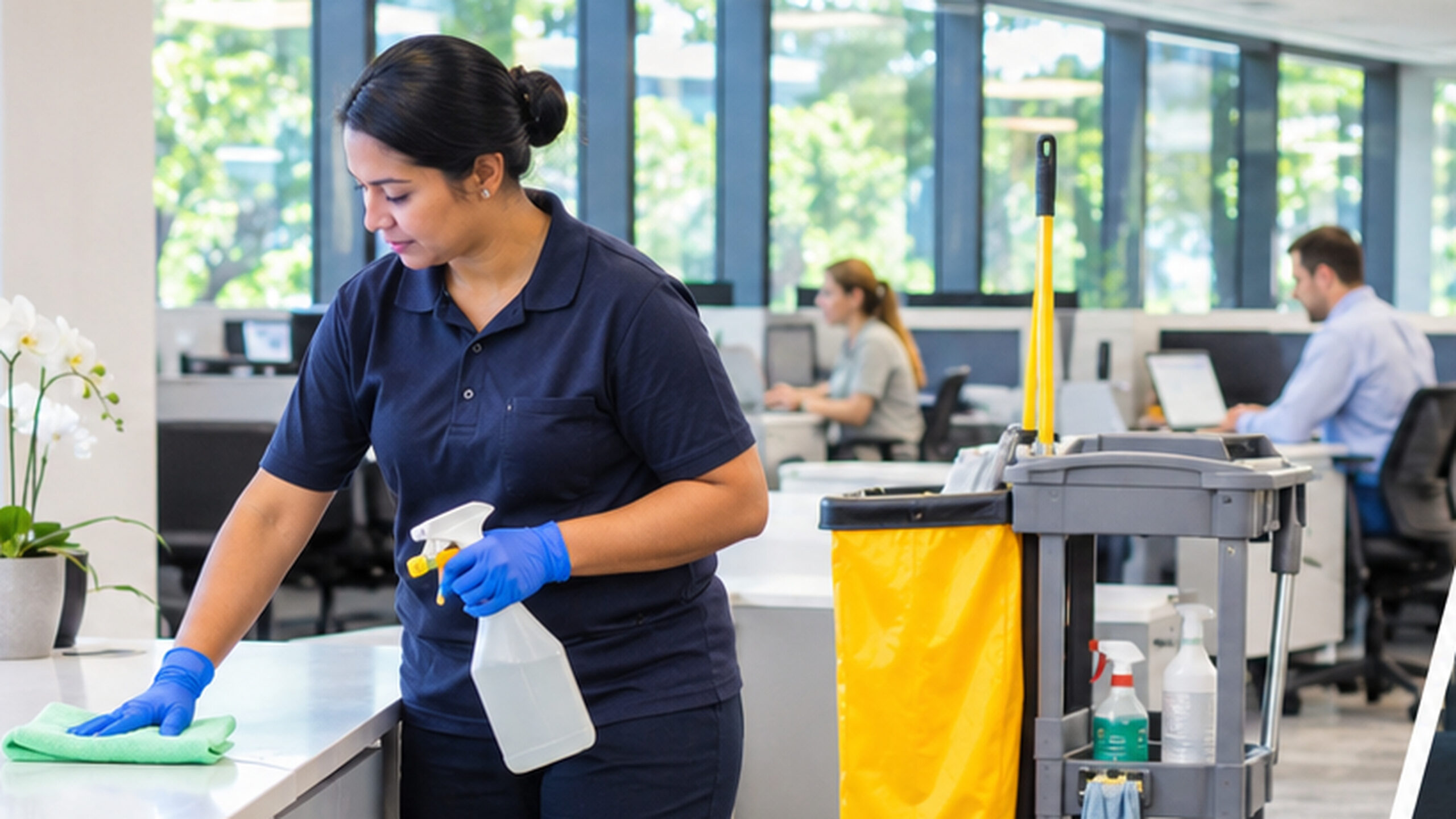
Cleaning while people are present requires attention to product use, airflow, and access. Strong odors can interrupt work, while wet floors can create hazards in busy walkways.
Nighttime service does not eliminate these concerns. Some buildings reduce ventilation after closing, so the cleaning schedule may need coordination with building management.
OSHA guidance emphasizes adequate ventilation, appropriate protective equipment, and worker training when using hazardous cleaning chemicals. Product labels and safety data sheets should guide handling and use.
Where disinfection forms part of the plan, the crew must follow the product’s required contact time. A rushed wipe between visitors may not complete the intended process.
Healthcare and other regulated facilities may need specialized protocols beyond a general commercial cleaning schedule.
Compare Cost by Scope, Not Just Shift
Neither daytime nor after-hours cleaning is always cheaper. Pricing depends on staffing hours, service frequency, building conditions, access arrangements, and the work included.
A day porter assigned for several hours costs differently from a brief midday restroom visit. After-hours pricing may reflect shift requirements, supervision, or building access restrictions.
Ask each provider to quote the same scope. Compare visit length, task frequency, supplies, periodic services, and response expectations.
For janitorial services in San Diego, a useful estimate explains what happens during each visit. A lower monthly price offers little value if essential tasks fall outside the agreement.
A Combined Schedule Can Solve Both Problems
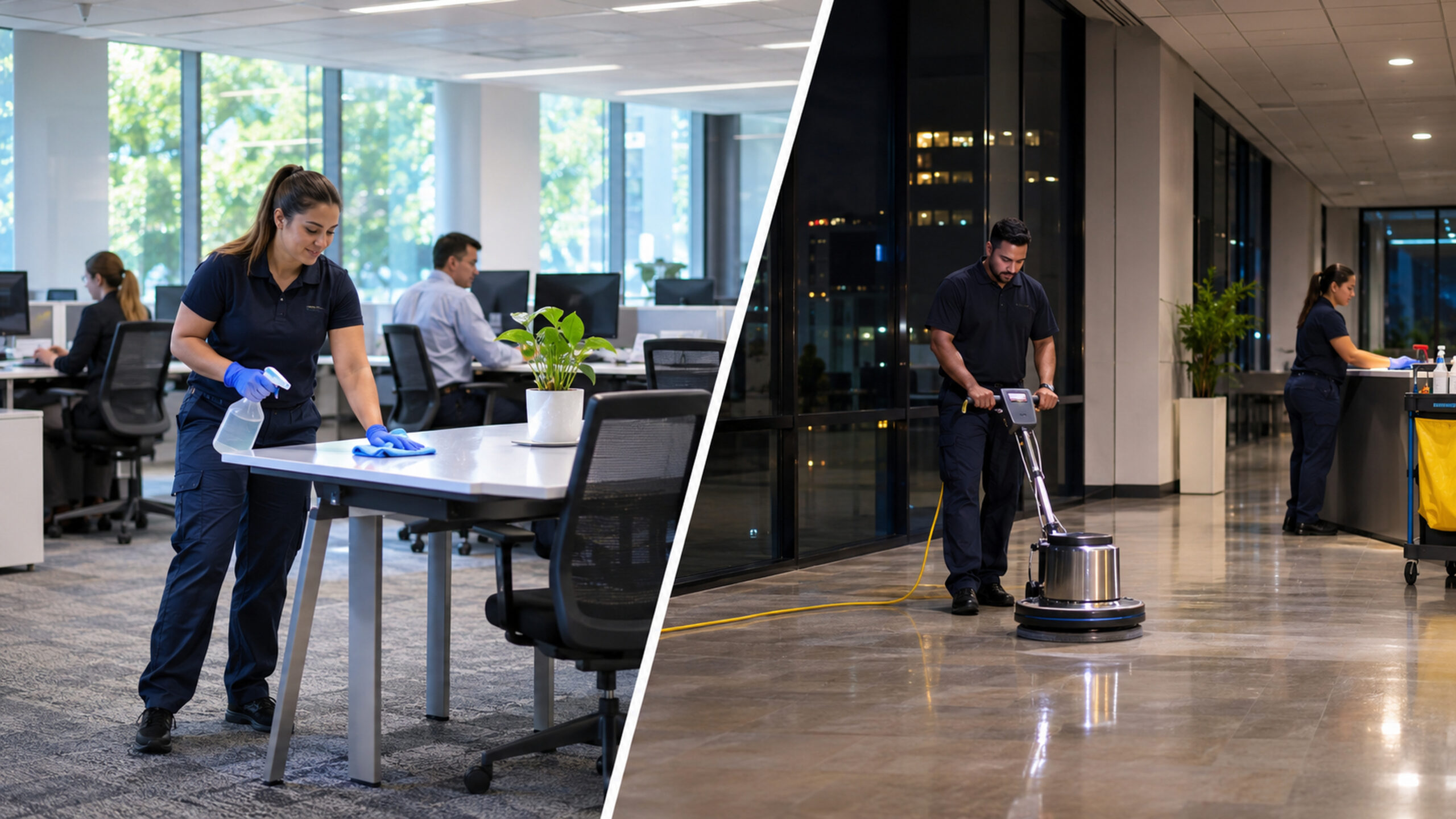
Some businesses need daytime upkeep and after-hours cleaning because they serve different purposes.
A busy office might use a midday visit for restroom checks and breakroom cleanup, followed by evening vacuuming and full restroom service. A retail space may need daytime attention near the entrance and detailed cleaning after customers leave.
We separate responsibilities clearly in a combined plan. That prevents one crew from assuming the other handled a task.
Review the results after implementation. Supply shortages, cleaning complaints, interruptions, and unfinished areas can show whether the schedule needs adjustment.
Choose a Schedule That Supports Your Working Day
Start with your actual operating hours, busiest periods, and cleaning needs. Then confirm the time, access, and staffing required to complete the work. A written task list helps keep expectations clear whether you choose daytime, after-hours, or combined service.
For businesses seeking janitorial services in San Diego, we build the schedule around the space and the people who use it. Contact JJ & CC Cleaning Services to discuss your facility’s needs and choose a cleaning plan that supports your daily operations.
Thanks for visiting Clearise Cleaning Services! Discover more helpful tips and expert cleaning insights by exploring our related categories.