If you’ve ever spilled pasta sauce on your shirt, you’ve probably asked yourself, how do I get tomato sauce out of clothing without ruining the fabric? It’s a common problem, and it can feel frustrating when a simple meal turns into a stubborn stain.
Tomato sauce stains are not like ordinary dirt marks. They are a mix of oil, strong red pigment, and mild acids. This combination makes them cling tightly to fabric fibers and often leave behind a faint orange or red shadow, even after washing.
The good news is that removing these stains is completely possible if you follow the right method. In this guide, you’ll learn a simple and effective approach that works for fresh stains, old stains, white clothes, colored fabrics, and even situations where you don’t have access to a washing machine.
Quick Step-by-Step Guide
| Step | What To Do | Why It Works | Pro Tip |
| 1 | Scrape off excess sauce | Prevents spreading deeper | Use spoon, not tissue |
| 2 | Rinse with cold water (back side) | Pushes stain out of fibers | Never use hot water |
| 3 | Apply dish soap | Breaks down oil layer | Leave for 10 minutes |
| 4 | Treat pigment (vinegar/peroxide) | Removes red color | Match method to fabric |
| 5 | Wash in cold water | Final cleaning step | Check before drying |
| 6 | Air dry & inspect | Avoids setting stain | Repeat if needed |
Understanding Tomato Sauce Stains: What You’re Really Dealing With
To remove a stain properly, it helps to understand what you’re dealing with. Tomato sauce is known as a “combination stain,” which means it contains more than one type of staining element.
First, there’s oil from ingredients like olive oil or butter. Oil binds easily to fabric and makes stains harder to remove with water alone. Second, there’s the red pigment called lycopene, which is what gives tomatoes their strong color. This pigment is what leaves behind that stubborn orange or red tint. Lastly, tomato sauce contains mild acids, which can slightly change how the fabric reacts to cleaning products.
This is why quick action matters. The longer the stain sits, the deeper it settles into the fibers. Heat makes the situation worse. If you use hot water or put the clothing in a dryer too soon, the pigment can become permanently set, making it much harder to remove later.
Immediate Action: What to Do Right After the Spill
When a tomato sauce spill happens, your first reaction can make a big difference. Acting quickly and correctly can prevent the stain from becoming permanent.
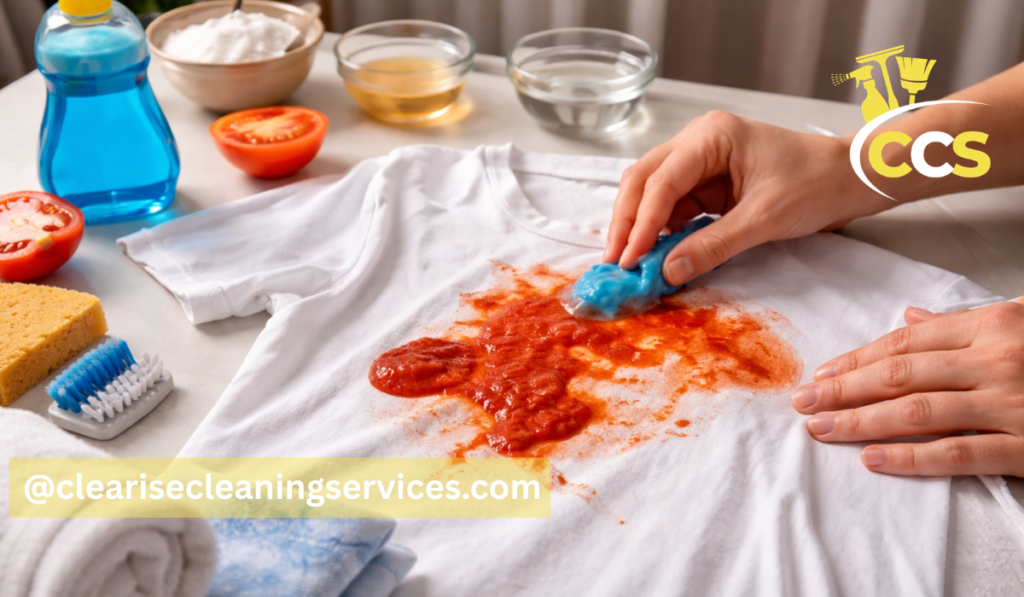
Start by gently scraping off any excess sauce using a spoon or the edge of a dull knife. It’s important not to rub the stain. Rubbing pushes the sauce deeper into the fabric and spreads it across a larger area.
Next, turn the clothing inside out and run cold water through the back of the stain. This helps push the sauce out of the fibers instead of forcing it further in. Cold water is essential here because heat can lock the pigment into the fabric.
One of the most common mistakes people make is wiping the stain with a tissue or using warm water right away. Both actions can make the stain worse. Taking a calm and careful approach in these first few minutes gives you a much better chance of removing the stain completely.
How to Get Tomato Sauce Out of Clothing Step by Step
If you’re wondering how to get tomato sauce out of clothing effectively, the key is to treat each part of the stain one step at a time.
After flushing the stain with cold water, apply a small amount of dish soap directly onto the affected area. Dish soap works well because it is designed to break down oils. Gently rub it into the fabric using your fingers or a soft brush, working from the outside of the stain toward the center. Let it sit for about ten minutes so it can fully break down the grease.
Once the oil has been treated, it’s time to focus on the pigment. For many fabrics, a mild cleaning solution can help lift the red color without damaging the material. At this stage, patience is important. Allow the cleaning agent to sit long enough to do its job before rinsing.
After treating both the oil and pigment, wash the clothing in cold water using a good-quality detergent. Before placing the item in the dryer, always check if the stain is completely gone. If any shadow remains, repeat the process while the fabric is still damp.
Quick Comparison Table (Based on Situation)
| Situation | Best Method | Key Ingredient | Time Needed |
| Fresh stain | Cold rinse + dish soap | Dish soap | 15–30 mins |
| No washing machine | Blot + soap + cold water | Dish soap | 10–15 mins |
| White clothes | Peroxide + soap | Hydrogen peroxide | 20–30 mins |
| Colored clothes | Vinegar solution | White vinegar | 30 mins |
| Old stain | Rehydrate + soak | Oxygen bleach | Several hours |
| Heat-set stain | Deep soak overnight | Oxygen bleach | Overnight |
How to Get Tomato Sauce Out of Clothes Without Washing
Sometimes you may not have immediate access to a washing machine, especially if you’re at work, traveling, or out at a restaurant. In these cases, you can still reduce the stain effectively.
Begin by blotting the stain gently with a clean cloth or tissue to remove as much sauce as possible. Avoid rubbing, as it can spread the stain. If water is available, use cold water to flush the area lightly.
Applying a small drop of dish soap can help break down the oils even without a full wash. Gently work it into the stain and then blot again with a damp cloth. This method won’t fully remove the stain, but it will prevent it from setting and make it easier to clean later.
This approach works best on fresh stains and is especially helpful as a temporary fix until you can properly wash the garment.
Removing Tomato Sauce Stains From White Clothes Without Fading
White clothes can be tricky because stains are more visible, but they also give you more flexibility with certain cleaning solutions.
After treating the stain with dish soap, you can use a mixture of hydrogen peroxide and dish soap to target the remaining pigment. Hydrogen peroxide acts as a mild bleaching agent, helping to lift the red color without damaging most white fabrics.
Apply the solution gently and let it sit for a short period. Avoid leaving it on for too long, as excessive exposure can weaken the fabric. Afterward, rinse thoroughly with cold water and wash as usual.
The key here is balance. While white fabrics allow stronger treatments, it’s still important to use them carefully to avoid fabric damage.
How to Remove Tomato Sauce Stain From Colored Shirt Safely
Colored clothing requires a more gentle approach to prevent fading or uneven patches.
After removing excess sauce and applying dish soap, you can use a mild vinegar solution to help lift the stain. Vinegar is effective at breaking down residues without harming most dyes.
Soak the stained area briefly and then rinse with cold water. Always test any cleaning solution on a small hidden area first to ensure it doesn’t affect the color.
This method helps remove the stain while keeping the original color of the fabric intact, which is especially important for darker or brightly colored garments.
How to Remove Old Tomato Sauce Stains From Clothing
Old stains are more challenging because they have already dried and bonded with the fabric fibers. However, they are not impossible to remove.
The first step is to rehydrate the stain by soaking the fabric in cold water. This softens the dried residue and makes it easier to treat. Once the stain is loosened, apply dish soap again to break down any remaining oils.
For deeper stains, a longer soaking period may be needed. Letting the garment sit in a cleaning solution overnight can help lift stubborn pigment that has settled into the fibers over time.
Consistency is important here. You may need to repeat the process more than once to fully remove an old stain.
How to Get Spaghetti Sauce Out of Clothes After Drying
When tomato sauce stains have already been exposed to heat, they become much harder to remove. This is because the heat locks the pigment into the fabric.
In this case, soaking the clothing in a solution with oxygen-based bleach can help break down the stain. This type of cleaner is gentler than traditional bleach and works well on both white and some colored fabrics.
Allow the garment to soak for several hours or overnight. After soaking, wash it again in cold water and check the results. While some stains may fade completely, others may leave a slight shadow depending on how deeply they were set.
How to Remove Tomato Stains From Clothes After Washing
Sometimes, a stain may appear to be gone during washing but becomes visible again after the fabric dries. This can happen when the pigment was not fully removed.
If this happens, avoid using heat again. While the fabric is still slightly damp, reapply dish soap or a suitable cleaning solution and repeat the treatment process.
It’s better to repeat the cleaning steps several times than to risk setting the stain permanently by drying it too soon.
How to Remove Tomato Sauce Stains From Plastic and Containers
Tomato sauce doesn’t just stain clothes; it can also leave marks on plastic containers and kitchen items.
The oily and pigmented nature of tomato sauce can cause plastic to absorb color, especially when heated. To remove these stains, washing with dish soap alone may not be enough.
A gentle soaking method combined with sunlight exposure can help reduce discoloration. Sunlight works as a natural bleaching agent, helping to fade the red pigment over time.
This approach is safe and effective for most plastic containers, including food storage items.
Common Mistakes That Make Tomato Stains Worse
Many people unknowingly make mistakes that turn a simple stain into a permanent problem. One of the biggest mistakes is using hot water too early. Heat can lock the stain into the fabric, making it much harder to remove.
Rubbing the stain instead of blotting is another common issue. This spreads the stain and pushes it deeper into the fibers.
Drying the clothing before checking the stain is also risky. Once the fabric goes through a dryer cycle, any remaining pigment may become permanent.
Using the wrong cleaning products can also cause damage or make the stain harder to remove. It’s always better to use simple, proven methods rather than harsh or unknown solutions.
Helpful Tips to Prevent Tomato Sauce Stains in the Future
While stains are sometimes unavoidable, a few simple habits can reduce the chances of them happening.
Being careful while eating and using napkins or protective clothing can help. Choosing fabrics that are easier to clean or less absorbent can also make a difference.
Acting quickly whenever a spill occurs is the most important step. The sooner you treat the stain, the easier it is to remove completely.
Conclusion
If you’ve been wondering how do I get tomato sauce out of clothing, the answer is simpler than it seems. The key is to act quickly, use cold water, and treat each part of the stain step by step.
By understanding how tomato sauce stains work and using the right methods, you can remove even stubborn marks without damaging your clothes. With a little patience and the right approach, you can handle these stains with confidence and keep your favorite outfits looking clean and fresh.
FAQs
Can I Use Hot Water To Remove Tomato Sauce Stains?
No, hot water should be avoided at the start. Heat can set the red pigment into the fabric, making the stain harder or even impossible to remove. Always begin with cold water for best results.
What If The Stain Is Still Visible After Washing?
If the stain remains, do not dry the clothing. Reapply dish soap or a suitable treatment while the fabric is still damp and repeat the process. Drying too early can permanently set the stain.
How Do I Get Tomato Sauce Out Of Clothing Without Washing It Immediately?
Blot the stain gently, rinse with cold water if possible, and apply a small amount of dish soap. This helps control the stain until you can properly wash the garment later.
Can Tomato Sauce Stains Be Removed After Drying?
Yes, but it’s more difficult. You’ll need to soak the garment in an oxygen-based cleaner for several hours or overnight. Some stains may fade instead of disappearing completely.
Is It Safe To Use Vinegar Or Hydrogen Peroxide On All Fabrics?
Not always. Vinegar is generally safe for colored fabrics, while hydrogen peroxide works best on white clothes. Always test on a small hidden area first to avoid damage or discoloration.
Disclaimer: This article is for general informational purposes only. Results may vary depending on fabric type and stain severity. Always check garment care labels and test cleaning methods on a small hidden area before full application.
Thanks for visiting Clearise Cleaning Services! Discover more helpful tips and expert cleaning insights by exploring our related categories.