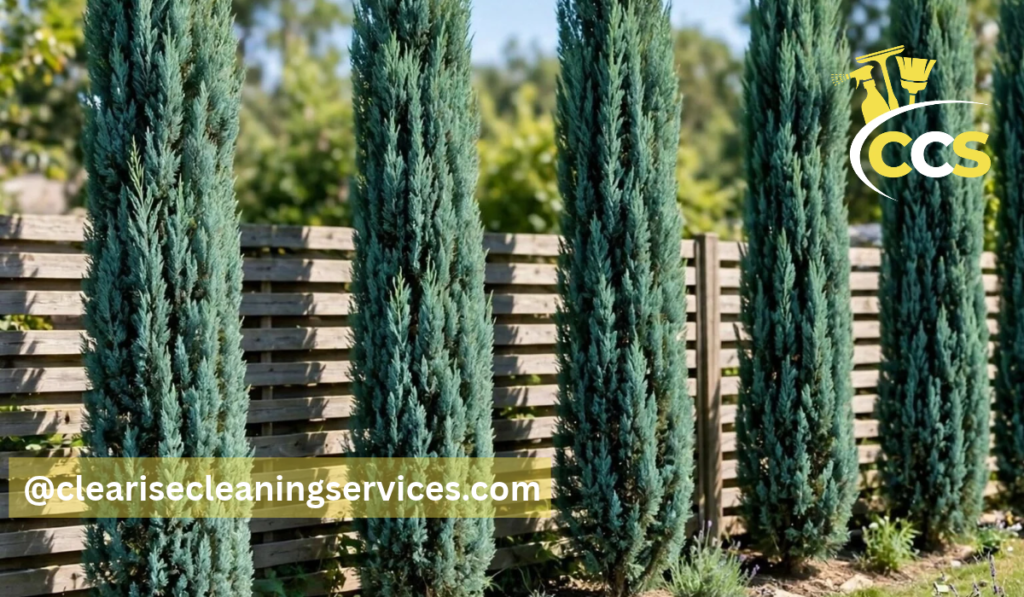
Some gardens have room for a wide hedge. Most do not. When the space between your patio and the fence is only a few feet wide, you need a tree that grows up instead of out. Juniper skyrocket conifers do exactly that. They rise like green rockets, tall and narrow, holding their colour all year and asking for very little water once they settle in. This guide covers how big they get, where they grow best, how to plant a screen, and how to keep them healthy for years.
What Juniper Skyrocket Conifers Are
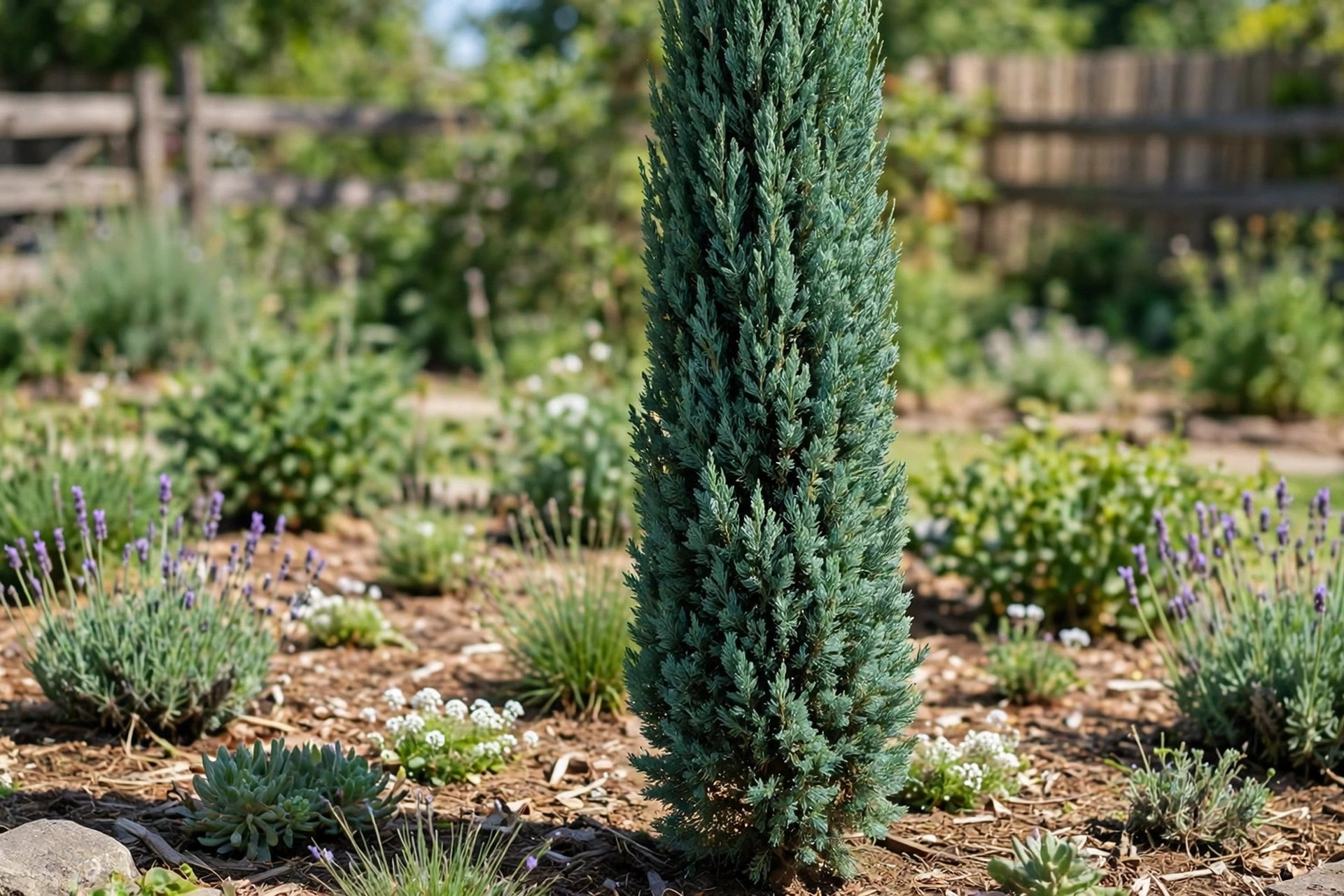
Juniper skyrocket conifers are a narrow, columnar cultivar of Rocky Mountain juniper, Juniperus scopulorum ‘Skyrocket’, with blue-green foliage, a rocket-like upright shape, and a mature size of about 15 to 20 feet tall and only 2 to 3 feet wide. They are evergreens, so they keep their foliage through winter, and they are grown as specimen trees, vertical accents, and privacy screens.
There is some confusion about the botanical name, because ‘Skyrocket’ is sometimes listed under Juniperus virginiana, the eastern redcedar, as well as under Juniperus scopulorum, the Rocky Mountain juniper. Most nurseries now list it as Juniperus scopulorum ‘Skyrocket’, and that is the name to look for on the label. Whatever the label says, the plant you are buying is the same narrow columnar juniper, and its garden behaviour is the same.
How Big Do Juniper Skyrocket Conifers Get?
Juniper skyrocket conifers typically reach 15 to 20 feet tall and 2 to 3 feet wide at maturity, growing about 12 to 24 inches a year in good conditions, though some sources list heights up to 30 feet in ideal settings over many years. The range matters, because mature size decides spacing, and spacing decides whether your screen works or your trees crowd each other.
Growth is fastest in the first few years after planting, when the tree is putting on height quickly. Expect roughly a foot or two of growth a year while the tree is young and well watered, slowing as it matures. A tree planted at three feet tall can reach ten feet within a few seasons, which is why Skyrocket is popular for new gardens that need privacy soon rather than in a decade. For a different kind of fast garden structure, read our guide to how to build a raised garden bed, which also starts with planning the space before you plant.
Where Juniper Skyrocket Conifers Grow Best
Juniper skyrocket conifers grow best in full sun, in well-drained soil, in USDA hardiness zones 4 through 9, and they tolerate drought, heat, cold, and urban pollution once established. They are a good match for dry gardens and for places where other evergreens struggle with poor soil.
Sun is the one thing they will not compromise on. They need at least six hours of direct sun a day, and they grow best in full sun all day. In shade they grow thin, lose their tight shape, and the lower foliage turns brown and sparse. Pick the sunniest spot you have, even if the soil is not perfect.
Planting Juniper Skyrocket Conifers Step by Step
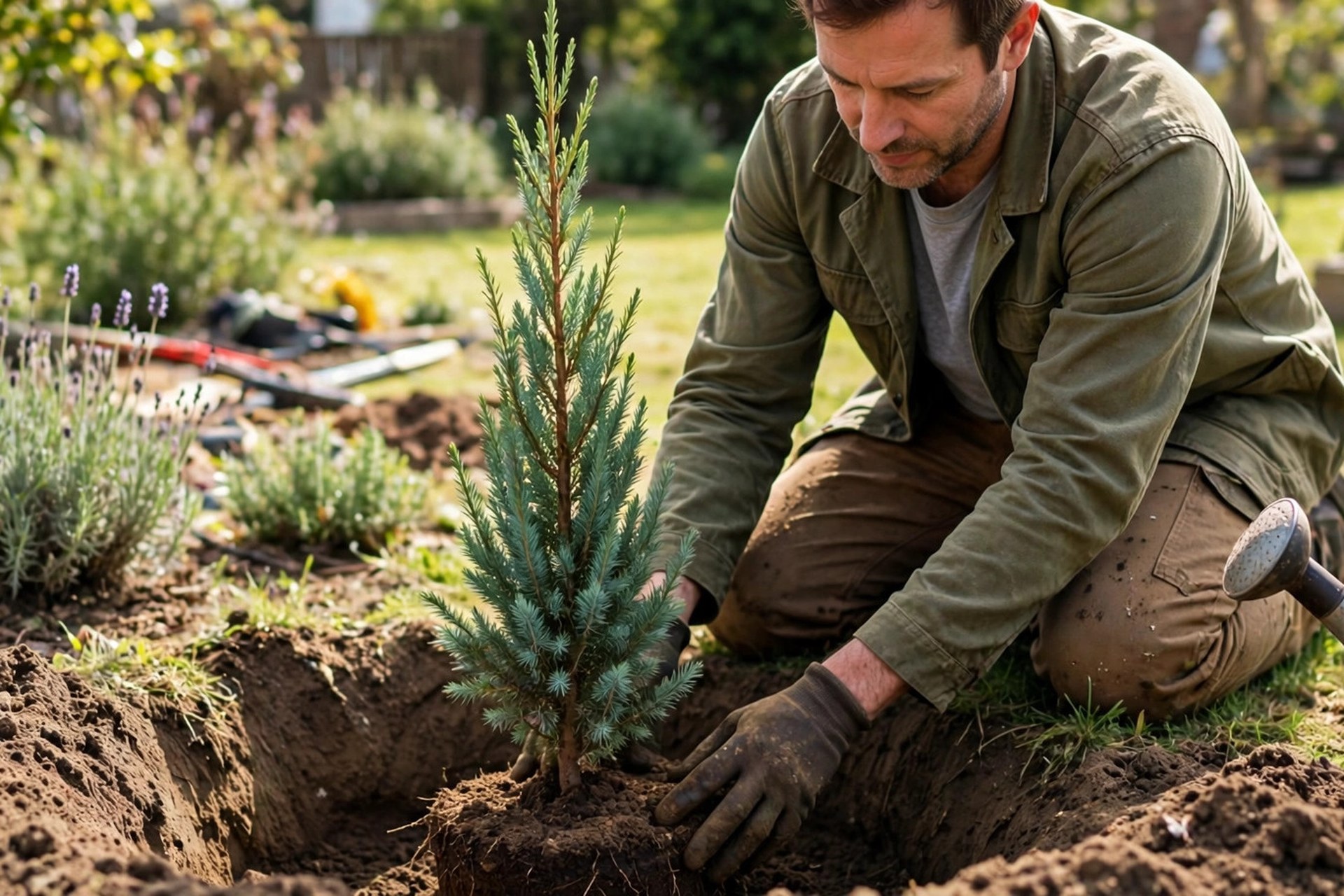
To plant juniper skyrocket conifers, dig a hole twice as wide as the root ball and no deeper, set the tree so the top of the root ball sits level with the ground, backfill with the soil you dug out, water deeply, and mulch around the base without piling mulch against the trunk. Plant in spring or early autumn, when the soil is warm and the tree has time to root before extreme weather.
- Pick a sunny, well-drained spot. Check that the site gets full sun and that water does not pool there after rain.
- Dig a wide, shallow hole. Make it twice as wide as the root ball and the same depth, so the roots spread sideways into loose soil.
- Set the tree at the right depth. The top of the root ball should sit level with the surrounding ground, not buried deeper.
- Backfill with native soil. Fill the hole with the soil you dug out, firming it gently. There is no need for rich compost in the hole.
- Water deeply right away. Soak the root zone slowly so water reaches the bottom of the root ball, not just the surface.
- Mulch around the base. Spread a layer of mulch a few inches deep, keeping it a few inches away from the trunk so the bark stays dry.
- Water regularly for the first two years. Water deeply when the soil dries out, then taper off as the tree establishes and shows new growth.
Stake the tree only if the site is very windy and the tree rocks in the ground. If you do stake it, use a loose tie and remove the stake after the first growing season, so the trunk learns to stand on its own. A tree that is staked for too long grows a weak trunk.
Watering and Feeding Through the Year
Water juniper skyrocket conifers deeply when the soil dries out during their first two years, then water only in long dry spells, because established trees are drought-tolerant and suffer more from overwatering than from dry soil. They need very little feeding, and most garden trees need none at all.
New trees need steady water while their roots grow out into the surrounding soil. Water slowly and deeply, so moisture reaches the full root zone, rather than sprinkling the surface every day. In the first summer, check the soil by pushing a finger a few inches down: if it is dry at that depth, water. After the first two years, the tree’s roots reach deeper, and you can leave it alone except in a long drought.
Pruning and Shaping a Narrow Column
Prune juniper skyrocket conifers lightly in late winter or early spring, removing only dead, damaged, or crossing branches, because heavy cutting into old wood does not regrow and can leave a permanent bare patch. The tree’s natural shape is already narrow and tidy, so most years it needs no shaping at all.
Start with the dead wood. In late winter, look for brown branches inside the tree and cut them back to healthy green growth with clean, sharp secateurs. Remove any branch that rubs against another, and any branch that sticks out sideways and spoils the column shape. Cut just above a side shoot or a green junction, never into bare brown wood with no green foliage, because juniper does not sprout new growth from old wood the way some shrubs do.
Juniper Skyrocket Conifers as a Privacy Screen
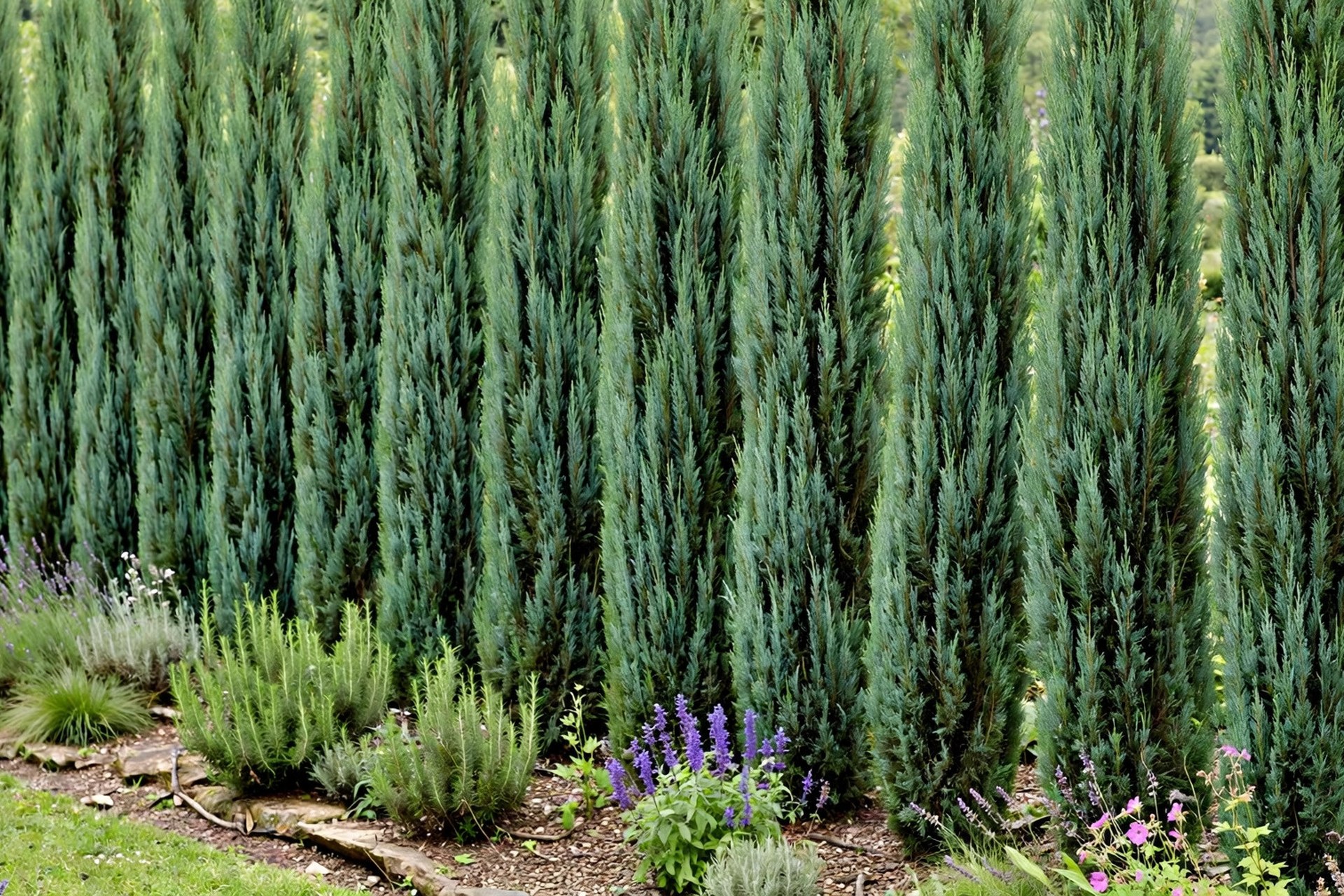
As a privacy screen, juniper skyrocket conifers work best planted in a straight or staggered row, a few feet apart, in full sun, where their evergreen columns block the view all year without taking up the width a hedge would need. They are one of the narrowest screening conifers available, which is why they suit small gardens and narrow side yards.
Think about what is behind the screen as well as what is in front of it. A row planted against a fence still needs air and light on its back side, or the rear foliage thins. Leave a gap between the trees and the fence, and avoid planting the row where a neighbour’s overhanging tree shades it. A screen that gets full sun on its face and some light on its back stays dense all the way down. If weeds compete with young trees for water, clear the ground around them, and our guide to how to get rid of weeds covers methods that will not harm the trees.
Common Problems: Browning, Bagworms, and Blight
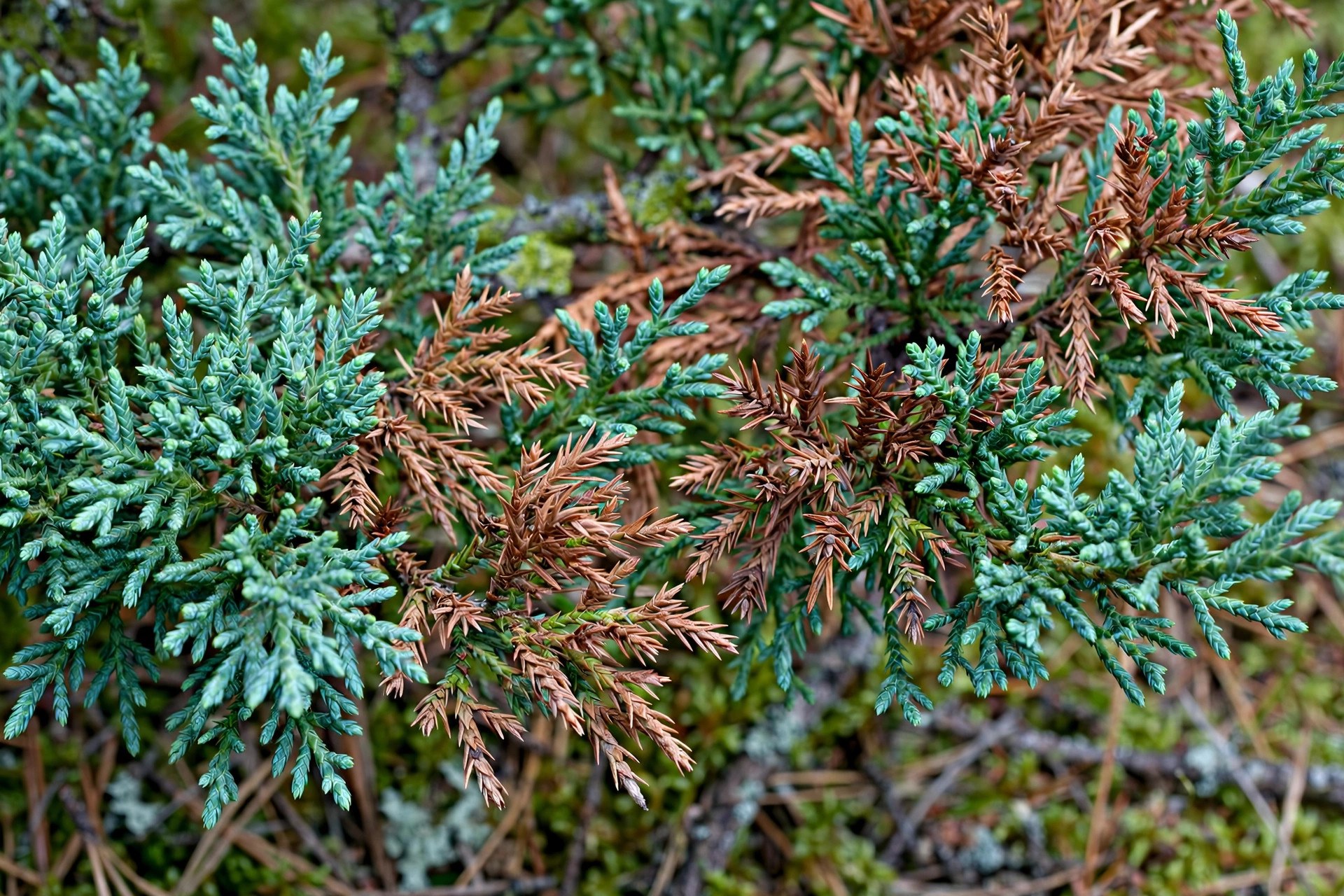
The most common problems for juniper skyrocket conifers are browning from drought or winter drying, bagworms that hang in small cone-shaped bags from the branches, and tip blight that turns shoot tips brown in wet springs, and all three are easier to prevent than to cure. Catch them early, and a tree usually recovers with simple care.
Browning is the most frequent complaint, and it has several causes. Winter drying browns the foliage on the windy side when the roots cannot take up water from frozen soil. Drought browns the lower branches first. Overwatering and poor drainage brown the whole tree from the inside out. Before you treat anything, check the soil moisture and the drainage, because the fix for dry soil and the fix for wet soil are opposites.
How Skyrocket Compares to Other Narrow Conifers
Compared with Blue Arrow juniper and Italian cypress, juniper skyrocket conifers are hardier in cold winters and more drought-tolerant than cypress, while Blue Arrow is a close rival with a slightly bluer colour and a similar narrow shape. The right choice depends on your climate and how much width you can spare.
| Feature | Skyrocket juniper | Blue Arrow juniper | Italian cypress |
|---|---|---|---|
| Mature height | 15 to 20 feet | 10 to 15 feet | 30 to 40 feet or more |
| Mature width | 2 to 3 feet | 2 to 3 feet | 3 to 5 feet |
| Hardiness zones | Zones 4 to 9 | Zones 4 to 9 | Zones 7 to 10 |
| Growth rate | Fast, 12 to 24 inches a year | Moderate to fast | Moderate to fast |
| Drought tolerance | High once established | High once established | Moderate |
| Cold tolerance | Very good | Very good | Poor in cold winters |
| Best use | Narrow screens, cold gardens | Narrow screens, blue accent | Tall screens, warm climates |
The table shows why Skyrocket is the safer pick for most of the United States. Italian cypress looks superb in a warm climate, but a hard winter can damage or kill it, and it grows far taller than most gardens need. Blue Arrow is the closest alternative, and the choice between the two often comes down to colour and availability at the nursery. If your winters are cold, pick a juniper. If your winters are mild and you want a taller screen, cypress is worth considering, but check your zone first.
Seasonal Care Calendar
Care for juniper skyrocket conifers by season: prune and feed lightly in spring, water new trees through summer, check for bagworms in autumn, and protect roots with mulch before winter, because each season has one job that keeps the tree dense and healthy. The calendar below turns that into a simple routine.
| Season | Main jobs |
|---|---|
| Spring | Prune out dead wood, feed lightly only if growth is poor, water new trees as growth starts |
| Summer | Water young trees deeply in dry spells, watch for bagworms and spider mites, keep mulch in place |
| Autumn | Pick off bagworm bags, water before the ground freezes, plant new trees early in the season |
| Winter | Leave the tree alone, brush off heavy snow that bends the column, check for wind-burned foliage in spring |
Winter care is mostly about leaving the tree alone. Heavy, wet snow can bend the narrow column or splay the branches, so brush it off gently with a broom if a storm leaves a thick load on the tree. Do not shake the tree hard, and do not use a metal tool that could cut the foliage. In spring, the brown tips left by winter drying can be pruned out, and the tree will fill in from the green growth below.
Where Not to Plant Skyrocket Juniper
Do not plant juniper skyrocket conifers in deep shade, in soggy soil, hard against a fence or wall, or under power lines you expect to stay clear, because shade thins the foliage, wet soil rots the roots, and a tree with no air around it loses its lower branches. A bad spot is harder to fix than a bad planting day.
Think about the mature tree, not the small plant in the pot. A tree that will reach 15 to 20 feet tall should not be planted under a low roof overhang, hard against a house wall, or where its top will grow into overhead wires. Leave room for the tree to grow straight, with air on all sides, and it will reward you with a dense, even column. If you need plants for a shady corner instead, read our guide to best places to buy plants online for sources that list shade-tolerant options clearly.
Growing Skyrocket Juniper in Containers
You can grow a Skyrocket juniper in a large container for a few years, but it will stay smaller than a garden-planted tree and need more water, because the roots dry out faster in a pot. Choose the largest pot you can move, with drainage holes, and fill it with a free-draining mix rather than heavy garden soil. A heavy pot, or one set inside a larger planter, stops the tall tree blowing over in wind.
Water a potted juniper whenever the top few inches of mix dry out, which in summer may be every few days, and feed it lightly in spring. Move the pot to a sheltered spot in very cold weather, because roots in a pot freeze harder than roots in the ground. After a few years, plant it out in the garden, where it can reach its full height.
Conclusion
Juniper skyrocket conifers earn their place in small gardens by growing up instead of out. At 15 to 20 feet tall and only 2 to 3 feet wide, hardy in zones 4 to 9, they give you a year-round privacy screen in a strip of ground where almost nothing else fits. Give them full sun, well-drained soil, and deep water for the first two years, then leave them largely alone. Prune lightly, watch for bagworms and browning, and plant them with room to breathe. Do that, and a row of Skyrockets will stand like a green wall for decades, asking for little and giving back privacy in every season.
Frequently Asked Questions
How fast do juniper skyrocket conifers grow?
Juniper skyrocket conifers grow about 12 to 24 inches a year in good conditions, reaching 15 to 20 feet tall in several years. Growth is fastest when the tree is young and well watered.
How far apart should I plant Skyrocket junipers for a screen?
For a solid screen, plant juniper skyrocket conifers a few feet apart in a straight row, leaving a gap behind them for air flow. The narrow crowns meet as the trees grow taller.
Why is my Skyrocket juniper turning brown?
Browning usually comes from drought, winter drying, or wet soil around the roots. Check the soil moisture and drainage first, then prune out dead wood in late winter.
Do juniper skyrocket conifers need a lot of water?
New trees need deep watering for the first two years. Established juniper skyrocket conifers are drought-tolerant and need water only in long dry spells.
Can I grow Skyrocket juniper in a pot?
Yes, for a few years, in a large pot with drainage holes and well-drained soil. A potted tree needs more water and will stay smaller than one planted in the ground.
Disclaimer: This article is provided purely for informational purposes. clearisecleaningservices.com only provides information about juniper skyrocket conifers and does not sell plants, offer landscaping or gardening services, guest posting, paid promotion, or advertising. Plant sizes and hardiness zones are general guidance for typical garden conditions; growth varies with climate, soil, and care.
Thanks for visiting Clearise Cleaning Services! Discover more helpful tips and expert cleaning insights by exploring our related categories.