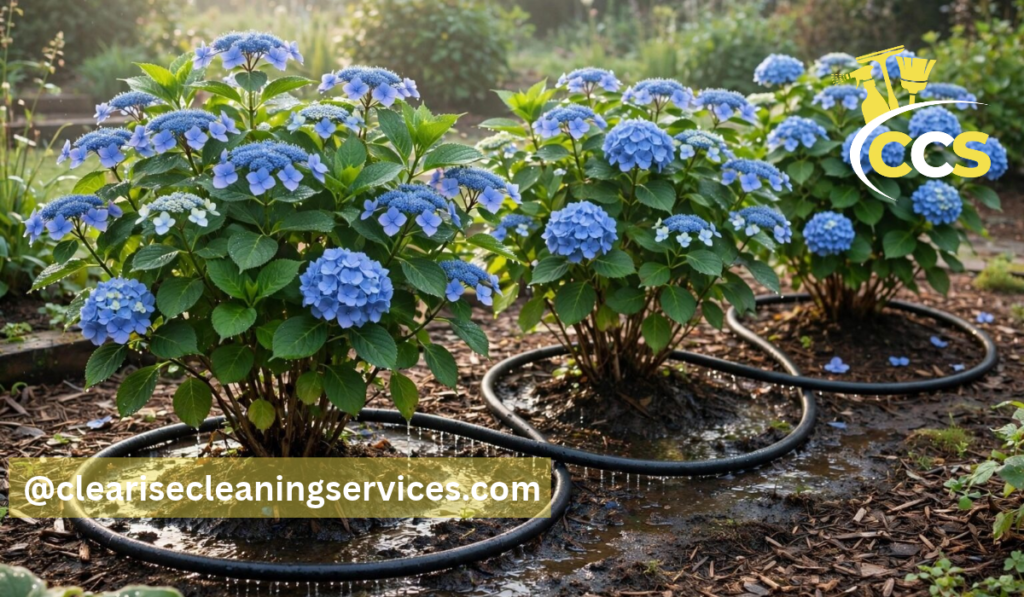
Hydrangeas are famous for big, showy blooms and for wilting dramatically on a hot afternoon. A soaker hose for hydrangeas solves the most common watering problem: water that lands on the leaves instead of reaching the roots. This guide shows you how to set one up, how long to run it, and how much water your shrubs really need.
What a Soaker Hose for Hydrangeas Actually Does
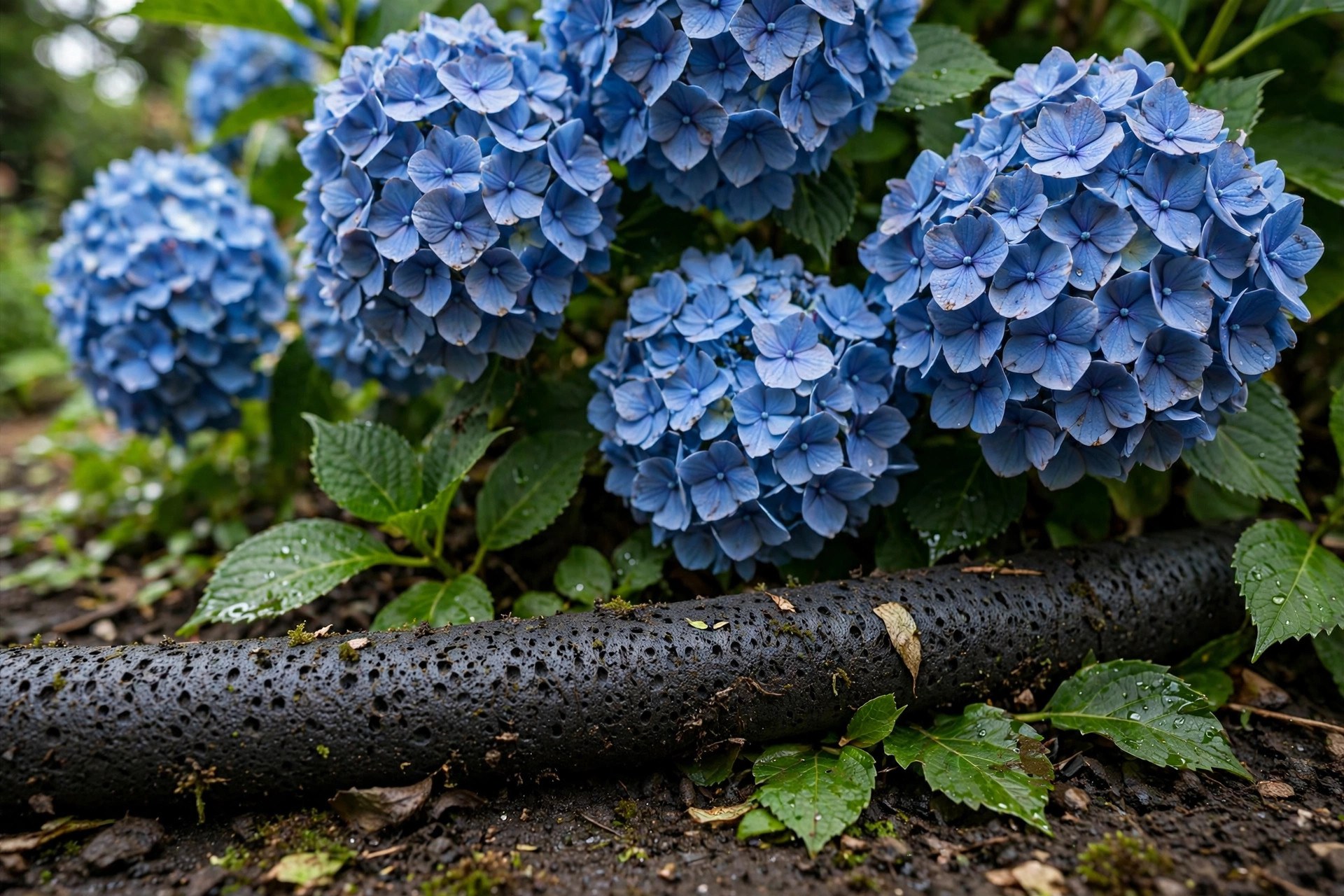
A soaker hose for hydrangeas is a porous hose that seeps water slowly along its whole length, wetting the soil around the roots evenly while the leaves and flowers stay dry. Unlike a sprinkler, which throws water into the air, a soaker hose works at ground level, so almost all the water goes where the plant can use it.
The hose is usually made from recycled rubber or a fabric-covered porous material, and it connects to an ordinary outdoor tap. Water pressure pushes water out through thousands of tiny pores, so the soil is soaked gently instead of being blasted. You lay the hose in loops or curves around the base of the shrub, turn the tap on low, and let it run.
Why Hydrangeas Love Slow, Deep Watering
Hydrangeas love slow, deep watering because their roots sit in the top layers of soil and dry out fast, so a long, gentle soak reaches them far better than a quick splash. Hydrangeas are not drought-tolerant shrubs, and they show stress quickly when the soil dries out, with drooping leaves and scorched leaf edges.
Deep watering trains roots to grow downward, where the soil stays moist longer. Shallow, frequent watering does the opposite: it keeps roots near the surface, where they dry out within hours on a hot day. A soaker hose delivers water at the pace the soil can absorb it, so moisture reaches several inches down. Wet leaves invite fungal problems, so watering at the base avoids that risk.
How Much Water Hydrangeas Need Each Week
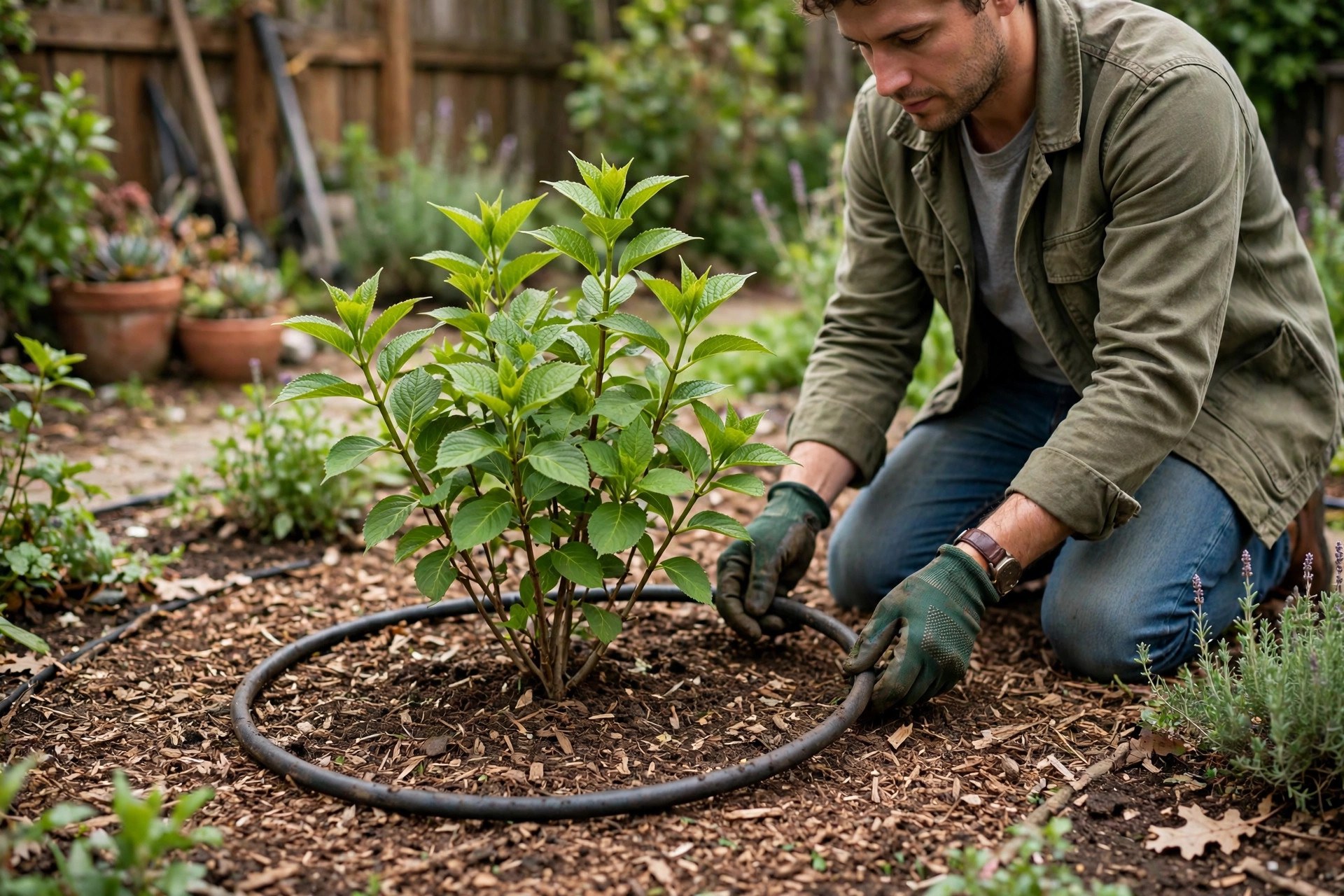
Established hydrangeas need about one inch of water per week from rain and watering combined, spread across two or three deep watering sessions rather than a little every day. In very hot or dry weather they need more, and newly planted shrubs need watering more often until their roots settle in.
One inch of water per week is the widely used rule of thumb for hydrangeas, given by garden sources such as Epic Gardening and the Hydrangea Library. Rainfall counts toward that inch, so check the weather first. In a heatwave, water deeply every two or three days.
Soaker Hose vs Sprinkler vs Hand Watering
A soaker hose beats a sprinkler and hand watering for hydrangeas because it puts water at the roots, keeps leaves dry, and wastes far less water to evaporation and runoff. Sprinklers are fast to set up but wet the whole plant, and hand watering is precise but hard to keep slow and even for long enough.
| Method | Water reaches roots | Leaves stay dry | Best for |
|---|---|---|---|
| Soaker hose | Yes, slow and even | Yes | Hydrangea beds and borders |
| Sprinkler | Partly, much is lost | No | Lawns, not shrubs |
| Hand watering | Yes, if done slowly | Mostly | One or two plants |
| Drip irrigation | Yes, very precise | Yes | Large or mixed beds |
A sprinkler can lose a large share of its water to wind and evaporation before it ever reaches the soil, and wet foliage raises the risk of fungal disease. Hand watering with a hose works well for a single shrub, but it is easy to rush and only wet the top inch of soil. Drip irrigation is the most precise option of all, but it costs more and needs emitters placed at each plant. For most home gardens, a soaker hose is the simple middle ground for watering plants at the roots.
How to Set Up a Soaker Hose for Hydrangeas
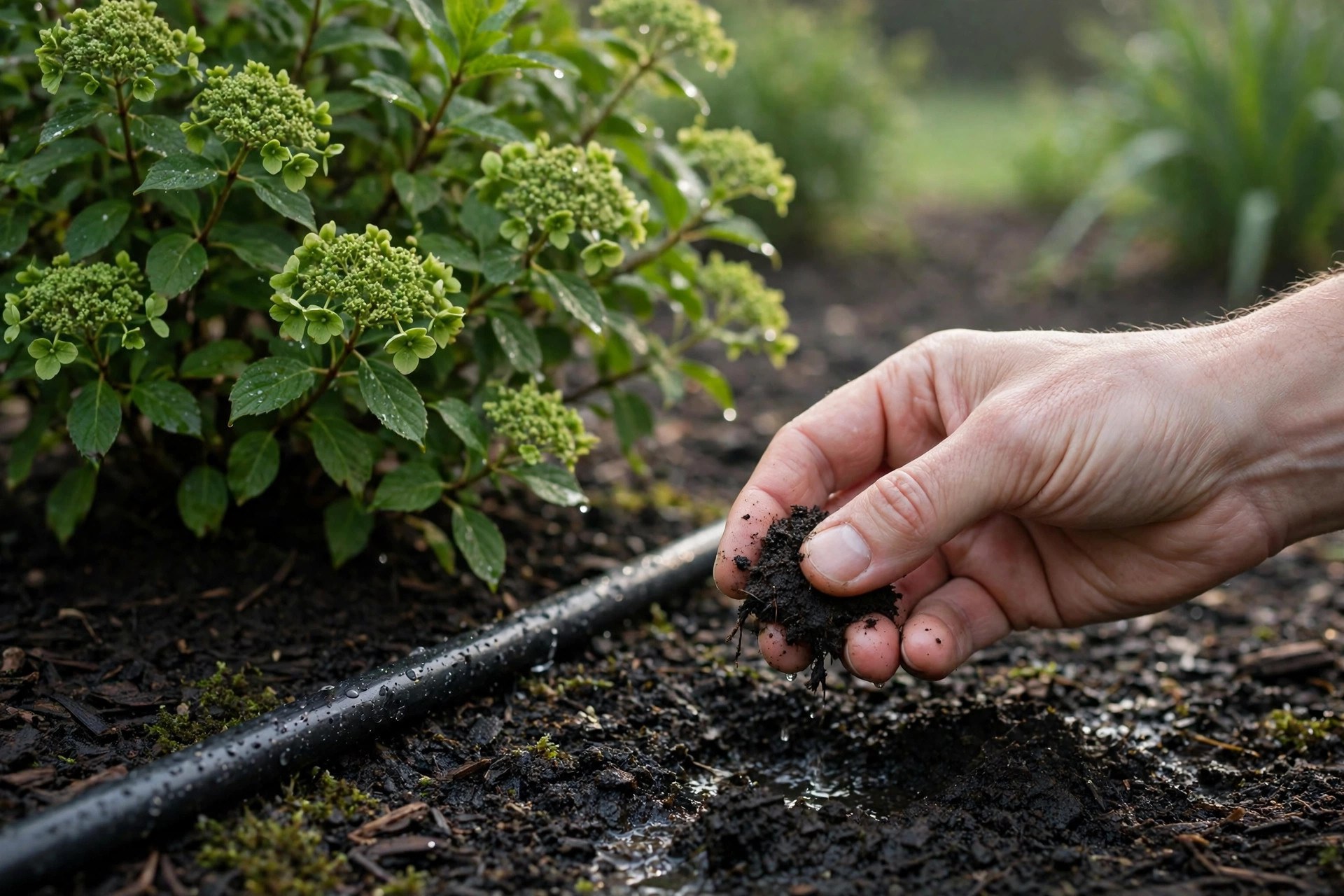
To set up a soaker hose for hydrangeas, lay the hose in a loop around the drip line of each shrub, keep it a few inches from the stems, cover it lightly with mulch, and connect it to the tap with a timer if you have one. The whole job takes under half an hour for a small bed.
Start by measuring the bed so you buy a hose long enough to loop around every shrub. Lay it in a gentle loop or serpentine pattern around the plants, following the drip line, which is the circle on the ground under the outer edge of the leaves. That is where the feeder roots are.
- Place the hose at the drip line. Keep the hose about 6 to 12 inches from the main stems, where the roots spread outward, and never coil it tight against the trunk.
- Leave the hose on the soil surface. Do not bury it deep, or the pores can clog with soil; a light mulch layer over the top is fine and hides the hose.
- Connect it to the tap. Use a washer in the coupling so it does not leak, and add a pressure regulator if your water pressure is very high.
- Turn the tap on low. Open it just enough that the hose seeps along its length instead of spraying at the far end.
- Check the wetting pattern. After ten minutes, look at the soil: it should be dark and damp in a band around the hose, not pooled or running off.
- Add a timer if you can. A simple tap timer stops the hose at the right time, so you do not overwater by forgetting it is on.
How Long to Run a Soaker Hose
There is no single run time that works everywhere, but a good starting point is 30 to 60 minutes per session, long enough for moisture to reach several inches deep into the root zone. Soil type, weather, and the size of the shrub all change the right run time, so check the soil rather than watching the clock alone.
After a run, push your finger two inches into the soil near the shrub. It should feel moist at that depth, not just damp on the surface. If the top is wet but the soil two inches down is dry, run the hose longer next time. If water is pooling on the surface or running off, the tap is open too far or the soil cannot absorb water that fast. As a habit, water in the early morning, when evaporation is low and the plant can take up water before the heat of the day.
Watering Newly Planted Hydrangeas
Newly planted hydrangeas need watering every two to three days in warm weather for the first few weeks, because their roots have not spread into the surrounding soil yet and dry out quickly. Once the shrub is established, you can move to the normal deep-watering routine of two or three times a week.
A new shrub has a small root ball sitting in a planting hole, and that root ball can dry out even when the soil around it feels damp. Run the soaker hose in a tight loop close to the root ball for the first few weeks, and check the soil with your finger every day or two. Mulch helps a great deal here: a layer two to three inches thick around the base keeps the soil cool and moist, but keep the mulch a few inches away from the stems so they do not stay damp and rot.
Watering Hydrangeas in Pots and Containers
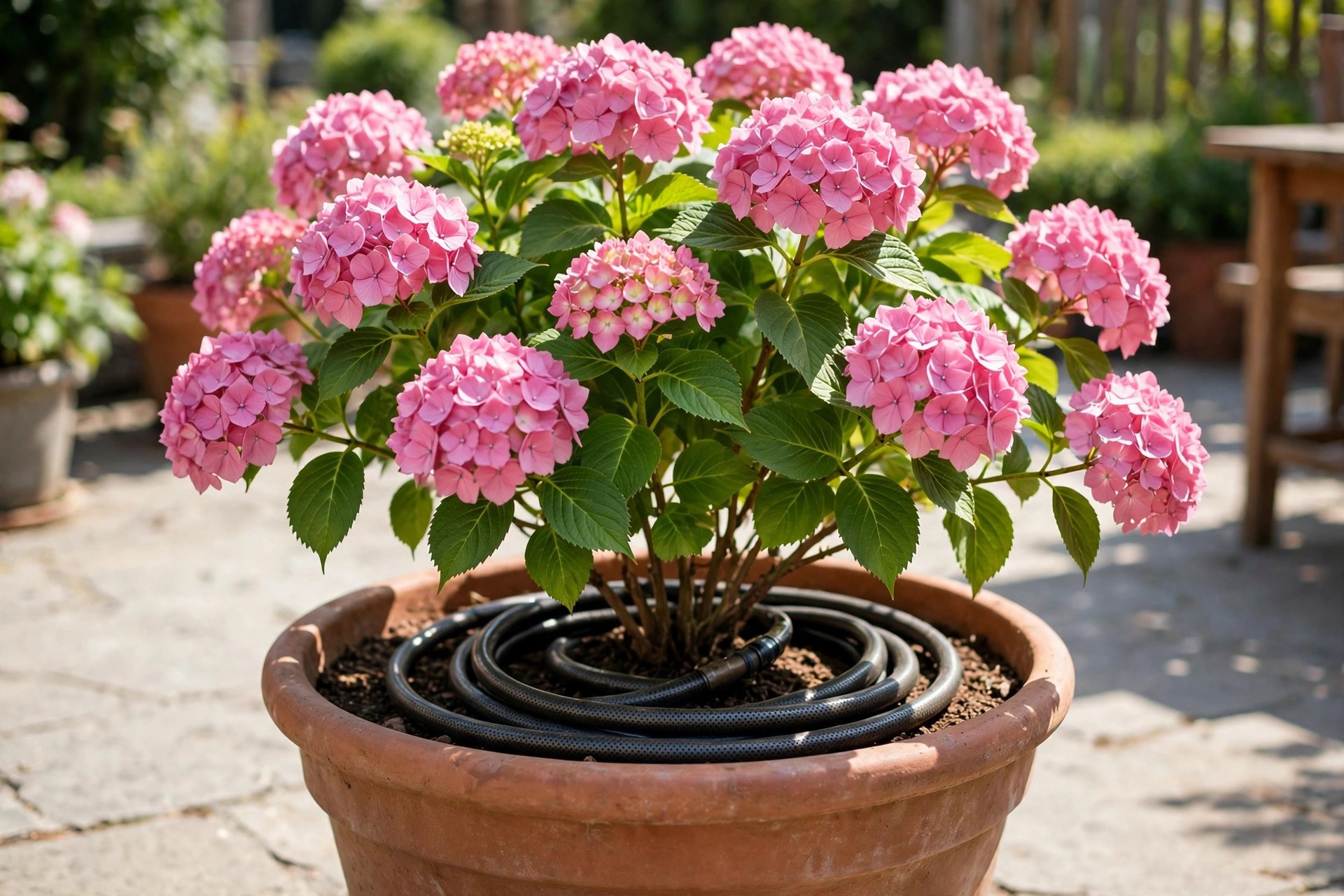
Hydrangeas in pots dry out much faster than garden shrubs, so check them daily in summer and water thoroughly until water drains from the bottom, then let the top inch dry before watering again. A short length of soaker hose coiled on the surface of a large container works well for potted hydrangeas too.
Pots hold a small volume of soil, and that soil heats up and dries out quickly in sun and wind. A potted hydrangea on a sunny patio may need water every day in midsummer, while the same shrub in the ground needs water only two or three times a week. When you water, soak the pot until water runs from the drainage holes, which tells you the whole root ball is wet. If you use a soaker hose on containers, coil a short length on the soil surface and run it on low for 15 to 20 minutes, checking that the water reaches the bottom of the pot.
Soaker Hoses in Clay, Sandy and Loamy Soil
Clay soil needs slow, longer soaker hose runs so water can soak in without pooling, sandy soil needs shorter but more frequent runs, and loamy soil sits happily in the middle. Knowing your soil type is the fastest way to get the run time right.
Clay soil holds water well but absorbs it slowly, so a fast flow will puddle and run off before it sinks in. Turn the tap down low and run the hose longer, and the water will creep down into the root zone. Sandy soil is the opposite: water drains through it quickly, so a long run wastes water below the roots. Shorter runs every two or three days work better there. Loam, the crumbly mix of sand, silt and clay that most gardeners hope for, absorbs water at a steady pace and holds it well.
Common Soaker Hose Mistakes to Avoid
The most common soaker hose mistakes are laying the hose against the stems, running the tap too hard, watering every day in small amounts, and forgetting the hose is on until the bed is flooded. Each of these is easy to fix once you know what to look for.
Laying the hose against the stems keeps the bark damp and invites rot, so keep it out at the drip line. Running the tap too hard turns a soaker hose into a sprinkler: water sprays from the far end and the near end stays dry. Open the tap only a quarter turn and check both ends. Daily light watering keeps only the surface wet and trains roots upward, so stick to deep soaks two or three times a week. Forgetting the hose is the classic mistake, and a cheap tap timer solves it. Do not water late at night, when wet soil suits slugs and fungal disease.
Caring for Your Soaker Hose Through the Seasons
Look after a soaker hose by flushing it once a month, draining it before winter, and storing it coiled in a shed or garage, because a frozen hose full of water can split and clogged pores stop it working evenly. A little care easily doubles the life of a cheap hose.
During the growing season, mineral deposits and fine soil can slowly clog the pores, so once a month run the hose with the end cap off to flush out sediment. Check the wetting pattern now and then: dry patches along the hose mean blocked pores, which you can sometimes clear by flexing the hose or rinsing it. In autumn, when watering stops, disconnect the hose, drain it completely, and coil it loosely for storage. Never leave a soaker hose full of water outside over winter in a cold climate, because the water inside freezes, expands, and cracks the hose. A hose stored dry and out of the sun will usually last several seasons. A raised garden bed also pairs well with a soaker hose under the mulch.
When a Soaker Hose Is Not Enough
A soaker hose is not enough when a hydrangea keeps wilting despite deep watering, which usually points to a deeper problem such as poor soil, root damage, or a spot that is too hot and sunny for the variety. In that case, watering more will not fix the plant, and the cause needs attention first.
Some hydrangea varieties, especially bigleaf types, struggle in full afternoon sun in hot climates, no matter how much water they get. If a shrub wilts every afternoon and never recovers, try shading it in the afternoon or moving it to a spot with morning sun and afternoon shade. Soil that drains too fast, such as very sandy soil with no organic matter, can also defeat a soaker hose, because the water passes straight through. Mixing compost into the top few inches of soil helps it hold moisture. If several shrubs wilt at once while the soil is moist, look at the roots before watering again, and keep weeds away, since weeds compete for every drop.
Conclusion
A soaker hose for hydrangeas takes the guesswork out of watering: slow, deep water and less waste. Aim for about an inch a week, run the hose long enough to wet the soil several inches down, and let the top inch dry between soaks. Water in the morning, and your hydrangeas will reward you with fuller leaves and bigger blooms.
Frequently Asked Questions
How often should I water hydrangeas with a soaker hose?
Water established hydrangeas two or three times a week with a soaker hose for hydrangeas, giving about one inch of water per week in total. New shrubs need watering every two to three days until their roots settle in.
How long should I run a soaker hose on hydrangeas?
Start with 30 to 60 minutes per session, then check the soil two inches down. If it is moist at that depth, the run time is right; if it is dry, run the hose longer next time.
Where should I place a soaker hose around hydrangeas?
Place the hose in a loop around the drip line, about 6 to 12 inches from the stems, where the feeder roots spread. Keep it off the stems and cover it lightly with mulch.
Can I leave a soaker hose on overnight?
No, avoid leaving it on overnight. Soil that stays wet all night invites slugs and fungal disease, and a forgotten hose can flood the bed. Use a tap timer instead.
Do hydrangeas need water every day?
No, garden hydrangeas do not need daily watering. Deep soaks two or three times a week are better than a little water every day, which only wets the surface and keeps roots shallow.
Disclaimer: This article is provided purely for informational purposes. clearisecleaningservices.com only provides information about soaker hoses and hydrangea watering and does not offer gardening services, guest posting, paid promotion, or advertising. Watering needs vary with climate, soil and variety, so observe your own plants first. If a shrub shows signs of disease, severe wilting, or root damage, contact a qualified local gardener or plant specialist.
Thanks for visiting Clearise Cleaning Services! Discover more helpful tips and expert cleaning insights by exploring our related categories.