
A big round table turns a meal into a conversation, because everyone can see everyone else and no one sits at the far end. A 72 round table is the largest round dining table most homes can sensibly hold, and it is a serious piece of furniture: six feet across, seating eight, and needing a room to match.
What a 72 Round Table Is
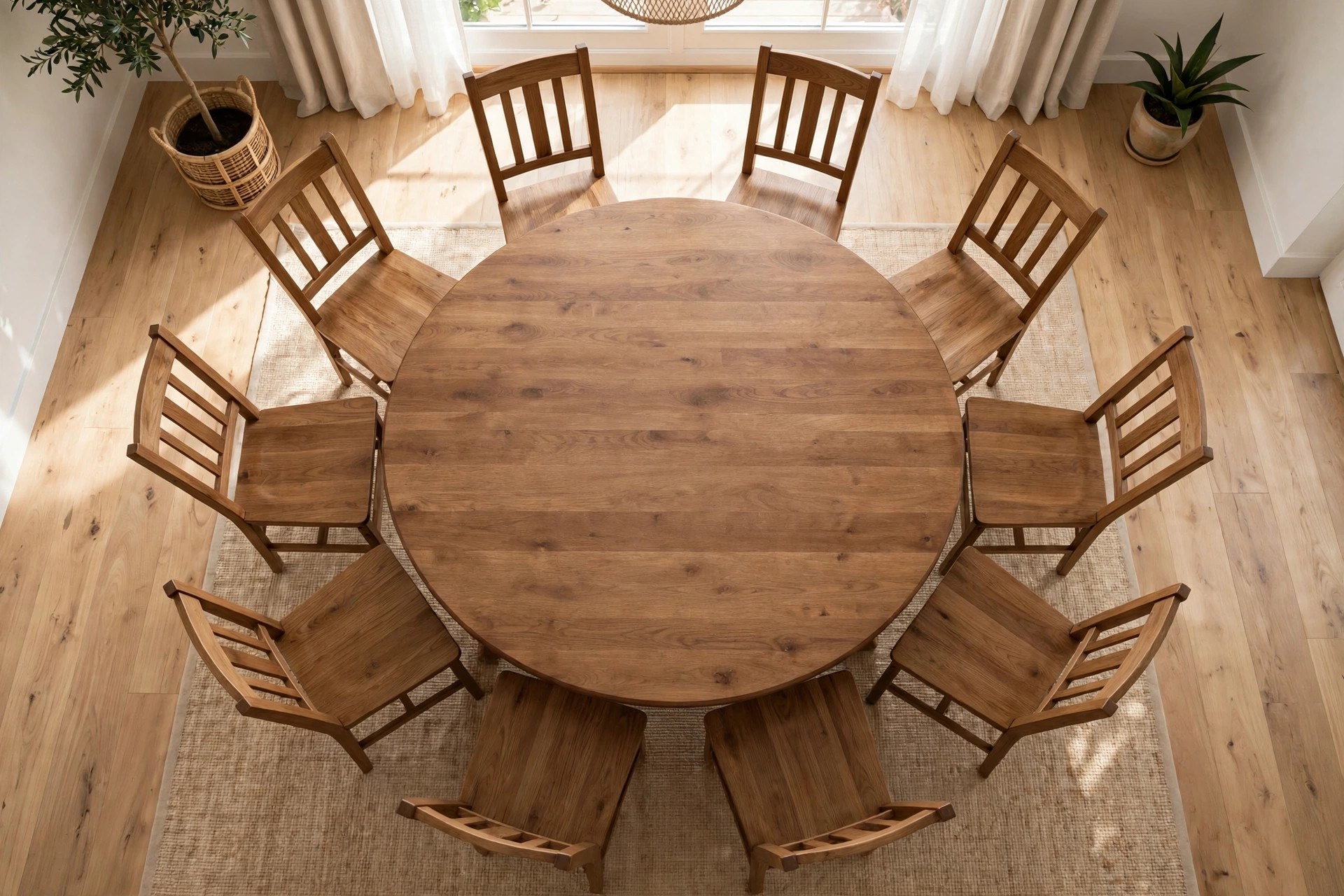
A 72 round table is a round dining table with a diameter of 72 inches, or six feet, making it one of the largest standard round tables sold for home dining rooms. It has no corners and no head of the table, so it suits large family meals, dinner parties, and rooms where people gather around food.
Round tables are measured by diameter, so a 72-inch table is six feet across, and its circumference of about 226 inches sets the seating capacity. Most stand at standard dining height, about 28 to 30 inches tall, with either a central pedestal base or four legs.
How Many People a 72 Round Table Seats
A 72 round table comfortably seats eight adults for a formal dinner, and it can fit nine or ten for a casual meal if you use armless chairs and keep place settings simple. Eight is the honest everyday number; ten is the occasional squeeze.
The trade rule is about 24 inches of table edge per person, enough for a full place setting and elbow room. A 72-inch table has a circumference of about 226 inches, and dividing by 24 gives room for slightly more than nine people, so eight diners each get about 28 inches. At ten, each person gets about 22.6 inches, which works for a casual meal but feels tight for a long formal dinner. Armchairs take up more width, so with armchairs all round, count on eight as the maximum; a standard bench height guide shows the same seat-spacing thinking for benches.
How Big a Room a 72 Round Table Needs
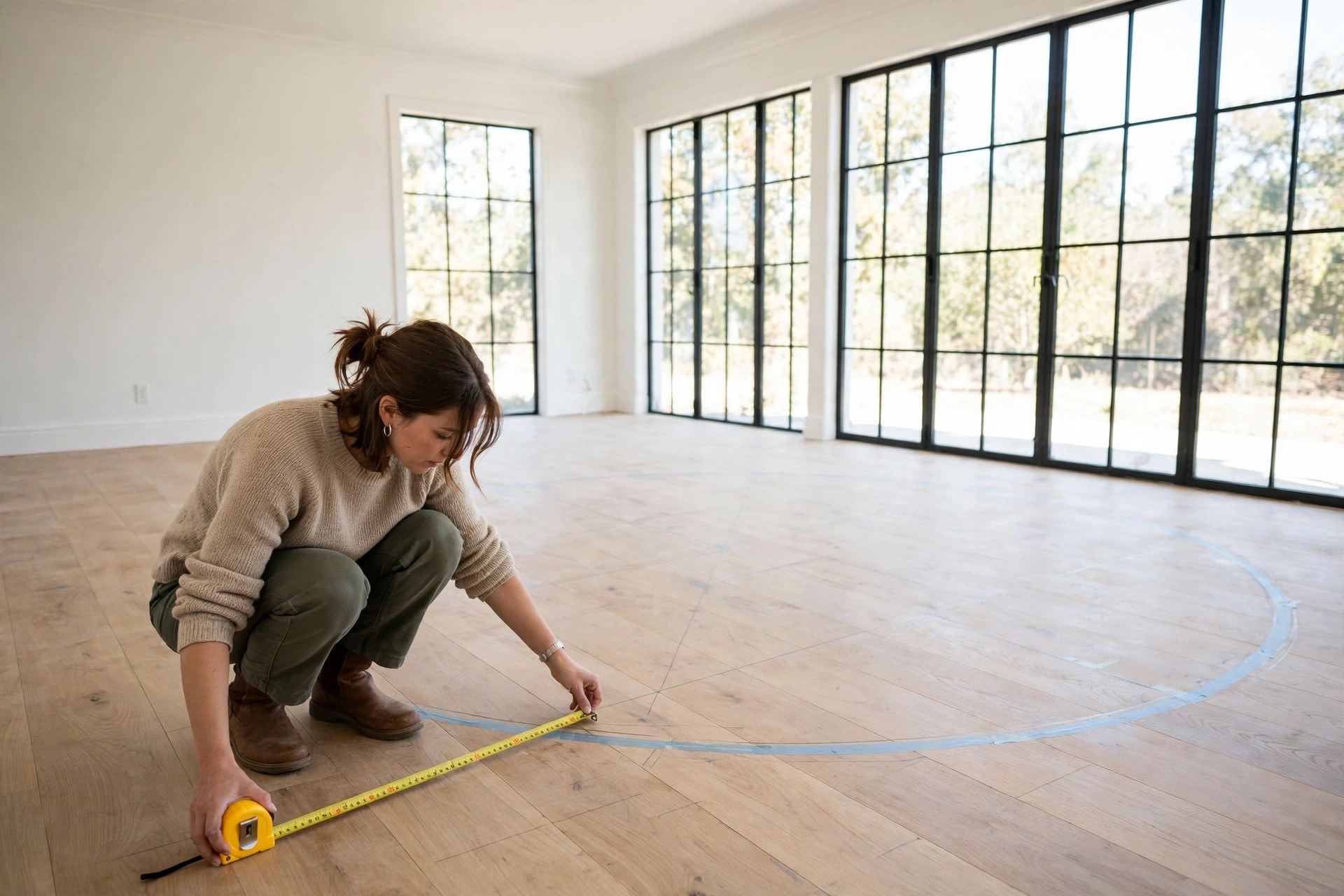
A 72 round table needs a room of at least 12 by 12 feet, which allows the standard 36 inches of clearance between the table edge and the walls or furniture on every side. A 14 by 14 foot room is better, because it allows the more comfortable 42 to 48 inches of clearance for walking behind seated diners.
The minimum of 36 inches is a tight fit, and nobody can walk behind a seated guest; with 42 to 48 inches, a person can pass behind a seated diner. The maths is simple: a 72-inch table plus 36 inches of clearance on each side needs 144 inches, or 12 feet, in both directions. Before you buy, measure the room in both directions, because a room 12 feet wide but only 11 feet deep will not hold this table; a rug should extend at least 24 inches beyond the table edge on all sides.
72 Round Table vs 60 and 48 Inch Round Tables
A 72 round table is the right size for eight people, while a 60-inch round table suits six to eight and a 48-inch round table suits four to six, so the jump from 60 to 72 inches is a jump from a family table to an entertaining table. Each size up adds two seats and needs a bigger room.
| Table diameter | Seats comfortably | Seats occasionally | Minimum room |
|---|---|---|---|
| 48 inches | 4–6 | 6 | 10 x 10 feet |
| 60 inches | 6–8 | 8 | 11 x 11 feet |
| 72 inches | 8 | 9–10 | 12 x 12 feet |
| 54 inches | 6 | 7 | 11 x 11 feet |
A 48-inch round table suits a breakfast nook or small apartment, seating four comfortably with room for two more at a push. A 60-inch table is the most common family size, seating six every day and eight when guests come. The 72-inch table needs a dedicated dining room or large open-plan space, and costs more for the table, eight or ten chairs, a bigger rug and a larger light. If you regularly host eight, the 72-inch table is worth it; if eight is a twice-a-year event, a 60-inch table with two spare chairs is smarter.
Table Height and Chair Fit
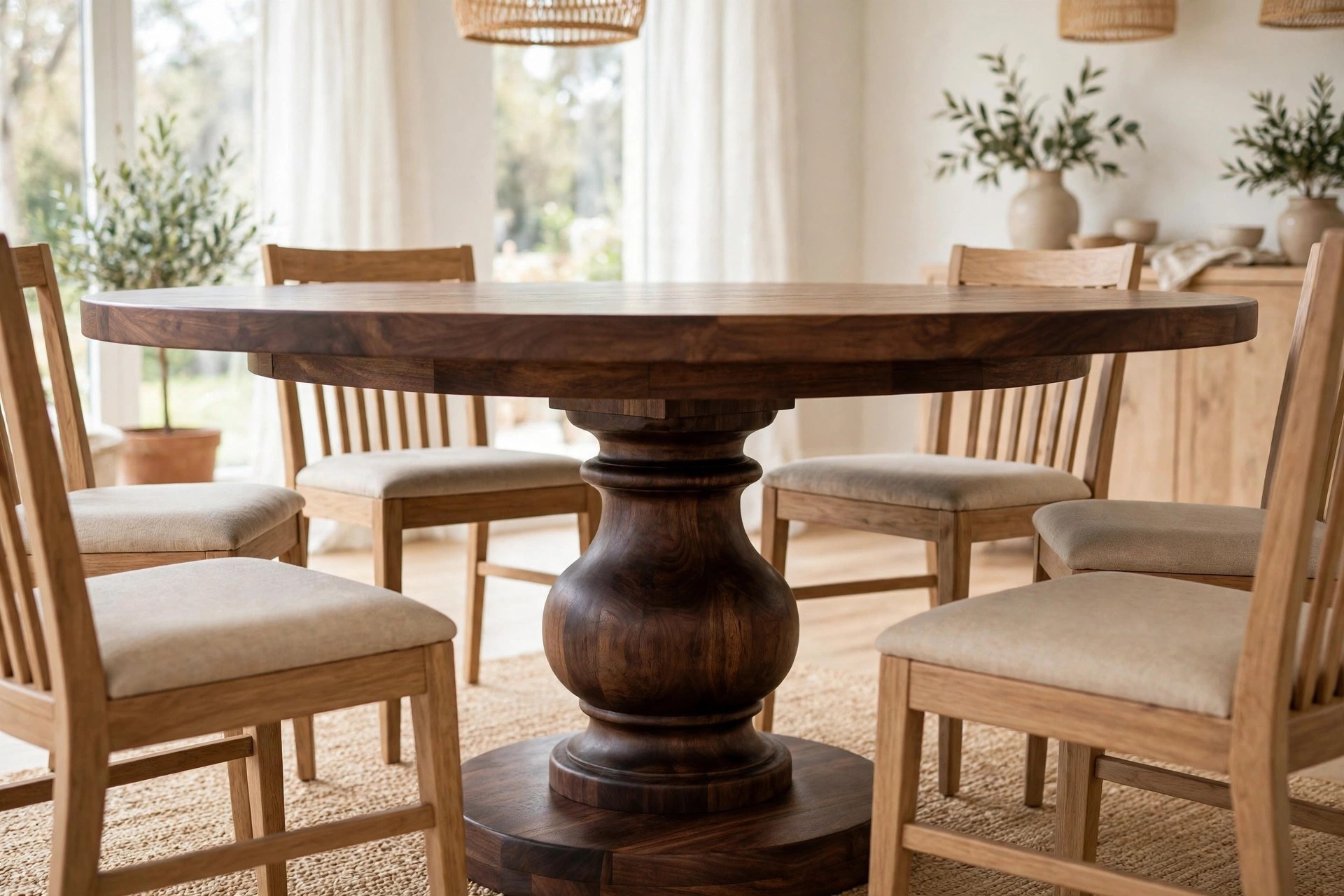
A standard 72 round table stands 28 to 30 inches tall, and dining chairs with a seat height of about 17 to 19 inches leave roughly 10 to 12 inches of legroom between the seat and the tabletop. That gap is what makes a chair comfortable for a long meal.
Before buying chairs, check the tabletop thickness and the height of any apron under the top, because a thick apron steals legroom. Sit in the chair at the table if you can: your thighs should slide under the top, and your elbows should rest naturally at table height. Armchairs need extra checking, because the arms must fit under the tabletop; measure the arm height against the underside before ordering a full set. A pedestal table has no legs to bump into, so chairs slide in further, which helps in a tight room; the same care applies to red oak furniture matching existing seating.
Pedestal Base vs Four Legs
A pedestal base suits a 72 round table better than four legs for most homes, because one central base leaves legroom free all the way around and lets you fit an extra chair anywhere, while four legs limit where chairs can go. Legs look traditional, but they get in the way at this size.
A pedestal base is a single central column, often with a wide disc or short feet at the floor, holding the top from the middle, so every seat has the same legroom. A pedestal table needs a heavy, well-made base, or the top can wobble when someone leans on the edge. Four legs give a rock-solid traditional look and are very stable, but each leg takes up a seat position, so an eight-person table may really seat only six comfortably. Some large round tables use a double pedestal or trestle base, combining stability with open legroom; whichever you choose, check the base is wide enough that the table does not tip.
Materials: Wood, Glass, Metal and Stone
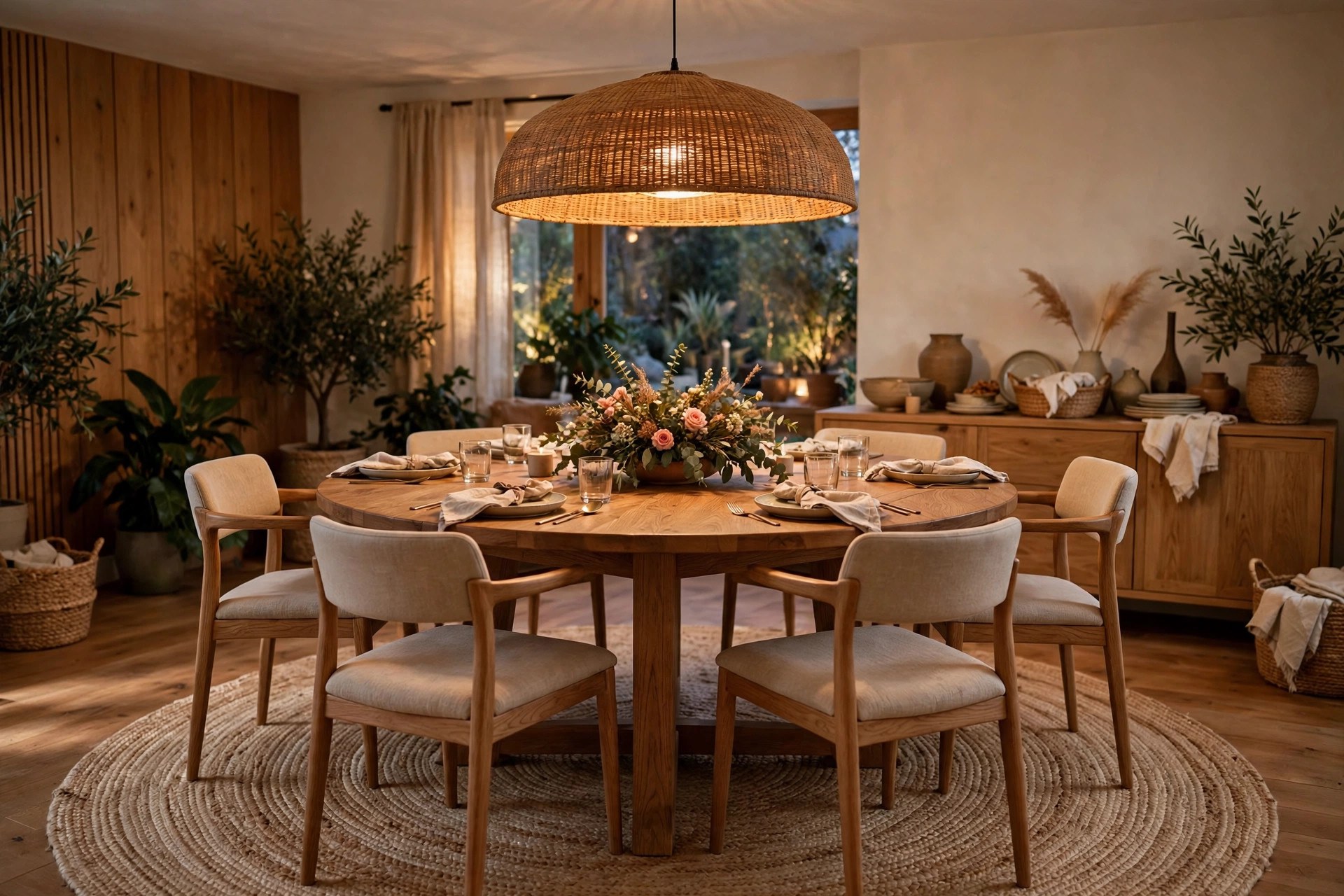
Wood is the most practical material, because it is warm, repairable, and suits most rooms, while glass shows every mark and stone is very heavy and hard to move. Choose the material for how you live, not just how it looks.
Solid wood and wood veneer are the most common choices. Solid wood can be sanded and refinished, but it needs coasters and protection from heat and water rings; veneer is lighter and resists warping, though deep scratches are harder to repair. Glass tops feel lighter and wipe easily, but they show fingerprints, dust and every crumb, and need a sturdy base. Metal bases with wood or stone tops are a modern option, strong and slim, but they can feel cold in a traditional room. Stone tops look impressive and resist heat, yet a 72-inch stone top is extremely heavy, needs a reinforced base, and can stain if not sealed. For a busy family home, a wood top with a durable finish is easiest to live with, and pairs well with home decor ideas using warm, natural textures.
Choosing Chairs for a 72 Round Table
Choose eight matching side chairs for a 72 round table, and add two armchairs at opposite sides only if the table is a pedestal style, because armchairs need more width and a four-leg table leaves them no room to slide in. Slim, armless chairs are the key to seating ten when you need to.
Most dining side chairs are 18 to 20 inches wide, and eight fit around a 72-inch table with room to spare. Armchairs are usually 22 to 24 inches wide, so eight armchairs around the same table would be a squeeze. Six side chairs with two armchairs at opposite points gives the table a hosted feel without crowding. Upholstered chairs suit long dinners but need stain protection, while wood chairs are easier to wipe and stack. Buy or borrow one chair first and test it at the table: check seat height, arm clearance, and whether the back clears a nearby sideboard when pulled out. Matching the chair finish to the table ties the set together, but a deliberate contrast, such as black chairs with a pale wood top, can look just as good.
Rugs, Lighting and Centrepieces
A rug under a 72 round table should be round or square and at least 10 feet across, so chairs stay on the rug when pulled out, and the light above it should hang 30 to 36 inches above the tabletop. These two choices make a large table feel settled instead of lost in the room.
A rug that is too small is worse than no rug, because chairs catch on the edge; a 10-foot round rug is the minimum, and 12 feet is better in a large room. A low-pile rug is the practical choice under a dining table, because food and crumbs are easier to clean from a flat weave than from a deep pile. A single pendant over a 72-inch table needs to be large, usually 30 to 36 inches across, or use two smaller pendants, because a small light over a big table looks lost. Hang the light 30 to 36 inches above the tabletop, so it lights the table without shining in diners’ eyes; centrepieces need scale too, so use a low, wide arrangement or a lazy Susan in the middle.
How to Measure and Plan Before You Buy
Before buying a 72 round table, measure the room, the doorways, and the delivery route, then mark the table’s footprint on the floor with tape and live with the outline for a few days. This routine catches the problems that a tape measure alone misses.
Delivery is the most overlooked step: a 72-inch tabletop does not bend, and may not fit through a doorway, around a stair turn, or into a lift, so ask the seller whether the top comes off the base and measure the route from the front door.
- Measure the room in both directions. Confirm at least 12 by 12 feet of clear floor, not counting sideboards and radiators.
- Mark the footprint with tape. Tape a 72-inch circle on the floor and place chairs around it.
- Check the walkways. Walk behind the taped chairs and confirm 36 inches of clearance.
- Measure the delivery route. Check doorways, hallways, stair turns and lifts against the tabletop size.
- Ask about assembly. Find out whether the top detaches and what tools are needed.
- Plan the rug and light. Confirm a rug of at least 10 feet across and a pendant sized for a 72-inch table.
Living with the taped outline for a few days shows whether the table blocks a walkway, and tape is far easier to move than a table is to return. The same careful planning helps when choosing finishes to match the rest of the room, including two tone kitchen cabinets in an open-plan space where the dining area meets the kitchen.
Moving a 72 Round Table Into Your Home
Moving a 72 round table takes two people, a clear route, and a plan to take the top off the base if it detaches, because a six-foot tabletop is wide, heavy, and impossible to steer through a doorway alone. Never try to carry it upright through a tight turn.
Remove the top from the base if the design allows it, and carry the two parts separately, on edge, with blankets protecting the surface and door frames. A 72-inch top carried on edge needs a doorway taller than 72 inches, which most are, but the turn into the room is where it usually sticks. If the top does not detach, use a furniture dolly and a second pair of hands; in a flat with stairs, hire professional movers. Once in place, level it before use: most pedestal bases have adjustable feet for uneven floors.
When a 72 Round Table Is Too Big
A 72 round table is too big when the room is under 12 by 12 feet, when you host eight people only once or twice a year, or when the table leaves less than 36 inches of clearance on any side. In those cases a 60-inch round table or an extending table is the better choice.
An extending round table seats six every day and opens to 72 inches or more when guests come, though the extra leaves need storage. A 60-inch round table seats six comfortably and eight at a push, and fits rooms a 72-inch table would overwhelm; a rectangular table suits a long, narrow room better than a circle. The honest test is the taped outline: if you keep bumping into it, or the chairs block the walkway to the kitchen, the table is too big, however much you like it.
Conclusion
A 72 round table seats eight in comfort and ten at a push, and it needs a room of at least 12 by 12 feet with 36 inches of clearance all round. Choose a pedestal base for free legroom, match the material to your household, and measure the room and delivery route before you order.
Frequently Asked Questions
How many people can a 72 round table seat?
A 72 round table seats eight adults comfortably for a formal dinner, and it can fit nine or ten for a casual meal with armless chairs and simple place settings.
What size room do I need for a 72 round table?
You need a room of at least 12 by 12 feet, which gives 36 inches of clearance on every side. A 14 by 14 foot room is better, allowing 42 to 48 inches for easy movement.
What size rug goes under a 72 round table?
Use a round or square rug at least 10 feet across, so chairs stay on the rug when pulled out. A low-pile rug is easiest to clean under a dining table.
Is a pedestal or four-leg base better for a 72 round table?
A pedestal base is usually better, because it leaves legroom free all the way around and lets you seat someone anywhere. Four legs are stable but block some seat positions.
Can a 72 round table fit through a standard doorway?
Often not in one piece. Measure the delivery route first and ask whether the top detaches from the base, because a six-foot tabletop needs a clear, wide path and usually two people to carry it.
Disclaimer: This article is provided purely for informational purposes. clearisecleaningservices.com only provides information about dining tables and home furniture and does not offer furniture sales or delivery services, guest posting, paid promotion, or advertising. Sizes and clearances are general guidelines, so measure your own room and doorways before ordering. If a table is very heavy or the delivery route is tight, hire professional movers rather than risking injury or damage.
Thanks for visiting Clearise Cleaning Services! Discover more helpful tips and expert cleaning insights by exploring our related categories.