How can I remove hard water stains from glass without damaging the surface? This is a common question for anyone dealing with cloudy shower doors, spotted windows, dull car glass, or glass doors that no longer look clean even after washing. Hard water stains are the white, chalky, or cloudy marks left behind when water dries on glass and leaves minerals behind.
These stains often appear on glass windows, glass shower doors, car glass, and glass doors because water sits on the surface and slowly evaporates. The longer the minerals stay there, the harder they become to remove. Fresh spots may come off with a simple vinegar spray, while older stains may need baking soda paste, a commercial cleaner, or careful scraping.
The safest method depends on how stubborn the stain is. The goal is to remove the mineral buildup without scratching the glass or making the surface look worse.
Quick Guide Table
| Stain Type | Best Method | Best For |
| Light water spots | Vinegar spray | Windows, shower glass, glass doors |
| Stubborn cloudy marks | Baking soda paste | Older mineral buildup |
| Heavy crusty stains | Commercial descaler | Severe hard water deposits |
| Thick mineral layer | Razor blade with care | Flat, uncoated glass only |
| Future stains | Squeegee and dry glass | Daily prevention |
Step-by-Step Guide
- Spray vinegar and water on the stained glass.
- Let it sit for 15–30 minutes.
- Wipe gently with a microfiber cloth.
- Use baking soda paste for stubborn marks.
- Rinse with clean water.
- Dry immediately with a squeegee or towel.
Why Hard Water Stains Stick to Glass
Hard water contains minerals, mainly calcium and magnesium. When water lands on glass and dries, the water disappears but the minerals remain. At first, these marks may look like light water spots, but over time they can turn cloudy, rough, or crusty.
Fresh hard water stains are easier to clean because the minerals have not fully bonded to the glass. Older buildup is different. It can become thicker and harder, especially on shower glass where soap scum mixes with minerals. This is why some glass looks foggy even after normal cleaning.
Understanding this helps you choose the right cleaning method. Light stains need a mild acidic cleaner, while stubborn buildup may need gentle scrubbing or a stronger product.
Best Supplies to Use Before You Start
Before cleaning, gather simple supplies that are safe for glass. White vinegar is one of the best starting options because it helps loosen mineral deposits naturally. Baking soda is useful when you need a gentle scrub for tougher marks. A microfiber cloth helps clean without leaving scratches, while a non-scratch sponge can remove buildup without damaging the surface.
A squeegee is also important because drying the glass properly prevents new spots from forming. If you plan to use a stronger commercial cleaner, wear gloves and make sure the area has good airflow. This is especially important in bathrooms or enclosed spaces.
Avoid rough tools at the beginning. Glass can scratch if you use harsh pads, steel wool, or aggressive pressure.
Vinegar Spray Method for Light Glass Stains
The vinegar spray method is usually the best first step for light to moderate stains. White vinegar contains natural acid that helps break down calcium and magnesium deposits. It works well on glass windows, glass shower doors, and regular glass doors.
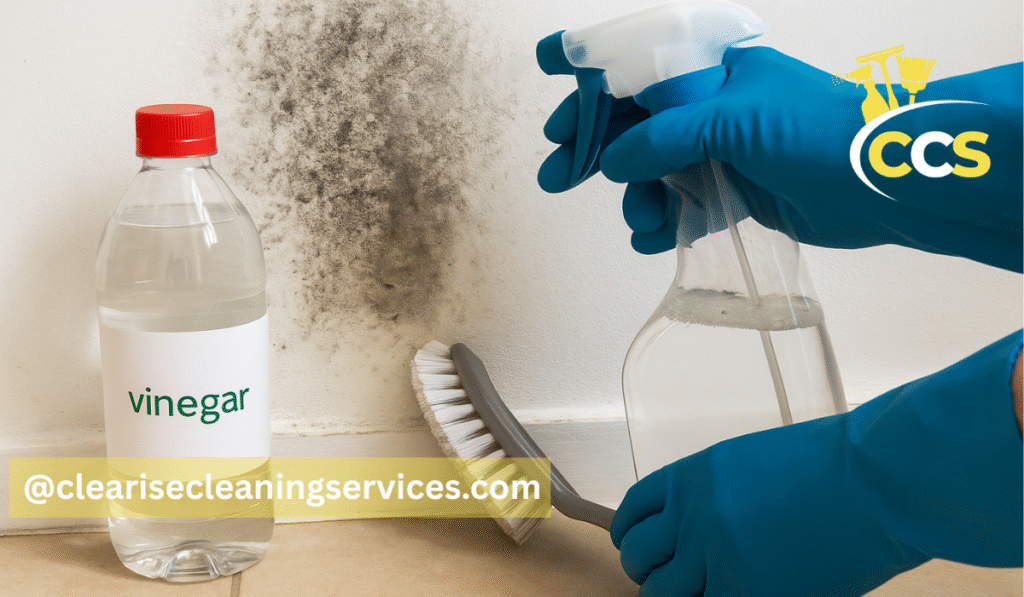
Mix equal parts white vinegar and water in a spray bottle. Spray the stained glass generously and let it sit for 15 to 30 minutes. The surface should stay wet during this time, so spray again if it starts drying too quickly. This soaking time matters because the vinegar needs time to soften the mineral buildup.
After soaking, wipe the glass with a microfiber cloth or non-scratch sponge using gentle circular motions. Rinse with clean water and dry immediately with a squeegee or lint-free towel. Drying is important because leaving water behind can create new spots.
Baking Soda Paste for Stubborn Hard Water Marks
If vinegar alone does not work, baking soda paste can help remove thicker buildup. Baking soda is mildly abrasive, which means it can lift stains without being too harsh when used gently.
Mix baking soda with a small amount of water until it forms a soft paste. Apply the paste to the stained areas and rub gently with a damp cloth or non-scratch sponge. Do not press too hard because aggressive scrubbing can leave fine marks on the glass.
For better results, you can lightly spray vinegar over the paste. It will fizz, which helps loosen the buildup. Let it sit for about 10 minutes, then wipe everything away and rinse well. If the stains are old, you may need to repeat the process instead of scrubbing harder.
Removing Hard Water Stains from Glass Shower Doors
Glass shower doors often collect the worst hard water stains because they deal with both mineral deposits and soap scum. This combination can make the glass look cloudy, dull, or dirty even when it has just been cleaned.
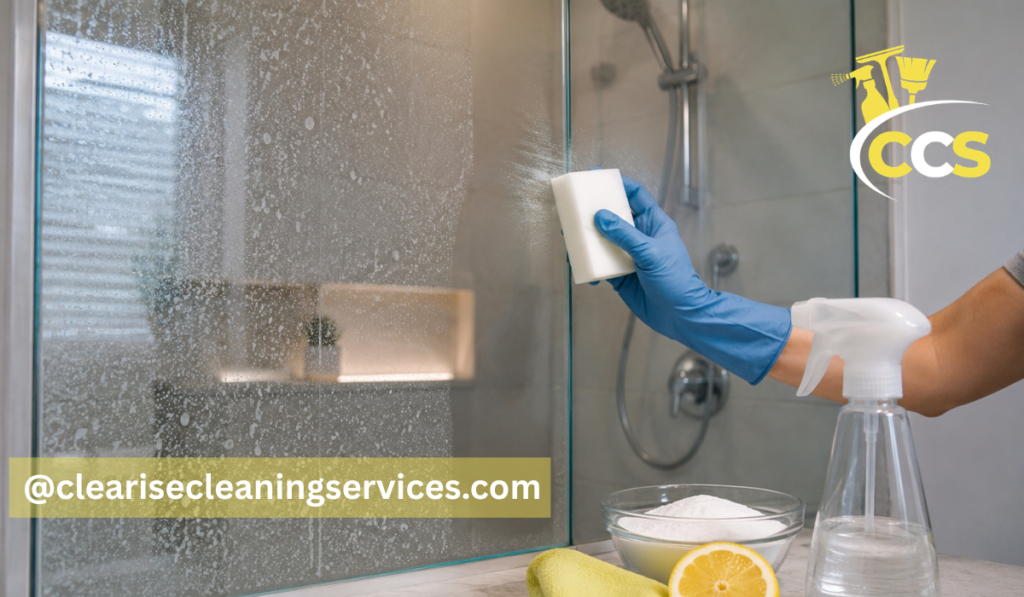
For people asking what removes hard water stains from glass shower doors, the safest DIY answer is usually vinegar first, followed by baking soda paste for stubborn areas. Spray the shower door with vinegar, let it sit, then wipe gently. If cloudy patches remain, apply baking soda paste and clean again with light pressure.
This method is also helpful for the related question: what removes hard water stains from glass shower doors DIY. The key is patience. Let the cleaner sit long enough to break down the minerals instead of trying to scrub everything off quickly.
Cleaning Hard Water Stains from Glass Windows
If you are wondering how to remove hard water stains from glass windows, the method depends on where the stains are. Indoor window stains are usually lighter and may come from condensation or splashes. Outdoor window stains can be tougher because sprinklers, rainwater, and dust can leave mineral marks for a long time.
For windows, spray vinegar on the stained glass and let it sit before wiping. For large areas, clean one section at a time so the vinegar does not dry before you rinse it. After cleaning, rinse with clean water and dry with a microfiber cloth or squeegee.
To avoid streaks, do not clean windows in direct hot sunlight. Heat can dry the cleaner too fast and leave marks behind. This is especially useful when dealing with outdoor glass windows.
How to Remove Hard Water Stains from Car Glass
Car glass needs extra care because windshields, side mirrors, and windows may have coatings or delicate surfaces. If you want to know how to remove hard water stains from glass on car, start with a gentle approach.
Use a vinegar and water solution on the affected area, but do not let it sit too long in direct sunlight. Wipe with a soft microfiber cloth, then rinse and dry. If stains remain, use a glass-safe cleaner made for automotive surfaces.
Avoid harsh abrasives on windshields. Scratches on car glass can affect visibility, especially at night or during rain. Also avoid using a razor blade on tinted windows or coated glass unless you are sure it is safe.
When DIY Methods Are Not Enough
Sometimes home remedies are not strong enough. This usually happens when stains are heavily calcified, rough to the touch, or have been sitting for months or years. In these cases, a commercial descaler or glass-safe mineral remover may be needed.
Products made for hard water buildup can work well, but they should be used carefully. Always read the label, wear gloves, and keep the area ventilated. Do not mix different cleaners together because some chemical combinations can be unsafe.
A stronger cleaner should not be the first step. Start mild, then move to stronger options only when needed.
Razor Blade Method: When and How to Use It Safely
A razor blade can help remove thick mineral crust from flat glass, but it must be used carefully. This method is not for every situation. It should only be used when the buildup is thick and other methods have failed.
First, wet the glass with soapy water so the blade can glide smoothly. Use a new, sharp blade and hold it at about a 45-degree angle. Gently push the blade across the mineral buildup without digging into the glass.
Do not use this method on coated, tinted, textured, or delicate glass. Also avoid using an old or rusty blade because it can scratch the surface.
Mistakes That Can Damage Glass
One of the biggest mistakes is using rough steel wool or harsh scrubbing pads. These can leave scratches that cannot be cleaned away. Another mistake is scrubbing too aggressively. If the stain does not come off, the cleaner may need more time, not more force.
Do not let vinegar or strong cleaners dry on the glass. Once a cleaner dries, it can leave marks or residue. It is also important not to mix cleaning chemicals without understanding whether they are safe together.
The safest approach is to test a small area first, use gentle tools, and rinse thoroughly after cleaning.
How to Prevent Hard Water Stains from Coming Back
Prevention is easier than removing old stains. After every shower, use a squeegee to remove water from the glass. This simple habit can greatly reduce mineral buildup on shower doors.
After cleaning glass windows, shower glass, or glass doors, dry the surface fully. You can also apply a water-repellent barrier made for glass to help water bead up and slide off. This is useful for shower doors and some exterior glass areas.
For outdoor windows, check whether sprinklers are spraying directly onto the glass. If they are, adjust them. Sprinkler water often causes repeated hard water stains on windows.
Final Cleaning Checklist for Best Results
For the best results, start with the mildest method first. Use vinegar spray for light stains, baking soda paste for stubborn marks, and stronger cleaners only when needed. Let each cleaner sit long enough to loosen the minerals before wiping.
Always rinse fully after cleaning. Any leftover cleaner or mineral residue can leave the glass looking cloudy. Dry the surface immediately with a squeegee or microfiber cloth to prevent fresh water spots.
This simple process works for many surfaces, including glass shower doors, windows, car glass, and glass doors.
Conclusion
The safest answer to how can I remove hard water stains from glass is to start gently and increase the cleaning strength only when needed. Vinegar spray works well for light stains, baking soda paste helps with tougher buildup, and commercial cleaners can be used for heavy mineral deposits.
Whether you are cleaning glass windows, a glass shower door, car glass, or a glass door, the main rule is the same: loosen the minerals, scrub gently, rinse well, and dry immediately. With regular cleaning and simple prevention habits, glass can stay clearer, smoother, and easier to maintain.
FAQs
How Can I Remove Hard Water Stains From Glass Naturally?
You can use white vinegar and water. Spray it on the glass, let it sit, wipe gently, rinse well, and dry the surface to prevent new spots.
What Removes Hard Water Stains From Glass Shower Doors?
Vinegar works well for light stains, while baking soda paste helps with stubborn buildup. For heavy stains, a glass-safe commercial descaler may be needed.
Can Baking Soda Scratch Glass?
Baking soda is usually gentle, but scrubbing too hard can cause fine marks. Always use light pressure and a soft cloth or non-scratch sponge.
How Do I Stop Hard Water Stains From Coming Back?
Dry the glass after water touches it. Use a squeegee after showers and consider a water-repellent glass coating for longer protection.
Can I Use A Razor Blade On Glass Stains?
Only use a razor blade on flat, uncoated glass with soapy water as lubrication. Avoid using it on tinted, coated, or delicate glass.
Disclaimer: This article is for general cleaning information only. Always test cleaners on a small hidden area first and follow product instructions for safety.
Thanks for visiting Clearise Cleaning Services! Discover more helpful tips and expert cleaning insights by exploring our related categories.