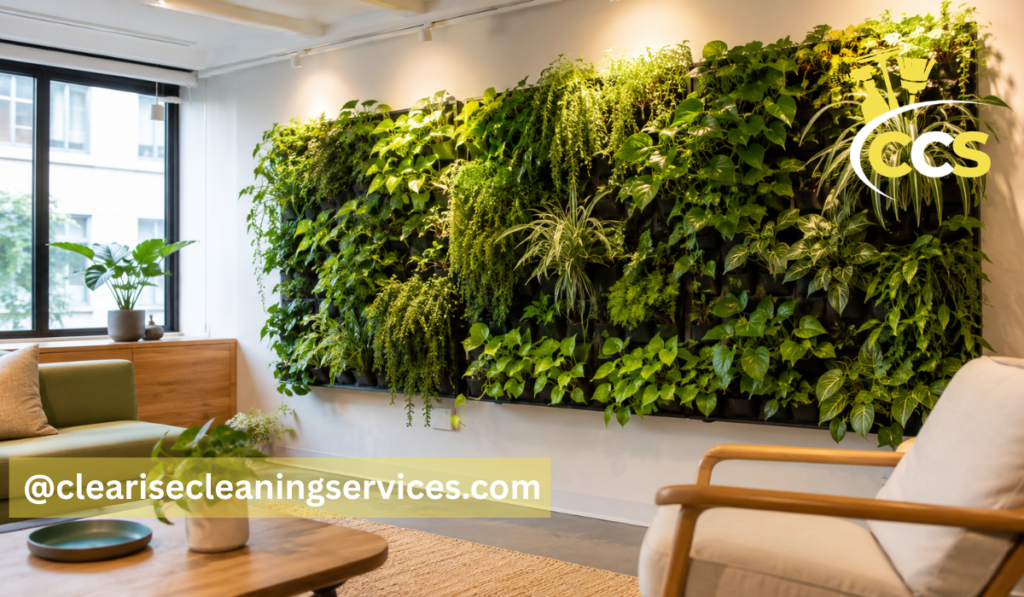
An indoor green wall turns an unused vertical surface into a feature filled with plants, natural texture, or realistic foliage. It can cover a small living-room section, form a reception backdrop, or extend across a large office wall. Because it uses vertical rather than floor space, it can suit compact rooms.
The term can describe three different products. A live indoor green wall contains growing plants. A preserved moss wall uses natural moss that has been treated to keep its colour and softness without regular watering. An artificial wall uses synthetic leaves arranged to create a green display. Each option has different installation and care needs.
A successful wall needs more than attractive plants. You must consider the strength of the supporting surface, available light, watering, drainage, airflow, access for maintenance, and the needs of the room. This guide explains how these parts work together so you can choose an indoor green wall that remains practical as well as beautiful.
Quick Comparison Guide
| Indoor Green Wall Type | Best For | Watering Needed | Lighting Needed | Maintenance Level |
| Live plant wall | Homes, offices, reception areas, and feature walls | Yes | Natural light or LED grow lights | Medium to high |
| Preserved moss wall | Bedrooms, offices, hallways, and decorative spaces | No | No grow lights required | Very low |
| Artificial green wall | Dark rooms, high walls, and hard-to-reach areas | No | No | Low |
| Modular planter wall | Large or expandable installations | Depends on plants | Usually required | Medium |
| Felt pocket wall | Small residential and DIY projects | Yes | Often required | Medium |
| Freestanding green divider | Offices, restaurants, and flexible layouts | Depends on design | May be required | Medium |
Indoor Green Wall Planning Checklist
- Measure the height and width of the available wall.
- Check whether the wall can support the full wet weight of the system.
- Decide between live plants, preserved moss, and artificial foliage.
- Review the amount of natural light the area receives.
- Add suitable LED grow lights when daylight is limited.
- Plan waterproof backing, irrigation, drainage, and floor protection.
- Select plants that need similar light and watering conditions.
- Leave enough access for pruning, cleaning, repairs, and replacement.
- Keep plants away from radiators, fireplaces, strong drafts, and electronics.
- Include ongoing maintenance costs in the total budget.
What an Indoor Green Wall Is and How It Works
A live green wall is a group of plants grown in containers or pockets attached to a vertical frame. The roots remain inside a growing medium, while the leaves spread across the visible surface. Small systems may be hand-watered, while larger walls often use a pump, reservoir, and irrigation lines.
This is different from a plant shelf. A shelf displays separate pots on horizontal surfaces, while a green wall is designed to look like one connected planting. It also differs from a traditional outdoor vertical garden because indoor systems must control water carefully and often need added lighting.
The main parts include a secure framework, plant holders, growing medium, waterproof backing, irrigation or hand-watering access, drainage, and suitable light. Some modern systems also use timers, moisture sensors, or leak alarms. The best location is a wall that can carry the installed weight, is easy to inspect, and is not exposed to heating vents, cold drafts, or strong direct sun for long periods.
Live, Preserved Moss, and Artificial Green Walls
A live wall offers natural growth, changing leaf shapes, and the satisfaction of caring for real plants. Individual plants can be replaced, but the wall requires reliable light, watering, drainage, pruning, and pest checks.
A preserved moss wall gives the appearance and texture of natural material without soil, irrigation, or grow lights. The moss is no longer actively growing, so it should be treated as decorative material rather than a living garden. Keep it away from direct sun, water splashes, high heat, and frequent touching.
An artificial green wall is often the simplest choice for dark corners, high walls, rental displays, and hard-to-reach spaces. Better products can look convincing from a normal viewing distance. They still need dusting, and commercial products should meet local fire and building requirements.
Choose live plants when you can provide consistent care and suitable conditions. Choose preserved moss when you want natural texture without plant maintenance. Choose artificial foliage when access, darkness, or predictable appearance matters most.
Benefits of Adding a Green Wall Indoors
An indoor green wall creates a strong visual feature without taking up much floor space. It softens hard surfaces, adds colour, and can divide open-plan areas without a permanent partition.
Greenery may help a room feel calmer and more welcoming. Many people enjoy interiors that include plants and other natural elements, but the effect will depend on the design, room, and individual. A dense wall can also absorb or scatter some sound, particularly when leaves, growing material, and wall cavities work together. Research suggests that green wall systems can provide acoustic benefits, although they should not be presented as a complete replacement for professional sound treatment.
Air-purifying claims need similar care. Plants can remove certain pollutants under controlled test conditions, and active systems that deliberately move air through roots may have greater potential. However, the US Environmental Protection Agency states that a reasonable number of ordinary houseplants has not been shown to remove significant amounts of pollution from real homes or offices. Ventilation, source control, and proper building maintenance remain more important for indoor air quality.
Indoor Green Wall Systems and Structural Options
Modular tray systems use rigid panels that hold separate pots or planting cells. They work well for medium and large walls because damaged or struggling plants can be removed without dismantling the whole display. The supporting wall must safely carry the frame, plants, water, and irrigation parts.
Felt pocket systems use rows of fabric pockets that hold plants and growing material. They are lighter and often attractive for an indoor living wall DIY project. However, felt can remain damp, allow roots to spread between pockets, or stain a wall if waterproofing and drainage are poor.
Freestanding systems are useful when attaching a frame to the building is not possible. Double-sided versions can divide offices or dining areas. Mobile units must remain stable when filled with wet growing material.
Before choosing an indoor living wall planter, confirm its total filled weight, attachment method, water path, drainage plan, and plant capacity. Install a proper moisture barrier between a live system and the building surface. Keep plumbing and electrical work accessible, and use qualified professionals where local rules or the size of the installation require them.
Indoor Green Wall With Lights: Getting the Lighting Right
A bright-looking room is not always bright enough for plants. Windows reduce light quickly as distance increases, and decorative ceiling bulbs are usually designed for people rather than plant growth. An indoor green wall with lights is often more reliable because the plants receive controlled light across the full surface.
Dedicated LED grow lights are commonly used because they can provide useful plant light with less heat than older lamp types. Full-spectrum white grow lights are easier to live with in homes and offices than strongly purple lights.
Even coverage matters. If the top receives strong light while the bottom remains dim, upper plants may become compact while lower plants stretch, thin out, or lose leaves. A timer provides a regular cycle, while brightness and duration should match the species, fixture distance, and available daylight.
Begin with the grow-light maker’s placement guidance, then watch the plants. Pale or scorched patches can indicate excessive light or heat, while long, weak stems and widening gaps often suggest insufficient light. Low-light plants may tolerate dimmer conditions, but they still need enough light to grow well. The Royal Horticultural Society also notes that ordinary domestic lighting is generally not suitable for plant growth and that specialised grow lighting may be needed.
Irrigation, Drainage, and Water Protection
Small walls with removable pots can be watered by hand, provided each container drains safely. This costs less but becomes time-consuming as the wall grows, and different sections may dry at different rates.
Self-watering and automated drip systems reduce routine work. Water is commonly pumped from a reservoir and delivered through narrow tubes. Depending on the design, extra water may return to the reservoir or collect in a drainage basin. Pumps, filters, emitters, and water levels still need inspection.
Waterproofing is essential. A live wall should have a clear route for every drop of water, including leaks and overflow. Use suitable backing and a catch tray or drain, and keep water lines safely away from electrical connections.
Allow the growing medium to hold moisture without staying constantly soaked. Standing water and poor drainage can damage roots and encourage fungus gnats. University of Minnesota Extension advises avoiding waterlogged conditions because overwatering and poor drainage contribute to root rot and pest problems.
Best Plants for a Healthy Indoor Living Wall
Pothos is widely used because its trailing stems cover gaps and its leaves remain attractive in many indoor settings. It grows fuller with suitable light, while trimming stops its vines from covering nearby plants.
Heartleaf and other compact philodendrons provide varied leaf shapes and trailing growth. Ferns, including bird’s nest and Boston types, add dense texture but often prefer steadier moisture and humidity than pothos. Spider plants create a bright, cascading effect and produce plantlets that can be trimmed or used to fill new spaces.
The strongest planting plan groups species with similar needs. A wall connected to one watering zone should not combine plants that like dry roots with plants that need consistently moist growing material. Consider mature size: fast growers can shade slower plants, and large roots can overcrowd shallow pockets.
Avoid choosing plants only because they look attractive in a photograph. Delicate flowering species, very large plants, thorny plants, and those needing intense direct sun can be difficult to manage vertically. In homes with children or pets, check whether each species may be harmful if touched or eaten, and place the wall where fallen leaves cannot be reached easily.
Planning a Large Indoor Green Wall
A large indoor green wall needs a detailed plan before the frame is installed. Measure the full wall, then identify doors, vents, controls, sockets, skirting boards, and maintenance access.
Calculate the load using the weight of the frame, saturated growing medium, plants, stored water, lights, pipework, and decorative trim. Because the wet wall may be far heavier than the empty system, have the structure assessed where necessary.
Dividing the installation into zones makes it easier to manage. Separate irrigation sections can serve areas that dry at different rates, while removable modules allow repairs without disturbing the whole wall. Leave enough space to reach pumps, valves, timers, drains, and lights.
For visual balance, mix upright, rounded, and trailing plants rather than placing every species randomly. Repeat a few plant types across the surface to make the wall feel connected. Professional help is sensible for tall walls, public buildings, automated plumbing, complex lighting, or any project where leaks could damage valuable interiors.
Indoor Green Wall Living Room Design Ideas
For an indoor green wall living room feature, start with the way the room is used. A wall behind a sofa can create a soft backdrop, but there should be enough space for leaves to grow without brushing people’s heads. A section beside a television is usually safer than placing watered plants directly behind electronics.
Compact rooms do not need full wall coverage. A narrow vertical panel, a framed collection of modular planters, or a freestanding half-height screen can add greenery without making the room feel crowded.
Match the planting to the interior rather than forcing a fixed style. A simple grid of deep green leaves suits a modern room. Ferns and trailing foliage create a softer, more relaxed appearance. Natural timber trim can complement rustic interiors, while slim metal edging may suit minimalist spaces.
Keep live walls away from fireplaces, radiators, air-conditioning outlets, and doors that create repeated cold drafts. Also consider viewing distance and pump noise, especially in a quiet room.
Living Wall Indoor Office Planning
A living wall indoor office installation can make a reception area more memorable and add interest to meeting rooms or shared workspaces. It must not block signs, emergency equipment, screens, or walking routes, and it still needs care during holidays.
Low-maintenance species with similar needs are usually the safest choice. Office heating and cooling can create dry air and sudden temperature changes, so plants placed near vents may suffer even when the rest of the wall looks healthy. Dedicated lighting is often necessary because interior office walls may receive little daylight.
Freestanding, double-sided walls can separate desks, waiting areas, or dining zones while allowing the layout to change later. Confirm that mobile units are stable, that wheels lock securely, and that staff can reach both sides for cleaning and pruning.
Assign responsibility for maintenance instead of assuming someone will notice problems. A simple schedule should cover water levels, leaf cleaning, pruning, pest inspection, failed plants, lighting timers, and pump checks. A maintenance contract may be more dependable than informal shared care.
Indoor Living Wall Kits and DIY Installation
Indoor living wall kits may include mounting rails, pots or pockets, a reservoir, pump, tubing, timers, waterproof panels, and trim. Some are simply sets of wall-mounted planters that require hand watering. Others are complete self-watering systems. Check whether lights, fixings, drainage pieces, and growing medium are included.
A modular kit is often easier to repair because one pot can be removed. A pocket kit may be lighter and less expensive but needs careful moisture control. A self-watering kit saves time, although it introduces pumps, tubing, and possible leaks.
For an indoor living wall DIY project, begin by checking the wall and marking studs or other safe fixing points. Install waterproof protection before the frame, then test the empty irrigation and drainage system. Test for loose connections and overflow before adding growing medium and plants.
Professional installation is the better choice when the wall is large, very tall, fixed above valuable flooring, or connected to plumbing and electrical systems.
Costs, Maintenance, and Common Problems
The cost of an indoor green wall depends on its size, type, plant count, frame material, lighting, irrigation, drainage, access, and labour. A small hand-watered planter panel is usually the least expensive live option. A custom wall with automated watering, fitted lighting, concealed drainage, and ongoing maintenance sits at the higher end. Preserved and artificial designs avoid plant-care equipment, but detailed custom layouts can still be costly.
Ongoing costs may include electricity for lights and pumps, water, fertiliser, replacement plants, pest treatment, cleaning, and professional visits. Before buying a kit, check that replacement pumps, timers, and planting cells are available.
Routine care includes checking moisture, removing dead leaves, trimming strong growth, wiping dust from foliage, rotating or replacing weak plants, and cleaning reservoirs and filters. Use fertiliser carefully because excess feeding can damage roots or leave deposits.
Yellow leaves may result from excess water, dry roots, low light, sudden temperature changes, or normal ageing. Bare patches often appear when one plant fails or faster plants shade slower ones. Fungus gnats commonly point to wet growing material. A bad root smell, soft stems, and repeated plant collapse may indicate poor drainage or root disease.
Recheck the system when seasons change. Winter daylight may be weaker, while heating can dry leaves and growing material. Summer sun through glass may raise temperatures or scorch sections near windows. Adjust lighting, watering, and airflow gradually.
Conclusion
The best indoor green wall is not simply the largest or most colourful design. It is the one that suits the room, receives appropriate light, manages water safely, and matches the amount of care you can provide. Live walls offer natural growth and variety, preserved moss provides real texture without watering, and artificial foliage works where darkness or difficult access makes living plants impractical.
For a live installation, choose a secure system, reliable waterproofing, clear drainage, and plants with compatible needs. Plan access before filling the wall, especially when pumps, timers, lights, and upper plants will need attention. A smaller, well-maintained wall usually looks better than a large installation that is difficult to reach.
By balancing appearance, budget, lighting, watering, and long-term maintenance, you can create an indoor green wall that feels like a natural part of the space rather than a short-lived decoration.
Frequently Asked Questions
What Is The Best Type Of Indoor Green Wall?
The best option depends on your light, budget, and maintenance ability. Live walls offer natural growth, preserved moss needs almost no care, and artificial foliage works well in dark spaces.
Does An Indoor Green Wall Need Grow Lights?
Most live indoor green walls need LED grow lights unless they receive enough bright, indirect daylight. Even lighting helps prevent weak growth, bare patches, and plants leaning toward nearby windows.
How Often Should An Indoor Living Wall Be Watered?
Watering frequency depends on the plants, growing medium, temperature, and irrigation system. Check moisture regularly rather than following a fixed schedule, and avoid leaving roots in standing water.
Can I Build An Indoor Living Wall Myself?
A small modular or felt-pocket wall can be a manageable DIY project. Larger installations may require professional help with structural support, waterproofing, electrical lighting, irrigation, and safe drainage.
Which Plants Are Suitable For An Indoor Green Wall?
Pothos, philodendrons, spider plants, and several indoor ferns are popular choices. Select plants with similar watering and lighting needs so every section of the wall can receive consistent care.
Disclaimer: This article is provided for general information and planning purposes only. Installation needs can vary depending on wall strength, building materials, electrical systems, plumbing, moisture control, and local safety rules. Consult a qualified installer, electrician, plumber, structural professional, or plant-care specialist when working on a large, heavy, automated, or permanently mounted indoor green wall.
Thanks for visiting Clearise Cleaning Services! Discover more helpful tips and expert cleaning insights by exploring our related categories.