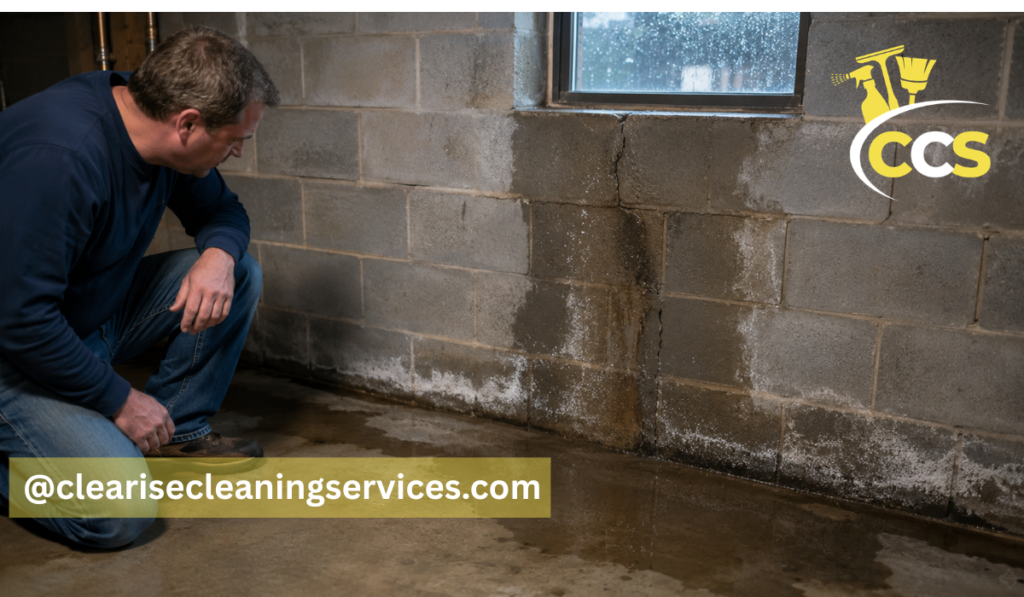
Water seeping through a basement wall may appear as a damp patch, a slow trickle, a wet crack, or a puddle forming near the floor. In many homes, the problem becomes noticeable during or shortly after heavy rain because the soil around the foundation becomes saturated with water.
As the ground absorbs more rain, pressure builds against the outside of the basement. This is often called hydrostatic pressure. Water then looks for the easiest path indoors, which may be a foundation crack, a porous concrete block, a weak mortar joint, or the point where the basement wall meets the floor.
Poor exterior drainage is another common cause. Clogged gutters, short downspouts, uneven soil, and blocked window wells can direct large amounts of water toward the foundation. In other cases, old or clogged footing drains are no longer able to move groundwater away from the home.
The most important step is to identify where the water is coming from before sealing the visible wet area. A patch may hide the symptom without correcting the source. This guide explains how to locate the leak, understand its likely cause, try affordable exterior fixes, select suitable interior repairs, and recognize when professional waterproofing is needed.
Quick Guide: Basement Water Source and Best First Step
| Water Location or Sign | Likely Cause | Best First Step |
| Water appears after heavy rain | Poor grading, overflowing gutters, or short downspouts | Improve exterior drainage and move roof water away |
| Water trickles through one crack | Shrinkage crack or foundation movement | Inspect the crack and use a suitable injection repair |
| Water enters around a pipe | Failed seal around the wall penetration | Clean and reseal the opening with a masonry-compatible product |
| Water appears at the wall-floor joint | Hydrostatic pressure or failed footing drains | Check the sump system and consider perimeter drainage |
| Dampness spreads through block walls | Porous blocks or trapped water inside cavities | Improve drainage and request a block-wall assessment |
| Water comes through floor cracks | High groundwater pressure beneath the slab | Inspect the sump pump and underground drainage system |
| Leak appears high on the wall | Window well, surface runoff, or exterior opening | Inspect windows, grading, and nearby penetrations |
| Water appears with no rain | Plumbing leak, high water table, or drain backup | Check plumbing and contact a drainage professional |
Step-by-Step Guide: What to Do First
- Find the entry point: Check whether water is coming through a crack, joint, pipe opening, window, wall surface, or floor edge.
- Record when it happens: Note whether seepage starts during rain, several hours later, or in completely dry weather.
- Check exterior drainage: Inspect gutters, downspouts, soil grading, window wells, patios, and low spots beside the foundation.
- Protect the basement: Move valuables away, avoid wet electrical areas, remove standing water, and dry the room safely.
- Correct simple exterior problems: Clean gutters, extend downspouts, improve grading, and clear blocked window wells.
- Repair suitable localized leaks: Seal stable cracks or pipe gaps with products designed for concrete and masonry.
- Monitor the next rainfall: Check whether the water returns and whether it appears in the same location.
- Call a professional when necessary: Seek help for repeated leaks, multiple wet walls, floor seepage, bowing walls, or growing cracks.
Why Water Seeps Through Basement Walls
Basement walls are surrounded by soil, so they are constantly exposed to moisture. During prolonged rain or snowmelt, the soil can become saturated. The weight of that water creates pressure against the foundation and can force moisture through small openings.
Poured concrete may develop shrinkage cracks as it cures. Concrete blocks and mortar joints are also naturally porous and may absorb moisture. Water can enter around pipes, utility lines, form-tie holes, basement windows, and other wall penetrations.
Exterior footing drains are designed to collect water near the bottom of the foundation. If they become clogged, damaged, or overwhelmed, water may rise and enter through the wall-floor joint. Seasonal changes in the groundwater level can also cause seepage, even when no obvious exterior problem is visible.
Signs That Reveal Where the Water Is Coming From
The appearance and location of moisture can offer useful clues. A damp patch in the middle of the wall may suggest water moving through porous masonry. A steady trickle from a visible crack usually points to a more direct water pathway.
Wet mortar joints are common in block or stone foundations. Moisture around a pipe may indicate a poorly sealed wall penetration, while water collecting at the base of the wall often suggests pressure below ground level or a failed drainage system.
Other warning signs include white powdery deposits called efflorescence, peeling paint, bubbling coatings, crumbling mortar, musty odors, and repeated mold growth. These signs may remain even after the wall looks dry.
Water Seeping Through Basement Wall After Rain
Water seeping through a basement wall after rain usually means the foundation is being exposed to more water than the drainage system can handle. Heavy or prolonged rainfall saturates the soil and increases pressure against the wall.
Overflowing gutters can dump water beside the house instead of directing it away. Short or disconnected downspouts may release roof runoff close to the foundation. Low spots in the yard can also hold water against the basement wall.
Poor grading is another major factor. The ground around a home should generally slope away rather than toward the structure. Clogged window wells and exterior drains can also trap water and allow it to enter near basement windows.
During rainfall, inspect the exterior from a safe location. Look for overflowing gutters, pooling water, leaking downspouts, and runoff moving toward the house. Do not walk through deep water or stand near electrical equipment.
Water Leaking Into Basement After Heavy Rain
When water leaks into a basement after heavy rain, first determine whether the problem is connected to weather or plumbing. A foundation leak often appears during rain or several hours later, depending on how quickly water moves through the soil.
A plumbing leak may continue regardless of the weather and may be linked to a nearby pipe, fixture, or water supply line. Checking the timing of the leak can help separate the two problems.
Inspect gutters, downspouts, window wells, and soil grading. Also look at patios, porches, driveways, and walkways. Hard surfaces that slope toward the home can direct a large amount of water toward one section of the foundation.
Before the area dries, take photographs and mark the wet location. This can help you monitor changes and explain the problem clearly to a contractor if repairs are needed.
What the Height and Location of the Leak Can Tell You
Water entering high on a basement wall may be caused by surface runoff, a damaged window well, a plumbing leak, or a poorly sealed exterior opening. Moisture in the middle of the wall may be moving through cracks, blocks, or mortar joints.
Leaks near basement windows often indicate failed seals, clogged drains, or water collecting inside the window well. Wetness around a pipe usually points to a gap in the surrounding seal.
Water appearing at the bottom of the wall or along the wall-floor joint is more likely to be related to groundwater pressure or a drainage problem near the footing. Because each leak pattern has a different cause, the correct repair depends heavily on its location.
Basement Wall Materials and Their Common Leak Points
Poured concrete walls often leak through shrinkage cracks, form-tie holes, and the joint between the wall and floor. Small vertical cracks are common, but cracks that are wide, horizontal, or growing may require structural inspection.
Hollow concrete block walls may absorb water through the blocks and mortar. Water can also collect inside the block cavities and later seep through joints near the bottom.
Stone foundations have many irregular joints that may weaken as mortar ages. Their uneven surfaces can make water paths difficult to trace. Brick and mixed-masonry foundations may also leak through deteriorated joints, damaged surfaces, or hidden gaps.
Immediate Steps to Take When Water Enters the Basement
Safety should come first. Keep extension cords, appliances, and electrical devices away from wet areas. Do not enter standing water if outlets, wiring, or electrical panels may be involved.
Move boxes, furniture, rugs, and valuable items away from the affected wall. Remove standing water with safe equipment, then use fans and a dehumidifier after active water entry has stopped.
Photograph the wet area, visible cracks, and water stains. Mark the edge of damp patches so you can see whether they expand. If the water smells unusual, contains sewage, or may be contaminated, avoid direct contact and seek professional cleaning help.
Call a professional promptly if water is near electrical systems or if the foundation shows bowing, major cracks, or other signs of structural damage.
Exterior Drainage Problems to Check First
Many basement leaks begin with simple drainage problems outside. Gutters may be clogged, damaged, or pulling away from the roof. Downspouts may discharge too close to the house.
Soil that slopes toward the foundation allows rainwater to collect beside the wall. Low areas near the home may also hold water for hours after a storm.
Window-well drains can become blocked by leaves, dirt, and debris. Cracked patios and driveways may direct runoff inward. Exterior faucets, irrigation lines, or underground pipes can also leak near the foundation. Dense shrubs and heavy landscaping may trap moisture and make inspection difficult.
Low-Cost Exterior Fixes That May Stop Basement Seepage
Begin by cleaning gutters and repairing leaking joints. Confirm that water flows freely through each downspout. Add suitable extensions so roof runoff is released well away from the foundation and does not flow back toward the house.
Fill low areas beside the home and improve the soil slope so water drains outward. Use appropriate soil rather than loose material that washes away easily.
Clear leaves and dirt from window wells, and replace broken covers. Seal small exterior gaps around utility penetrations with a product designed for masonry and outdoor use.
Check the sump-pump discharge pipe as well. It should release water far enough away that it does not return to the foundation. After making these corrections, monitor the basement during the next heavy rainfall.
How to Stop Water Seeping Through Basement Wall
To stop water seeping through a basement wall, reduce water buildup outside before focusing on interior finishes. Determine whether the leak comes from one crack, several joints, an opening around a pipe, or a large section of wall.
Let the area dry when possible, then choose a repair that matches the wall material and water path. A localized crack may respond to injection or patching, while widespread seepage may require a drainage system.
Do not simply cover active moisture with paint, wall panels, or insulation. Water may continue moving behind those materials and cause hidden mold or damage. Test every repair during later rain and seek a broader waterproofing solution if the leak returns.
Repairing Localized Basement Wall Cracks
Before repairing a crack, check whether it appears stable. A small vertical crack that has not changed may be suitable for a targeted repair. Wide, horizontal, stair-step, or expanding cracks should be inspected by a structural professional.
Remove loose debris and clean the area. Hydraulic cement can be useful for certain active masonry leaks because it expands while curing. Polyurethane injection may help seal cracks that allow water movement because the material can expand into the opening.
Epoxy injection is generally used when structural bonding is needed, but it is not suitable for every wet crack. Gaps around pipes and utility lines should be sealed with a compatible product. Continue monitoring the repair for movement or renewed moisture.
Why Waterproof Paint Alone Often Fails
Waterproof paint may improve the appearance of a slightly damp wall, but it usually does not solve an active leak. It treats the inside surface while water pressure remains outside.
Hydrostatic pressure can cause paint and roll-on coatings to blister, peel, or separate from the wall. Water may also move around the coated area and appear through another crack or joint.
Some coatings can help control mild moisture on sound masonry, but they should not replace proper drainage, crack repair, or foundation waterproofing. The source of the water should be corrected first.
Water Seeping Through Basement Floor
Water seeping through a basement floor is often related to groundwater pressure beneath the slab. Moisture may appear around the edges, through floor cracks, near drains, or in low areas.
Wall seepage enters through the vertical foundation, while slab seepage rises from below. However, both problems can be connected to high groundwater or failed footing drains.
Older basements may have a missing or damaged vapor barrier beneath the floor. If water appears across a wide area, sealing the surface alone may not work. A perimeter drainage system and sump pump may be needed to control groundwater.
Water Seeping Through Basement Floor Cracks
Concrete floors naturally develop some shrinkage cracks, but water can use those cracks as pathways when pressure rises below the slab. First determine whether the crack is dry, slightly damp, or actively releasing water.
A minor stable crack may be sealed with an appropriate concrete repair material. However, sealing one crack does not remove the pressure below the floor. Water may return through another opening.
Cracks that are uneven, widening, or linked to floor movement may indicate settlement or structural problems and should be professionally evaluated.
Water Coming Up Through Basement Floor With No Rain
Water coming up through a basement floor with no rain may be caused by a high seasonal water table. Groundwater can remain elevated long after earlier rainfall or snowmelt.
Other possible causes include a leaking water supply line, a damaged underground drain, sump-pump failure, or backflow from a floor drain. Condensation can sometimes be mistaken for seepage, especially during humid weather.
Changes in nearby grading, construction, drainage, or underground utilities may also affect groundwater movement. Persistent unexplained moisture should be checked by a plumber, drainage specialist, or waterproofing professional.
How to Fix Water Leaking Into Basement After Heavy Rain
Start by recording where and when the water appears. Inspect the roof drainage system, clean the gutters, and make sure every downspout carries water away from the home.
Correct low soil and improve grading beside the foundation. Clean window wells and verify that their drains are open. Check patios and walkways for slopes that direct runoff toward the wall.
Once the rain has stopped and the area is dry, repair any suitable localized cracks. Test the changes during the next storm. If water continues to enter, the property may need an interior drain, sump pump, exterior waterproofing, or footing-drain work.
Interior Drainage Systems and Sump Pumps
An interior drainage system collects water at the edge of the basement floor before it spreads across the room. A channel is usually installed around the perimeter and directs water toward a sump basin.
The sump pump then removes the collected water through a discharge pipe. A battery backup can provide protection during power failures, while a high-water alarm can warn homeowners of pump problems.
Interior systems are commonly used when water repeatedly enters at the wall-floor joint. They manage water effectively, but they do not stop moisture from reaching the exterior foundation. Pumps, drains, and backup equipment also require regular testing and maintenance.
Exterior Waterproofing and Foundation Drainage
Exterior waterproofing addresses water before it enters the foundation. The soil is excavated to expose the wall, damaged areas are repaired, and a waterproof membrane is applied.
A drainage board may be added to direct water downward. Damaged footing drains can be replaced with perforated pipe surrounded by suitable drainage material.
This method can provide a complete solution for some homes, but excavation may be expensive and disruptive. Access, landscaping, decks, driveways, and nearby structures can affect the cost and difficulty of the work.
Weep Holes and Drainage for Concrete Block Walls
Hollow concrete blocks can fill with water when moisture enters through the exterior wall. That trapped water may later seep through mortar joints or collect near the floor.
In some professionally designed interior drainage systems, small weep holes are drilled near the bottom of the block wall. These holes release trapped water into a drainage channel that carries it to a sump pump.
Homeowners should not drill random holes without a proper collection system. Doing so may create uncontrolled water flow, damage the wall, or worsen moisture problems.
Choosing the Right Repair Based on the Leak Pattern
A single stable crack may need targeted injection or patching. Water around a pipe opening may require proper penetration sealing. Seepage through many block joints may call for block-wall drainage and moisture management.
Water entering at the wall-floor joint often points to the need for interior perimeter drainage. Widespread pressure may require a sump-pump system or exterior drainage work.
Leaks high on the wall are more likely to involve grading, gutters, window wells, or surface openings. Repeated seepage across several walls should be assessed by a qualified waterproofing professional.
Basement Seepage Repairs That Commonly Waste Money
Painting over a leaking wall is one of the most common temporary fixes. Sealing the inside without improving exterior drainage may also fail because water pressure remains unchanged.
Ordinary household caulk is not suitable for moving foundation cracks. Very short downspout extensions may simply release water a few feet farther away, where it can still return.
Covering a wet wall with drywall or panels can hide mold and damage. A dehumidifier may reduce humidity, but it cannot stop active water entry. It is also risky to ignore leaks that disappear during dry weather, because they are likely to return.
When Basement Water Seepage Signals Structural Trouble
Some cracks are more serious than ordinary shrinkage. Horizontal cracks, stair-step cracks, bowing walls, and rapidly widening openings may indicate pressure or foundation movement.
Other warning signs include uneven floors, sticking doors and windows, visible settlement, and soil pulling away from the foundation. Water entering through badly deteriorated masonry may make existing damage worse.
A structural engineer or qualified foundation specialist should inspect these conditions before cosmetic or waterproofing repairs are attempted.
Mold, Air Quality, and Damage Caused by Ongoing Seepage
Ongoing moisture can support mold growth behind insulation, drywall, flooring, and stored materials. It may also create musty odors that spread through the rest of the home.
Water can damage flooring, furniture, boxes, and finished walls. It may cause wood rot, rust metal components, weaken mortar, and increase humidity.
Drying the room is important, but it is not enough if water continues to enter. The leak source must be corrected to protect the basement and indoor air quality over the long term.
DIY Repair or Professional Waterproofing
Simple drainage work is often suitable for homeowners. Cleaning gutters, extending downspouts, clearing window wells, correcting minor grading, and sealing a small stable gap may be manageable DIY tasks.
Professional help is more appropriate when water enters across several walls, returns at the wall-floor joint, rises through the slab, or appears near electrical systems. Bowed walls, major cracks, failed footing drains, and unexplained water during dry weather also require expert attention.
Ask contractors to explain the source of the leak, the proposed drainage path, expected maintenance, warranties, and whether permits are needed. Compare complete repair plans instead of choosing only by price.
Preventing Water From Returning
Keep gutters clean and downspouts connected throughout the year. Maintain soil that slopes away from the foundation and repair low areas when settling occurs.
Inspect basement windows, window wells, exterior drains, and foundation walls regularly. Test the sump pump before wet seasons and check any battery backup.
Control indoor humidity with ventilation or a dehumidifier, but remember that humidity control does not replace leak repair. Keep valuable items off the basement floor and leave space between stored belongings and foundation walls.
After major storms, inspect repaired areas for fresh moisture, stains, or cracks.
Conclusion
Water seeping through a basement wall is often a sign that water is collecting around the foundation or finding a path through damaged or porous materials. The most effective solution begins with identifying the exact entry point and understanding why water is reaching it.
Start with simple exterior corrections such as cleaning gutters, extending downspouts, improving grading, and clearing window wells. Repair suitable localized cracks only after addressing the surrounding water problem.
Recurring seepage, floor moisture, wall-floor joint leaks, and structural warning signs should not be ignored. These problems may require an interior drainage system, sump pump, exterior waterproofing, or professional foundation repair.
Correcting the source instead of hiding the wet area gives the basement the best chance of remaining dry, safe, and protected from long-term damage.
Frequently Asked Questions
Why Is Water Seeping Through My Basement Wall After Heavy Rain?
Heavy rain saturates the soil around your foundation. The resulting pressure can force water through cracks, porous concrete, mortar joints, basement windows, or the joint between the wall and floor.
Can I Seal A Leaking Basement Wall From The Inside?
Small, stable cracks may sometimes be repaired from inside. However, interior sealing alone may fail if poor grading, clogged drains, or groundwater pressure outside the foundation remains uncorrected.
Does Waterproof Paint Stop Basement Wall Seepage?
Waterproof paint may help with mild surface dampness, but it rarely stops active leaks. Continued water pressure can cause the coating to blister, peel, or redirect moisture elsewhere.
When Should I Call A Basement Waterproofing Professional?
Call a professional when seepage affects several walls, returns after drainage improvements, rises through the floor, appears near electricity, or occurs with horizontal cracks, bowing, or foundation movement.
Is Water Seeping Through A Basement Wall Dangerous?
The water itself may create electrical or contamination risks. Ongoing seepage can also encourage mold, damage finished materials, weaken masonry, and indicate drainage or structural problems that require attention.
Disclaimer: This article provides general educational information about water seeping through basement walls and is not a substitute for an on-site inspection. Foundation conditions, drainage systems, building materials, and local requirements vary. Consult a qualified waterproofing contractor, plumber, electrician, or structural engineer when water is near electrical equipment, may be contaminated, continues without rain, or appears with serious foundation cracks or movement.
Thanks for visiting Clearise Cleaning Services! Discover more helpful tips and expert cleaning insights by exploring our related categories.