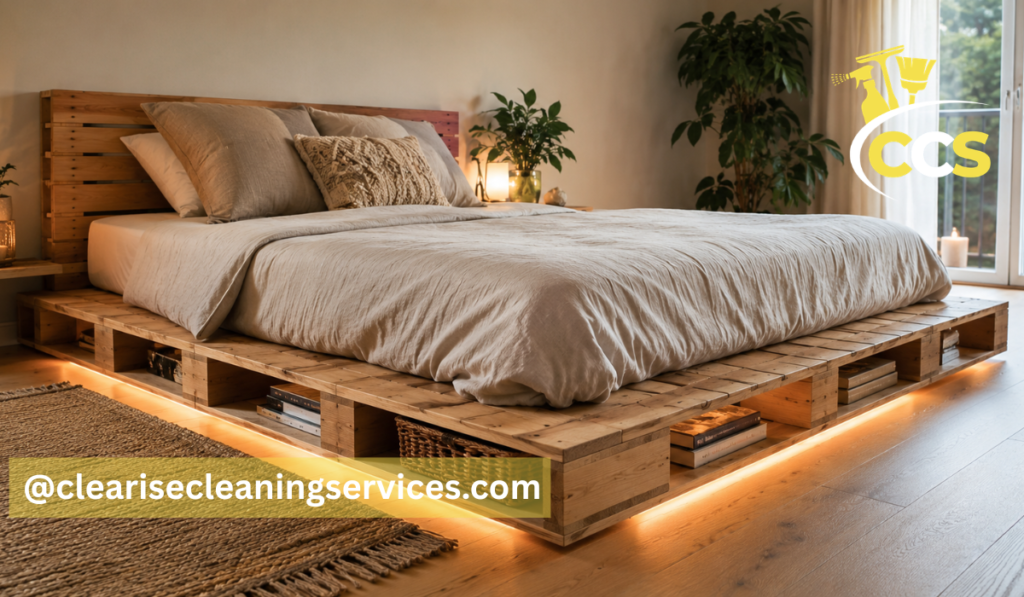
A pallet bed frame is a simple platform-style base made from wooden or plastic pallets arranged to support a mattress. It is popular with people who like low-profile furniture, rustic wood, bohemian bedrooms, minimalist spaces, or hands-on DIY projects. A pallet frame can be as basic as one layer close to the floor or built higher with extra layers, storage space, lighting, or a headboard.
Not every pallet bed is made from used shipping pallets. Some are built from reclaimed transport pallets, while others are purpose-made furniture designed to look like pallets but use smoother, more consistent timber. Purpose-built versions may offer more consistent dimensions, while reused pallets require closer attention to their history and condition.
Before choosing this type of bed, think beyond appearance. The frame needs to fit the mattress, provide suitable support, remain stable, allow reasonable airflow, and avoid damaging the floor. Anyone building a DIY version should also check the wood carefully before bringing it indoors.
Quick Guide: Pallet Bed Frame Comparison
| Type | Best For | Main Benefit | Main Consideration |
| Single-layer pallet bed | Minimalist rooms | Low-profile design | Limited under-bed access |
| Double-layer pallet bed | Extra height and storage | More comfortable bed height | Heavier to move |
| Wood pallet bed frame | Rustic and DIY designs | Easy to customize | Needs sanding and inspection |
| Plastic pallet bed frame | Easy-clean setups | Resistant to splinters | Less natural appearance |
| Ready-made pallet-style bed | Convenience | More consistent construction | Usually costs more than DIY |
| LED pallet bed | Decorative bedrooms | Creates ambient lighting | Wiring must be installed safely |
Quick Steps for Building a Pallet Bed Frame
- Measure the mattress and available bedroom space accurately.
- Choose clean, sound pallets with no mold, stains, odors, rot, or major damage.
- Clean and sand the wood until edges, corners, and surfaces are smooth.
- Arrange the pallets to provide even mattress support.
- Secure the sections together with suitable screws and joining hardware.
- Add floor protection such as felt pads or a protective mat.
- Check stability and airflow before placing the mattress on the finished frame.
What a Pallet Bed Frame Is and How It Works
Most pallet beds work like platform beds. The pallets form a broad base, and the mattress rests directly on top. A single layer produces a very low bed, while two stacked layers create more height. Some designs use legs, blocks, or a recessed support structure to raise the pallets farther from the floor.
A box spring is often unnecessary when a mattress is placed on a firm platform, but that does not mean every pallet arrangement is suitable. Mattresses can have specific support requirements, including limits on the spacing between slats. Wide gaps may allow parts of the mattress to sag, so the mattress manufacturer’s instructions should be checked before using a pallet base.
A wood pallet bed frame also differs from a conventional slatted platform bed. Standard bed frames are designed as furniture, with planned dimensions, joints, support points, and often a center rail. Shipping pallets were originally built for moving goods, not sleeping. They may need extra preparation and reinforcement before they can serve as bedroom furniture.
Benefits and Drawbacks of Sleeping on a Pallet Bed Frame
The main appeal of a pallet bed frame is flexibility. A DIY version can be relatively inexpensive when suitable pallets are available, and the design can be changed to suit the room. The wood can be sanded, stained, painted, stacked, extended beyond the mattress, or combined with storage and lighting. Reusing suitable pallets can also give unwanted material a second life.
Natural timber also suits rustic, bohemian, industrial, and minimalist interiors.
There are practical drawbacks, however. Used pallets may be heavy, rough, cracked, stained, or difficult to clean. Poorly joined sections can move or squeak. Low frames collect dust close to the floor and can make cleaning underneath difficult. A very low mattress may also be uncomfortable for people who have trouble bending their knees or standing up from a low position.
For these reasons, a pallet frame should be chosen for more than style. Mattress type, room humidity, floor material, cleaning habits, mobility needs, and the condition of the pallets all matter.
Pallet Bed Frame Ideas for Different Bedroom Styles
One of the simplest pallet bed frame ideas is a single-layer base with the mattress centered on top. This keeps the room visually open and works well when a low sleeping position is intentional. Leaving a small border of wood around the mattress can make the base look more deliberate, although the exposed corners should be smoothed carefully.
For a rustic room, natural wood with a clear protective finish keeps the grain visible. A bohemian design can use a wider platform, neutral bedding, woven textures, and soft furnishings around the bed. A recessed lower support can create a floating appearance, especially when warm LED lighting is hidden beneath the visible edge.
More practical designs use two layers of pallets. The extra height can make the bed easier to enter and can create open spaces for baskets, books, or shoes. A matching timber headboard can make the frame look finished, while a wider platform can act as a small bedside surface. The best design is one that looks intentional without creating awkward edges, unstable overhangs, or hard-to-clean spaces.
Choosing Safe Pallets for an Indoor Bed Frame
The condition and history of a pallet are more important than its appearance. Inspect every piece for broken boards, loose or protruding nails, deep cracks, rot, damp areas, visible mold, insect activity, strong smells, oil marks, chemical stains, or other signs of contamination. If the previous use is unknown and the pallet looks questionable, it is better not to use it indoors.
International shipping pallets may carry an IPPC mark under ISPM 15. The treatment code can include HT for heat treatment or MB for methyl bromide treatment. However, ISPM 15 is a phytosanitary standard intended to reduce the movement of plant pests through international wood packaging. The mark shows that approved phytosanitary measures were applied; it does not certify that a used pallet is clean, uncontaminated, or designed for furniture. Therefore, an HT stamp should not be treated as a complete indoor-safety guarantee.
Whenever possible, choose clean pallets with a known source and history. Avoid damp, badly stained, foul-smelling, pest-damaged, or chemically contaminated wood even if it carries a treatment mark.
Pallet Bed Frame DIY: Materials, Tools, and Preparation
A successful pallet bed frame DIY project begins with preparation. Measure the mattress and room first, then work out how many pallets are needed and whether they will sit flush with the mattress or extend beyond it.
A practical checklist includes:
- Clean, sound pallets or pallet-style timber sections
- Measuring tape, pencil, and straightedge
- Drill or driver with suitable wood screws
- Metal joining plates or other appropriate connectors
- Coarse, medium, and fine sandpaper or a power sander
- Gloves, eye protection, and a dust mask for preparation work
- Felt pads, rubber feet, or a protective mat for the floor
- Optional wood sealer, stain, paint, or clear finish
Clean and dry the wood before assembly. Sand rough areas progressively, starting with a coarser grit where needed and moving to finer sandpaper for exposed surfaces. Round sharp corners and remove splinters. Remove sanding dust thoroughly. If you want to seal, stain, or paint the pallets, use a finish suitable for indoor furniture and allow it to dry or cure according to the product instructions before regular use.
How to Build a Pallet Bed Frame Step by Step
Start by measuring the actual mattress rather than relying only on the size name printed on its label. Lay out the pallets on a flat floor and test the arrangement before fastening anything. Check the overall width and length, and decide whether you want the mattress to cover the entire base or leave a visible wooden border.
Next, inspect the layout for uneven boards or large unsupported gaps. Add appropriate support where necessary, especially if the mattress requires closer slat spacing. Bring neighboring pallets together and secure them with suitable wood screws and joining hardware so they cannot slide apart easily during use.
Once the main platform is connected, check that the frame sits level and does not rock. Add felt pads or another floor barrier underneath contact points. Inspect every outer edge, corner, screw, and joint for anything sharp or loose.
Finally, make sure the frame is clean and fully dry. Place the mattress on top only when the structure feels solid and stable. After the first few nights, recheck the joints because regular movement can sometimes reveal loose connections that were not obvious during assembly.
Mattress Support, Airflow, Moisture, and Floor Protection
A mattress needs even support. Large openings between pallet boards can create unsupported areas, particularly with flexible foam mattresses. If gaps are wider than the mattress maker allows, additional slats or another suitable support layer may be needed. Always follow the mattress warranty and foundation instructions because support requirements can vary between products.
Airflow also deserves attention. A mattress placed very close to the floor can have less air movement around its underside, and moisture can become a greater concern in humid or poorly ventilated rooms. Periodically lift the mattress, inspect the underside and wood, and allow damp areas to dry.
The U.S. Environmental Protection Agency recommends controlling indoor moisture and keeping relative humidity below 60% where possible, ideally around 30% to 50%, as part of mold prevention.
Protect the floor as well as the mattress. Felt pads can help protect finished wood and laminate, while rubber or non-marking protective material can reduce movement on smooth surfaces. On carpet, keep rough timber and exposed hardware away from the fibers.
Pallet Bed Frame Queen, King, and Other Size Planning
A pallet bed frame queen layout should be planned around the mattress itself, not around an assumed pallet size. Pallet dimensions differ by region and industry, so a neat queen layout may require trimming, spacing, extra boards, or a purpose-built arrangement. Measure both the mattress and the complete pallet layout before assembly.
The same rule applies to a pallet bed frame king design. Because a king mattress covers a larger area, the frame needs consistent support across the middle as well as around the outer edges. Avoid leaving a weak center line where separate pallet sections meet without adequate connection or support.
Twin or single and full or double mattresses can be easier to fit into smaller rooms, but the planning process is the same. Decide whether the finished frame should sit flush with the mattress or extend beyond it.
A deliberate overhang can create an attractive platform look, but too much exposed wood increases the chance of bumping your legs or catching bedding on the corners. Whatever size you choose, confirm the actual mattress measurements and available walking space before building.
Storage, Headboards, Lighting, and Other Custom Features
Stacked pallets naturally create open spaces that can be used for light storage. Baskets can keep small items contained and make openings easier to clean. Avoid packing every cavity tightly, since some open space makes inspection and cleaning simpler.
A pallet or timber headboard can visually connect the bed to the wall, but it should be smoothed and secured so that it cannot tip, wobble, or expose rough boards close to pillows.
LED lighting is another popular addition. Lights placed beneath the frame can produce a soft floating effect and provide gentle nighttime illumination. Route cables where they will not be pinched between pallets, crushed by the mattress, or damaged by storage items. Always follow the lighting manufacturer’s installation instructions and avoid placing electrical components where heat cannot escape.
Casters can make a frame movable, but they need to be appropriately rated and securely attached. Recessed bases can create a floating appearance, while removable sections can make moving the bed easier. Every added feature should improve function without reducing the stability of the frame.
Pallet Bed Frame IKEA Searches and Similar Alternatives
People searching for a pallet bed frame IKEA option are often looking for the appearance rather than a literal shipping-pallet frame: simple wood, a low profile, a platform shape, or useful under-bed storage.
IKEA’s current U.S. bed range includes conventional bed frames, wooden styles, platform-style options, and storage beds. Its catalog also includes beds with drawers and other built-in storage solutions rather than presenting reused shipping pallets as a standard bed-frame category.
That difference can help with the buying decision. A ready-made bed may suit someone who wants predictable dimensions, supplied hardware, and less preparation. A genuine pallet build suits people who specifically want the reclaimed look and are comfortable selecting, cleaning, sanding, measuring, and fastening the materials themselves.
Instead of choosing by appearance alone, compare the amount of work involved, total cost, mattress support, storage needs, available room, and maintenance.
Wood Pallet Bed Frame vs Plastic Pallet Bed Frame
A wood pallet bed frame is the traditional choice because wood is relatively easy to sand, cut, drill, stain, and combine with other bedroom furniture. It also provides the rustic appearance most people associate with pallet beds. Its disadvantages can include weight, splinters, moisture sensitivity, and the uncertain condition of used shipping pallets.
A plastic pallet bed frame has different qualities. Plastic pallets can be easier to wipe clean and do not produce wood splinters, but they may not offer the warm appearance people want from a pallet bed. Their openings, shape, flexibility, and load design can also vary widely.
Neither material should be assumed suitable simply because the product is called a pallet. Shipping pallets are designed around transport and handling needs, not automatically around mattress support or bedroom furniture requirements. Check the stated load capacity, condition, dimensions, support pattern, and intended use before building a bed from either material. Purpose-built furniture may be the more predictable option when clear specifications are important.
Pallet Bed Frame for Sale: What to Check Before Buying
Buying a ready-made pallet-style frame can remove much of the sanding and fitting involved in DIY construction. However, products sold under the pallet-bed name can differ considerably. Some are genuine reclaimed-pallet builds, while others are newly manufactured platform frames with a pallet-inspired appearance.
When comparing a pallet bed frame for sale, begin with exact dimensions and mattress compatibility. Check whether the seller provides a stated weight capacity, what type of support sits beneath the mattress, how wide the support gaps are, and whether center support is included for larger sizes. Look closely at finish quality, particularly around corners, edges, screw heads, and joints.
Check whether hardware, headboards, lighting, slats, and floor protectors are included. Shipping weight and assembly requirements can also matter because solid wooden frames may be difficult to move once assembled. Review the seller’s return conditions, warranty coverage, and availability of replacement parts before ordering.
Finally, compare the complete cost with a conventional platform bed. A low purchase price may become less attractive if the frame still needs major finishing, reinforcement, expensive delivery, or additional mattress support.
Conclusion
A pallet bed frame can give a bedroom a relaxed, distinctive look while offering plenty of room for customization. The strongest results come from treating it as a functional bed base first and a design project second. Safe materials, accurate measurements, secure joints, suitable mattress support, floor protection, and moisture control all matter.
DIY wood pallets provide the most freedom but require careful inspection and preparation. Ready-made pallet-style beds can offer a similar visual effect with more predictable construction, while a plastic pallet bed frame may appeal to someone who prefers a washable, non-wood base.
Choose the option that matches your mattress, bedroom conditions, available space, budget, and willingness to maintain it. A well-planned pallet bed should feel stable, fit the mattress correctly, remain easy enough to inspect and clean, and look like a deliberate part of the bedroom rather than a temporary stack of pallets.
FAQs
Is A Pallet Bed Frame Safe To Sleep On?
A pallet bed frame can be suitable when the materials are clean, structurally sound, properly prepared, and securely joined. Avoid pallets with unknown contamination, mold, chemical stains, serious cracks, or other damage.
Does A Pallet Bed Frame Need A Box Spring?
Usually, a box spring is not needed if the pallet platform provides firm and even support. However, always check your mattress manufacturer’s requirements for foundation type and maximum spacing between support boards.
Can I Put A Mattress Directly On Pallet Wood?
Yes, but the surface should be smooth, clean, dry, and properly supported. Adequate airflow is also important because mattresses placed close to the floor may be more exposed to trapped moisture.
How Many Pallets Are Needed For A Queen Bed?
The number varies because pallet and queen mattress dimensions differ between countries and pallet types. Measure your actual mattress and pallets first, then plan a layout that provides full and even support.
Are Wood Or Plastic Pallets Better For A Bed Frame?
Wood offers a warmer appearance and greater DIY flexibility, while plastic may be easier to clean. In either case, confirm that the pallets are strong, undamaged, and suitable for the intended load.
Disclaimer: This article provides general information about pallet bed frames and DIY bedroom furniture. Pallets vary greatly in construction, treatment, previous use, and load capacity. Always inspect materials carefully, follow mattress and hardware manufacturer instructions, and seek professional advice if you are unsure about structural safety, electrical lighting, or material contamination.
Thanks for visiting Clearise Cleaning Services! Discover more helpful tips and expert cleaning insights by exploring our related categories.