Quartz countertops appear in kitchen after kitchen these days, yet many buyers are unsure what they are actually buying. The name suggests natural stone, but the countertop in the showroom is something a little different. Knowing what it is made of, and how it behaves, makes choosing much easier.
This guide explains quartz countertops in plain language. It covers what engineered quartz is, how it is made, what it looks like, how tough it is, how to clean it, the edges and thicknesses available, where it works best, what affects its cost, and the mistakes to avoid. By the end, you should be able to judge whether quartz suits your kitchen or bathroom, and what to check before ordering.
The Short Answer: What Are Quartz Countertops?
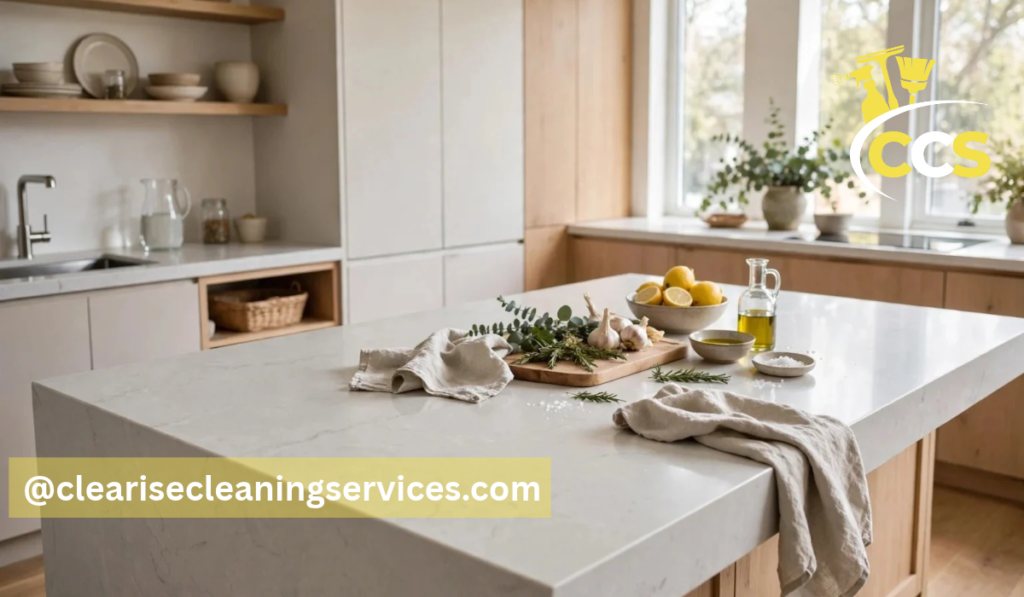
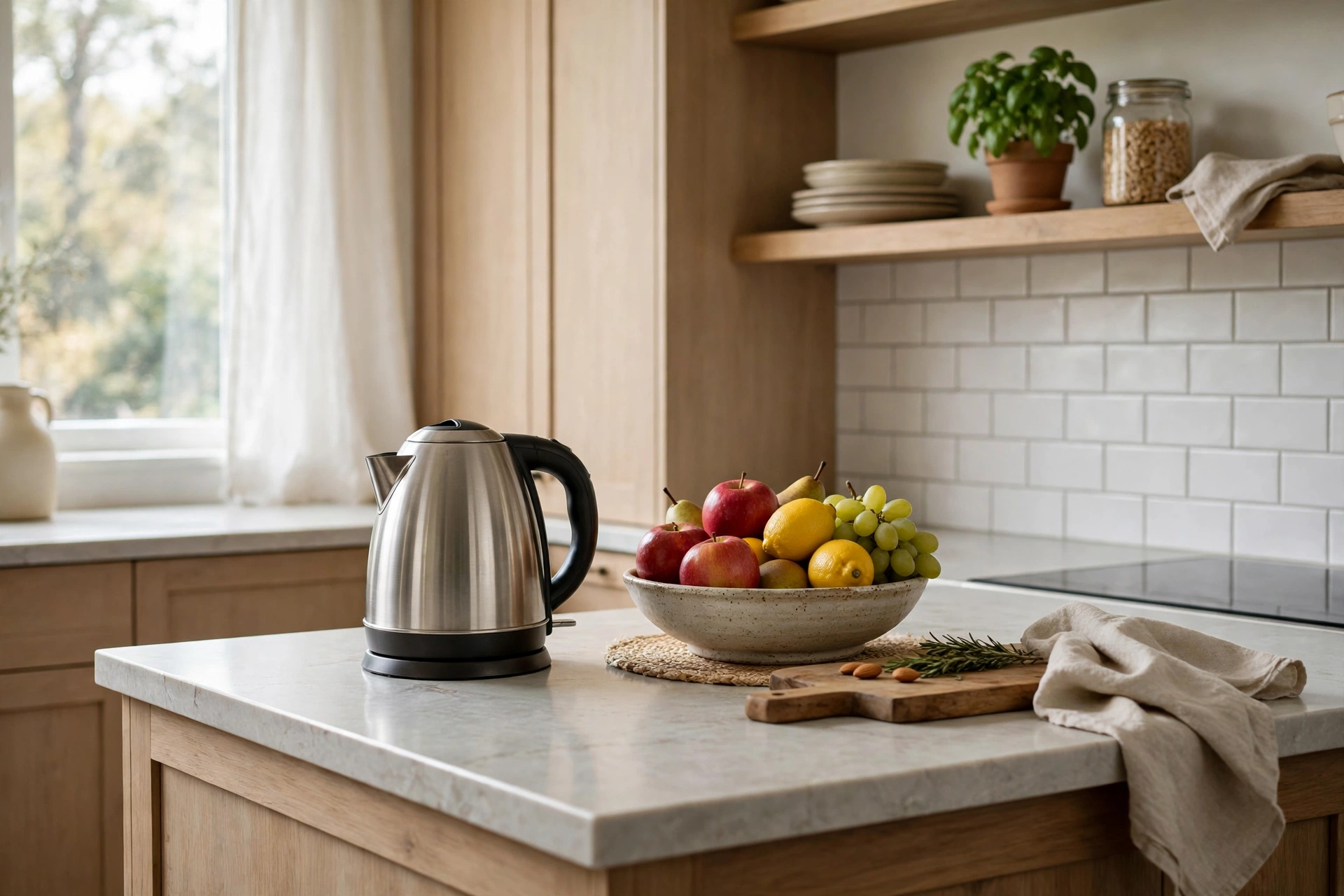
Quartz countertops are engineered stone surfaces made mainly from crushed natural quartz mixed with resins and pigments, then pressed into slabs and polished. They are not slabs cut from a single block of stone, but a manufactured surface designed to look like stone while behaving more evenly from slab to slab.
That engineered nature is the key to understanding them. Because the material is made rather than quarried whole, its colour and pattern are more consistent, it has no natural cracks or weak veins, and it does not need sealing in the way some natural stones do. It gives the look of stone with the predictability of a made product, which is why it suits busy family kitchens so well.
What Quartz Countertops Are Made Of
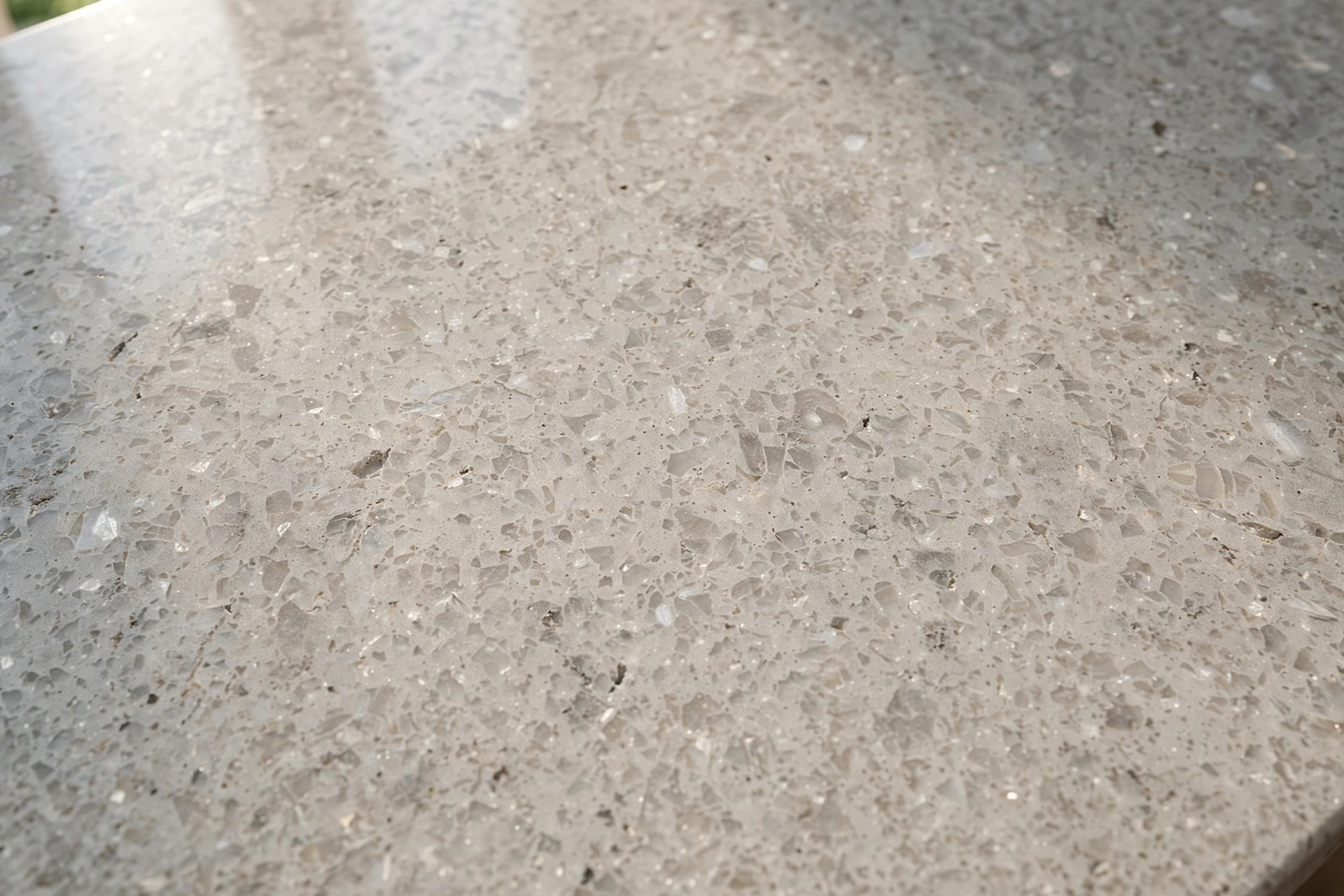
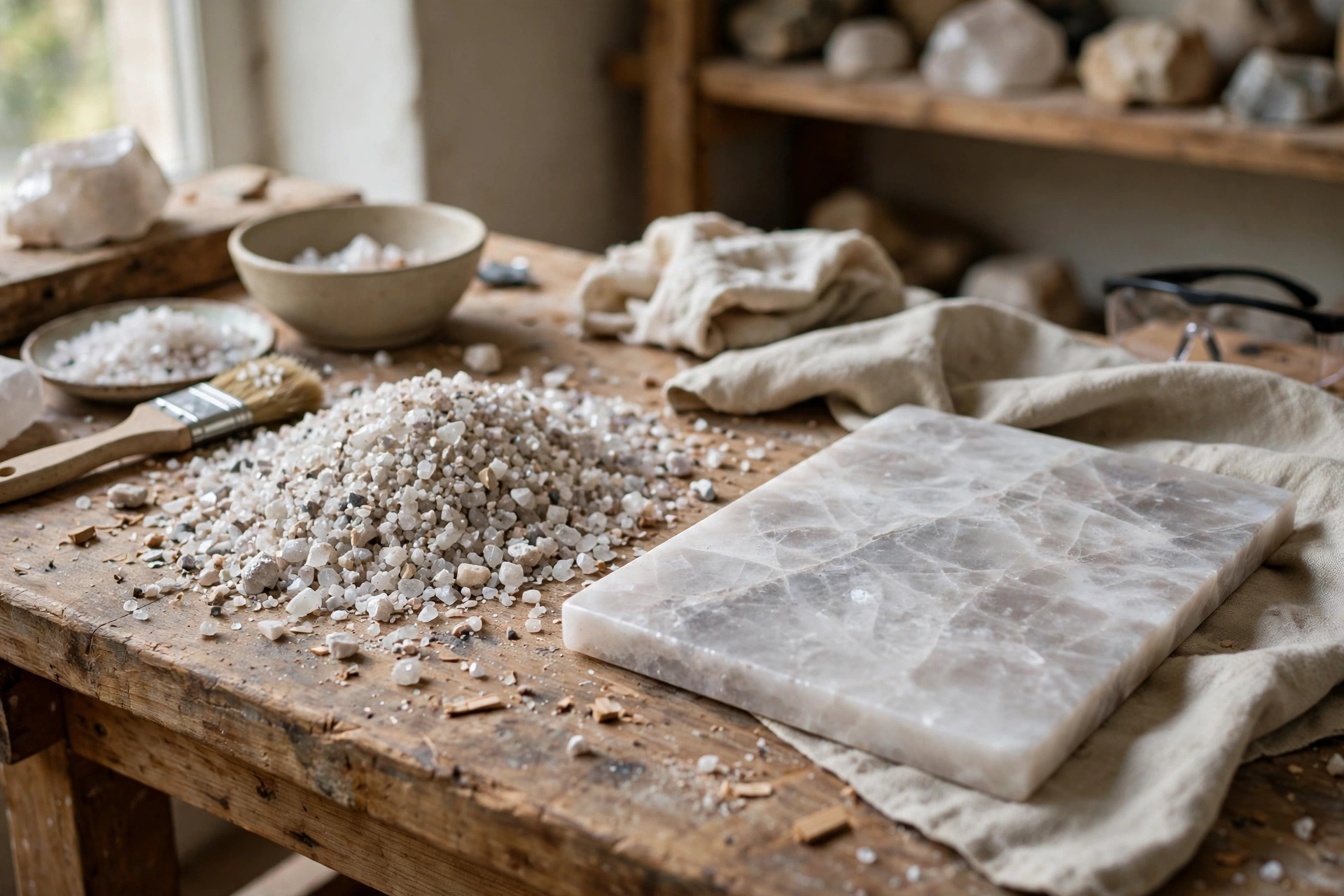
Quartz countertops are made mostly from crushed quartz, one of the hardest minerals found in nature, held together with a resin binder and coloured with pigments. The quartz gives the surface its hardness and its stone-like look, while the resin binds the particles into a solid, non-porous slab.
The exact mix varies by maker, and no two brands use precisely the same recipe, so it is best to think of quartz countertops as a family of products rather than one identical material. Some slabs include small amounts of other minerals or recycled glass for sparkle or texture, and the pigment decides the colour, from plain white to deep black or veined marble looks. What matters for the buyer is the finished slab: hard, dense, and consistent in colour and pattern.
How Quartz Countertops Are Made
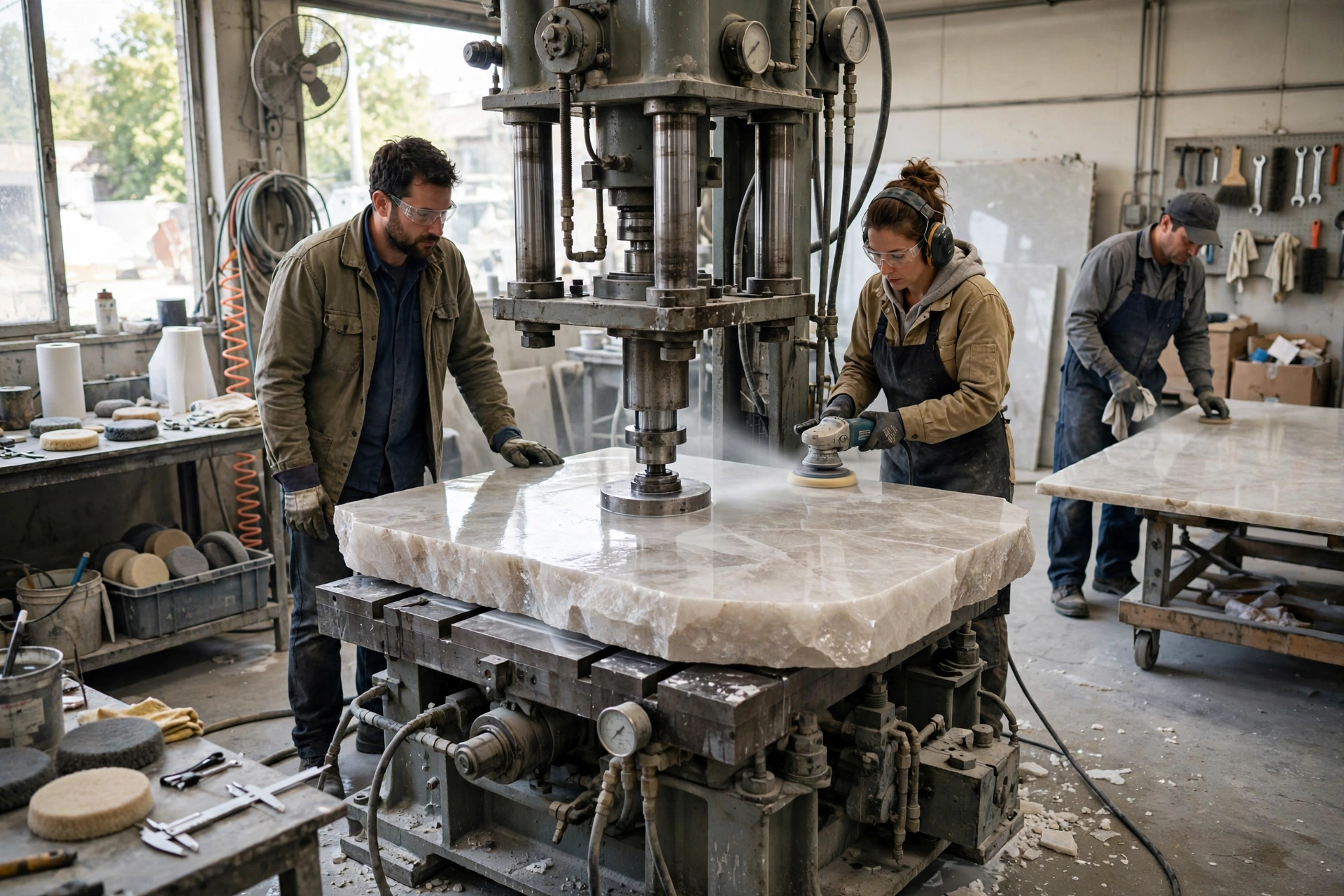
Quartz countertops are made by crushing natural quartz into grains, mixing those grains with resin and pigment, pressing the mixture into large slabs under pressure, and then curing and polishing the slabs. The pressing removes air and packs the grains tightly together, which is what gives the finished surface its density and strength.
After curing, each slab is polished to its final finish, usually a smooth shine, though honed and matte finishes are also available. The slabs are then cut to size for a kitchen or bathroom, with sink cut-outs, tap holes and edge profiles shaped by the fabricator. Because the slab starts as a manufactured sheet, large pieces can be made without the natural flaws that sometimes appear in quarried stone, and matching pieces for a long run of worktop is easier.
Appearance and Colour Options
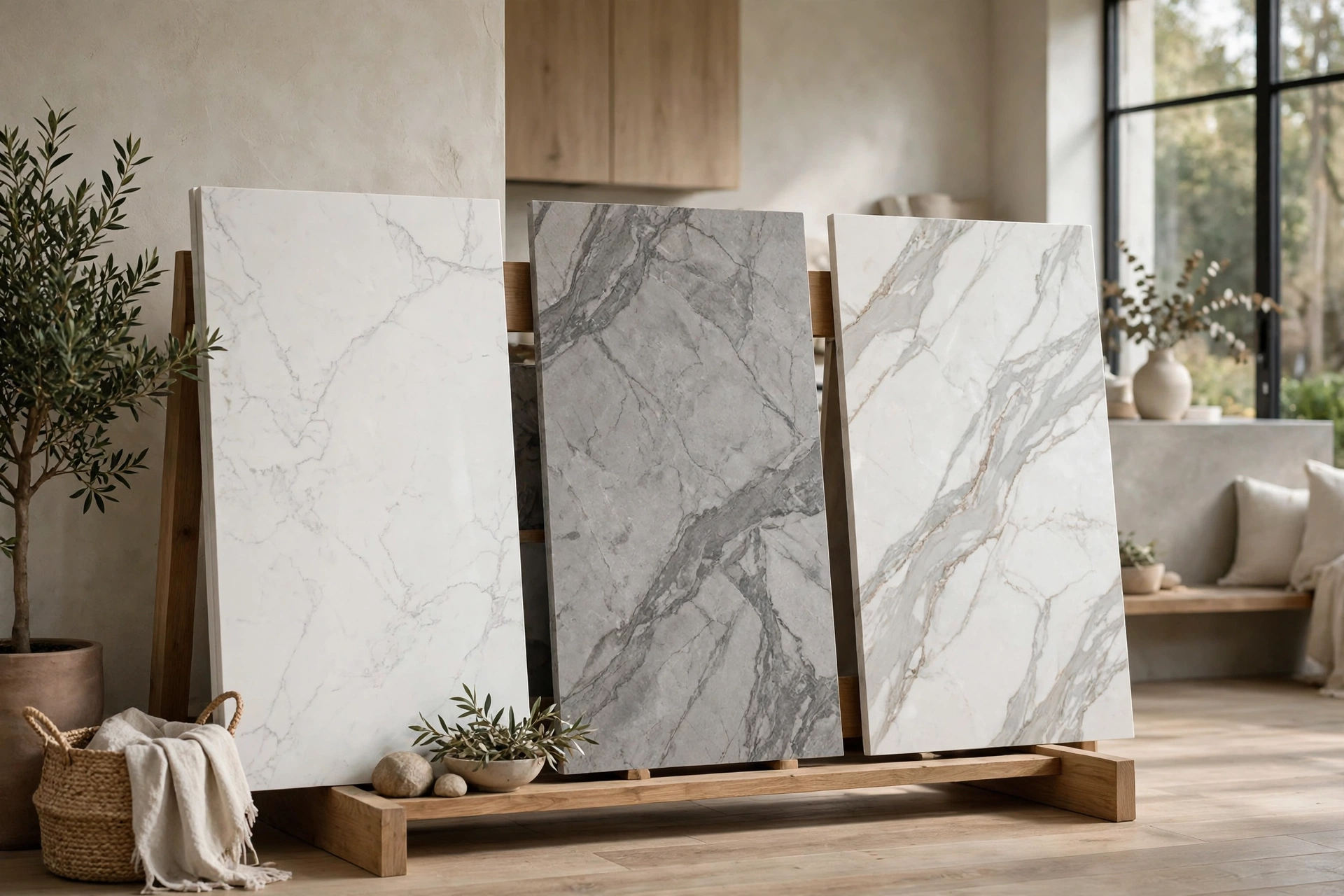
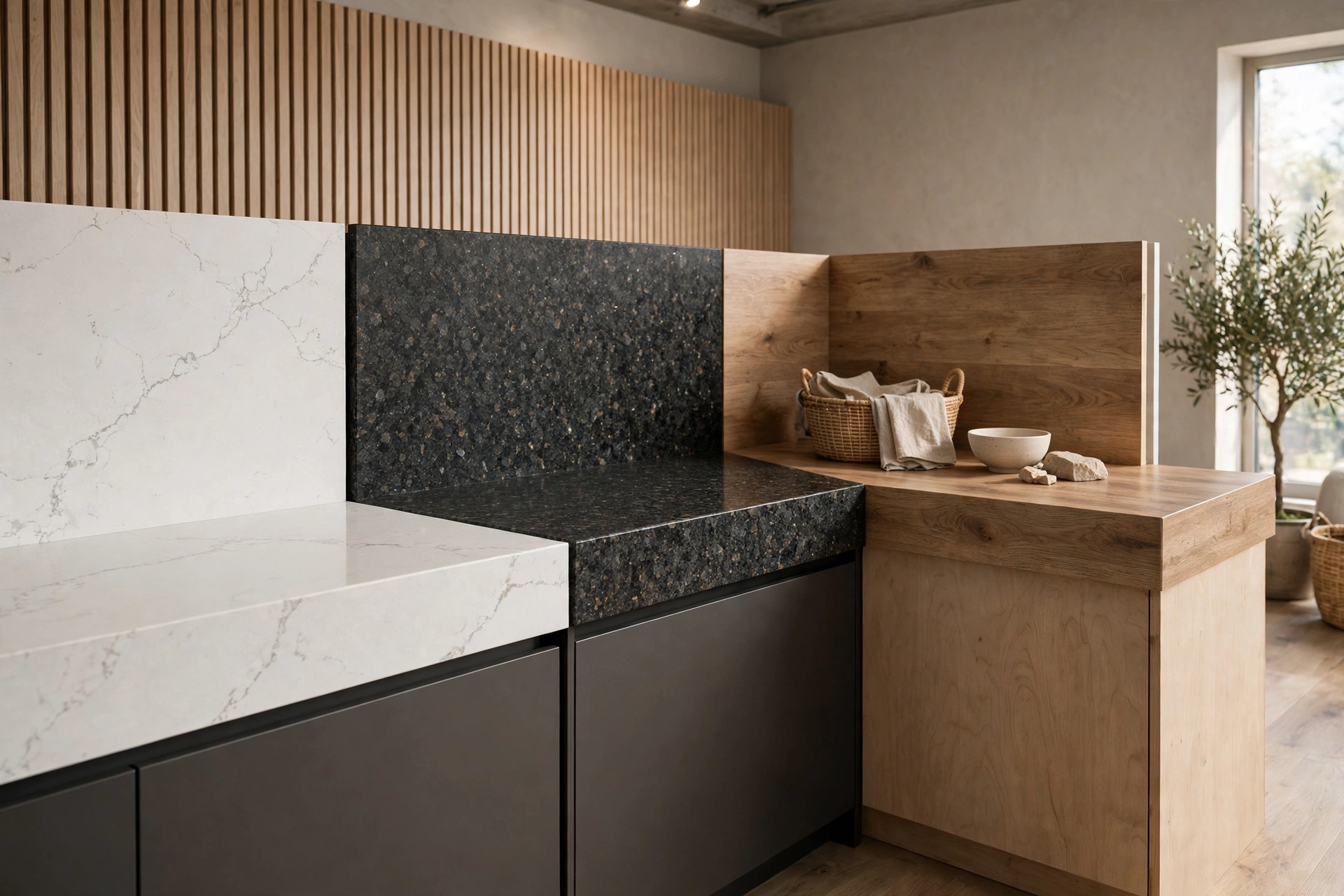
Quartz countertops come in a very wide range of colours and patterns, from plain whites and greys to bold veined designs that imitate marble or granite. Because the pattern is created during manufacture, it is repeatable, so a sample gives a reliable idea of the finished countertop, unlike natural stone, where each slab can differ markedly.
Plain colours suit modern, minimal kitchens, where a calm, unbroken surface lets cabinets and fittings take centre stage. Veined designs suit kitchens that want the drama of marble without its upkeep, since the veins are printed into the pattern rather than running through a natural stone. Light colours brighten a small kitchen, while darker colours hide crumbs and marks but show dust and water spots more readily. Checking a large sample in your own kitchen light, rather than a small chip in a showroom, is the surest way to judge a colour.
Durability and Everyday Wear
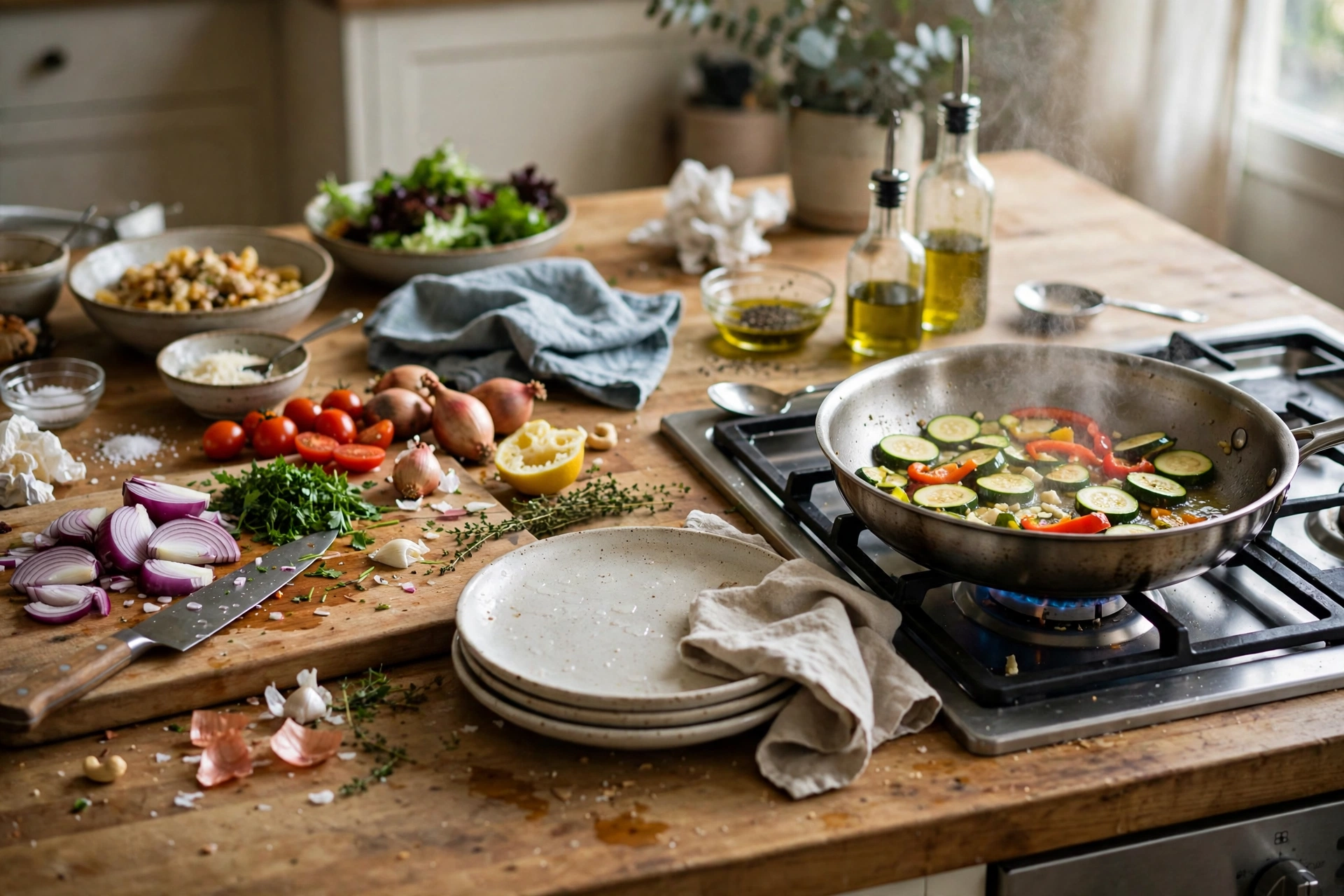
Quartz countertops are hard, dense and non-porous, which makes them resistant to stains, scratches and chips in everyday kitchen use. Spills such as coffee, wine and cooking oil sit on the surface rather than soaking in, so they wipe away without leaving a mark, and the hard surface stands up well to plates, pans and chopping boards.
That does not mean quartz is indestructible. A heavy object dropped from height can chip an edge, and dragging a sharp knife across the surface can still leave a mark, so chopping boards remain good practice. Seams are another everyday detail worth knowing about: on very long runs, two slabs are joined, and a good fabricator makes the join neat and level, though it may still be faintly visible on close inspection. The non-porous surface is a real advantage in a kitchen, though, because it does not harbour spills and does not need regular sealing to stay stain-resistant. For a busy family kitchen, that combination of hardness and low upkeep is the main reason quartz is so popular.
Heat Resistance: What to Watch For
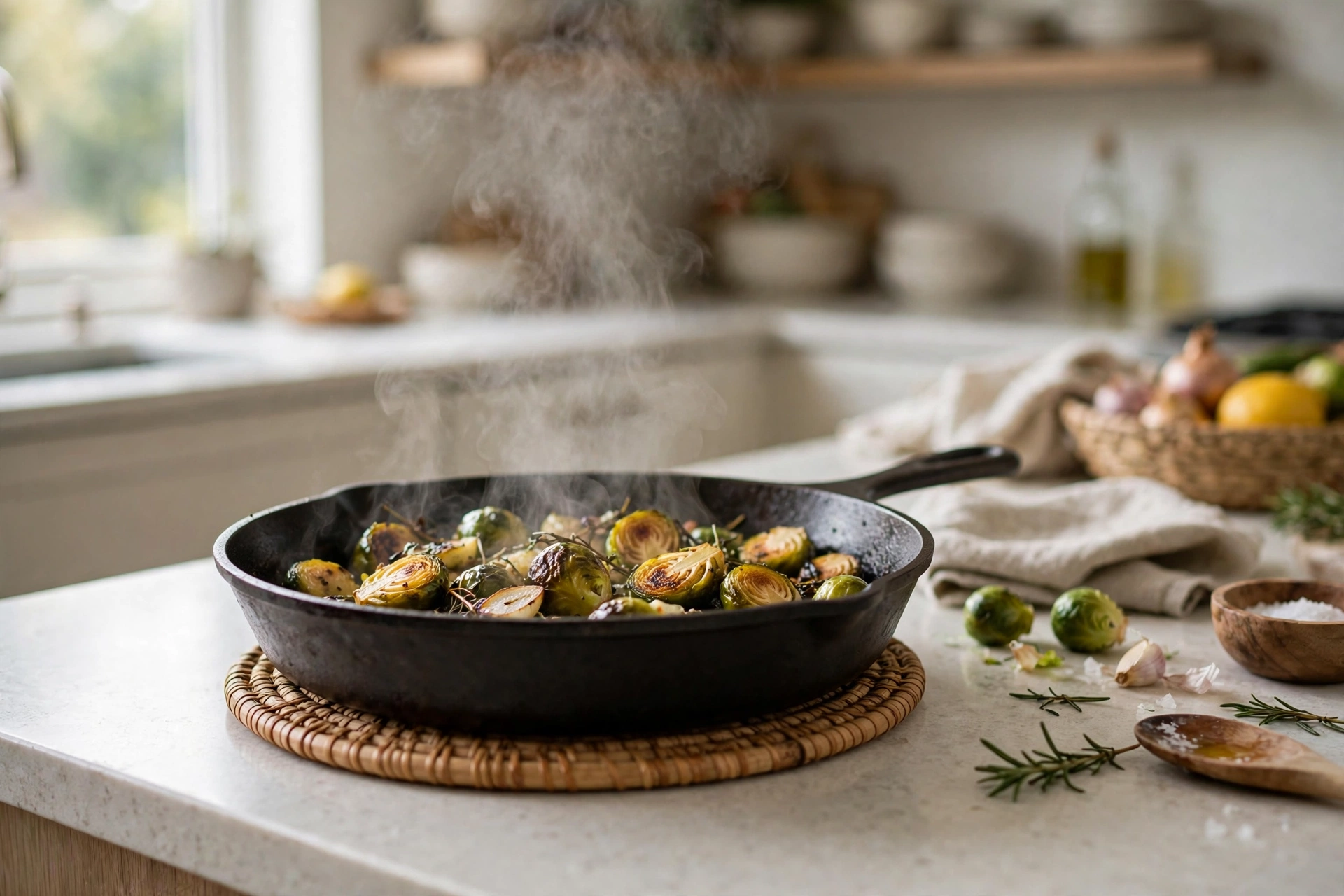
Quartz countertops resist everyday heat reasonably well, but they are not as heat-proof as granite or other natural stones, because the resin binder in the slab can be damaged by very high temperatures. A hot mug will not harm it, but a pan straight from the hob can scorch the resin or crack the slab.
The practical rule is simple: always use a trivet or heat pad under hot pans, baking trays and slow cookers, and never place a roasting pan straight from the oven onto the worktop. This one habit protects the surface for its whole life. If a heat mark does appear, it is often in the resin rather than the stone, so it may not polish out, which is why prevention matters more than repair. With trivets as routine, heat is rarely a problem in a normal kitchen.
Cleaning and Maintaining Quartz Countertops
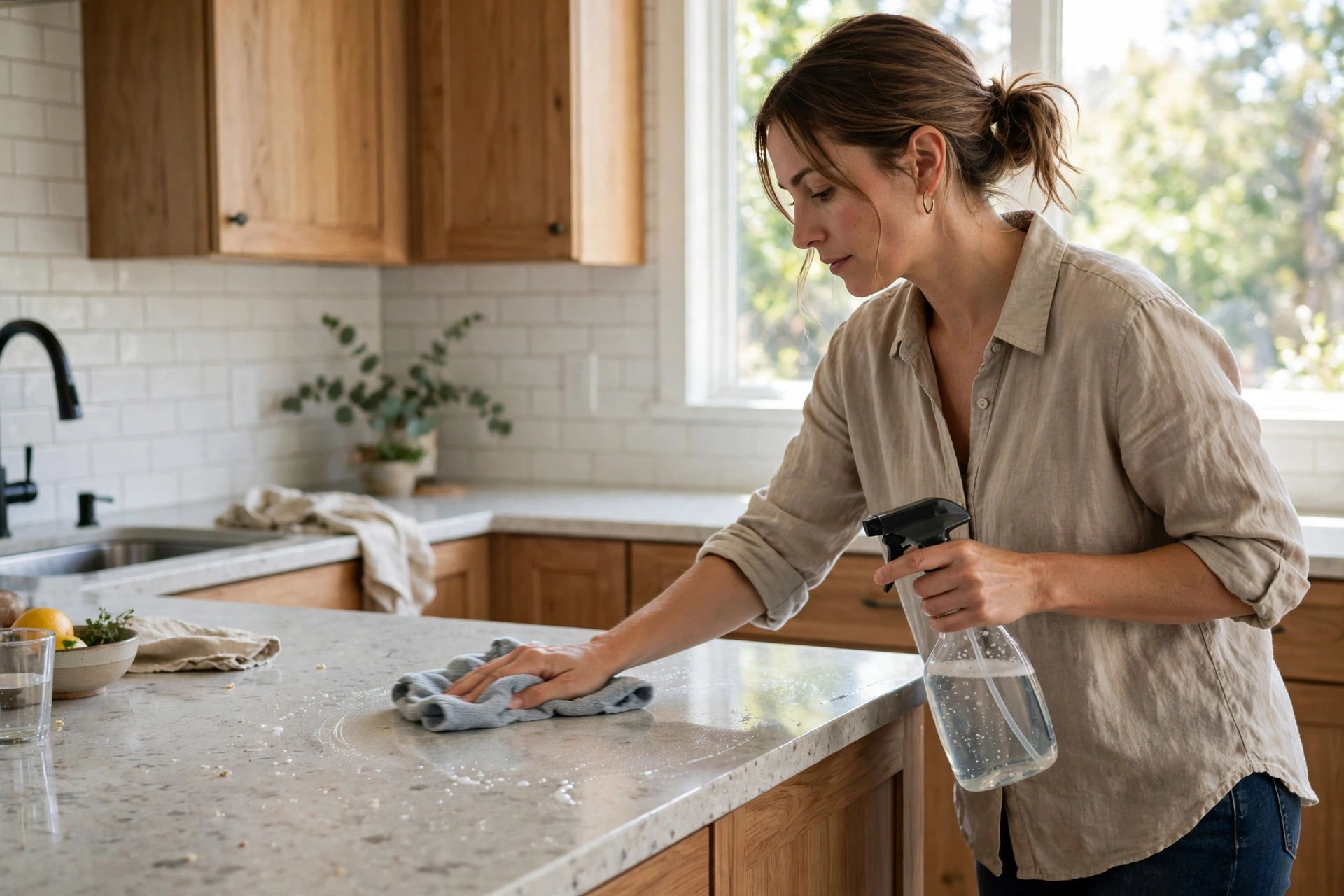
Cleaning quartz countertops is simple, because the non-porous surface needs only warm water and a mild washing-up liquid for everyday marks, wiped with a soft cloth. There is no sealing routine, no special stone cleaner and no waxing, which keeps the weekly upkeep short and straightforward.
For dried-on food or grease, a soft sponge and mild cleaner will usually lift the mark without scrubbing hard, and a plastic scraper can help with stubborn spots. Avoid harsh abrasive pads, which can dull the polish over time, and avoid strong chemicals such as bleach-based cleaners or oven cleaner, which can damage the resin and the finish. Spills are best wiped up promptly, not because they will stain quickly, but because dried spills are harder to remove and can leave a film. That simple routine is all most quartz countertops ever need.
Edges and Thickness Explained
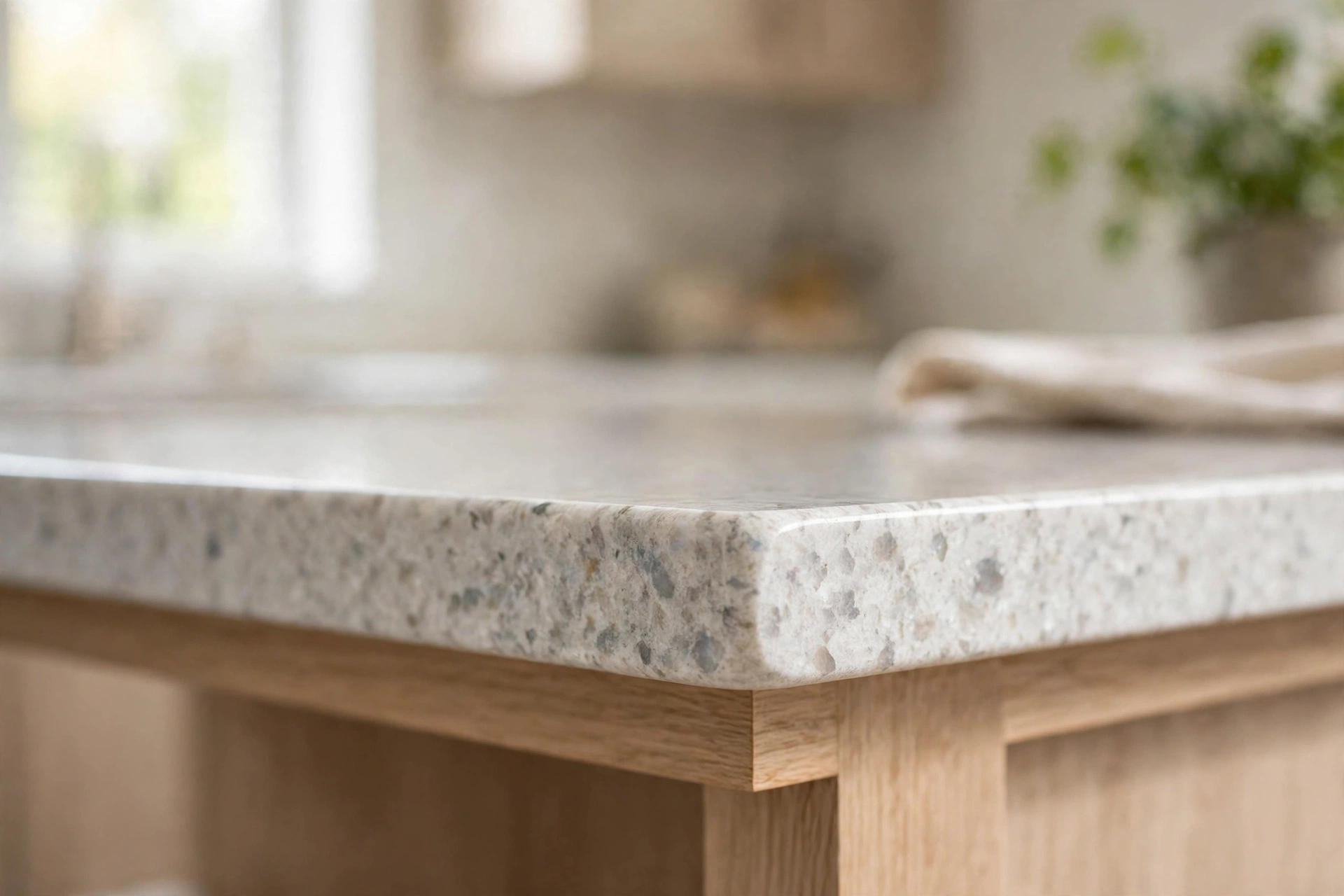
Quartz countertop edges come in several profiles, from a simple straight or eased edge to rounded, bevelled and waterfall-style edges, and the edge you choose changes both the look and the feel of the worktop. A rounded edge is softer to lean against, while a built-up edge looks thicker and more substantial.
Thickness is usually around 20 millimetres or 30 millimetres for the slab itself, with built-up edges making the front appear thicker where desired. Thicker slabs feel more solid and suit large islands, while thinner slabs suit a lighter, modern look and cost less in material. The edge profile and thickness should be agreed with the fabricator before cutting, because changing them afterwards is difficult. A sample edge, seen and touched in person, is worth more than a drawing when making this choice.
Where Quartz Countertops Work Best
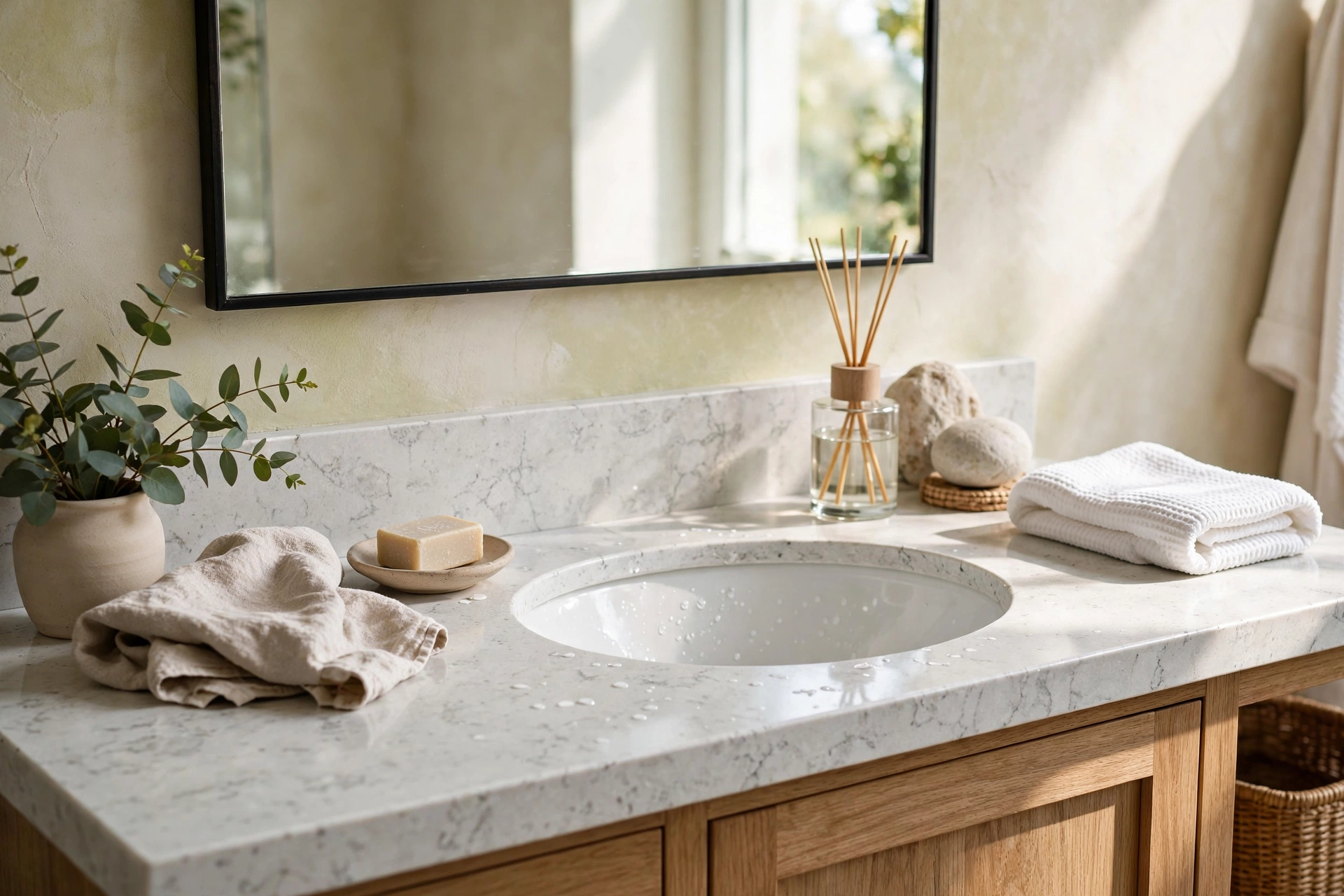
Quartz countertops work best in kitchens and bathrooms, where a hard, stain-resistant, low-maintenance surface matters most and the worktop is used every day. In a kitchen, they suit worktops, islands and breakfast bars, coping with cooking spills, hot plates and constant wiping without sealing or special care.
In a bathroom, quartz suits vanity tops, where its resistance to water marks, cosmetics and cleaning products keeps it looking fresh, and where its consistent pattern suits smaller pieces. Quartz also suits laundry rooms and home offices, where a wipe-clean surface handles spills and daily use without fuss. In rental homes it is a practical upgrade too, since it stands up to different tenants and needs no special care routine to stay looking good. It is less suited to outdoor kitchens, because prolonged strong sunlight and weather can affect the resin and colour over time, so a stone rated for outdoor use is a safer choice outside. Inside the home, though, quartz is one of the most forgiving countertop materials available, which is why it suits busy households so well.
Quartz Countertops vs Other Countertop Materials
Quartz is one choice among several, and each material trades looks, upkeep and cost differently, so comparing them side by side helps. Granite is natural stone with unique patterns but needs sealing and varies slab to slab, while laminate is much cheaper but less heat- and scratch-resistant, and solid surface can be repaired but scratches more easily.
| Material | Look | Upkeep | Best for |
|---|---|---|---|
| Quartz | Consistent, stone-like, many colours | Low, no sealing, easy wiping | Busy kitchens and bathrooms |
| Granite | Unique natural patterns | Sealing needed, varies by slab | Kitchens wanting natural stone |
| Laminate | Wide colours, wood or stone looks | Low, but less heat-resistant | Budget kitchens |
| Solid surface | Seamless, soft matte look | Low, but scratches more easily | Bathrooms and light-use kitchens |
What Quartz Countertops Cost
The cost of quartz countertops depends on the colour and pattern, the slab thickness, the edge profile, the size of the job, and the fabrication and fitting work, rather than on the material alone. Plain colours are usually more affordable than heavily veined marble-look designs, and thicker slabs and fancy edges add to the total.
Fabrication is a large part of the price, because each worktop is cut, shaped and polished to fit a specific kitchen, with sink cut-outs, tap holes and joins all done by hand or machine. Fitting adds further cost, especially for islands, long runs and awkward corners, and for removing an old worktop first. Getting a quote that covers material, fabrication, fitting and any removal together is the surest way to compare options fairly, since a cheap slab price alone can hide expensive extras.
Buying Checklist and Common Mistakes
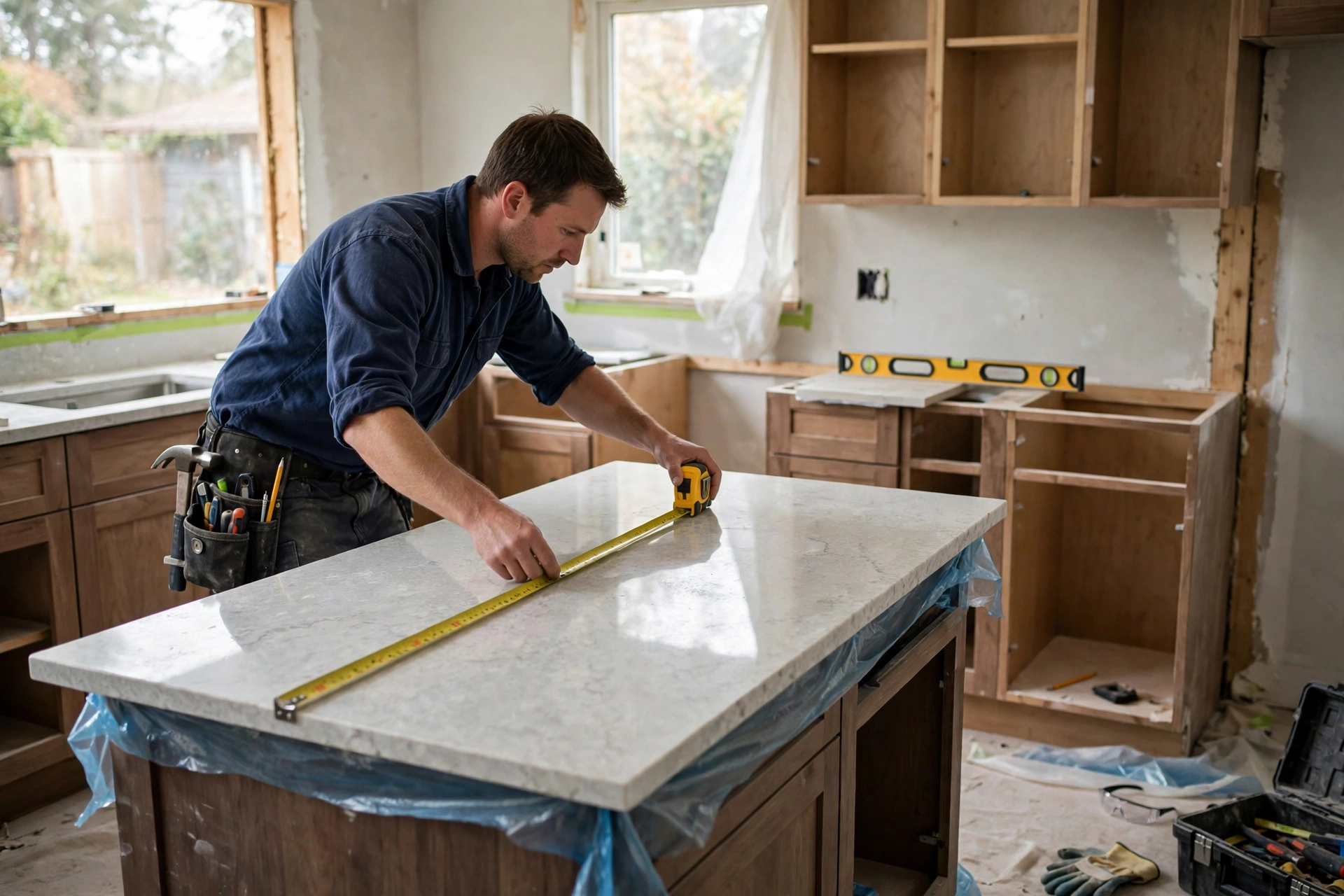
Buying quartz countertops goes smoothly when the choices are made in order, before cutting starts, because changes after fabrication are costly and sometimes impossible. Work through this checklist, and watch for the common mistakes beside each step, so the finished worktop matches what you pictured.
Follow these steps in order:
- Choose the colour from a large sample seen in your own kitchen light, not a small chip.
- Confirm the thickness and edge profile with the fabricator, and see a sample edge.
- Measure carefully, including overhangs, upstands and appliance gaps, and confirm the template.
- Agree what the quote covers: material, fabrication, fitting, joins, cut-outs and removal.
- Plan for heat: buy trivets and agree that hot pans never go straight onto the surface.
- Check the care advice in writing, and keep the fabricator’s guarantee details safe.
The most common mistakes are choosing colour from a tiny sample, forgetting to agree the edge and thickness, and skipping trivets after fitting. Slowing down at each step avoids all three, and a written quote protects both sides if anything is unclear.
Conclusion
Quartz countertops are engineered stone surfaces, made mainly from crushed quartz bound with resin, that combine a stone-like look with a hard, non-porous, low-maintenance surface. They resist stains and everyday wear, come in consistent colours and patterns, and need only simple cleaning, with trivets as the one essential habit for heat.
What matters most is choosing the colour from a large sample, agreeing thickness and edge before cutting, and getting a full quote for material, fabrication and fitting. Done that way, a quartz countertop is a practical, long-lasting choice for a busy kitchen or bathroom, giving the look of stone without the upkeep that natural stone often demands.
Frequently Asked Questions
What are quartz countertops made of?
Quartz countertops are made mainly from crushed natural quartz mixed with resin and pigments, pressed into slabs and polished, giving a hard, dense, engineered stone surface.
Are quartz countertops better than granite?
Quartz is more consistent and needs no sealing, while granite offers unique natural patterns but needs sealing, so the better choice depends on whether you value consistency or natural variation.
Do quartz countertops need sealing?
No, quartz countertops do not need sealing, because their non-porous surface resists stains without a sealer, unlike some natural stones that need regular sealing.
Can you put hot pans on quartz countertops?
No, hot pans straight from the hob or oven can damage the resin in quartz, so always use a trivet or heat pad under hot pans, trays and slow cookers.
How do you clean quartz countertops?
Clean quartz countertops with warm water, mild washing-up liquid and a soft cloth, avoiding abrasive pads and harsh chemicals that can dull the polish or damage the resin.
Disclaimer: This article is provided for general information only. It is not professional building, design, or installation advice, and it does not promote any brand, product, or service. Quartz countertop materials, colours, thicknesses, and suitability vary by maker and supplier, so always check the guidance for the specific product and seek qualified professional advice before ordering or fitting, especially for large islands, outdoor use, or structural changes.
Thanks for visiting Clearise Cleaning Services! Discover more helpful tips and expert cleaning insights by exploring our related categories.