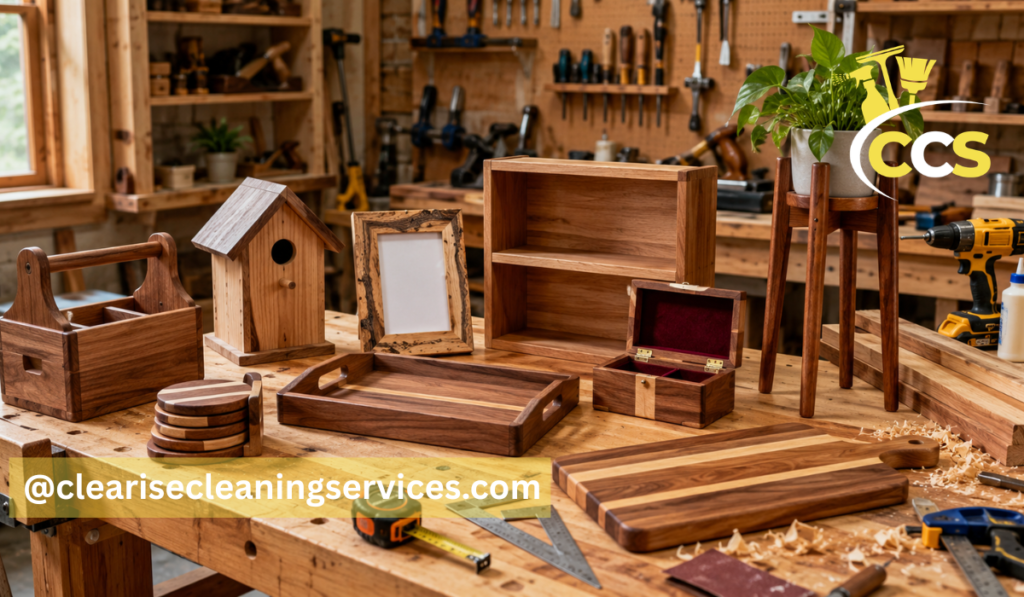
Woodworking projects turn simple pieces of wood into useful, decorative, or meaningful objects. Some people begin woodworking because they want to repair things around the house. Others enjoy making furniture, gifts, storage items, or home decorations. It can be a relaxing weekend hobby, a practical skill, or even a small source of income.
One of the best things about woodworking is that projects can match almost any skill level. A beginner can build a basic birdhouse or serving tray with only a few tools. Someone with more experience may prefer a coffee table, floating shelf, or cabinet. Advanced makers can take on larger builds such as dining tables, workbenches, chairs, and chests of drawers.
The right project depends on several factors. These include your experience, confidence, available tools, workspace, budget, wood type, and the amount of time you can spend. A project that looks simple online may require special tools or accurate cuts, so careful planning is important.
This guide covers beginner, intermediate, and advanced woodworking projects. It also explains practical ideas for adults, creative builds, projects that may sell, free plans, tools, wood choices, safety, and common mistakes.
Quick Guide to Woodworking Projects
| Skill Level | Suitable Projects | Common Tools | Typical Time |
| Beginner | Birdhouse, coasters, serving tray, picture frame | Tape measure, drill, handsaw, sandpaper | A few hours to one weekend |
| Easy Adult Projects | Storage box, bench, plant stand, wall organizer | Drill, jigsaw, clamps, square | One to two weekends |
| Intermediate | Cutting board, coffee table, floating shelves | Miter saw, router, pocket-hole jig | Several days |
| Advanced | Dining table, workbench, jewelry box, chest of drawers | Table saw, planer, jointer, band saw | Several weeks |
| Sellable Projects | Trays, shelves, planters, signs, small furniture | Depends on product design | Varies by size and quantity |
Step-by-Step Guide to Starting a Woodworking Project
- Choose a suitable project: Select a design that matches your skill level, available time, budget, and workspace.
- Review the complete plan: Check all measurements, diagrams, cutting instructions, hardware, and assembly steps before buying materials.
- Prepare the tools and wood: Gather the required tools and inspect the wood for cracks, warping, knots, or other damage.
- Measure and mark carefully: Use a tape measure and square to create clear, accurate marks before making any cuts.
- Cut and test the parts: Cut each piece safely, then place the parts together without glue to check their fit.
- Assemble the project: Apply wood glue where needed, use suitable fasteners, and secure the parts with clamps.
- Sand the surfaces: Begin with a suitable coarse grit and move gradually to finer sandpaper for a smooth result.
- Apply the finish: Choose paint, stain, oil, or another finish suited to the wood and the project’s intended use.
Choosing the Right Woodworking Project
A successful woodworking experience usually begins with choosing a project that matches your current ability. It may be tempting to start with a large dining table or detailed cabinet, but a complicated build can become frustrating when you are still learning basic measuring, cutting, drilling, and sanding.
Beginners should choose projects with simple shapes, straight cuts, and easy joints. These builds provide a chance to learn how wood behaves without requiring expensive machinery. A small shelf, box, tray, or birdhouse can teach many useful skills.
Before starting, think about the tools required. Some plans can be completed with a handsaw, drill, tape measure, square, glue, and sandpaper. Other plans may require a table saw, router, pocket-hole jig, planer, or band saw. Avoid choosing a project that depends on equipment you do not know how to use safely.
Workspace also matters. Large furniture requires room for cutting, assembly, and finishing. Smaller projects are easier to complete in a garage, shed, balcony workshop, or compact indoor space.
You should also estimate the cost of wood, hardware, glue, sandpaper, and finish. A clear plan helps you avoid buying unnecessary materials or starting a build that requires more time and money than expected.
Woodworking Projects for Beginners
The best woodworking projects for beginners are simple, useful, and forgiving. They allow new makers to practice essential skills while still producing something worth keeping.
A birdhouse is a classic first project because it mainly involves straight cuts and basic assembly. Cedar is often a practical choice for outdoor birdhouses because it handles weather better than many untreated indoor woods. A single fence board may provide enough material for a small design.
A serving tray is another manageable option. It normally includes a flat base, raised sides, and handles. This project teaches measuring, drilling, gluing, clamping, and sanding. It can also be customized with stain, paint, or a clear protective finish.
Wooden coasters can be made from small boards, branches, or glued strips of contrasting wood. Because they require little material, they are useful for practicing smooth cuts and finish application.
Picture frames introduce 45-degree miter cuts. These cuts must meet neatly at the corners, so the project helps beginners improve accuracy. A basic bookshelf is slightly larger but still approachable when built with simple butt joints, screws, or pocket holes.
Small weekend builds help beginners develop confidence. They also make it easier to identify mistakes and improve without wasting a large amount of wood.
Easy Woodworking Projects for Adults
Woodworking projects for adults do not have to be difficult or highly technical. Many practical household items can be built with basic tools and a clear plan.
A wooden storage box is a useful place to start. It can hold toys, tools, craft supplies, blankets, or garden items. The design can be kept simple with square panels, screws, and glue. Adding a lid, handles, or internal dividers provides an extra challenge without making the project too complex.
A basic bench is another practical choice. It teaches how to build a stable frame and attach legs securely. The size can be adjusted for an entryway, garden, bedroom, or workshop.
Wall organizers are helpful for keys, mail, tools, or office supplies. Because they are mounted on a wall, builders also learn the importance of using suitable fasteners and locating secure mounting points.
Plant stands are popular because they combine simple construction with decorative appeal. A basic design may use a square top and four straight legs, while a more detailed version can include tapered legs or lower shelves.
These projects balance usefulness and creativity. They can often be completed over one or two weekends, depending on the design and finish. They are also affordable when made from standard boards or suitable scrap wood.
Intermediate Woodworking Projects
Intermediate woodworking projects require better accuracy and a stronger understanding of assembly. They may introduce more advanced joints, larger panels, hidden fasteners, or moving parts.
A cutting board is a common intermediate build. Hardwood strips such as maple, walnut, or cherry are cut, arranged, glued, clamped, flattened, and sanded. The glue joints must be tight, and the finished surface must be smooth. A food-safe finish, such as suitable mineral oil or a cutting-board conditioner, is normally used instead of a surface coating that may chip.
A coffee table involves more structural planning. The base must be stable, the legs should sit evenly, and the top needs to remain flat. Builders may use pocket holes, dowels, half-lap joints, or mortise-and-tenon joints, depending on their skill level.
A wooden tool tote introduces angled cuts and a dowel handle. Floating shelves require careful wall installation and often use hidden internal supports. Small cabinets add doors, shelves, hinges, and more detailed fitting.
At this level, measuring errors become more noticeable. Careful clamping is also important because boards can move while glue dries. Intermediate makers should check for square corners throughout assembly rather than waiting until the project is complete.
Advanced Woodworking Projects
Advanced woodworking projects demand patience, planning, accurate machinery setup, and a good understanding of wood movement and joinery. These builds often use expensive materials, so mistakes can be costly.
A heavy-duty workbench is a major project that may include a thick laminated top, strong legs, stretchers, vises, shelves, and dog holes. It must remain stable during planing, cutting, and assembly work.
A dining room table requires a flat tabletop, a strong base, and carefully fitted aprons or supports. Large panel glue-ups can be difficult because the boards must stay aligned while the glue is clamped. Some designs include breadboard ends, which require an understanding of seasonal wood movement.
An Adirondack chair uses angled parts, curved shapes, and outdoor finishes. Builders may need templates, a band saw, or a router to create matching pieces.
Jewelry boxes are smaller, but they require very high precision. Mitered corners, dovetails, fitted lids, small hinges, internal trays, and fabric linings leave little room for error. A chest of drawers is even more demanding because the case must remain square and every drawer must open smoothly with even gaps.
Advanced builds often require a jointer, planer, table saw, router, or band saw. The real challenge, however, is not simply owning these tools. It is knowing how to use them accurately and safely.
Unique Woodworking Projects for Creative Makers
Unique woodworking projects allow makers to move beyond standard furniture and add personal ideas to their work. A project does not need a completely new purpose to feel original. Changing the shape, wood combination, size, hardware, or finish can create a distinctive result.
Modular shelves are a good example. Instead of building one fixed unit, you can create separate boxes or shapes that can be arranged in different ways. This makes the design flexible for changing rooms or storage needs.
Hidden-compartment boxes combine practical storage with an element of surprise. The compartment should be simple enough to operate reliably but discreet enough to remain unnoticed.
Sculptural wooden lamps can use curved pieces, stacked layers, or geometric frames. Electrical parts should always be suitable for the design and installed according to safe instructions.
Custom desk accessories are another creative option. Pen holders, monitor stands, cable organizers, headphone stands, and small drawers can be shaped around a person’s specific workspace.
Personal details make ordinary projects more meaningful. A tray can include contrasting handles, a shelf can follow an unusual wall shape, and a box can be sized for a special collection. Originality often comes from solving a real need rather than adding unnecessary decoration.
Woodworking Projects That Sell
Some woodworking projects that sell are small, useful, easy to display, and affordable to produce. Popular examples may include cutting boards, serving trays, shelves, planters, signs, coasters, storage boxes, and compact furniture.
However, a product should not be selected only because it appears popular online. Local demand, material prices, shipping costs, competition, and customer preferences can vary. Before producing several items, it is sensible to test one or two designs.
Profit depends on more than the price of wood. Makers should consider hardware, glue, sandpaper, finish, packaging, tool wear, electricity, delivery, and working time. A project that uses cheap materials may still be unprofitable if it takes many hours to complete.
Finish quality is especially important when selling handmade products. Rough edges, visible glue, uneven stain, weak joints, or unstable legs can quickly reduce customer trust. Every item should be clean, strong, smooth, and suitable for its intended use.
Pricing should be realistic. Charging too little may not cover costs, while an unrealistic price may discourage buyers. Clear photos, accurate dimensions, care instructions, and honest descriptions can help customers understand the value of handmade work.
Free Woodworking Projects and Plans
Free woodworking projects can be useful for learning new skills, but the quality of free plans varies widely. A reliable plan should include finished dimensions, a material list, a cutting list, tool requirements, diagrams, and clear assembly steps.
Good plans explain the order of construction. For example, they should make it clear whether parts need to be sanded before assembly, where holes should be drilled, and when glue or screws are used.
Measurements should be consistent throughout the plan. If a diagram shows one size while the cutting list gives another, stop and check the design before cutting wood. It may help to sketch the project or build a small cardboard model.
Some online collections use titles such as “100 easy woodworking projects,” but a large number of ideas does not always mean the plans are complete. A smaller collection with accurate drawings and tested instructions may be more useful than a long list with little detail.
Always read the entire plan before buying materials. This allows you to identify missing tools, unclear steps, difficult joints, or measurements that need to be adjusted for your space.
Using Free Woodworking Plans PDF Files
Free woodworking plans PDF files are helpful because they can be saved, printed, and used away from a computer. A printed copy can stay near the workbench, making it easier to mark completed steps, write notes, and record measurement changes.
Before printing, check whether the plan uses full-size templates. Some template pages must be printed at 100 percent scale. Options such as “fit to page” may change the size and make the template inaccurate. Many plans include a small test square that can be measured after printing.
Review the material list and confirm that the listed board sizes are available in your area. Wood dimensions may be shown as nominal sizes, while the actual boards are smaller. The plan should make clear which measurements are being used.
Check each woodworking projects PDF guide for missing pages, unclear diagrams, or links to separate instructions. A cutting diagram is useful, but it should not replace full assembly guidance.
Printable plans can also help organize work. You can label parts, create a cutting order, track hardware, and note which surfaces require sanding or finishing before assembly.
Essential Tools for Woodworking Projects
Basic woodworking does not require a workshop full of expensive machines. Accurate measuring and careful technique are often more valuable than owning many power tools.
A tape measure, combination square, speed square, ruler, and marking pencil help create accurate layouts. A simple mistake at the measuring stage can affect every later step, so marks should be clear and checked before cutting.
Cutting tools may include a handsaw, jigsaw, circular saw, or miter saw. A table saw offers greater control for many repeated cuts, but it requires training, enough workspace, and careful safety practices.
A drill and suitable bits are useful for making holes and driving screws. Wood glue adds strength to many joints, while clamps hold pieces in position as the glue dries. Four clamps may be enough for small projects, but larger panels often require more.
Sandpaper in coarse, medium, and fine grits helps remove tool marks and prepare the surface for finishing. Common choices include 80 grit for rough shaping, 120 grit for general smoothing, and 180 or 220 grit before many finishes.
Intermediate and advanced makers may add a router, pocket-hole jig, planer, jointer, band saw, or drill press as their projects become more complex.
Best Wood Types for Different Projects
The best wood depends on the project’s purpose, location, budget, appearance, and required strength.
Pine is widely used for beginner projects because it is affordable, easy to cut, and commonly available. It can dent more easily than many hardwoods, but it works well for shelves, boxes, simple furniture, and practice builds.
Cedar is useful for certain outdoor projects because it offers natural resistance to decay and has a noticeable scent. It is often chosen for planters, birdhouses, and outdoor storage. Fir is another practical softwood that can be used for framing, benches, and general utility projects.
Hardwoods such as oak, maple, walnut, and cherry are normally more expensive, but they can provide greater durability and a more refined appearance. Maple is often used for cutting boards and furniture. Oak is strong and has visible grain. Walnut offers a rich, dark appearance, while cherry develops a warmer color as it ages.
Outdoor projects need wood and finishes suited to moisture and changing weather. Indoor decorative pieces allow more freedom. Always confirm that the chosen wood is suitable for food contact, outdoor use, children’s items, or any other special purpose.
Woodworking Safety and Common Mistakes
Safety should be part of every woodworking project, regardless of its size. Wear safety glasses when cutting, drilling, sanding, or using tools that may throw chips. Hearing protection is important around loud machinery, and suitable dust protection helps reduce exposure to fine particles.
Avoid loose clothing, jewelry, and anything that could catch in a moving tool. Long hair should be secured. The workspace should be well lit, stable, and free from clutter.
Never rush a cut. Check that blades and bits are sharp, correctly installed, and suitable for the material. Dull tools may require more force and can produce rough or unpredictable results.
Skipping clamps is another common mistake. Holding a board by hand while drilling or cutting can reduce accuracy and increase risk. Proper support and clamping make the work safer and cleaner.
Wood grain should also be considered. Cutting or routing against the grain can cause tear-out. Sanding across the grain may leave scratches that become more visible after finishing.
Before using any unfamiliar tool, read its instructions and understand its controls, guards, and safe operating method. Accuracy is important, but no project is worth an injury.
Conclusion
Good woodworking projects begin with realistic planning. The right design should match your experience, tools, workspace, budget, and available time. A simple project completed carefully is more valuable than an ambitious build that becomes unsafe or unfinished.
Beginners can develop strong skills through birdhouses, trays, coasters, frames, shelves, and boxes. Intermediate makers can move into cutting boards, tables, tool totes, floating shelves, and cabinets. Experienced woodworkers may enjoy the challenge of chairs, workbenches, dining tables, jewelry boxes, and detailed drawer units.
Reliable plans, suitable materials, accurate measuring, secure clamping, patient sanding, and careful finishing all improve the final result. Mistakes will still happen, but each one can teach a useful lesson for the next build.
Woodworking should remain practical and enjoyable. Work at a steady pace, check measurements before cutting, understand your tools, and keep safety at the center of every task. With consistent practice, each completed project can lead naturally to a more creative and challenging one.
Frequently Asked Questions
What Are The Easiest Woodworking Projects For Beginners?
Birdhouses, coasters, serving trays, picture frames, storage boxes, and simple shelves are good beginner projects. They use basic cuts and joints while helping new woodworkers improve measuring, drilling, sanding, and assembly skills.
Can I Start Woodworking Without Power Tools?
Yes. Many small woodworking projects can be completed with a handsaw, hammer, drill, measuring tools, sandpaper, wood glue, and clamps. Power tools save time but are not always required for beginner builds.
Which Wood Is Best For Beginner Woodworking Projects?
Pine is commonly recommended because it is affordable, widely available, and easy to cut. Cedar and fir are also manageable choices, although the best wood depends on the project’s purpose and location.
Where Can I Find Reliable Free Woodworking Plans?
Reliable free plans are available through trusted woodworking publications, educational resources, manufacturers, and experienced makers. Choose plans that include accurate dimensions, material lists, cutting diagrams, tool requirements, and clear assembly instructions.
Which Woodworking Projects Are Easiest To Sell?
Cutting boards, serving trays, shelves, planters, coasters, signs, and storage boxes are commonly sold. Success depends on local demand, material costs, finish quality, practical design, presentation, and realistic pricing.
Disclaimer: This article provides general educational information about woodworking projects, tools, materials, and safety. Project requirements may vary according to the design, wood type, equipment, and working environment. Always follow the tool manufacturer’s instructions, use suitable protective equipment, and seek guidance from an experienced professional when using unfamiliar machinery. Check local building or safety requirements before completing structural, electrical, children’s, or food-contact projects.
Thanks for visiting Clearise Cleaning Services! Discover more helpful tips and expert cleaning insights by exploring our related categories.