A stand-on floor scrubber is a powerful cleaning machine designed to help users clean large areas quickly and efficiently while standing on the unit. These machines are commonly used in warehouses, shopping centers, hospitals, and industrial spaces where speed and cleanliness matter. They combine water, cleaning solution, brushes, and suction to scrub and dry floors in one smooth process.
However, like any machine, a stand-on floor scrubber needs proper care to work well over time. Stand on floor scrubber maintenance is not just a technical requirement—it is a simple routine that ensures your machine performs at its best every day. Without regular upkeep, even the best machines can lose efficiency, develop odors, or stop working properly.
Proper maintenance improves cleaning performance, keeps floors hygienic, and helps the machine last longer. It also reduces the chances of unexpected breakdowns, which can interrupt work and increase costs. When maintenance becomes part of your daily routine, the machine stays reliable and easy to use.
In this guide, you will learn everything you need to know about stand on floor scrubber maintenance. From daily cleaning steps to monthly inspections and cost considerations, this article will help you take care of your equipment in a simple and practical way.
Quick Maintenance Guide
| Maintenance Type | Tasks to Perform | Frequency | Purpose/Benefit |
| Daily Care | Drain tanks, clean squeegees, rinse brushes, check filters, charge battery | After every use | Keeps machine clean, prevents odor and buildup |
| Weekly Check | Inspect battery, clean terminals, rotate brushes/pads | Once a week | Ensures even wear and stable performance |
| Monthly Service | Lubricate parts, flush system, check leaks, tighten components | Once a month | Improves long-term efficiency and prevents damage |
| Troubleshooting | Check suction, water flow, noise, streaking | As needed | Helps detect issues early and avoid breakdowns |
| Storage Practice | Leave lids open, store in dry place | After use | Prevents mold, mildew, and bad smells |
Why Regular Stand On Floor Scrubber Maintenance Matters
Regular stand on floor scrubber maintenance plays a key role in keeping your cleaning operations smooth and effective. When the machine is well-maintained, it delivers consistent cleaning results. Floors look cleaner, dry faster, and stay free from streaks or residue. This is especially important in environments where cleanliness reflects professionalism and safety.
Maintenance also helps prevent costly repairs. Small issues, such as a clogged filter or worn-out squeegee, can quickly turn into bigger problems if ignored. By checking the machine regularly, you can fix minor issues early and avoid expensive downtime later. This not only saves money but also keeps your cleaning schedule on track.
Another important benefit is extending the machine’s lifespan. A well-maintained scrubber can last for many years, while a neglected one may need replacement much sooner. Regular care reduces wear and tear on key components, allowing the machine to operate smoothly for a longer period.
Safety and hygiene are also closely linked to maintenance. Dirty tanks, blocked hoses, or poor suction can lead to bacteria buildup and unpleasant odors. Proper cleaning and inspection ensure that the machine stays sanitary and safe for both operators and the environment.
Daily Stand On Floor Scrubber Maintenance Routine
Daily maintenance is the foundation of keeping your stand-on floor scrubber in good condition. These simple steps should be done before and after each use to maintain performance and hygiene.
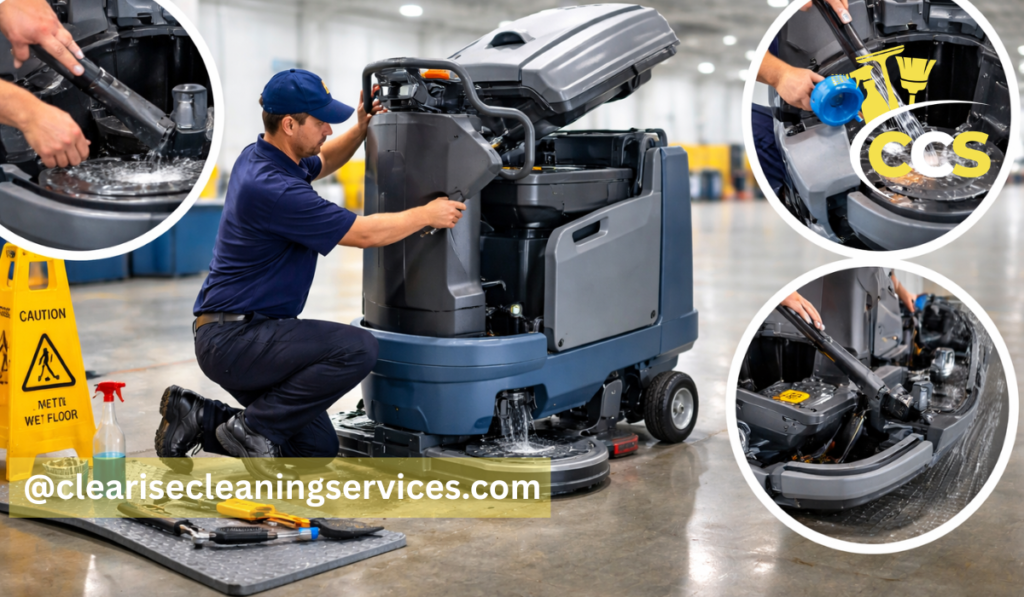
After each cleaning session, both the solution tank and the recovery tank should be drained and rinsed. Leaving dirty water inside can lead to bacteria growth, bad smells, and buildup that may affect the machine’s performance. Rinsing the tanks with clean water keeps them fresh and ready for the next use.
Squeegees and brushes also need attention. During operation, they collect dirt, debris, and cleaning residue. If not cleaned, they can cause streaking on floors or reduce cleaning efficiency. Rinsing them thoroughly helps maintain smooth and even cleaning results.
It is also important to check filters and hoses. Blocked filters can reduce water flow or suction, while damaged hoses can lead to leaks. A quick inspection ensures everything is clear and working properly.
Battery care is another key part of daily maintenance. The machine should be charged after each use, and the battery level should not drop too low. Keeping the battery in good condition helps avoid power issues and ensures consistent operation.
Finally, proper storage makes a big difference. Leaving the tank lids open allows airflow, which helps prevent mold and mildew. This small step keeps the machine clean and ready for the next job.
Step-by-Step Stand On Floor Scrubber Maintenance Guide
- Start by emptying both solution and recovery tanks after every use.
- Rinse tanks thoroughly to avoid residue buildup and odors.
- Clean brushes and squeegee blades to maintain proper floor contact.
- Inspect filters and hoses for any blockages or damage.
- Recharge the battery fully and avoid deep discharge.
- Leave tank lids open for airflow during storage.
- Perform weekly and monthly checks to keep everything running smoothly.
Weekly Maintenance Tasks to Keep Your Machine Running Smoothly
Weekly maintenance goes a step further by focusing on parts that experience gradual wear over time. These tasks help keep the machine balanced and efficient.
If your scrubber uses lead-acid batteries, checking the electrolyte levels is essential. Low levels can affect battery performance and shorten its lifespan. Topping up with distilled water when needed helps maintain proper function. It is also a good idea to clean the battery terminals to prevent corrosion, which can interfere with power flow.
Brushes and pads should be rotated regularly. Over time, they wear unevenly, which can affect cleaning results. Rotating or flipping them ensures even wear and extends their usable life.
A quick system check each week can help identify early signs of problems. Listening for unusual sounds, checking for leaks, and observing how the machine operates can reveal issues before they become serious. This proactive approach keeps your stand on floor scrubber maintenance routine effective and stress-free.
Monthly Maintenance Checks for Long-Term Performance
Monthly maintenance focuses on deeper care that supports long-term performance. These checks help keep the machine running smoothly and prevent long-term damage.
Lubricating moving parts, such as wheels and pivot points, reduces friction and keeps the machine operating quietly and efficiently. Using the recommended lubricant ensures that components do not wear out quickly.
Flushing the solution system is another important step. Over time, cleaning chemicals can leave residue inside the system. Flushing it with clean water or a mild cleaning solution removes buildup and keeps water flow consistent.
A full inspection of the machine should also be done monthly. Checking for leaks, cracks, or worn parts helps identify areas that need attention. Tightening loose components ensures the machine remains stable during operation.
These monthly tasks may take a little more time, but they play a big role in maintaining the overall health of the machine.
Stand On Floor Scrubber Maintenance Checklist for Easy Routine Tracking
Creating a clear maintenance checklist makes it easier to stay consistent. A structured routine ensures that nothing is missed and that the machine receives proper care at every stage.
Daily tasks usually include draining tanks, cleaning brushes and squeegees, checking filters, and charging the battery. Weekly tasks focus on battery care, brush rotation, and quick inspections. Monthly tasks involve lubrication, system flushing, and detailed checks.
Many businesses prefer using a printable stand on floor scrubber maintenance pdf to track these tasks. This helps operators follow the same routine and maintain consistency across shifts. A checklist also makes it easier to train new staff and ensure everyone follows the correct process.
Keeping a record of maintenance activities can also help identify patterns and prevent recurring issues. Over time, this simple habit can improve efficiency and reduce maintenance costs.
Common Problems and What They Reveal About Maintenance
Even with regular care, issues can sometimes occur. Understanding these problems can help you quickly identify what needs attention.
Streaking on floors is often linked to dirty or worn squeegee blades. Cleaning or replacing them usually solves the issue. Poor suction is another common problem, which may be caused by a full recovery tank, clogged hose, or dirty filter. Checking these components can restore proper function.
If there is no water flow, the solution tank may be empty or the filter could be blocked. Cleaning the system and ensuring proper water levels can fix the problem.
Unusual noise or vibration is often a sign of debris stuck in the brushes or worn parts. Addressing these issues early prevents further damage and keeps the machine running smoothly.
These signs act as early warnings, helping you adjust your stand on floor scrubber maintenance routine before problems become serious.
Understanding Stand On Floor Scrubber Maintenance Cost
The cost of stand on floor scrubber maintenance can vary depending on how often the machine is used and how well it is maintained. Daily maintenance usually involves minimal cost, mainly related to water, cleaning solutions, and basic supplies.
Monthly and yearly costs may include replacing worn parts such as brushes, pads, or squeegee blades. Battery maintenance or replacement can also add to the overall expense. However, these costs are usually predictable and manageable when maintenance is done regularly.
Comparing maintenance costs with repair expenses shows a clear difference. Regular upkeep is far more affordable than fixing major breakdowns or replacing the machine. Preventive care reduces the risk of unexpected repairs and helps businesses plan their budgets more effectively.
By investing time in maintenance, businesses can save money in the long run and keep their cleaning operations running smoothly.
Best Practices for Stand On Floor Scrubber Maintenance
Following best practices ensures that your maintenance routine is both effective and efficient. Using the right cleaning chemicals is important, as harsh or incorrect solutions can damage the machine or leave residue behind.
It is also essential to follow the manufacturer’s guidelines. Each machine may have specific requirements, and following these instructions helps avoid mistakes and ensures proper care.
Training operators is another key factor. When users understand how to handle the machine and perform basic maintenance, the chances of damage are reduced. Proper training also improves safety and efficiency.
Scheduling regular maintenance routines keeps everything on track. Instead of waiting for problems to occur, a planned approach ensures that the machine stays in good condition at all times.
Choosing the Best Approach for Stand On Floor Scrubber Maintenance
When it comes to stand on floor scrubber maintenance, businesses can choose between in-house maintenance and professional servicing. In-house maintenance works well for daily and weekly tasks, as these are simple and easy to manage.
However, some situations require expert attention. If the machine shows signs of serious issues, such as electrical problems or major leaks, it is best to call a technician. Professional servicing ensures that complex problems are handled correctly.
Knowing when to seek help is important. Ignoring serious issues can lead to further damage and higher repair costs. By combining regular in-house care with occasional professional servicing, businesses can maintain their machines effectively.
Following the best stand on floor scrubber maintenance practices ensures that the machine remains reliable, efficient, and ready for daily use.
Conclusion
Stand on floor scrubber maintenance is not complicated, but it requires consistency and attention to detail. Regular care keeps the machine performing at its best and helps avoid common problems that can disrupt cleaning operations.
By following a simple routine that includes daily cleaning, weekly checks, and monthly inspections, you can extend the life of your machine and maintain high cleaning standards. This approach not only improves performance but also reduces long-term costs.
In the end, a well-maintained scrubber is a reliable tool that supports efficiency, hygiene, and safety. With the right habits and a clear maintenance plan, you can ensure your equipment stays in excellent condition for years to come.
FAQs
How Often Should I Perform Stand On Floor Scrubber Maintenance?
Daily maintenance should be done after every use, while deeper checks like battery care and inspections should be done weekly and monthly. Following a regular schedule ensures better performance and prevents unexpected machine issues.
What Happens If I Skip Regular Maintenance?
Skipping maintenance can lead to poor cleaning results, bad odors, clogged systems, and even machine breakdowns. Over time, this increases repair costs and reduces the lifespan of your stand-on floor scrubber.
Why Is My Floor Scrubber Leaving Streaks On The Floor?
Streaking is usually caused by dirty or worn squeegee blades, clogged filters, or improper cleaning solution use. Regular cleaning and replacing worn parts can quickly fix this issue.
How Can I Reduce Stand On Floor Scrubber Maintenance Cost?
You can reduce costs by following a consistent maintenance routine, using proper cleaning solutions, and fixing small issues early. Preventive care is always cheaper than repairing major damage.
Do I Need Professional Servicing For My Scrubber?
Basic maintenance can be done in-house, but professional servicing is recommended for electrical issues, major leaks, or complex mechanical problems to ensure safe and proper repair.
Disclaimer: This article is for general informational purposes only. Maintenance steps may vary depending on the machine model and manufacturer guidelines. Always refer to your equipment manual or consult a professional technician for specific maintenance instructions.
Thanks for visiting Clearise Cleaning Services! Discover more helpful tips and expert cleaning insights by exploring our related categories.