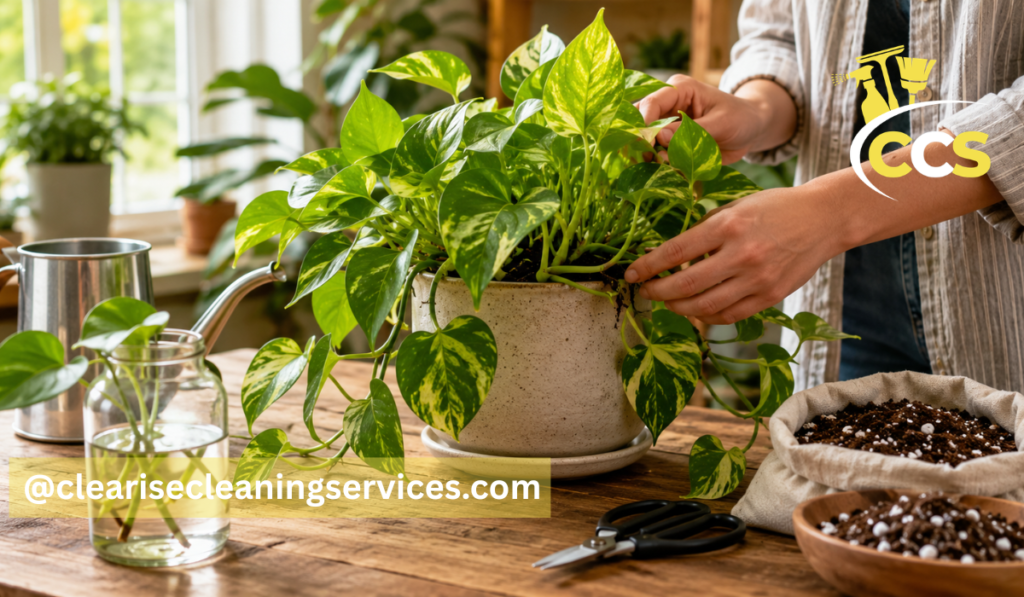
experienced plant owners alike. It has trailing vines, heart-shaped leaves, and a relaxed growing style that makes it perfect for shelves, hanging baskets, desks, plant stands, and moss poles. With the right basic care, this plant can stay green, full, and attractive for many years.
Pothos is also known as Devil’s Ivy, and its botanical name is Epipremnum aureum. Many people choose it because it can handle different indoor conditions better than many other houseplants. It does not need constant attention, and it can usually bounce back if you forget to water it once in a while.
Good pothos plant care mainly comes down to a few simple things: giving the plant bright, indirect light, watering only when the soil has partly dried, using a well-draining potting mix, feeding lightly during the growing season, repotting when needed, and pruning or propagating the vines to keep the plant full. It is also important to know that pothos can be toxic to cats and other pets if chewed.
This guide explains pothos plant care in a simple, practical way. Whether you keep your pothos indoors, grow cuttings in water, move it outdoors in warm weather, or want to make it look fuller, the steps below will help you care for it with confidence.
Quick Pothos Plant Care Guide
| Care Need | Best Practice | Quick Tip |
| Light | Bright, indirect light | Avoid harsh direct sunlight because it can burn the leaves. |
| Watering | Water when the top 1–2 inches of soil are dry | Do not let the plant sit in standing water. |
| Soil | Well-draining indoor potting mix | Add perlite, coco coir, or bark for better airflow. |
| Fertilizer | Feed lightly in spring and summer | Use a balanced liquid fertilizer once a month. |
| Temperature | 65°F–80°F is ideal | Keep away from cold drafts and AC vents. |
| Humidity | Average indoor humidity is usually fine | Use a humidifier if the air is very dry. |
| Repotting | Repot when roots outgrow the pot | Choose a pot only 1–2 inches larger. |
| Propagation | Use stem cuttings with nodes | Root cuttings in water or soil. |
| Pet Safety | Toxic to cats and dogs if eaten | Keep pothos out of reach of pets. |
Step-by-Step Pothos Plant Care
- Place your pothos in bright, indirect light.
- Check the top 1–2 inches of soil before watering.
- Use a pot with drainage holes.
- Plant it in loose, well-draining soil.
- Feed lightly during spring and summer.
- Prune long vines to keep the plant fuller.
- Repot only when the plant becomes root-bound.
- Keep it away from cats, dogs, and small children.
Quick Pothos Plant Care Summary
Pothos grows best in bright, indirect light, but it can also tolerate lower light areas. In brighter filtered light, the plant usually grows faster and keeps better color, especially if it has yellow, white, or cream variegation. Direct hot sun should be avoided because it can burn the leaves.
The best watering rule is simple: water when the top 1 to 2 inches of soil feel dry. Pothos does not like sitting in wet soil, so a pot with drainage holes is very important. After watering, let extra water drain away and empty the saucer if water collects at the bottom.
For soil, use a light, well-draining potting mix. A regular indoor potting mix can work well when improved with perlite, coco coir, or orchid bark for better airflow around the roots. Pothos does not need heavy feeding. A balanced liquid houseplant fertilizer once a month during spring and summer is usually enough.
Indoors, pothos prefers normal home temperatures, roughly between 65°F and 80°F. It enjoys humidity but can still grow in average indoor air. The two biggest warnings are overwatering and pet safety. Too much water can cause root rot, and pothos should be kept away from cats, dogs, and curious children because the leaves and stems can irritate the mouth if eaten.
Best Light Conditions for Healthy Pothos Growth
Light plays a big role in healthy pothos plant care. The ideal spot is bright but indirect light. This means the plant gets plenty of daylight, but the sun is not shining directly on the leaves for long periods. A place near an east-facing window, a few feet away from a bright window, or behind a sheer curtain can work very well.
Pothos can survive in low light, which is one reason it is so popular indoors. However, low light does not mean no light. In darker rooms, the plant may grow slowly, produce smaller leaves, and look less full. If the vines become long and thin with wide gaps between leaves, the plant may be stretching toward more light.
Variegated pothos varieties, such as Golden Pothos, Marble Queen, Manjula, or N’Joy, often need brighter indirect light to keep their patterns. When these plants do not get enough light, new leaves may become more green because the plant is trying to make more energy. If you want stronger variegation, move the plant to a brighter spot without exposing it to harsh sun.
Direct sunlight is one of the easiest mistakes to make. A little gentle morning sun may be fine in some homes, but strong afternoon sun can scorch the leaves. Burned leaves may look pale, crispy, brown, or faded. If this happens, move the plant away from the window and trim badly damaged leaves.
How to Water Pothos Without Causing Root Rot
Watering is where many pothos problems begin. Pothos likes moisture, but it does not like staying wet all the time. The safest approach is to check the soil before watering. Push your finger into the top 1 to 2 inches of soil. If it feels dry, it is time to water. If it still feels damp, wait a few more days.
When you water, water the soil thoroughly until water runs out of the drainage holes. This helps the roots receive even moisture. After that, let the pot drain fully. Never allow the plant to sit in standing water because this keeps the roots too wet and increases the risk of root rot.
A thirsty pothos may droop slightly, and the leaves may feel softer than usual. Once watered, it often perks up again. However, it is better not to wait until the plant is badly wilted every time. Repeated long dry periods can lead to brown edges, yellow leaves, or weak growth.
Overwatering can be more harmful than underwatering. Signs of overwatering include yellow leaves, black spots, mushy stems, a sour smell from the soil, and soil that stays wet for many days. If this happens, check the pot drainage, reduce watering, and consider repotting into a fresher, better-draining mix if the roots look brown or mushy.
Best Soil and Pot Setup for Pothos Plants
A healthy root system starts with the right soil and pot. Pothos does best in a potting mix that holds some moisture but still drains well. Heavy garden soil is not a good choice for indoor pothos because it can become compacted and stay wet around the roots.
A good mix can be made with regular indoor potting soil plus extra perlite, coco coir, or small orchid bark. Perlite helps create air spaces in the soil. Coco coir helps hold gentle moisture without becoming too heavy. Bark pieces improve drainage and keep the mix loose. The goal is simple: the roots should get water, but they should also get air.
The pot also matters. Always choose a pot with drainage holes. Decorative pots without drainage may look nice, but they can trap water at the bottom and lead to root rot. If you want to use a decorative cover pot, keep the pothos in a plastic nursery pot inside it and remove the inner pot when watering.
Pot size should match the plant. A pot that is too large can hold too much wet soil, while a pot that is too small can restrict growth. When repotting, choose a new pot that is only 1 to 2 inches wider than the current one. This gives the roots room to grow without surrounding them with too much unused damp soil.
Pothos Plant Fertilizer: When and How to Feed It
Pothos is not a heavy feeder, but fertilizer can help it grow stronger and fuller during the active growing season. The best choice is usually a balanced liquid houseplant fertilizer. Balanced means it supports overall leaf and root growth rather than pushing one type of growth too strongly.
For simple pothos plant fertilizer care, feed once a month in spring and summer. Use the fertilizer at half strength or follow the label carefully. More fertilizer does not mean faster healthy growth. In fact, too much can burn the roots, cause brown leaf tips, or leave white salt buildup on the soil surface.
During fall and winter, pothos usually grows more slowly because indoor light levels are lower. In most homes, it is best to stop fertilizing or reduce feeding during this time. Feeding a plant that is not actively growing can stress the roots and lead to weak or damaged growth.
Signs that your pothos may need fertilizer include very slow growth during spring or summer, pale new leaves, or a plant that has been in the same soil for a long time. Signs of too much fertilizer include crispy brown tips, yellowing, or a crusty layer on the soil. If you think you overfed the plant, flush the soil with water and pause fertilizer for several weeks.
Pothos Plant Care Indoors: Placement and Everyday Care
Pothos plant care indoors is simple when you choose the right location. Place the plant where it gets steady indirect light and is easy to check for watering. Good places include a bright shelf, a hanging basket near a window, a desk with natural light, or a plant stand in a living room.
Pothos vines can trail beautifully, but they can also climb if given support. A moss pole, trellis, or wall hook can guide the vines upward. When pothos climbs, it may produce larger leaves over time, especially in warm, bright, humid conditions. If you prefer a softer trailing look, let the vines hang naturally and trim them when they get too long.
Everyday care also includes keeping the leaves clean. Dust can build up on indoor plants and block some light from reaching the leaf surface. Wipe the leaves gently with a soft damp cloth every few weeks. This also gives you a chance to check for pests or damaged leaves.
Rotate the pot every week or two so all sides receive light. Without rotation, the plant may lean toward the window and grow unevenly. Small habits like wiping leaves, turning the pot, and trimming long vines can make a big difference in keeping pothos full and attractive.
Temperature and Humidity Needs for Pothos
Pothos is comfortable in the same temperatures most people enjoy indoors. A range of about 65°F to 80°F is ideal for steady growth. It can handle slightly warmer rooms, but cold conditions can slow it down or damage the leaves.
Keep pothos away from cold drafts, open winter windows, heating vents, and air conditioning vents. Sudden temperature changes can stress the plant. If leaves start yellowing or looking limp after being placed near a vent or drafty window, move the plant to a more stable spot.
Because pothos comes from warm, tropical environments, it appreciates humidity. However, it does not usually need special humidity care in an average home. If your home is very dry, especially in winter, the leaves may develop brown edges or tips.
A small humidifier near your plants can help if the air is very dry. You can also group houseplants together to create a slightly more humid area. Light misting may freshen the leaves, but it is not a complete humidity solution and should not leave the plant constantly wet.
Pothos Plant Care in Water
Pothos is one of the easiest plants to grow in water, especially from cuttings. To start, cut a healthy vine below a leaf node. A node is the small bump on the stem where a leaf or root can grow. Remove any leaves that would sit below the water, then place the cutting in a clean glass or jar.
Use room-temperature water and place the container in bright, indirect light. Avoid strong direct sun because it can heat the water and stress the cutting. Roots often begin to appear within a few weeks, though timing can vary depending on light, temperature, and the health of the cutting.
Change the water every one to two weeks, or sooner if it looks cloudy. Clean the container if algae forms on the glass. Water-grown pothos can live in water for a long time, but it still needs nutrients if you want it to keep growing well. A very diluted liquid fertilizer can be used occasionally.
If you want to move a water-grown pothos into soil, wait until the roots are a few inches long. Plant it in a small pot with moist, well-draining soil. Keep the soil lightly moist for the first couple of weeks while the roots adjust, then return to normal pothos watering habits.
Pothos Plant Care Repotting Guide
Repotting is an important part of long-term pothos plant care. A pothos does not need to be repotted often, but it will eventually outgrow its container. Common signs include roots growing out of the drainage holes, water running straight through the pot, soil drying out very quickly, or growth slowing even during spring and summer.
The best time to repot pothos is usually spring or early summer, when the plant is actively growing. This gives it the best chance to recover quickly. Avoid repotting during winter unless there is a serious problem, such as root rot or badly compacted soil.
Choose a new pot that is only slightly larger than the current pot. A pot that is too big can hold extra moisture and increase the risk of overwatering. Add fresh, well-draining potting mix, gently remove the plant from its old pot, loosen tightly circling roots if needed, and place it at the same depth in the new pot.
After repotting, water the plant lightly and place it back in bright, indirect light. It is normal for pothos to look a little droopy for a few days after repotting. Avoid fertilizing right away. Let the plant settle for a few weeks before feeding again.
Pothos Plant Care Propagation
Pothos plant care propagation is simple and rewarding. The easiest method is stem cuttings. Choose a healthy vine and cut a section that has at least one or two nodes. Each cutting should have a leaf or two, but the node is the most important part because roots grow from that area.
For water propagation, place the cutting in a jar with the node under water and the leaves above water. Keep it in bright, indirect light and change the water regularly. Once the roots are around 2 to 3 inches long, the cutting can be planted in soil.
Soil propagation is another option. Place the cutting directly into a small pot of lightly moist, well-draining soil. Keep the soil gently moist, but not soggy, while roots develop. Soil propagation may not show root growth as clearly as water propagation, but it helps the cutting adjust to soil from the start.
To make a pothos look fuller, plant several rooted cuttings back into the same pot. You can also prune long vines and use those cuttings to fill empty areas. This is one of the best ways to turn a thin pothos into a bushier, healthier-looking plant.
Outdoor Pothos Plant Care
Pothos can grow outdoors in warm, frost-free climates, but outdoor care is different from indoor care. In cooler areas, it is better to keep pothos as a houseplant and move it outside only during warm months. Bring it back indoors before temperatures drop.
Outdoors, pothos should be placed in shade or filtered light. A covered patio, shaded balcony, or area under trees can work well. Direct sun, especially in the afternoon, can burn the leaves quickly. Outdoor light is stronger than indoor light, so even shade outdoors may be brighter than a window indoors.
Outdoor pothos may need water more often because heat, wind, and brighter light can dry the soil faster. Still, the same rule applies: check the soil before watering. Do not keep the pot constantly wet.
In some warm regions, pothos can grow aggressively outdoors. It may climb trees, spread quickly, and become hard to control. For this reason, it is often better to keep outdoor pothos in a pot rather than planting it directly in the ground. Regular pruning helps keep the vines neat and manageable.
Common Pothos Problems and Easy Fixes
Most pothos problems are easy to fix once you understand the cause. Yellow leaves are often linked to overwatering, but they can also happen from old age, low light, stress, or sudden changes in care. If several leaves turn yellow at once and the soil is wet, check the roots and reduce watering.
Brown tips usually point to dry air, underwatering, too much fertilizer, or mineral buildup in the soil. Trim the damaged tips if you want a cleaner look, but focus on correcting the care issue so new growth stays healthy.
Drooping vines often mean the plant is thirsty, especially if the soil is dry. If the soil is wet and the plant is drooping, the roots may be struggling from too much water. This is why checking the soil is more reliable than watering on a strict schedule.
Leggy growth happens when pothos is reaching for more light or has not been pruned in a long time. Move it to brighter indirect light and trim the vines above a node to encourage new growth. Fading variegation usually means the plant needs brighter light. Slow growth can be caused by low light, cool temperatures, old soil, lack of nutrients, or a pot that is too crowded.
Is Pothos Plant Toxic to Cats?
Yes, pothos is toxic to cats if they chew or eat the leaves or stems. It can also be toxic to dogs. The plant contains irritating crystals that can cause pain and swelling in the mouth, drooling, vomiting, and trouble swallowing.
This does not mean you cannot own pothos if you have pets, but you should be careful. Keep the plant out of reach by placing it on a high shelf, in a hanging basket, or in a room your cat cannot access. Remember that many cats can jump high, so choose the location carefully.
Avoid leaving pruned vines or fallen leaves where pets can reach them. If you propagate pothos in water, keep the jar away from curious cats as well. Some cats are attracted to trailing vines, so regular trimming can also reduce temptation.
If your cat chews pothos or shows signs such as drooling, mouth irritation, vomiting, pawing at the mouth, or trouble swallowing, contact a veterinarian or a pet poison helpline right away. Quick advice from a professional is the safest choice.
Conclusion: Keeping Pothos Healthy Long-Term
Pothos plant care is simple when you focus on the basics. Give the plant bright, indirect light, water only when the top layer of soil feels dry, use a well-draining pot, and avoid letting the roots sit in standing water. These habits prevent most common problems and help the plant grow strong.
For fuller growth, prune long vines, rotate the pot, clean the leaves, and feed lightly during spring and summer. Repot only when the plant truly needs more room, and use cuttings to propagate new plants or fill out the original pot.
Pothos is forgiving, adaptable, and beginner-friendly, but it still responds best to consistent care. Whether you grow it indoors, in water, on a moss pole, or outdoors in a warm shaded spot, a little attention goes a long way. With simple care and regular checks, your Devil’s Ivy can stay lush, healthy, and beautiful for years.
FAQs
How Often Should I Water A Pothos Plant?
Water your pothos when the top 1–2 inches of soil feel dry. In most homes, this is usually every 1–2 weeks, but it depends on light, temperature, and pot size.
Does Pothos Need Direct Sunlight?
No, pothos does not need direct sunlight. It grows best in bright, indirect light. Strong direct sun can scorch the leaves, while very low light may slow growth.
What Is The Best Fertilizer For Pothos Plant Care?
A balanced liquid houseplant fertilizer works well for pothos. Feed once a month during spring and summer, and avoid heavy feeding because too much fertilizer can damage the roots.
Can Pothos Grow In Water Permanently?
Yes, pothos can grow in water for a long time if the water is changed regularly. For healthier growth, keep it in bright indirect light and add diluted fertilizer occasionally.
Is Pothos Toxic To Cats?
Yes, pothos is toxic to cats if chewed or eaten. It can irritate the mouth and stomach, so keep the plant in a safe place away from pets.
Disclaimer: This article is for general plant care information only. Plant growth can vary depending on your home environment, climate, pot size, soil, and watering habits. If a pet eats pothos or shows signs of illness, contact a veterinarian or pet poison professional immediately.
Thanks for visiting Clearise Cleaning Services! Discover more helpful tips and expert cleaning insights by exploring our related categories.