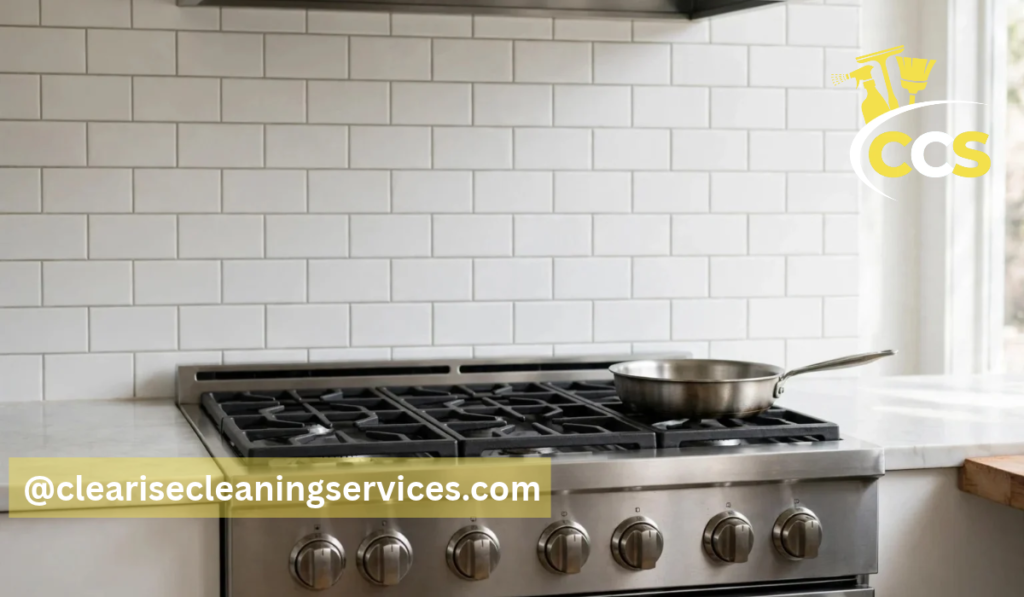
Subway tiles are the small, rectangular wall tiles you see in kitchens, bathrooms and old railway stations, usually laid in neat, staggered rows. They are plain, practical and familiar, which is exactly why they have stayed popular for so long. A subway tile wall looks clean without shouting for attention, and it suits both old homes and new ones.
This guide explains what subway tiles are in plain language. It covers their classic size and shape, a brief history, the main materials, where they work best, the popular laying patterns, grout choices, cleaning, cost factors, and the mistakes to avoid. By the end, you should know whether subway tiles suit your kitchen or bathroom, and how to choose them with confidence.

The Short Answer: What Are Subway Tiles?
Subway tiles are rectangular wall tiles, usually about twice as long as they are wide, with a plain glazed surface and slightly bevelled or flat edges. They were first made for the walls of underground railway stations, where a hard, washable surface was needed, and they later became a classic choice for kitchens and bathrooms.
The classic subway tile is white and glossy, but the same shape now comes in many colours, finishes and materials. What makes a tile a subway tile is not its colour, but its rectangular shape and its proportions. If the tile is roughly twice as long as it is wide and laid as a wall tile, it belongs to the subway tile family.
What Subway Tiles Look Like
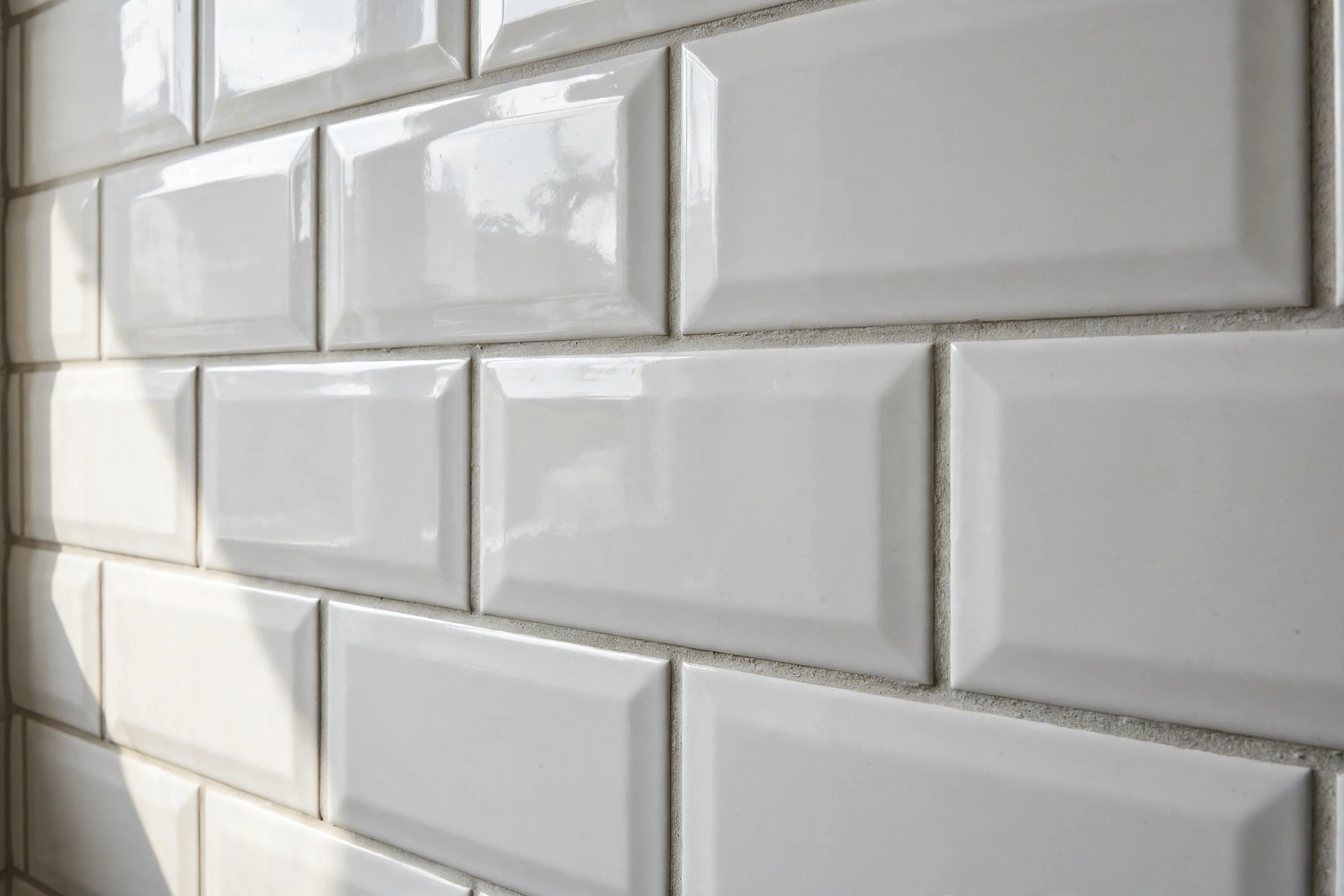
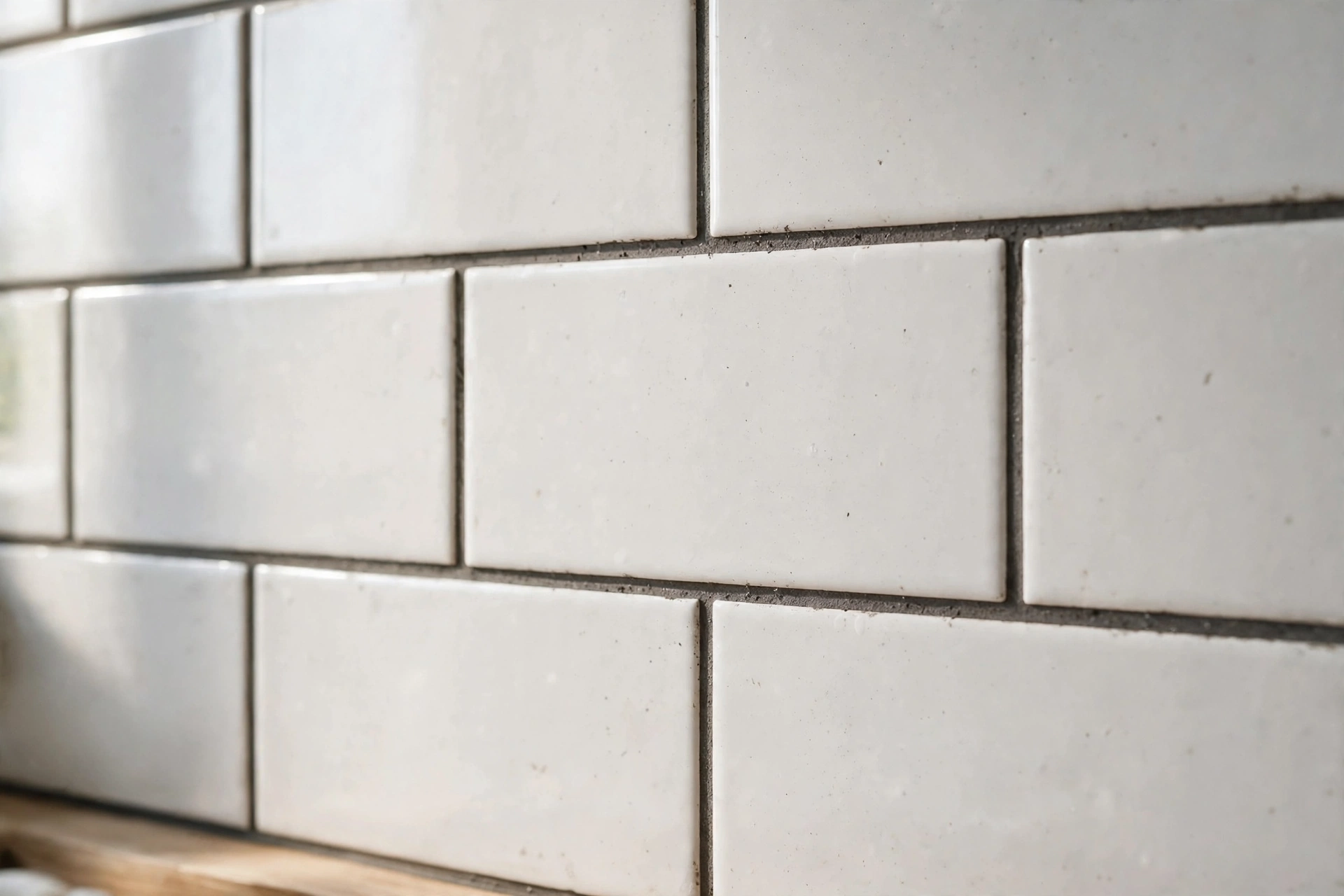
A subway tile is a simple rectangle, and its classic size is around 3 inches wide by 6 inches long. The surface is usually smooth and glazed, which gives it a slight shine and makes it easy to wipe clean. Some subway tiles have bevelled edges that catch the light, while others are flat with a clean, modern edge.
The plain shape is the whole point. Because each tile is simple, a wall of subway tiles looks calm and ordered rather than busy. Colour and grout then do the talking: white tiles with white grout look soft and seamless, while the same tiles with dark grout show every line and turn the pattern into a feature. That flexibility is a big reason the style lasts.
A Brief History of Subway Tiles
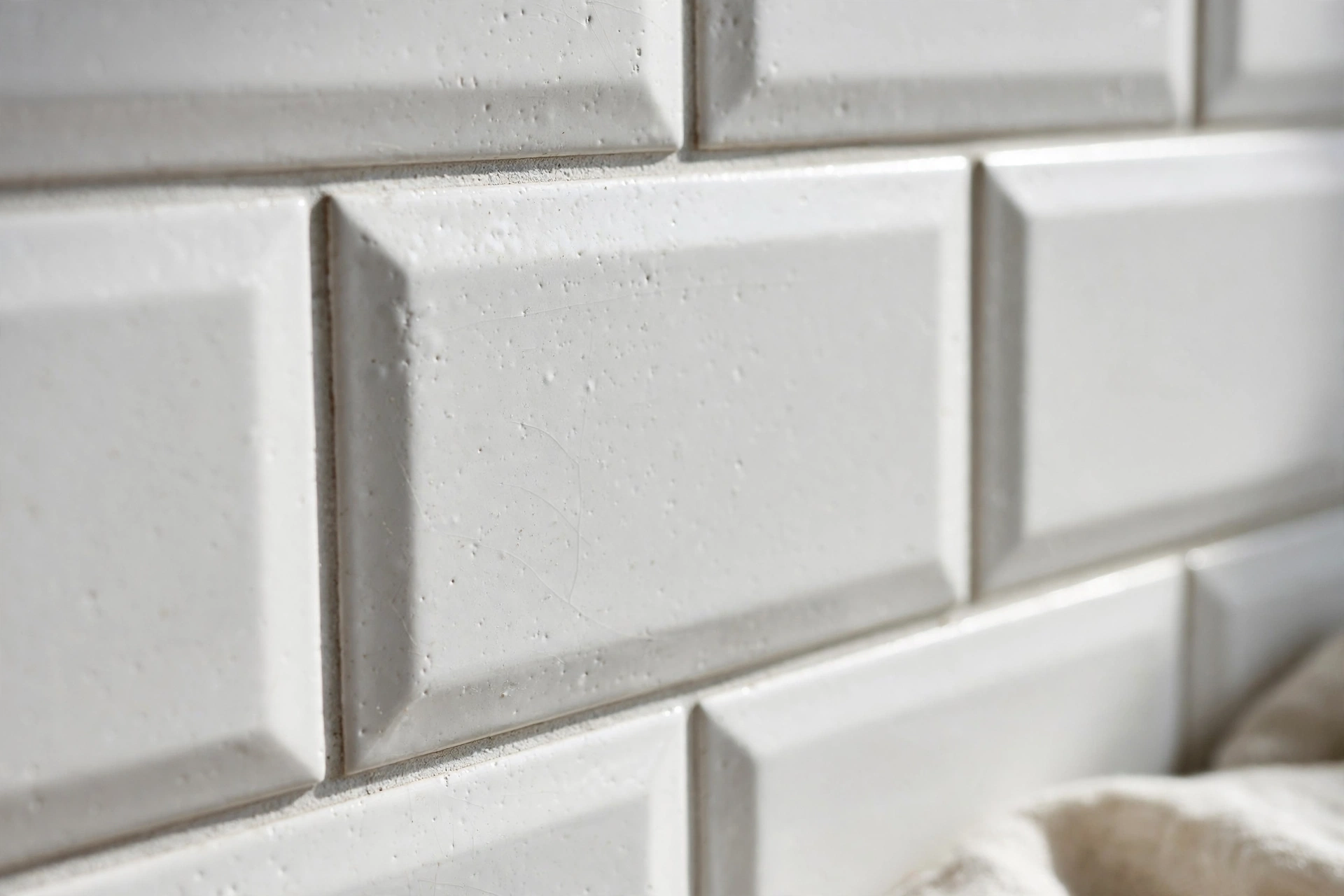
Subway tiles get their name from underground railway stations, where they were first used more than a century ago to line station walls. The tiles were chosen because they were easy to clean, resisted dirt and moisture, and reflected light in dark, underground spaces, which made stations feel brighter and safer.
From stations, the look spread into homes, first in bathrooms and kitchens, where the same washable, hard-wearing qualities were just as useful. Over time, the white glossy tile became a classic, but makers began to offer new colours, finishes and sizes. Today, subway tiles are used far beyond their railway roots, yet the original idea has not changed: a simple, durable tile that is easy to keep clean.
Subway Tile Materials: Ceramic, Porcelain and Glass
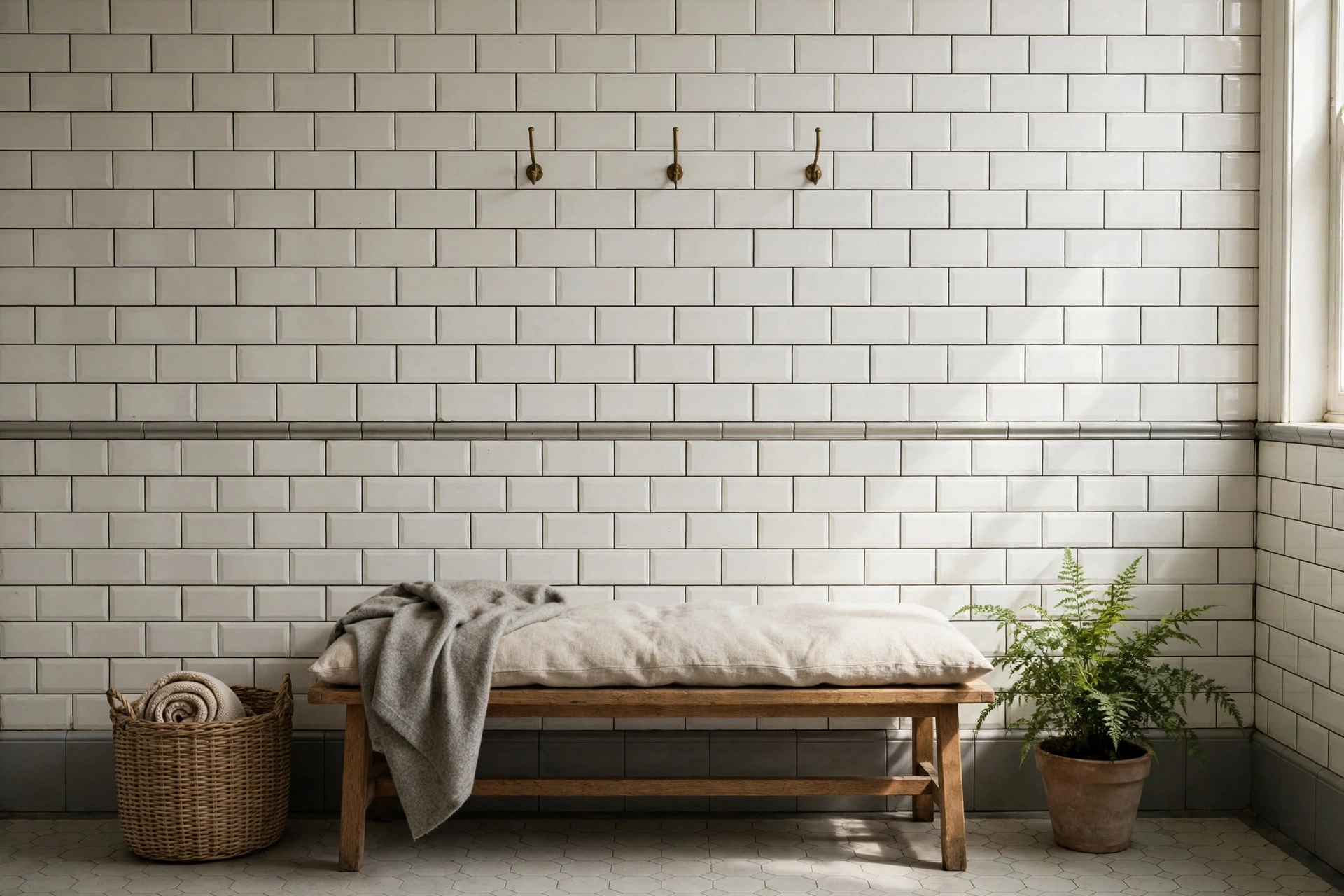
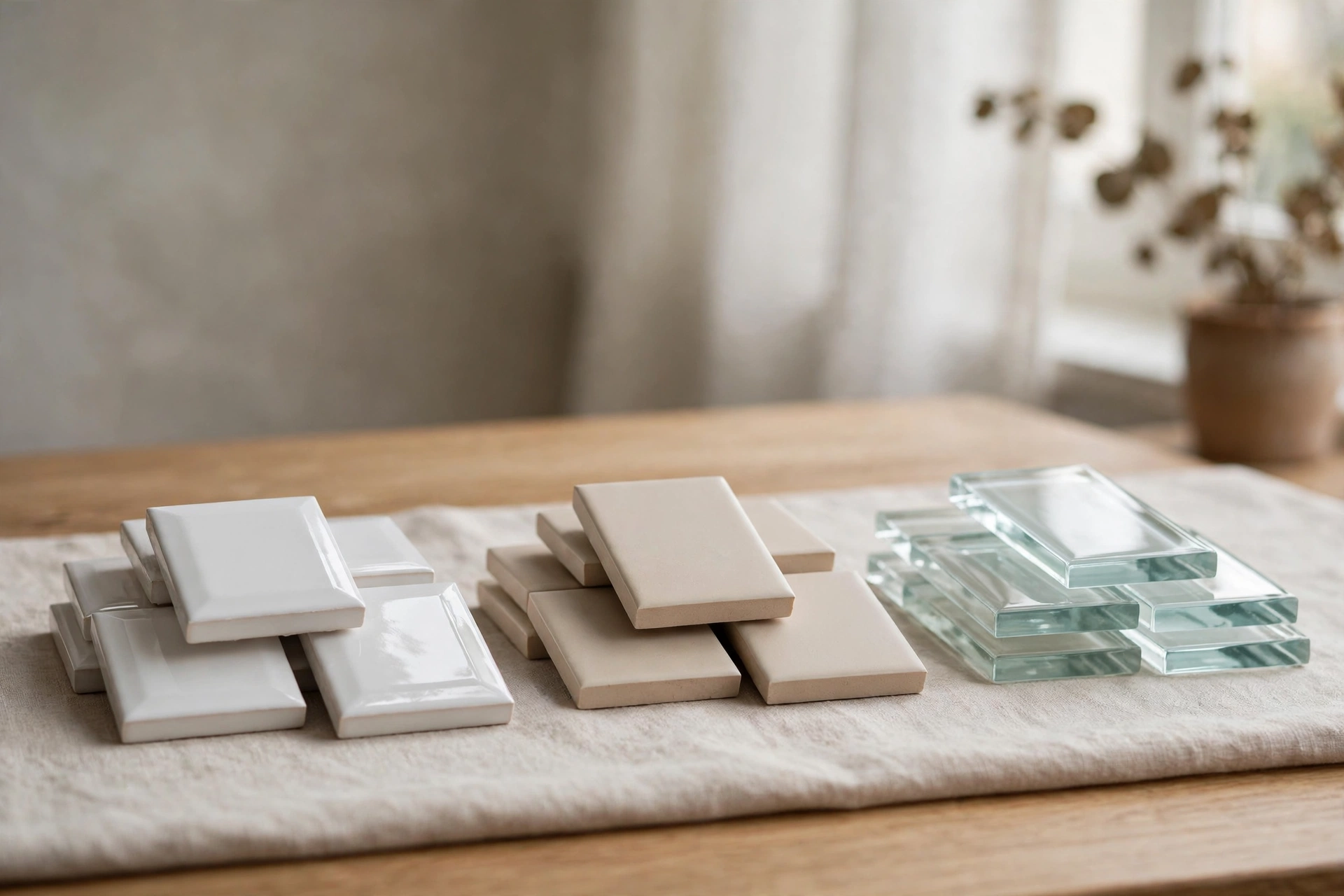
Most subway tiles are made from ceramic, porcelain or glass, and each material suits a slightly different job. Ceramic subway tiles are the most common and the most affordable choice for ordinary kitchen and bathroom walls. They are easy to cut and fix, and they come in the widest range of colours and finishes.
Porcelain subway tiles are denser and harder than ceramic, so they cope better with heavy wear, moisture and stains. They are a good choice for shower walls and busy family bathrooms, though they are harder to cut and usually cost more. Glass subway tiles give a bright, reflective finish and suit feature areas, but they need careful fixing and show adhesive and grout more easily, so they are less forgiving for a first-time tiler.
Subway Tiles vs Other Wall Tiles
Subway tiles are smaller and plainer than most other wall tiles, and that difference changes how a room looks and how the tiling job goes. Large wall tiles cover a wall faster with fewer grout lines, while mosaic tiles suit curved areas but have many grout lines to clean.
The table below compares the main wall tile types in simple terms. Treat it as a starting guide, not a strict rule, because the right choice also depends on your room, your budget and who is doing the tiling.
| Tile type | Typical look | Best for | Things to watch |
|---|---|---|---|
| Subway tile | Small rectangles, staggered rows | Kitchen backsplash, bathroom walls | Many grout lines to clean |
| Large wall tile | Big, calm panels | Modern bathrooms, large walls | Heavy, needs a flat wall |
| Mosaic tile | Small pieces, detailed pattern | Shower niches, curved areas | Lots of grout, slower to clean |
| Square wall tile | Simple grid pattern | Classic bathrooms, utility rooms | Can look plain in large areas |
Where Subway Tiles Work Best
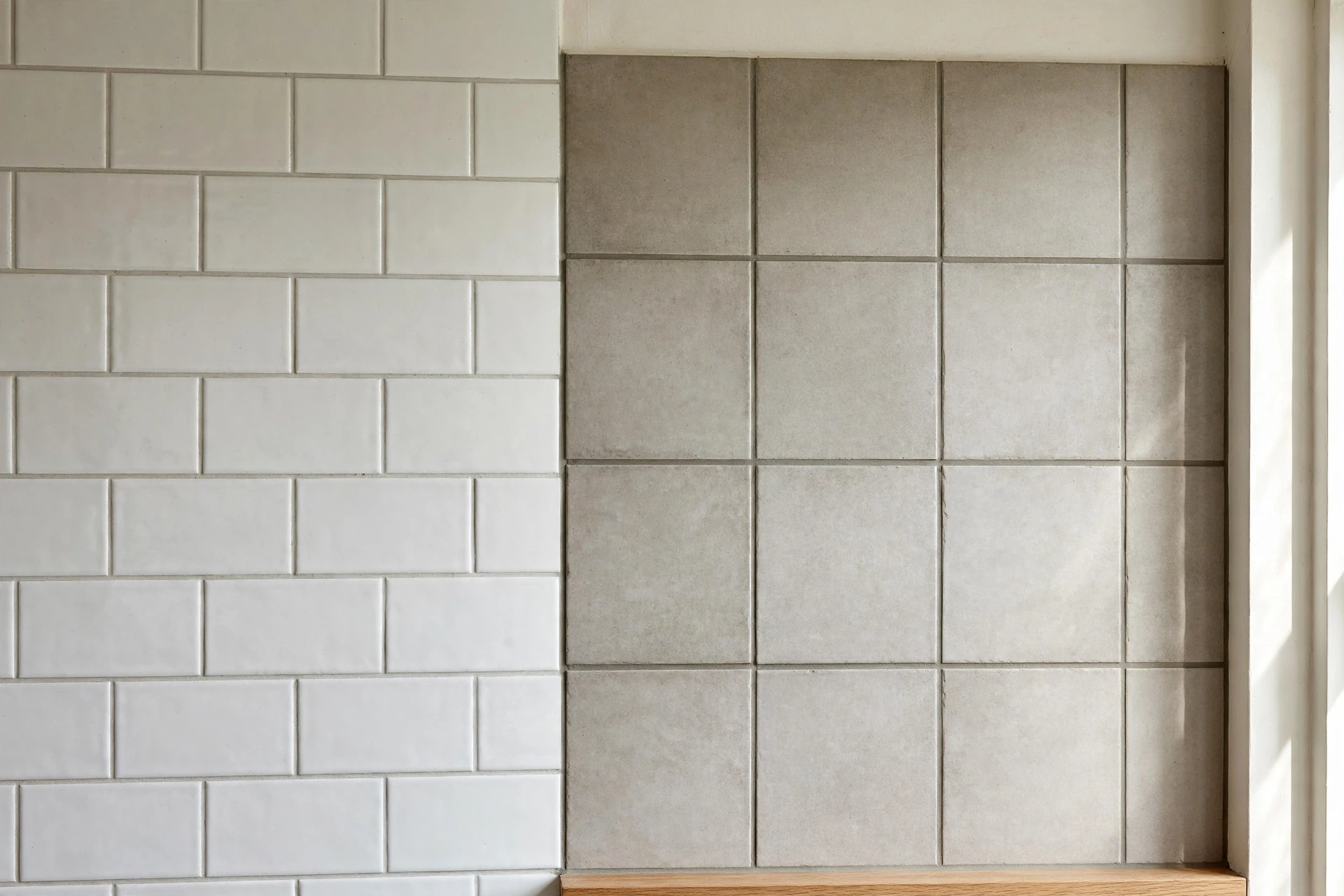
Subway tiles work best where walls need to be washable, hard-wearing and easy to live with, which is why kitchens and bathrooms are their natural home. A kitchen backsplash is the classic spot: the tiles protect the wall behind a cooker and sink from splashes, steam and cooking marks, and they wipe clean with a damp cloth.
In bathrooms, subway tiles suit full walls, half-height walls and shower enclosures, where they cope with steam and splashes. They also work well as a fireplace surround, where their simple shape frames the fire without competing with it, and as a feature wall in a hallway or utility room. In a hallway or utility room, subway tiles protect the lower part of the wall from scuffs, splashes and muddy marks, while still looking neat and simple. A half-height run of tiles, finished with a trim piece along the top edge, is a practical choice here, since it gives protection where the wall is touched most, without the cost and effort of tiling the full height.
They are less suited to floors, because most subway tiles are wall tiles and are not made to carry foot traffic.
Subway Tile Patterns and Layouts
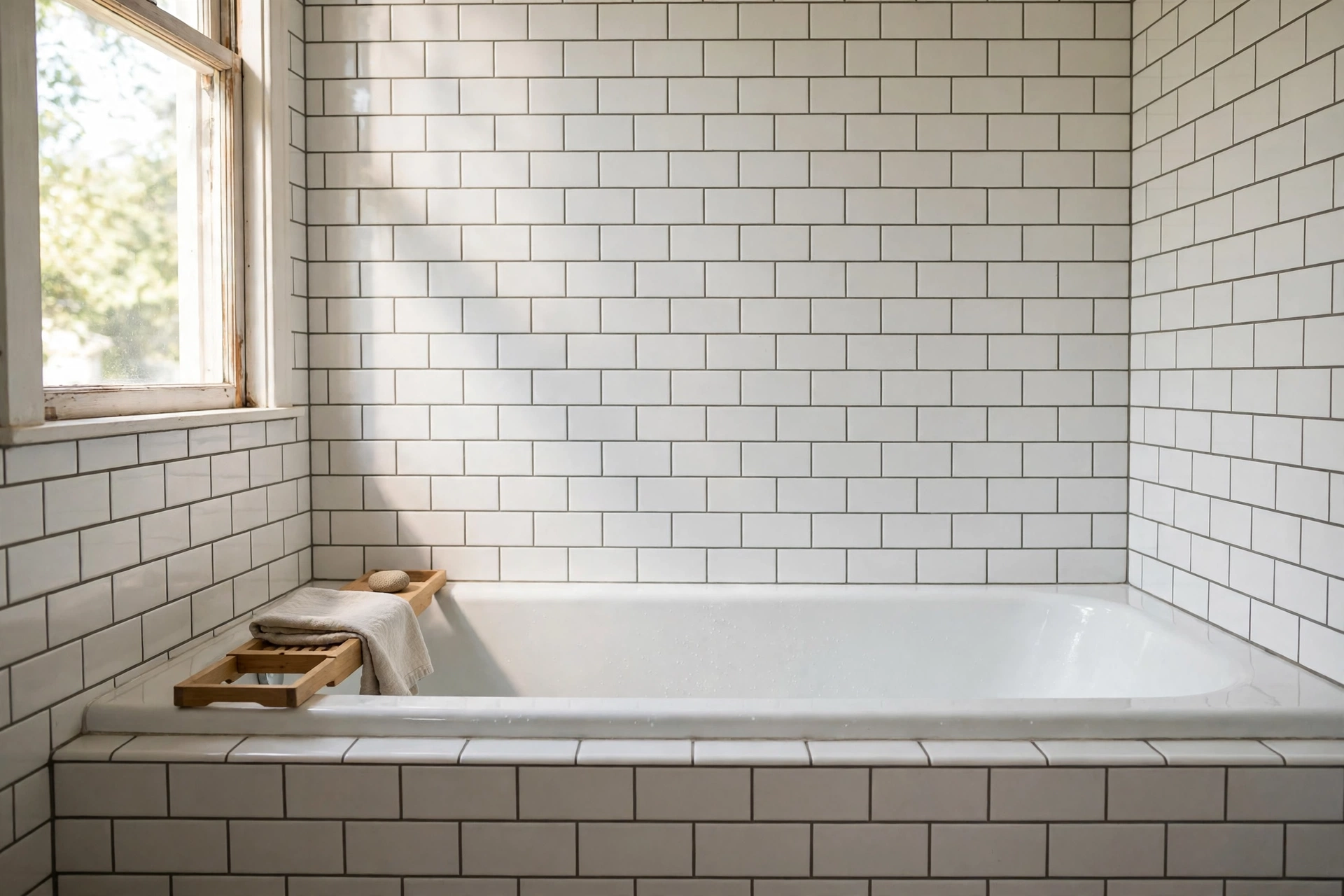
The classic subway tile pattern is the running bond, also called brick bond, where each row is offset by half a tile from the row below, just like a brick wall. This pattern is forgiving, because small differences in tile size or wall level are less obvious, and it suits almost any room.
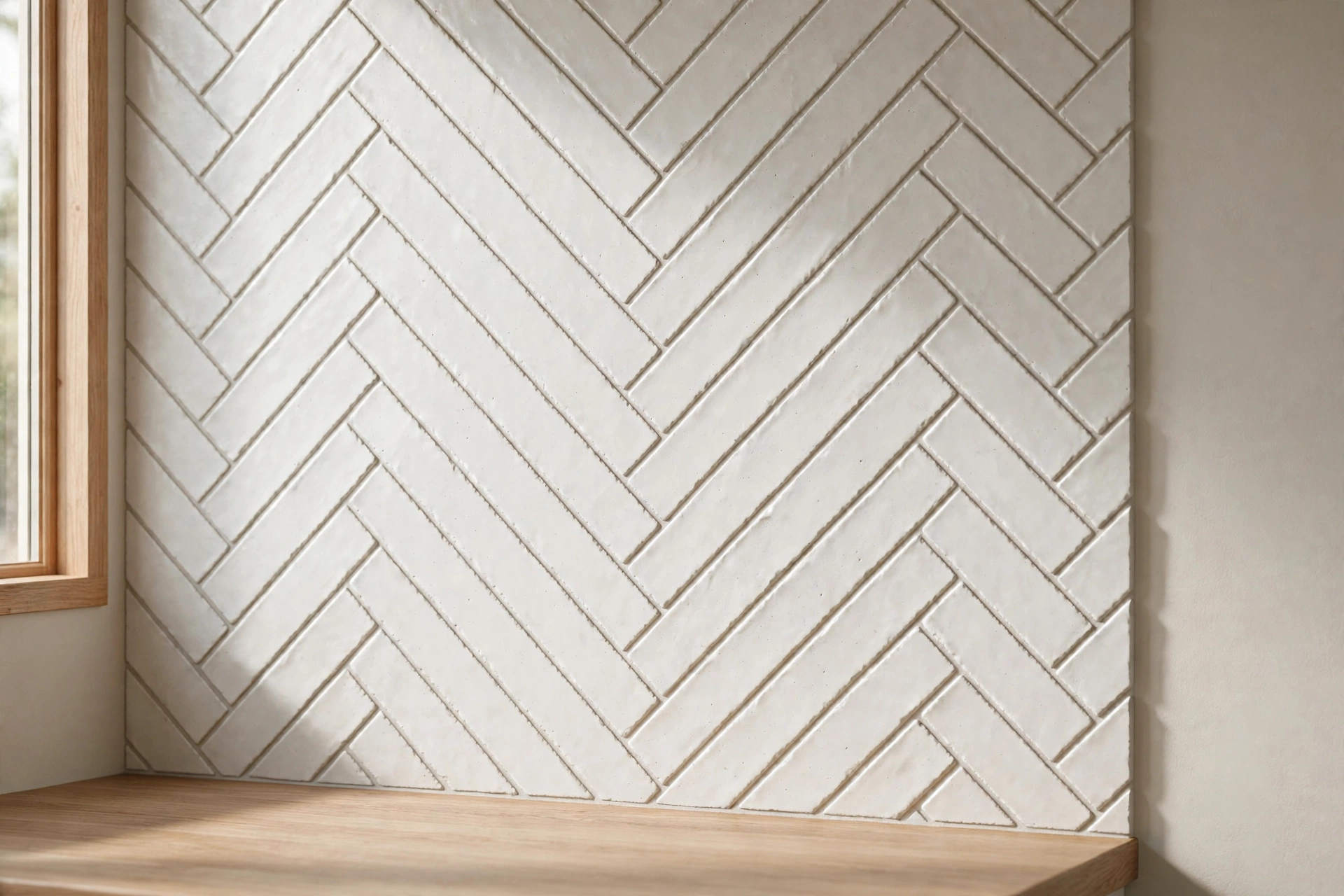
Other layouts change the feel of the same tile. A stacked pattern lines tiles up in straight columns for a clean, modern look, but it shows uneven tiles and walls more clearly. Herringbone lays tiles at angles for a bold, decorative effect, while a vertical stack turns the rectangles upright and can make a low room feel taller. Each pattern uses tiles differently, so the amount of cutting and waste varies, and a patterned layout usually takes longer to fix.
Grout Colour and Joint Width
Grout colour changes the look of a subway tile wall more than most people expect, so it deserves as much thought as the tile itself. White or matching grout makes the grout lines fade away, giving a soft, seamless wall, while dark grout outlines every tile and turns the pattern into a feature.
Joint width, the gap between tiles, matters too. Narrow joints of around 2 to 3 millimetres suit a neat, modern look, while wider joints suit a rustic or handmade tile. Wider joints show more grout and need more cleaning, and they suit uneven or handmade-look tiles better, because the extra grout hides small size differences. Whatever you choose, keep the joint width even across the whole wall, since uneven joints are easy to spot.
How to Choose Subway Tiles for Your Home
Choosing subway tiles means matching the tile to the room, the wall and the way the room is used, rather than picking the prettiest sample in the shop. Start with the room: a kitchen backsplash suits glossy ceramic, a shower suits denser porcelain, and a feature wall can take glass or a bold colour.
Work through this short checklist before buying:
- Measure the wall area and add a sensible allowance for cuts and breakages.
- Decide the material: ceramic for ordinary walls, porcelain for showers and heavy wear.
- Choose the size and finish, and check a few tiles together, not just one sample.
- Pick the grout colour and joint width, and test them against the tile.
- Check the tiles suit the wall: flat, dry and sound, or repaired first.
- Confirm the pattern and whether your tiler is happy to lay it.
A tile chosen against this checklist is far more likely to look right once it is on the wall. If any answer is unclear, ask the tile supplier or tiler before ordering.

Cleaning and Maintaining Subway Tiles
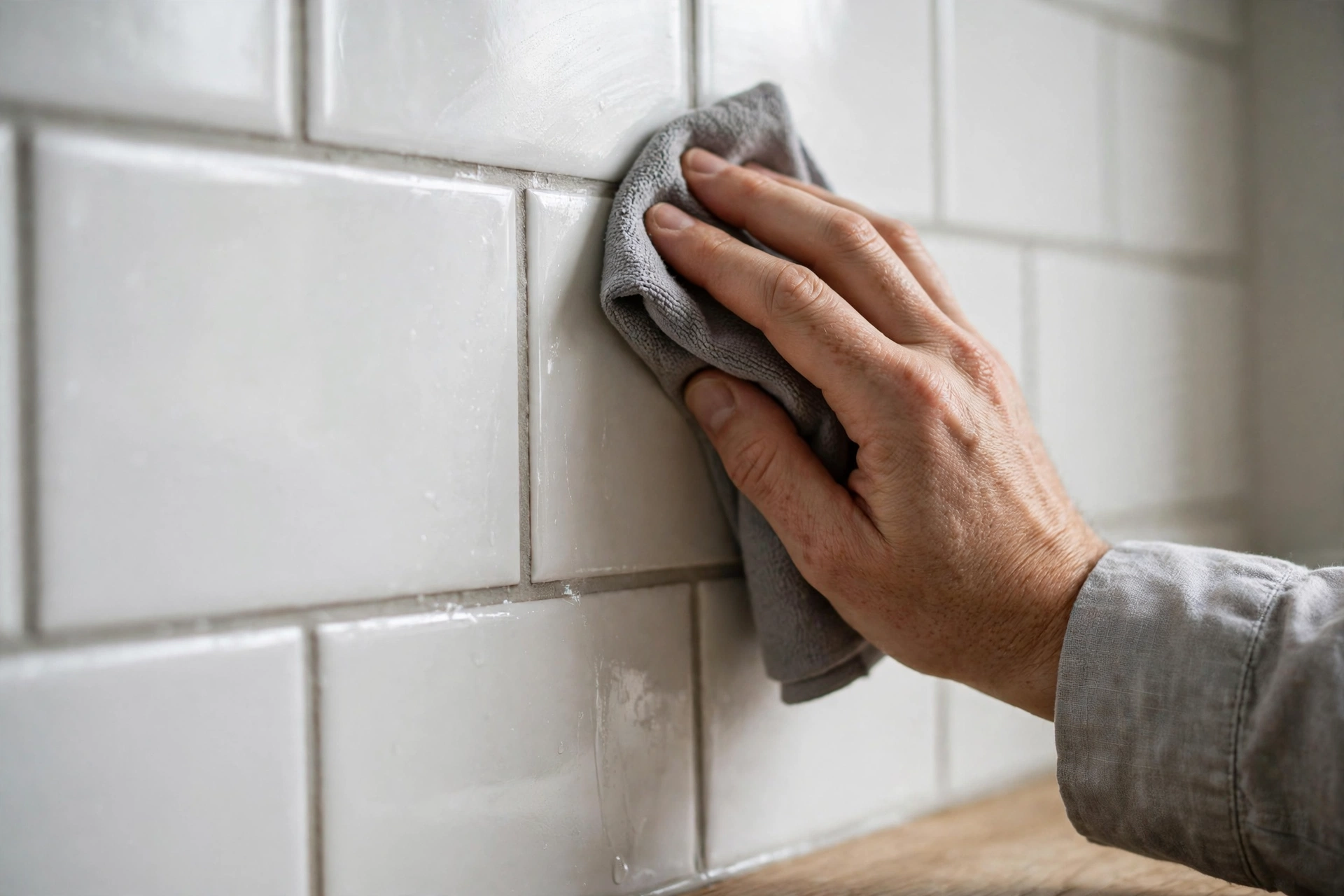
Subway tiles are easy to clean, which is one of their main advantages, because their smooth glazed surface wipes down with a damp cloth and a mild cleaner. Grout needs a little more attention, since it is rougher than tile and can hold dirt and discolour over time.
For everyday cleaning, warm water and a soft cloth are usually enough for kitchen splashes and bathroom marks.
For grout, a soft brush and a mild cleaner used regularly will keep most walls looking fresh, and sealing grout in wet areas can slow staining, though it does not make grout stain-proof. Avoid harsh abrasive pads on glossy tiles, since they can dull the glaze, and avoid strong bleach on coloured grout, which can fade it. Damaged tiles should be replaced rather than painted over, since a single cracked tile lets moisture reach the wall behind it.
What Subway Tiles Cost
The cost of a subway tile job depends on the tile material, the tile size, the pattern, the wall area and who does the tiling, rather than on the tile alone. Plain ceramic subway tiles are usually the most affordable option, while porcelain and glass tiles cost more.
Handmade-look or unusual colours can cost more again, and larger or smaller than usual sizes may also carry a higher price.
Pattern affects cost too, because herringbone and other angled layouts need more cutting and more tiles than a simple running bond, and they take longer to lay. Labour is often the largest part of the total, especially for a shower or a wall that needs preparation, levelling or waterproofing first. Grout, adhesive and trims add a smaller but real share. Getting a quote that covers tiles, materials and labour together is the surest way to compare options fairly.

Common Mistakes With Subway Tiles
The most common mistake with subway tiles is starting without a plan for the layout, so the pattern ends up with thin, awkward slivers of tile at edges and corners. A little planning, working out where full tiles fall and where cuts will land, prevents this and gives a balanced wall.
Another common mistake is choosing grout colour from a small sample, since grout dries to a different shade and looks very different across a whole wall.
Other mistakes are easy to make too. Tiling over an uneven or damp wall without preparing it first leads to tiles that do not sit flat or that fail later. Using wall tiles on a floor, or the wrong adhesive in a shower, causes problems that only show up months later. And rushing the grouting, before the adhesive has set properly, can shift tiles and spoil the joints. Slowing down and checking each stage avoids most of these problems.
Conclusion
Subway tiles are simple rectangular wall tiles, about twice as long as they are wide, first used in underground stations and now a classic choice for kitchens and bathrooms. Their plain shape and washable surface make them easy to live with, and the choice of material, colour and grout suits both traditional and modern homes.
What matters most is choosing the right material for the room, planning the pattern before tiling starts, and picking a grout colour you will still like in a few years. Done that way, subway tiles are a safe, lasting choice that looks good without dating quickly, and they will keep their clean, ordered look for a long time.
Frequently Asked Questions
What is a subway tile?
A subway tile is a rectangular wall tile, usually about twice as long as it is wide, with a plain glazed surface, first used in underground stations and now common in kitchens and bathrooms.
What size are subway tiles?
The classic subway tile size is around 3 by 6 inches, though many other sizes are now made, including longer, narrower and larger versions of the same rectangular shape.
Are subway tiles good for bathrooms?
Yes, subway tiles suit bathroom walls and showers well, especially porcelain versions, because their glazed surface copes with steam, splashes and regular cleaning.
Can subway tiles be used on floors?
Most subway tiles are made for walls and are not suitable for floors, so always check that a tile is rated for floor use before laying it underfoot.
What grout colour suits white subway tiles?
White grout gives a soft, seamless look, while grey or dark grout outlines each tile and makes the brick pattern stand out as a feature.
Disclaimer: This article is provided for general information only. It is not professional tiling, building, or design advice, and it does not promote any brand, product, or service. Tile sizes, materials, suitability and costs vary by product, region and supplier, so always check the guidance for the specific product and seek qualified professional advice before tiling, especially in showers and wet areas.
Thanks for visiting Clearise Cleaning Services! Discover more helpful tips and expert cleaning insights by exploring our related categories.