To clean a stain means to remove a mark left by food, drink, grease, ink, mud, or another substance from fabric, carpet, or a hard surface, using the right first steps and cleaner for that stain type and surface. Acting quickly, blotting instead of rubbing, and testing a cleaner first give most stains their best chance of coming out.
Stains feel stressful because they look permanent, but most are not. A stain is simply a substance that has soaked into fibres or dried on a surface. Fresh stains are usually easier than old ones, and hot water on a protein stain or rubbing a carpet stain can push it deeper.
This guide gives you a calm first-aid routine for any stain, then a simple way to identify the stain type, then safe methods for the most common stains. It also covers fabric, carpet, and hard surfaces separately, because the same stain needs a different method on each one.
What Stain Cleaning Really Means
Stain cleaning means loosening and lifting a substance out of a material without damaging the material itself, which is why the stain type, the surface, and the cleaner all matter at the same time. A method for cotton may damage wool, and a tile cleaner may bleach carpet.
Think of stain cleaning in three steps: loosen, lift, and rinse. First, loosen the stain with water or a suitable cleaner, giving it time to work. Second, lift it by blotting with a clean cloth, so the stain moves into the cloth instead of deeper into the material. Third, rinse or wash the area well, because leftover cleaner can attract new dirt or leave a mark of its own.
Patience matters more than force: gentle, repeated blotting usually works better than hard scrubbing, which can damage fibres or push a stain deeper. If a stain does not lift after two or three gentle attempts, try a different surface-safe method.
First Steps for Any Stain
For any stain, act fast: remove loose material, blot with a clean cloth, work from the outside toward the centre, test any cleaner on a hidden spot first, and avoid heat until you know the stain type. These first steps apply to almost every stain, and they prevent the most common mistakes.
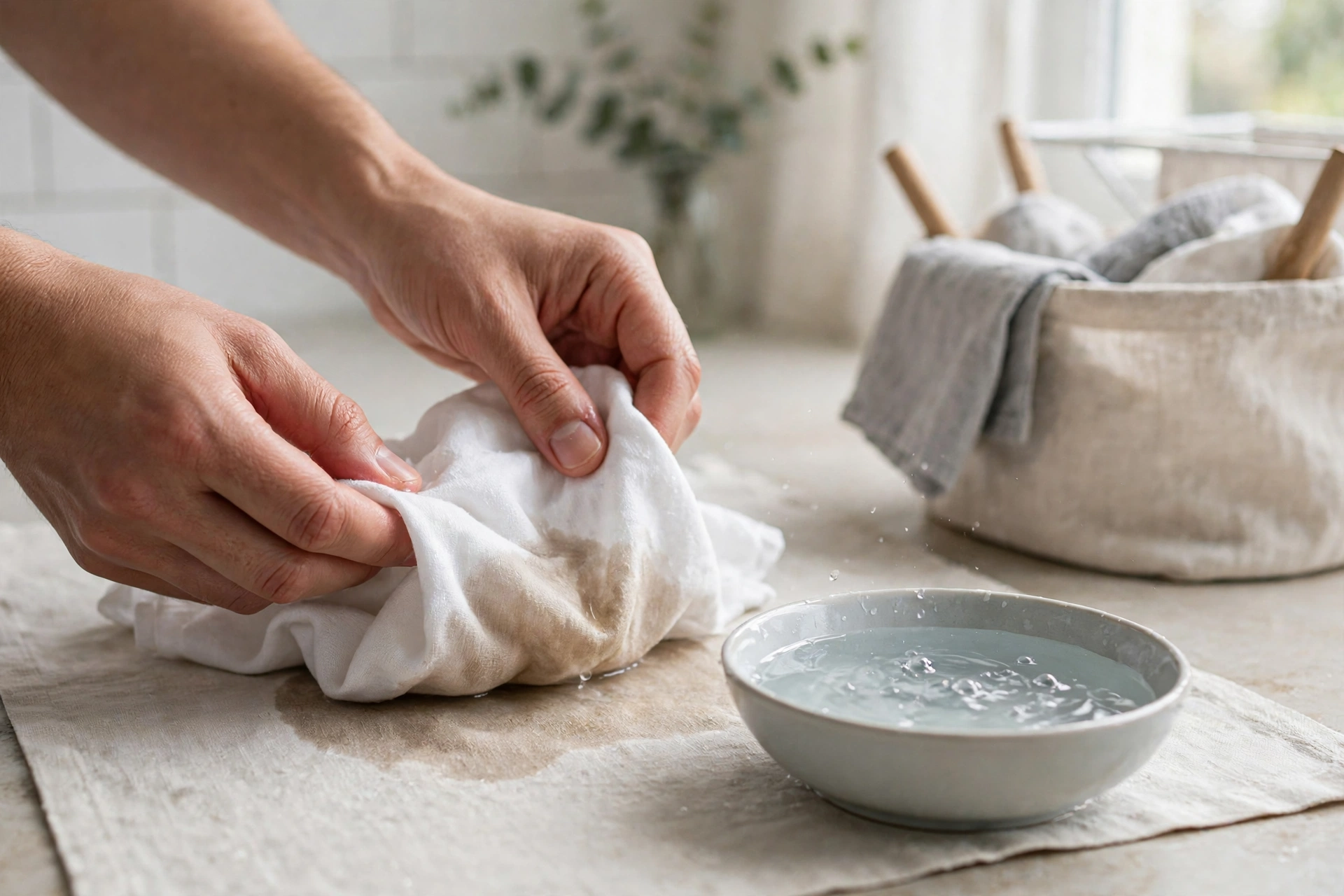
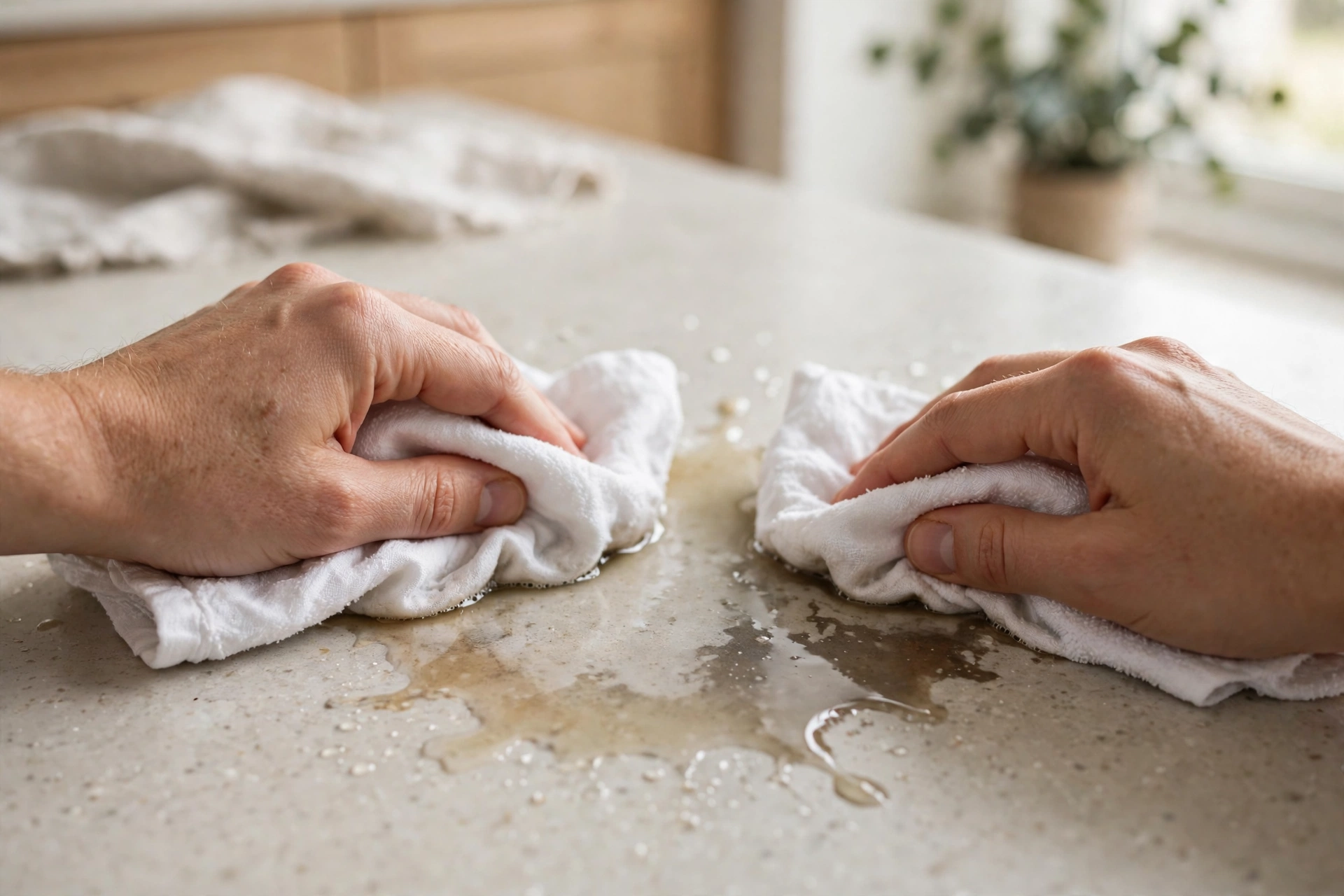
Start by lifting off solids with a blunt knife or spoon, without pressing them in. Blot liquid with a clean white cloth or paper towel, pressing gently and lifting, then using a fresh part of the cloth. Working from the outside inward stops the stain from spreading, which is especially important on carpet and light fabric.
Test any cleaner on a hidden area first, such as an inside seam or a corner of carpet, and wait a few minutes to check for colour change or damage. Rinse with cool water unless you know the stain type, because hot water can set protein stains such as blood and milk. Note what caused the stain if you can.
- Remove solids gently, blot liquids, never rub at first
- Work from the outside toward the centre of the stain
- Test every cleaner on a hidden spot before the stain itself
- Use cool water first unless the stain type says otherwise
- Keep the stained item away from heat until the stain is out
Identify the Stain Type First
To identify a stain, ask what caused it, whether it feels greasy or watery, and whether it has dried, because food, grease, protein, dye, and mud stains each need a different cleaner. Guessing the cleaner first is the most common reason a stain gets worse instead of better.
Food and drink stains, such as coffee, tea, juice, and tomato sauce, are usually water-based with colour, and they often respond to cool water and dish soap. Grease stains, such as cooking oil, butter, and make-up, feel oily and need a degreasing step before washing. Protein stains, such as blood, milk, and egg, need cool water first, because heat can set them.
Dye stains, such as ink and wine, need careful blotting and a colour-safe method. Mud and outdoor stains should dry first, so loose dirt can be brushed away before washing. If you cannot identify it, start with cool water and dish soap, and move to a specific method only when sure.
| Stain type | Examples | First safe step |
|---|---|---|
| Food and drink | Coffee, tea, juice, tomato sauce | Blot, cool water, dish soap |
| Grease and oil | Cooking oil, butter, make-up | Blot, dish soap or degreaser, rinse |
| Protein | Blood, milk, egg, sweat | Cool water only, never heat first |
| Dye and colour | Ink, wine, coloured drinks | Blot gently, colour-safe method, test first |
| Mud and outdoor | Mud, grass, soil | Let dry, brush off, then wash |
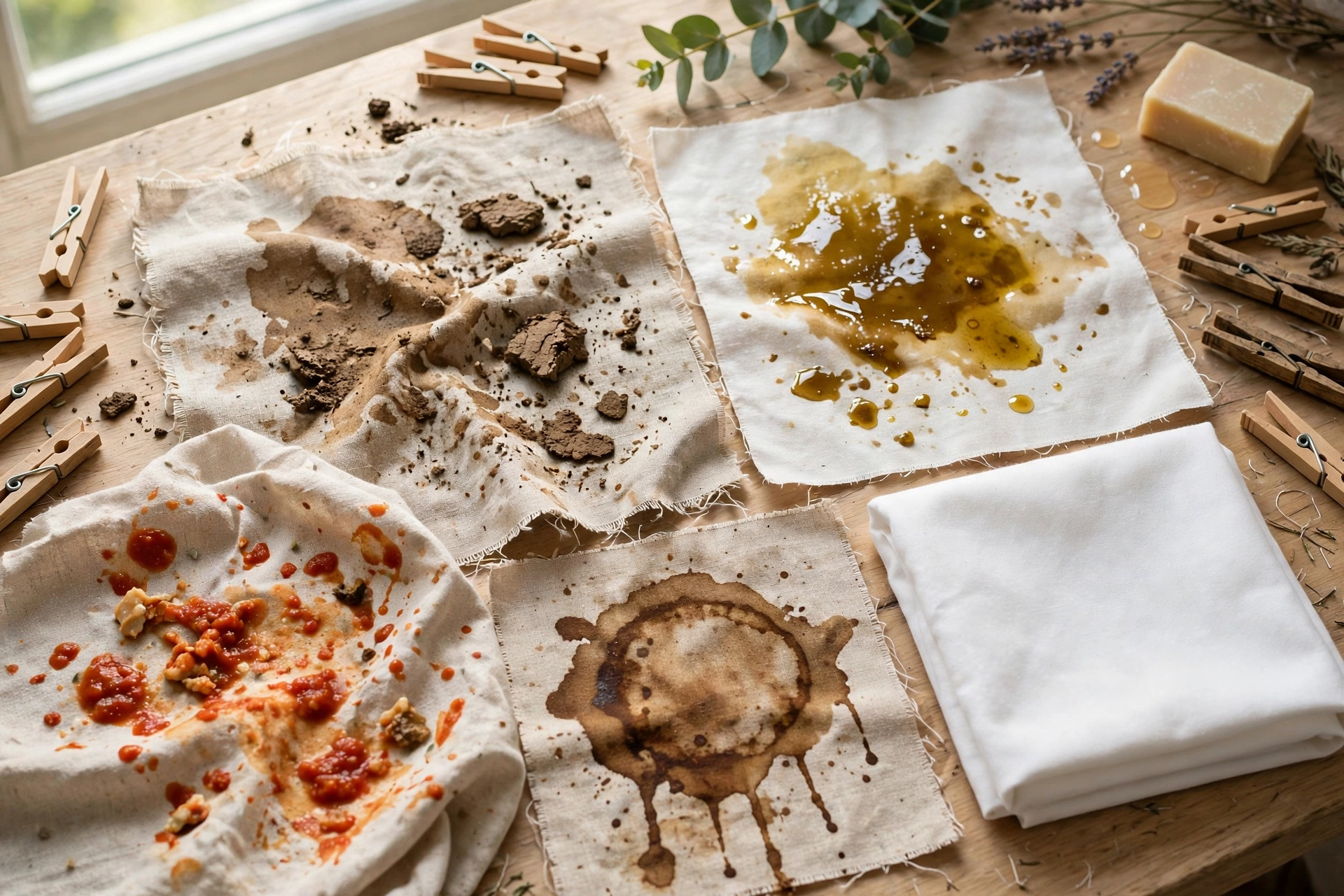
Clean Food and Drink Stains
To clean a food or drink stain, blot up as much as you can, rinse with cool water from the back of the fabric if possible, apply a small amount of dish soap, blot again, and rinse well before washing or drying. Rinsing from the back pushes the stain out of the fibres, instead of deeper into them.
For coffee and tea, blot first, then rinse with cool water and apply dish soap, working it in gently with your fingers or a soft cloth. For juice and tomato sauce, remove solids first, rinse with cool water, and blot with soapy water, repeating with a clean cloth each time. For chocolate, scrape off solids, rinse with cool water, and use soapy water.
On carpet, blot with cool water and a small amount of dish soap on a cloth, then blot with clean water to rinse, and repeat. Avoid soaking the carpet, because excess water can reach the padding and leave a damp mark. On hard surfaces, warm soapy water, a rinse, and drying are usually enough.
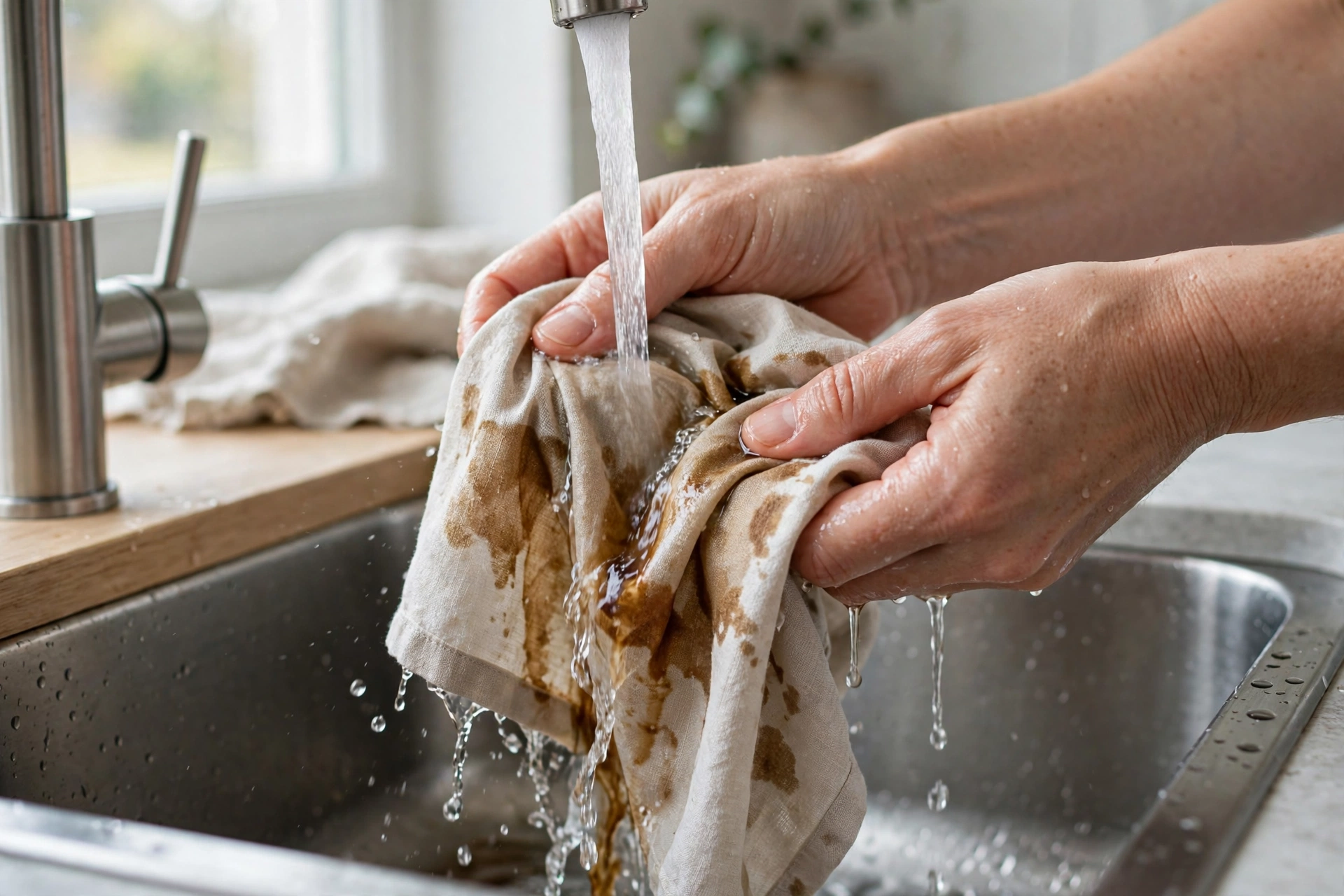
Clean Grease and Oil Stains
To clean a grease or oil stain, blot up excess oil without rubbing, apply dish soap or a degreaser to break down the fat, let it sit briefly, blot or wash, and rinse well before drying. Grease needs a cleaner that can dissolve fat, because water alone usually spreads it.
On fabric, blot the stain, apply a small amount of dish soap directly to it, and work it in gently with your fingers. Let it sit for ten to fifteen minutes, then wash as the care label directs, using the warmest water the fabric allows. Check before drying, because dryer heat can set a remaining grease stain.
On carpet, blot with soapy water, then clean water, repeating until the cloth comes away clean. Avoid pouring large amounts of water onto carpet. On hard surfaces, warm soapy water and a degreaser usually remove cooking oil and butter, followed by a clean-water wipe and drying, so no slippery film remains.
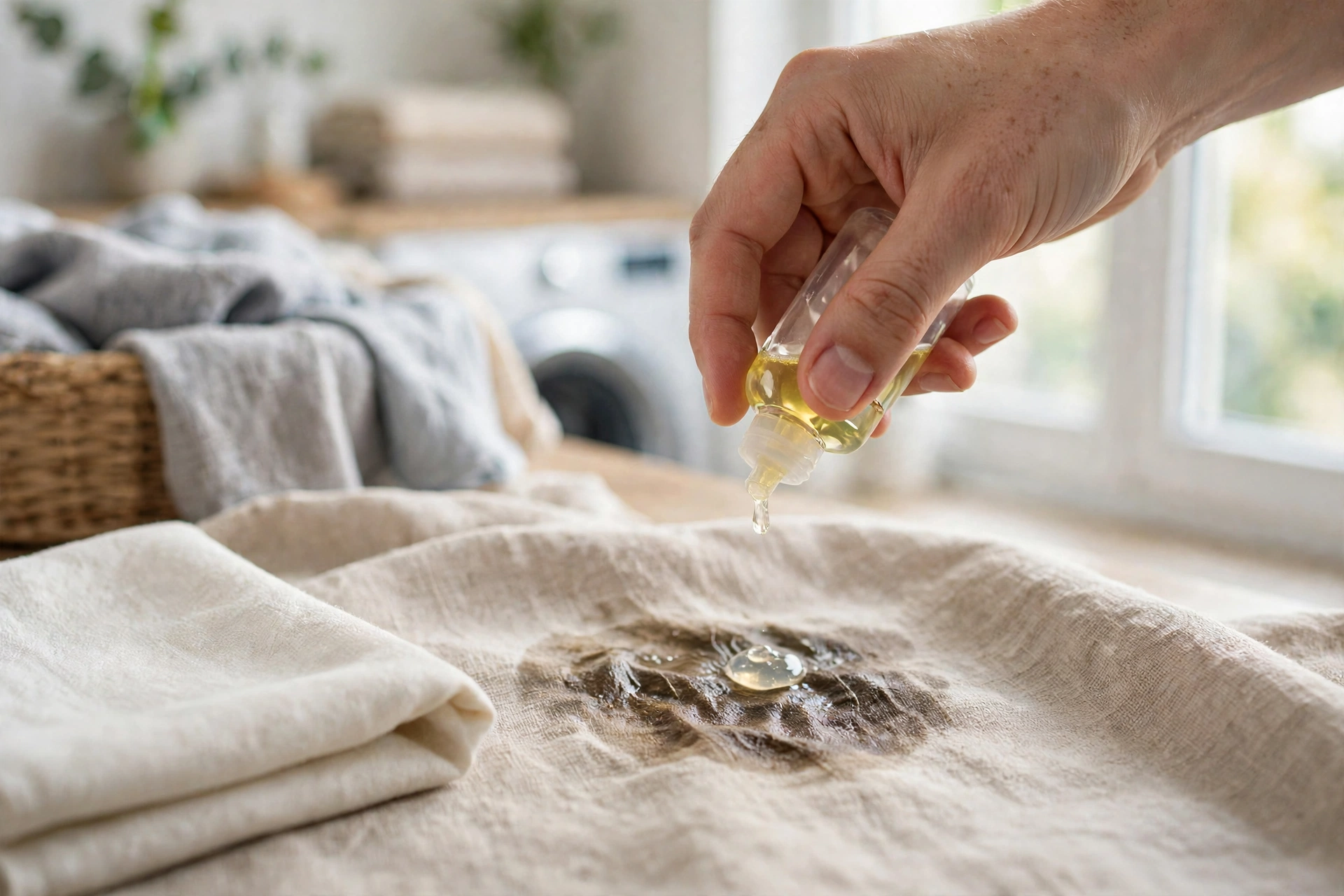
Clean Protein Stains With Cool Water
To clean a protein stain such as blood, milk, egg, or sweat, rinse with cool water first, blot with cool soapy water, rinse again, and never use hot water or a dryer until the stain is fully gone. Heat can cook protein into fibres, which makes the stain much harder to remove.
For blood on fabric, rinse under cool running water as soon as possible, then soak in cool water with a small amount of dish soap if the care label allows it. For milk and egg, remove solids, rinse with cool water, and blot with soapy water, repeating with a clean cloth. For sweat marks on collars and underarms, a paste of baking soda and water, left briefly and then washed, can help, if the fabric allows it.
On carpet, blot with cool soapy water, then clean water, and repeat. Do not use hot water or steam on a protein stain until it is gone. If it remains, try a surface-safe enzyme cleaner, tested on a hidden spot first.
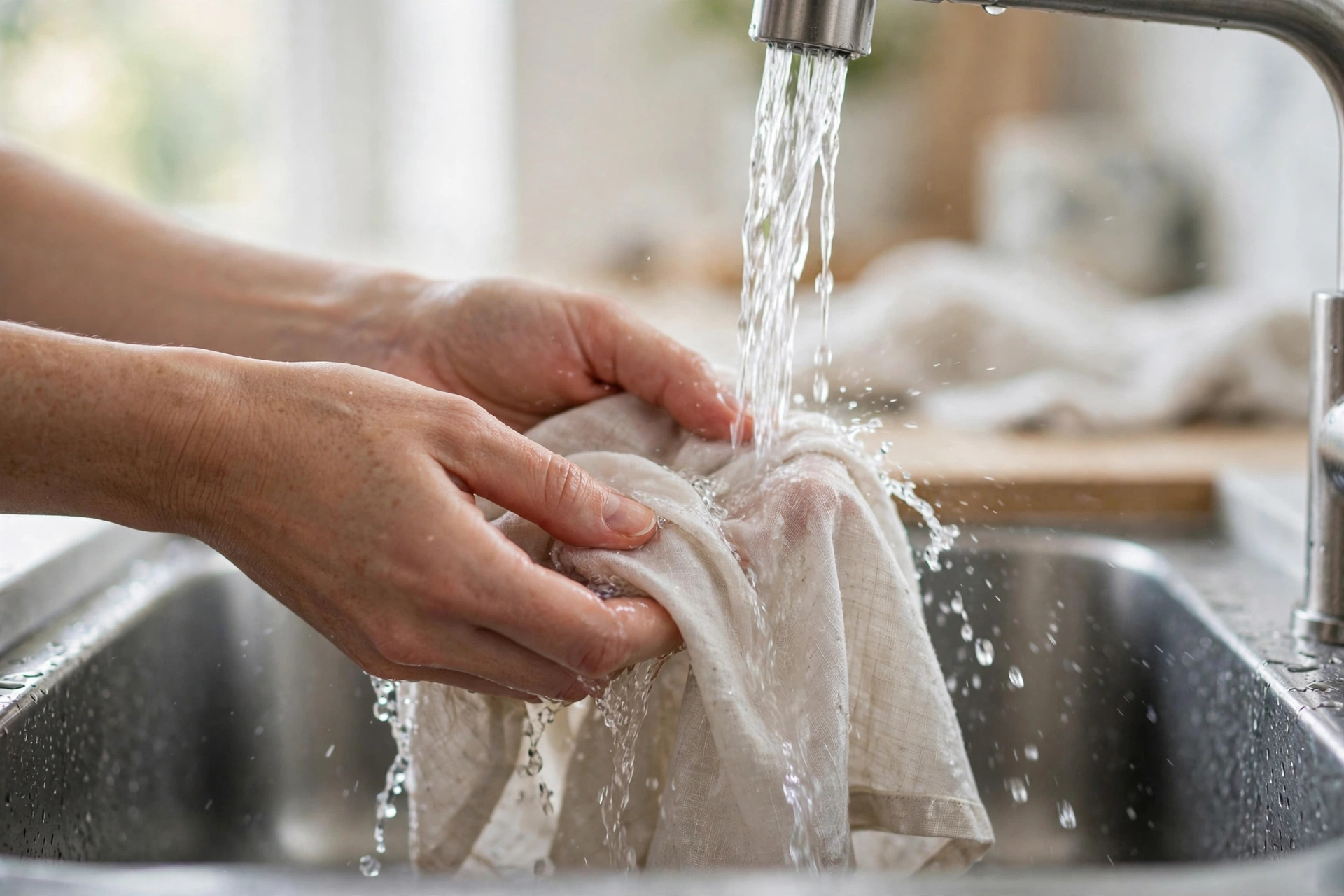
Clean Mud, Grass, and Outdoor Stains
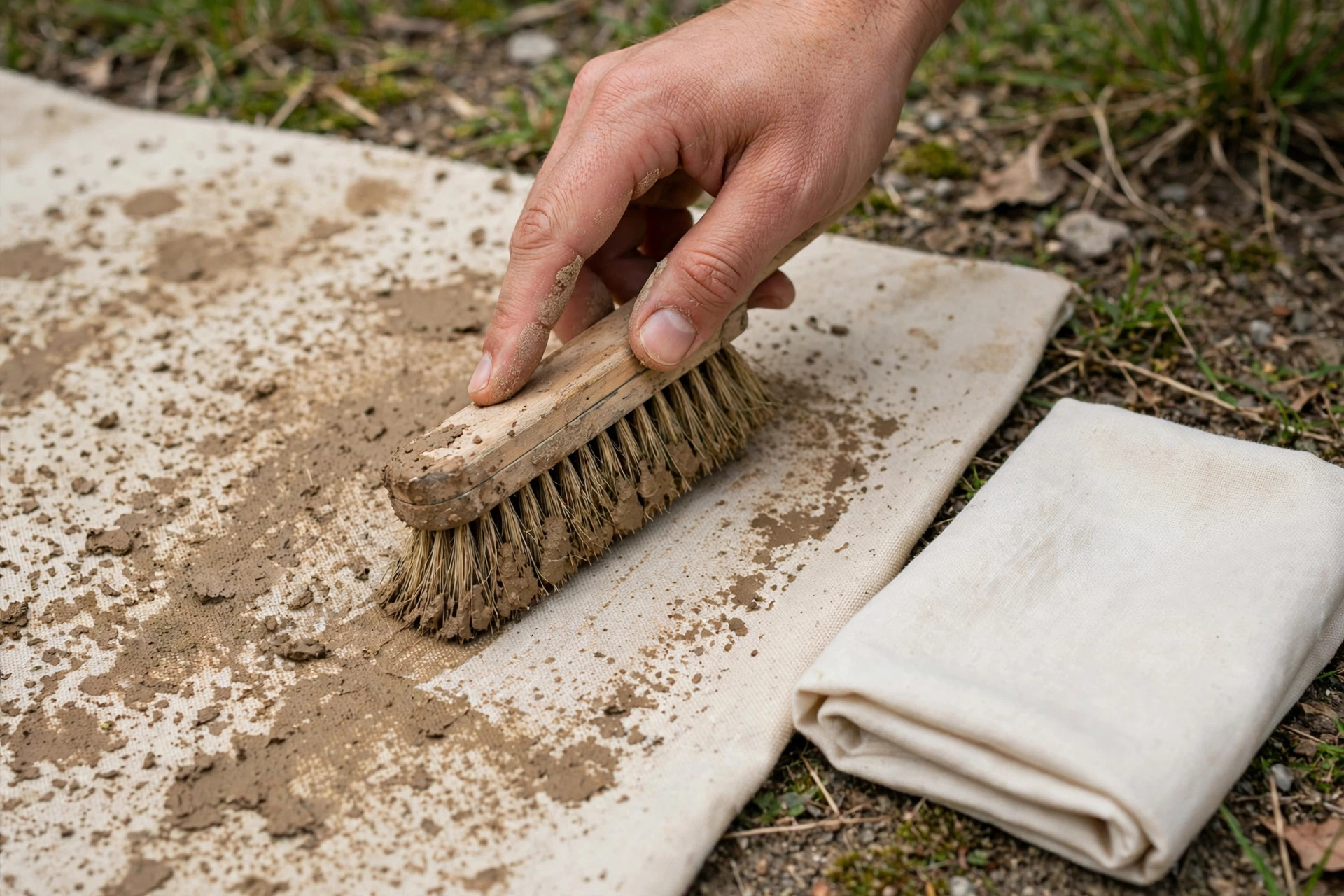
To clean mud and outdoor stains, let mud dry completely first, brush off as much loose dirt as you can, then wash with cool or warm soapy water, because wet mud spreads and soaks deeper if you scrub it at once. Patience at the start saves most of the work later.
Once mud is dry, brush it off outdoors or over a bin, using a soft brush for fabric and a stiff brush only for hard surfaces. For fabric, rinse with cool water, apply dish soap, and wash as the care label directs. For grass stains, which contain both colour and protein, cool water and dish soap are a good first step, followed by washing, and the stain should be checked before drying.
On carpet, vacuum dried mud well before any wet cleaning, because vacuuming removes most of the dirt without spreading it. Then blot with soapy water and clean water, as with other carpet stains. On hard floors, sweep or vacuum first, then mop with warm soapy water, and dry the floor well afterwards.
Clean Ink, Wine, and Dye Stains
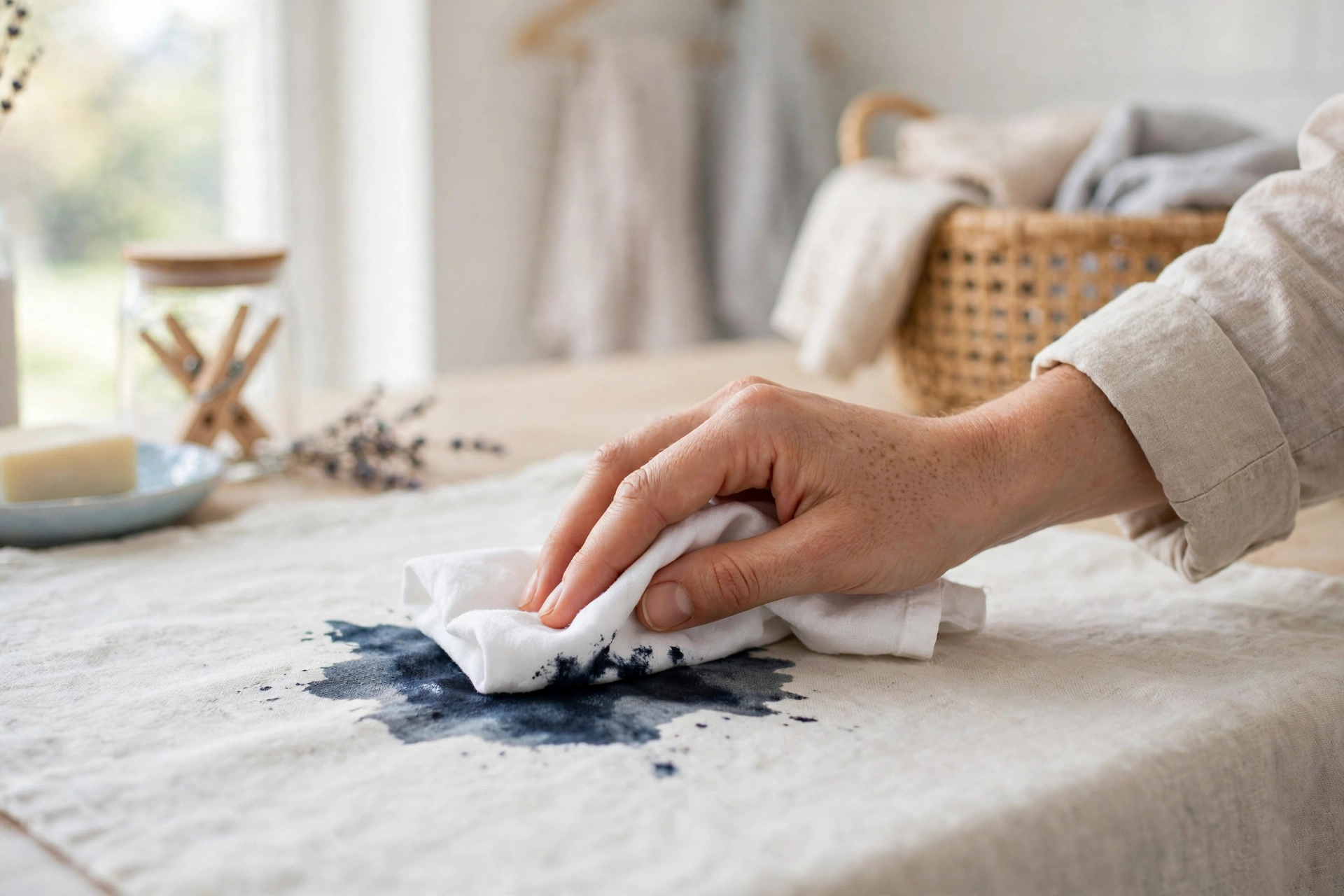
To clean an ink or dye stain, blot gently without rubbing, test a colour-safe method on a hidden spot, work from the outside inward, and rinse well, because rubbing spreads dye and the wrong cleaner can bleach the material around the stain. Dye stains are about colour, not just dirt.
For ballpoint ink on fabric, blot with a cloth dampened with rubbing alcohol if the fabric and care label allow it, using a clean part of the cloth each time so ink does not transfer back. For wine, blot at once, cover the stain with a damp cloth, and rinse with cool water, then use soapy water and rinse again. For coloured drinks, the same cool-water and dish-soap first step usually helps, if you act quickly.
On carpet, blot with cool water and a small amount of dish soap, then blot with clean water, and repeat with fresh cloths. Avoid bleach on carpet and coloured fabric unless the label clearly allows it, because bleach can remove the fabric colour as well as the stain. If a dye stain does not lift, consider professional cleaning rather than risking damage.
Clean Pet Stains and Smells
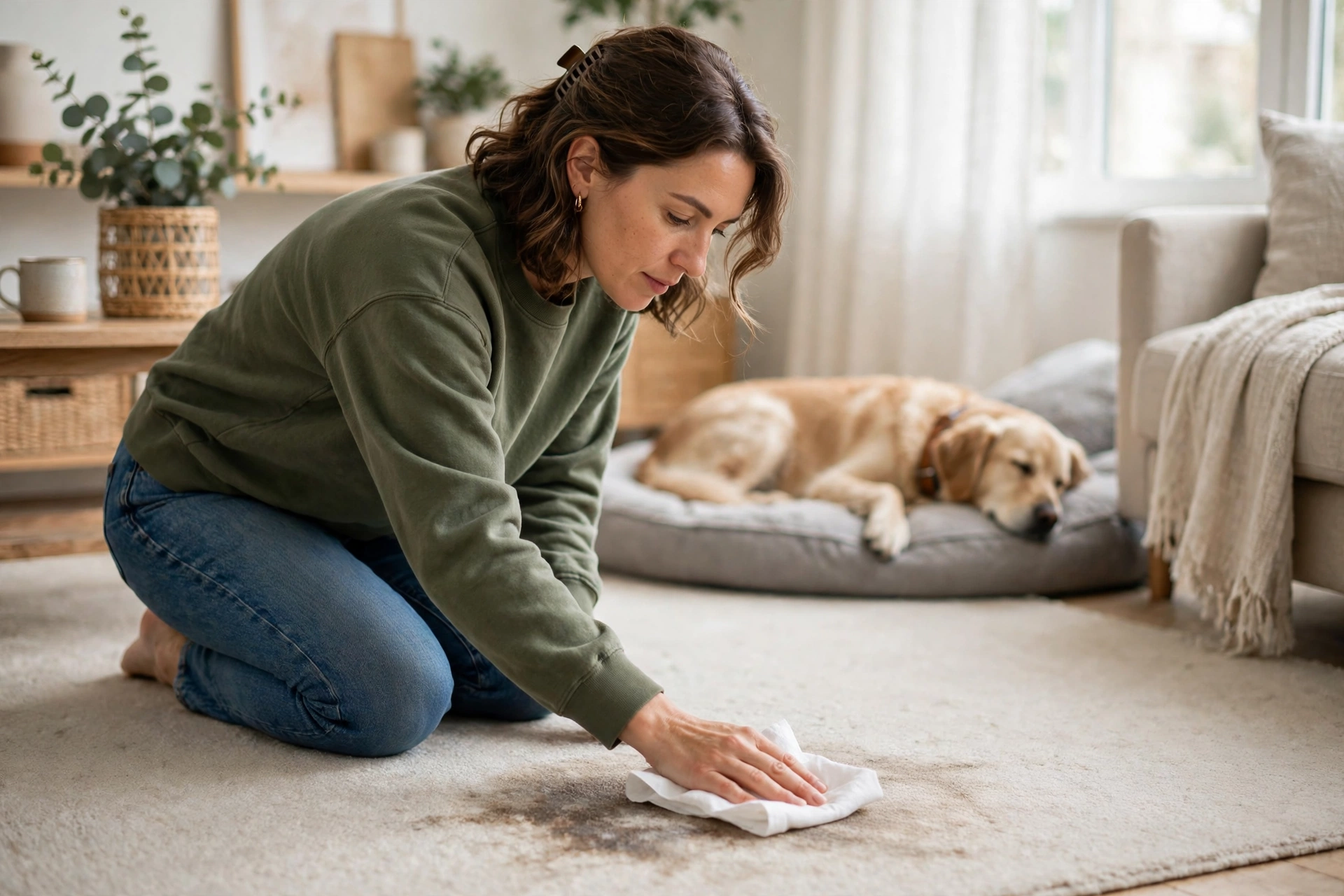
To clean a pet stain, blot up as much as you can, rinse with cool water, blot with soapy water, rinse again, and use an enzyme cleaner made for pet stains if a smell remains, because ordinary cleaners may remove the mark but leave the smell that draws a pet back. Smell matters as much as appearance with pet stains.
Start by blotting, not rubbing, and remove solids gently. Rinse with cool water and blot with a small amount of dish soap, then blot with clean water to remove soap. If the stain is on carpet, avoid soaking the padding, and blot until the cloth comes away clean. An enzyme cleaner, used exactly as the label directs and tested on a hidden spot first, breaks down the proteins that cause smell.
Dry the area well with air flow if possible, to avoid a musty smell. If the pet returns to the same spot, clean it thoroughly and consider a vet check. Keep pets away from the area until it is fully dry and any cleaner residue is gone.
Tackle Old and Dried Stains
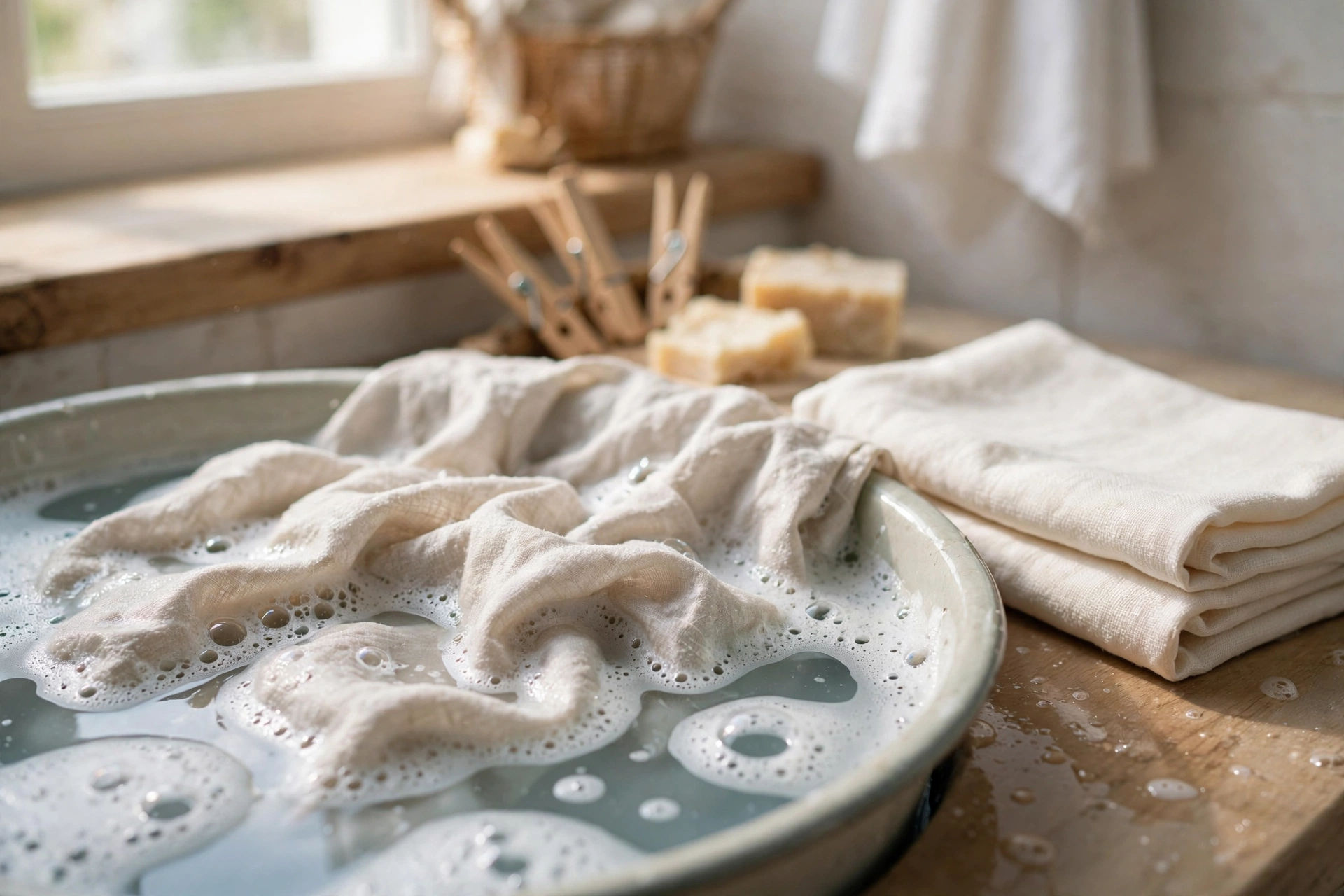
To clean an old or dried stain, soak the item in cool or warm water with dish soap if the material allows it, work the cleaner in, rinse, and repeat, because dried stains need time to soften before they will lift. An old stain is not always permanent, but it rarely comes out in one quick attempt.
Soak fabric for thirty minutes to a few hours, checking the care label first, and change the soaking water if it becomes dirty. For carpet, dampen the stain with soapy water, let it sit briefly, blot, and repeat with clean water, rather than flooding the carpet. For hard surfaces, a damp cloth left on the stain for a few minutes often softens it enough to wipe away.
Check the stain in good light before drying, because heat can set any stain that remains. If it lightens but does not disappear, repeat the gentle method once more. If the item is valuable, delicate, or labelled dry-clean only, take it to a professional cleaner instead of experimenting at home.
Match the Method to the Surface
To match a stain method to a surface, use gentle, tested methods on fabric and carpet, and stronger wiping on sealed hard surfaces, because the same cleaner can be safe on tile and harmful on wool, silk, or light carpet. The surface decides how much water, scrubbing, and chemical you can safely use.
On washable fabric, follow the care label first, and use cool water for protein stains and the warmest safe water for grease after treatment. On wool, silk, and dry-clean-only items, blot gently and seek professional help early. On carpet, blot only, use small amounts of water, and dry well, because excess water can reach padding and backing.
On sealed hard surfaces such as tile, laminate, and sealed stone, warm soapy water and a soft cloth usually work, followed by a clean-water rinse. On unsealed stone and wood, use only a lightly damp cloth and a cleaner the maker allows, and dry at once, because standing water and strong cleaners can damage these surfaces. When in doubt, test a hidden spot and choose the gentlest method that works.
Mistakes That Make Stains Worse
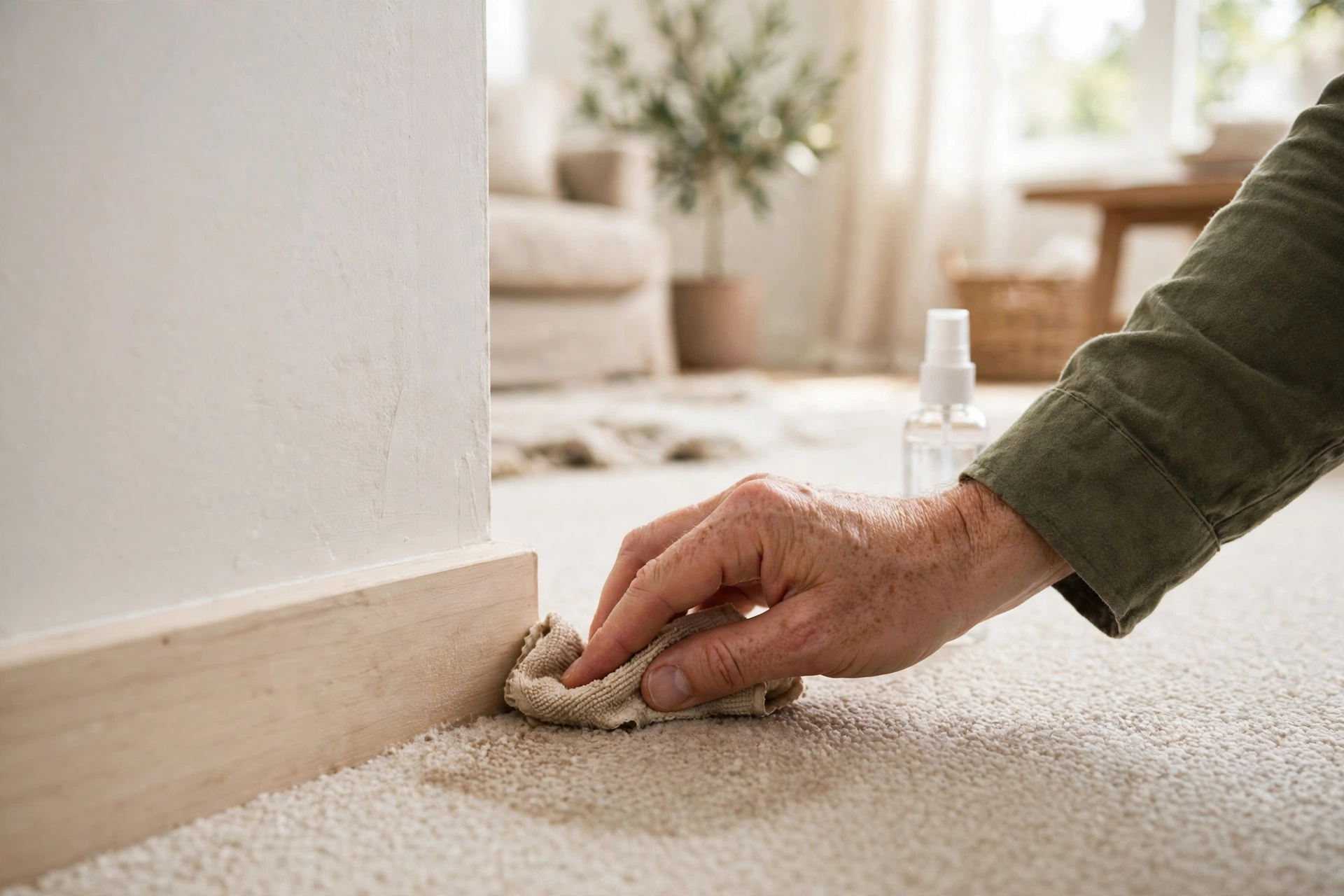
The mistakes that make stains worse are rubbing instead of blotting, using hot water on a protein stain, drying before the stain is out, mixing cleaners, and skipping the hidden-spot test. Avoiding these five mistakes alone gives most stains a much better chance.
Rubbing spreads a stain and pushes it deeper, especially on carpet and soft fabric. Hot water and dryer heat can set protein and dye stains, so always check the stain in good light before drying. Mixing cleaners, especially bleach with vinegar or other products, can create harmful fumes and damage surfaces, so use one cleaner at a time and rinse between methods.
Skipping the test on a hidden spot risks bleaching or damaging the material around the stain, which is often worse than the stain itself. Too much cleaner also leaves soap that attracts dirt. Rinse well, blot dry, and repeat a gentle method rather than adding a stronger chemical at once.
Conclusion
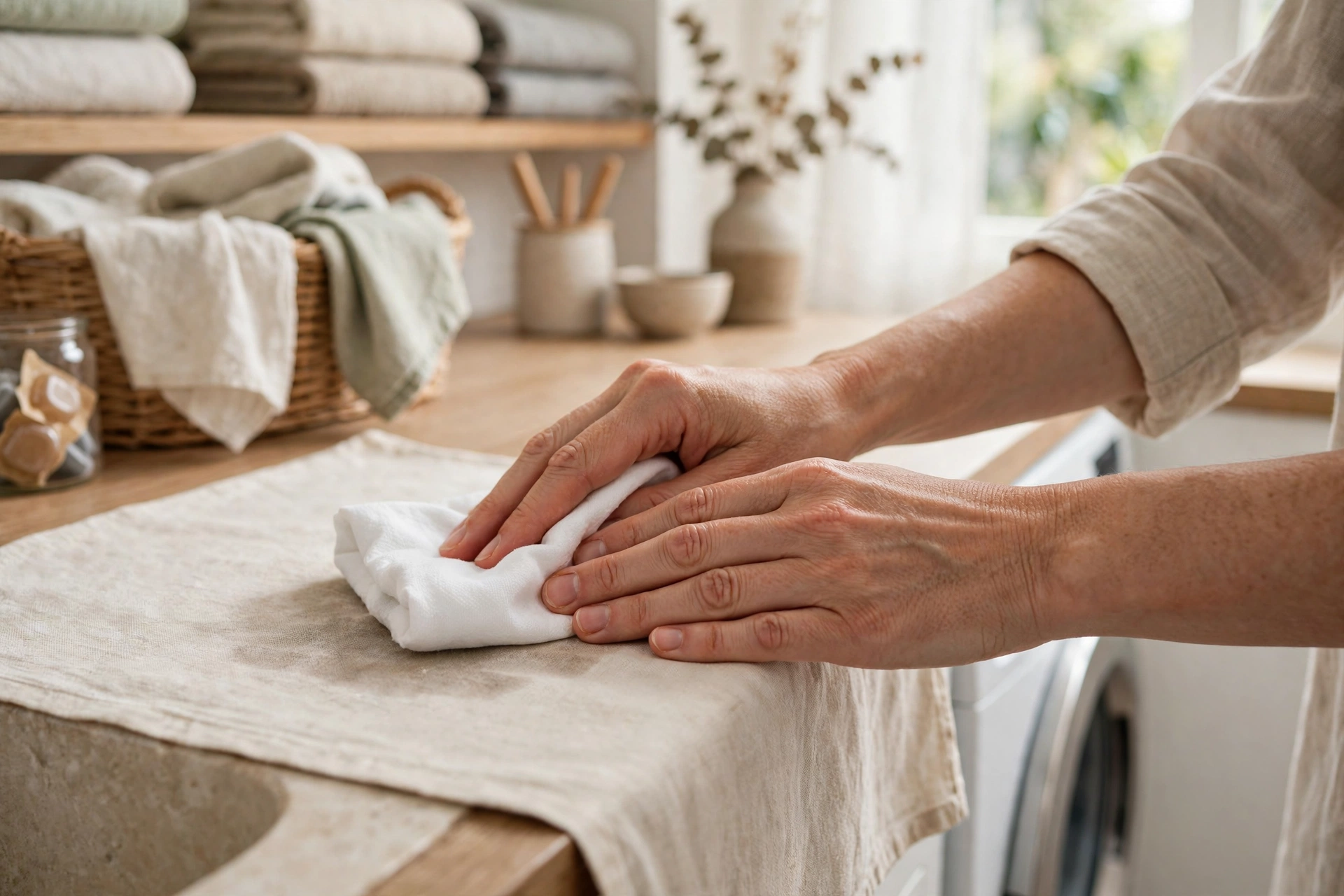
Cleaning a stain is mostly about calm first steps: blot, identify the type, match the method to the surface, and check before drying. With cool water, dish soap, and a clean cloth, most everyday stains can be handled at home. For valuable, delicate, or stubborn stains, professional help is the safer choice.
FAQs
What is the first thing to do for a stain?
Blot up liquid or remove solids gently, work from the outside inward, and test any cleaner on a hidden spot first. Avoid rubbing and heat until you know the stain type.
Can I use hot water on a stain?
Not always. Hot water can set protein stains such as blood, milk, and egg. Use cool water first for those stains, and only use warm water when the stain type and care label allow it.
How do I remove an old dried stain?
Soak the item if the material allows it, work soapy water in gently, rinse, and repeat. Check the stain before drying, because heat can set any stain that remains.
Is dish soap safe for most stains?
Dish soap is a good first cleaner for many food, grease, and drink stains, if you test it first. It is not suitable for every surface, so check the care label and rinse well afterwards.
When should I call a professional cleaner?
Call a professional for valuable, delicate, or dry-clean-only items, and for stains that do not lift after gentle attempts. Professional help is safer than risking damage with stronger chemicals.
Disclaimer: This article is for general information only and does not provide professional cleaning, textile, or carpet-care advice. Always follow care labels and the instructions for your surfaces, fabrics, and cleaning products, test cleaners on a hidden spot first, keep cleaning products away from children and pets, never mix bleach with vinegar or other cleaners, and seek qualified help for valuable, delicate, or damaged items. Clearise Cleaning Services does not offer guest posting, paid promotion, or advertising through this article.
Thanks for visiting Clearise Cleaning Services! Discover more helpful tips and expert cleaning insights by exploring our related categories.