
There is no single answer to how much vinyl plank flooring costs, because the real total depends on your room size, the plank you choose, the condition of your floor underneath, and whether you fit it yourself or pay a professional. A price for one box of planks tells only part of the story.
That is why this guide works through the full cost, step by step, in plain language. It explains what goes into a complete quote, how room size changes the total, what drives plank prices up or down, and which smaller items people often forget. It does not give a fixed price, because prices vary by region, supplier, and product, and any single figure would quickly become out of date or wrong for your home. Instead, it gives you a clear way to build up your own total and to compare quotes fairly.

What the Total Cost Really Includes
The total cost of vinyl plank flooring is the price of the planks plus underlayment if needed, adhesive if needed, trims and thresholds, subfloor preparation, fitting labour if you hire someone, delivery, and extra material for cuts and waste. Any quote that leaves out one of these parts is not a complete quote.
Think of it as a finished floor, not a pile of planks. The planks are usually the largest single item, but the other parts can add a noticeable share, especially in a room that needs old flooring removed or a floor levelled first. When you ask for a quote, ask for each part to be listed separately. That way you can see where the money goes, compare two quotes properly, and decide where you can save without harming the result.
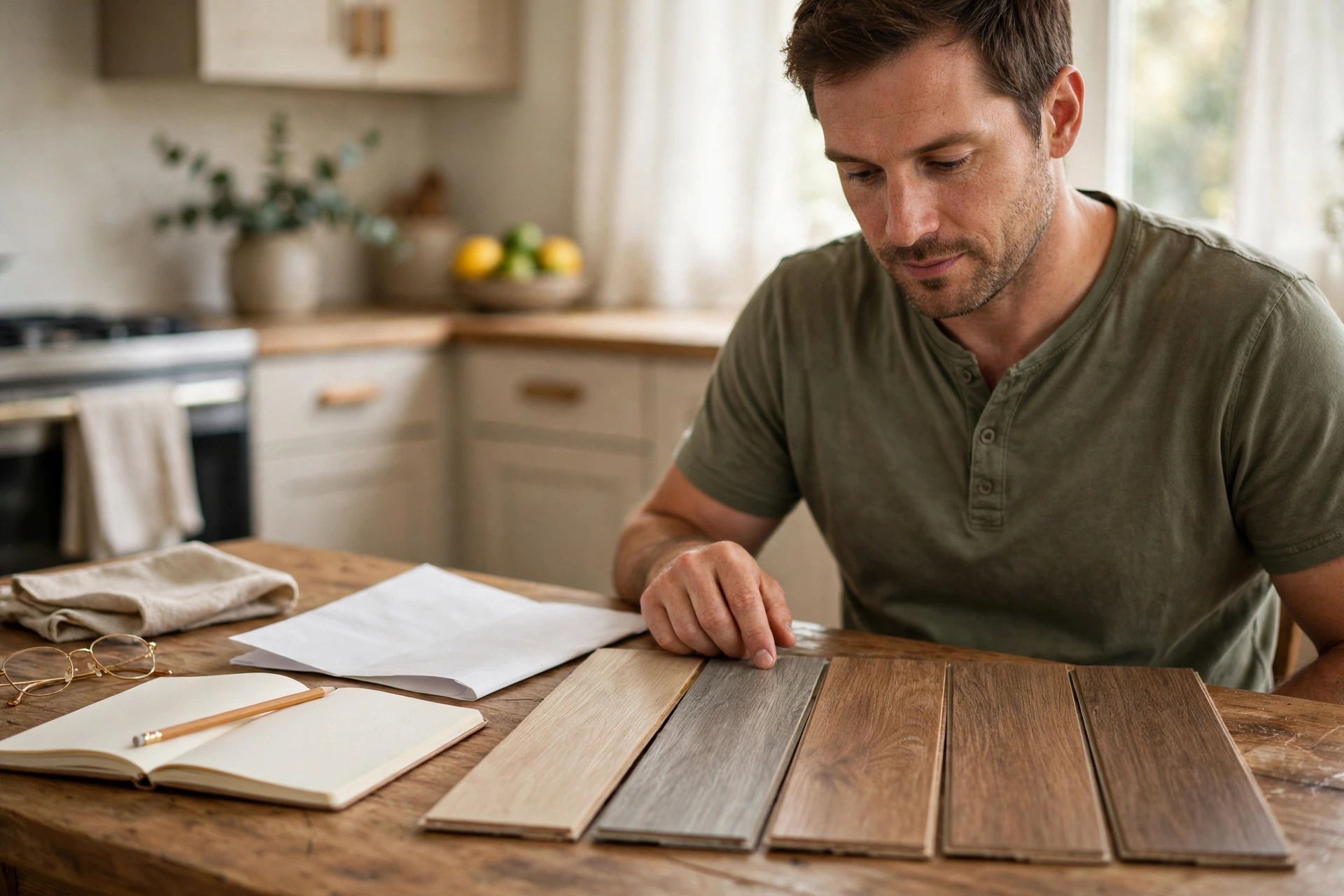
How to Work Out Your Room Size
Your room size is the starting point for any vinyl plank flooring cost, because most of the material is bought to cover an area, and a bigger room simply needs more planks, more underlayment, and more fitting time. Measure the length and width of each room you plan to floor, and work out the area for each one separately.
For a simple rectangular room, multiply length by width to get the area. For an L-shaped room or a room with alcoves, split it into rectangles, work out each part, and add them together. You will also need extra material for cuts, because planks at edges and around fittings have to be trimmed, and some pieces cannot be reused. Suppliers and fitters usually allow for this waste, but it is worth asking how much extra has been included, so you are not caught short halfway through the job or left paying for far more than you need.
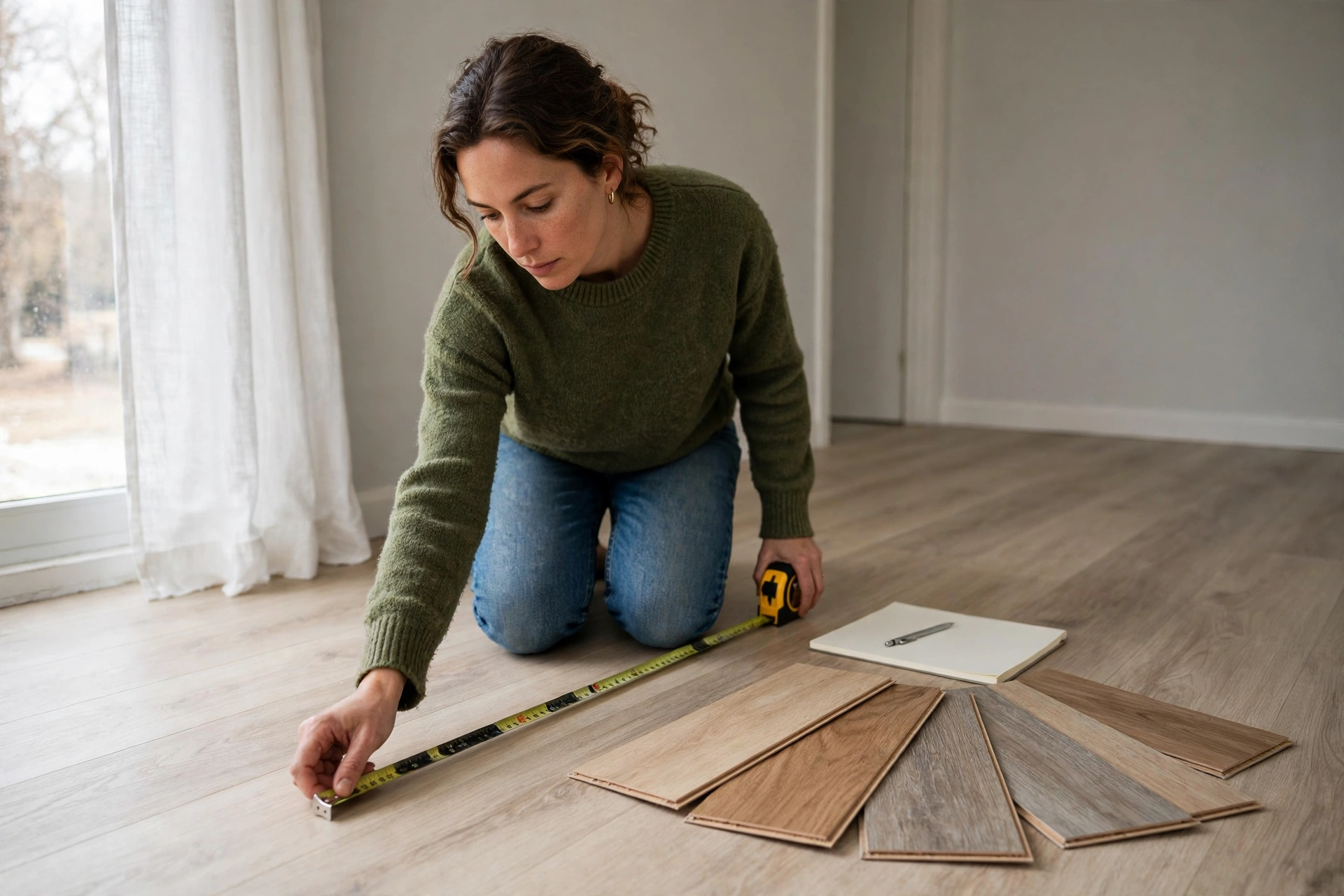
Plank Price: What Usually Changes It
Plank price usually changes with the wear layer, the core type, the plank size and finish, and whether backing is already attached, rather than with colour alone. Two planks that look almost the same in a shop can sit at very different prices because of what is inside them.
A thicker wear layer is generally made for heavier use, so it suits busy rooms and homes with pets, while a thinner wear layer suits quieter rooms and usually costs less. Rigid core planks, which feel firmer, also tend to cost more than basic flexible planks, and wider or longer planks, or planks with a more detailed wood-like texture, can add to the price as well. The lesson is simple: compare planks by wear layer, core, and backing, not by colour or by the price of one box alone.
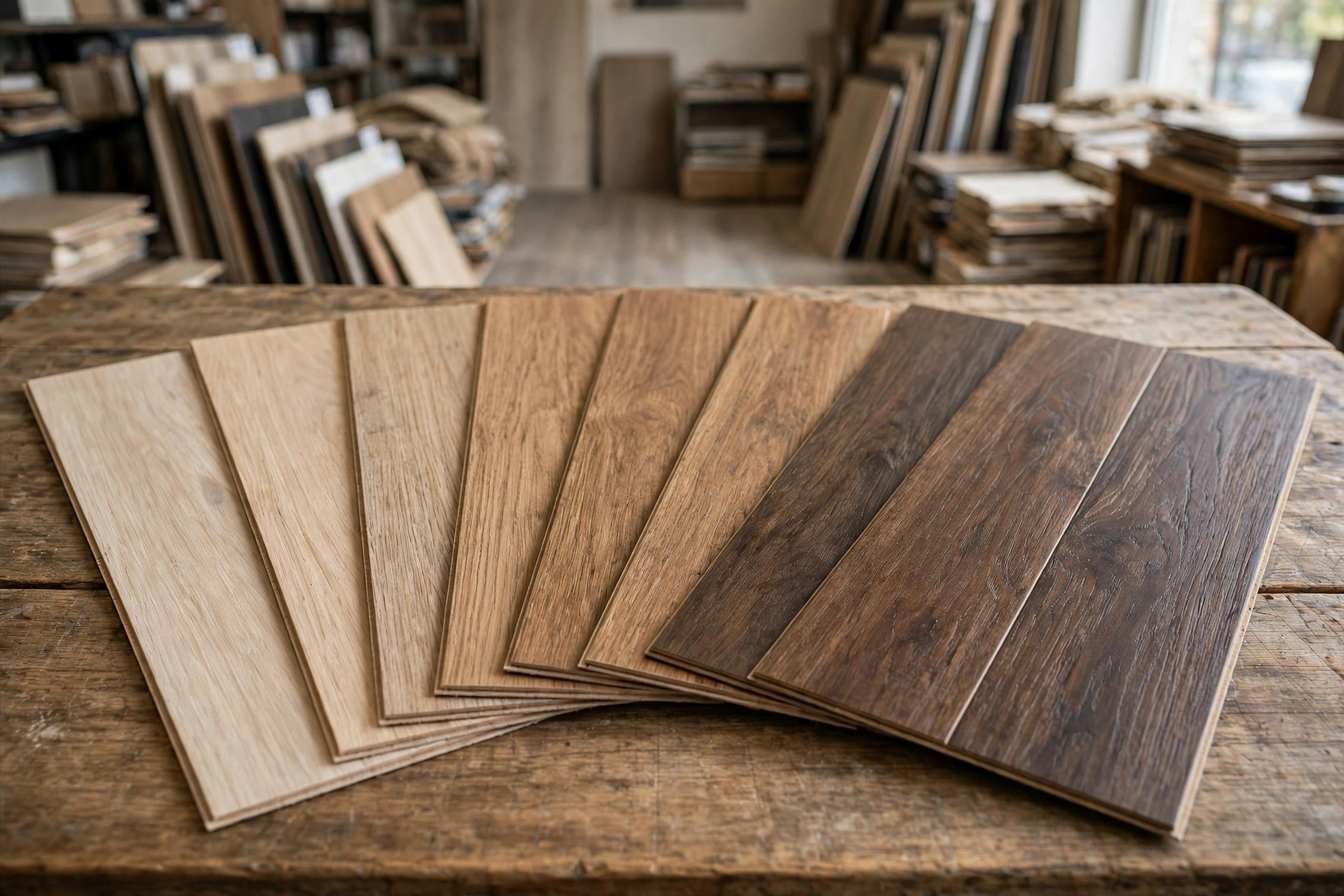
Underlayment: When It Adds to the Bill
Underlayment adds to the bill when your chosen plank does not already include backing and your floor type or product guidance calls for a separate layer underneath. Some vinyl planks come with backing attached, in which case separate underlayment may not be needed at all.
Underlayment is a thin layer laid on the subfloor before the planks go down. It can help with comfort, sound, and small unevenness, and some products need it to meet their fitting guidance. If it is needed, it is bought to cover the same area as the floor, so a larger room means more underlayment and a higher cost. Before you accept a quote, check whether underlayment is included, whether the plank already has backing, and whether the underlayment named is the one your product guidance actually requires.

Fitting Costs: DIY or Professional
Fitting costs depend on whether you lay the floor yourself or hire a professional, and on how difficult your rooms are, because awkward shapes, stairs, and many doorways take more time and care than a simple square room. Professional fitting is labour, not just laying planks, and it usually includes measuring, cutting, and finishing.
Doing it yourself removes the labour charge, but it does not remove the cost of tools, time, and mistakes. You may need a saw, spacers, a tapping block, and other basic tools, and a first-time job in a tricky room can take much longer than expected. A professional fitter, by contrast, can usually work faster and handle awkward cuts and door frames more neatly, but will charge for that skill and time. Glue-down fitting can also take more care and time than click-together fitting, which can affect the labour charge. Get the fitting method and the rooms included written into the quote, so you are not comparing a simple room with a difficult one.

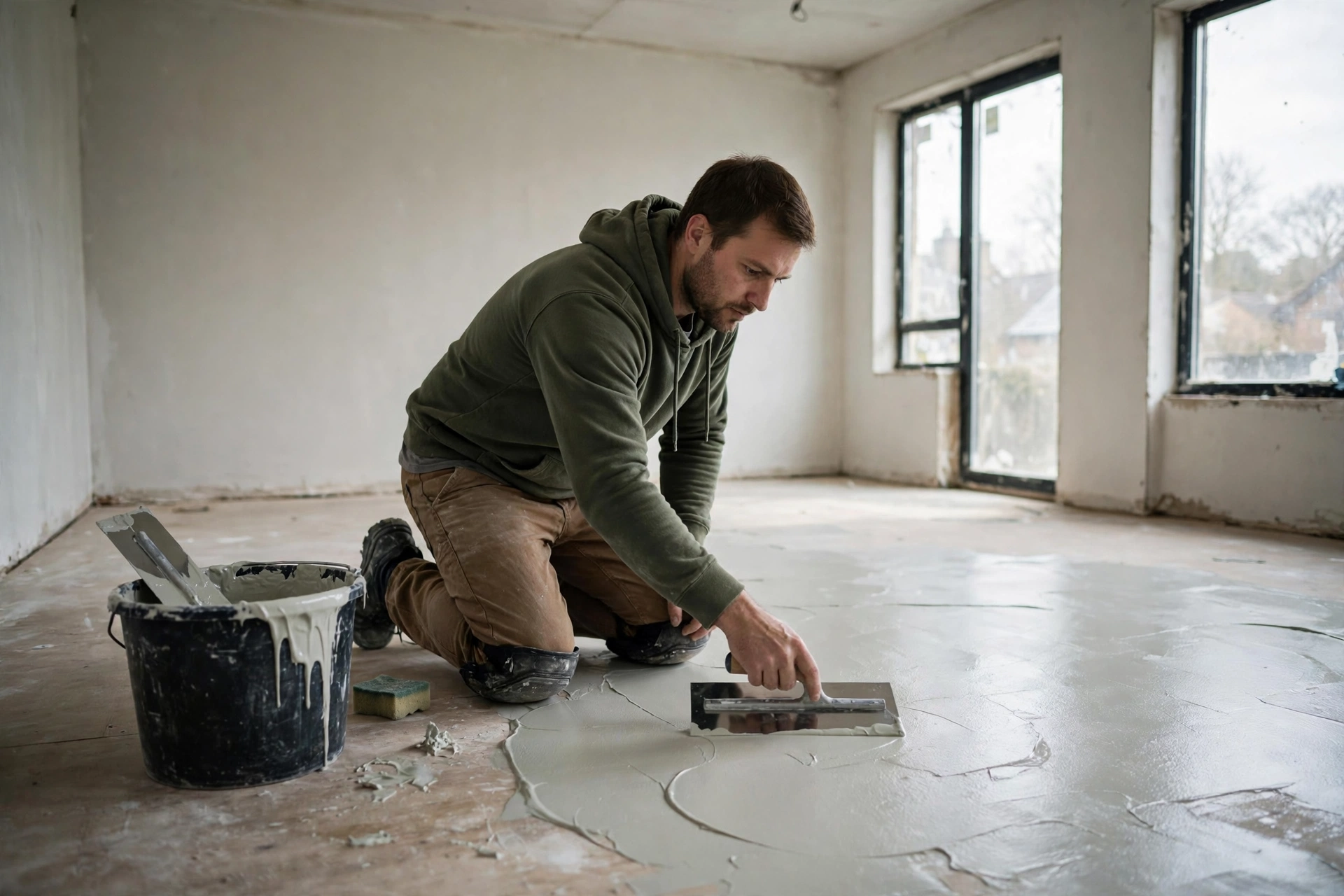
Subfloor Preparation Costs
Subfloor preparation costs are the charges for getting the floor underneath ready, and they can be the most variable part of the whole job, because one home needs almost nothing and another needs old flooring removed, boards fixed, or a surface levelled. A vinyl plank floor needs a clean, dry, level, and stable base, whatever plank you choose.
If your base is already in good shape, preparation may be little more than cleaning and a quick check. If it is not, the work can include lifting old carpet or tiles, removing adhesive, fixing loose boards, filling dips, or levelling a concrete floor. Each of these takes time and materials, and they are often charged separately from fitting. This is also the part of the job that is hardest to price without seeing the room, which is why a fitter may want to visit before giving a firm figure. A quote that assumes no preparation at all may look cheaper at first, but it can grow once the old floor comes up.
Trims, Thresholds and Finishing Details
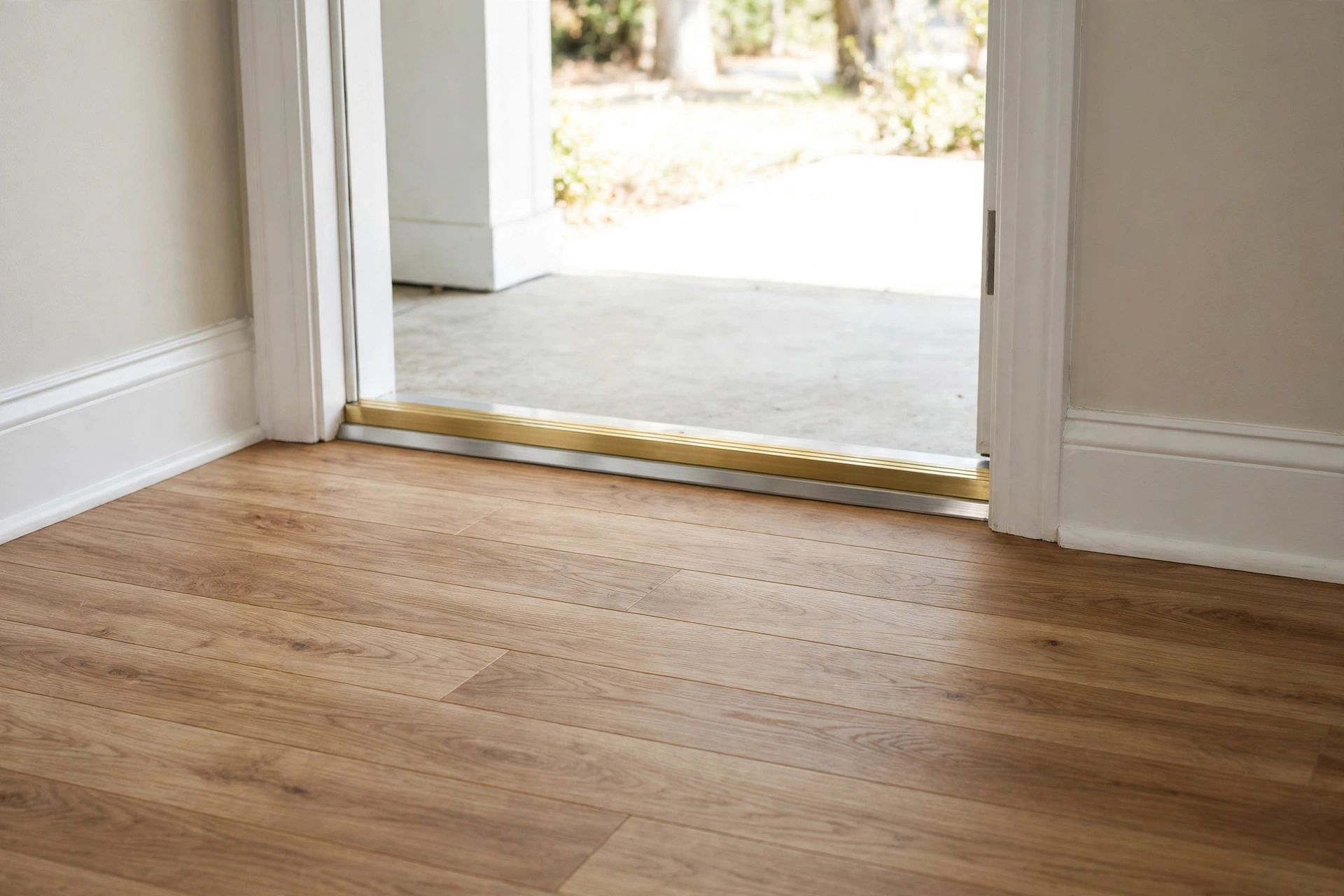
Trims, thresholds, and finishing details are the smaller pieces that make a floor look finished where it meets walls, doorways, and other floors, and they are easy to overlook when you are focused on plank prices. They are small items, but they add up across several rooms and doorways.
Skirting or scotia covers the expansion gap around the edges of a floating floor, so the gap is hidden and the floor can still move slightly with temperature changes. Thresholds or transition strips cover the join where vinyl plank meets carpet, tile, or another floor, and they help the join look neat and feel safe underfoot. Door frames, pipes, and stair edges may need extra cutting or special trims, which take time as well. When you compare quotes, count the doorways and room joins in your home and check whether trims and thresholds are included, and in what finish, because a quote without them is not a finished floor.
Hidden Costs People Often Miss
Hidden costs are the charges that are not in the headline plank price, such as delivery, old floor removal and disposal, furniture moving, extra material for cuts, and return trips if something is missing or wrong. They are not tricks, but they are easy to miss until the bill arrives.
Delivery is a common one, especially for a small order or a home that is hard to reach, and it may be charged per delivery rather than per box. Removing and disposing of an old floor can also be charged separately, as can moving heavy furniture out of the room and back in again. If you run short of planks, a second delivery or a return visit from a fitter can add cost and delay. Some suppliers also charge for samples, although many will credit them against an order. The best protection is a written list of what is included and what is not, asked for before you agree, rather than discovered after the work starts.

Budget, Mid-Range and Premium: A General Comparison
Budget, mid-range, and premium vinyl plank flooring differ mainly in wear layer, core, finish, and backing, and those differences decide which rooms each tier suits and how it is likely to cope with busy daily use. The tiers below are general descriptions only, not fixed price bands, because actual prices vary by supplier and product.
A budget plank is usually a simpler product with a thinner wear layer and a more basic finish, which can suit a quiet room or a short-term need, but may show wear sooner in a busy hallway or kitchen. A mid-range plank usually offers a tougher wear layer, a firmer core, and a more convincing wood-like finish, which suits most family rooms and daily use. A premium plank usually adds the toughest wear layer, a rigid core, attached backing, and the most detailed finish, which can suit busy homes and rooms that take heavy wear. Paying more does not automatically make a floor better for your room; the right tier is the one whose wear layer and core match how the room is actually used.
| Tier | Typical wear layer | Core and backing | Best suited to | Main trade-off |
|---|---|---|---|---|
| Budget | Thinner, for light use | Basic flexible core, often no attached backing | Quiet rooms, short-term use | May wear sooner in busy rooms |
| Mid-range | Tougher, for everyday use | Firmer core, backing often included or optional | Family rooms, kitchens, hallways | Costs more than budget, but suits daily use |
| Premium | Toughest, for heavy use | Rigid core, usually with attached backing | Busy homes, high-traffic rooms | Highest plank cost, may be more than a quiet room needs |
How to Compare Complete Quotes Like for Like
Comparing complete quotes like for like means checking that every quote covers the same rooms, the same plank, the same underlayment, the same preparation, and the same finishing, because a cheaper quote that leaves something out is not cheaper once that item is added back. Give every supplier the same room list.
A simple step-by-step check can help:
- List every room, doorway, and join, and give the same list to each supplier or fitter.
- Ask for each part to be priced separately: planks, underlayment, adhesive, trims, thresholds, preparation, fitting, and delivery.
- Check how much extra material for cuts is included, and whether spare planks for future repairs are included.
- Ask what is not included, such as old floor removal, furniture moving, or return visits.
- Compare the totals only after every quote covers the same items, and ask about anything that is missing.
If one quote is much lower than the others, look for what it leaves out before you assume it is better value. A missing item is usually the reason, not a better plank.

Ways to Keep the Total Down Without Cutting Corners
Keeping the total down without cutting corners means saving on the parts of the job that do not affect how the floor performs, while protecting the parts that do, such as the wear layer for the room, the subfloor preparation, and the fitting quality. The cheapest plank is not always the cheapest finished floor.
One practical saving is to floor rooms in one go where it makes sense, so delivery and call-out costs are shared rather than repeated. Another is to choose a mid-range plank for busy rooms and a simpler plank for quiet rooms, rather than paying for the toughest product everywhere. You can also move furniture yourself, clear rooms before the fitter arrives, and keep spare planks from the same batch for future repairs, which avoids a later mismatch. What you should not cut is subfloor preparation or the expansion gap, because fixing a floor that gaps, lifts, or creaks usually costs far more than preparing it properly in the first place.

Mistakes That Push the Cost Up Later
Mistakes that push the cost up later are decisions that look like savings at the start, such as skipping subfloor preparation, buying too little material, choosing a plank by colour alone, or accepting a quote that leaves out trims and fitting. Each one can lead to a second visit, extra material, or a repair that costs more than the saving.
Buying too little is a common example. If you run short, a second order may come from a different batch, and the colour or pattern may not match exactly, or you may pay a second delivery charge. Choosing by colour alone is another: a plank that looks right but has too thin a wear layer for a busy room can wear quickly and need replacing sooner. Skipping preparation is the most expensive mistake of all, because a floor laid over a damp, uneven, or loose base can gap, lift, or creak, and fixing it usually means lifting planks and starting again. A careful quote and a realistic allowance for cuts and spares cost little at the start and save a great deal later.
Conclusion
How much vinyl plank flooring costs is best answered as a complete total, not a single plank price. Your room size sets how much material you need, the plank’s wear layer and core set its price band, and underlayment, fitting, subfloor preparation, trims, delivery, and cutting waste all add to the finished cost.
The most useful habit is to ask for a complete, itemised quote and to compare quotes like for like, with the same rooms, the same plank, and the same included items. Choose the tier that matches how each room is actually used, protect the subfloor preparation and fitting quality, and keep a small allowance for cuts and spares. Done that way, you will know your true total before work starts, and you will be far less likely to face an unexpected bill halfway through the job.
Frequently Asked Questions
Does the price of vinyl plank flooring include fitting?
Not always. Some quotes cover planks only, while others include fitting, underlayment, and trims. Always ask for an itemised quote so you can see exactly what is included.
Why do two quotes for the same room differ so much?
Quotes often differ because they cover different items, planks, or preparation work. One may include underlayment and trims, while another leaves them out, so compare the full list before judging price.
Do I need underlayment under vinyl plank flooring?
It depends on the product. Some planks have backing attached and need no separate layer, while others need underlayment for comfort, sound, or fitting guidance. Check your product guidance first.
Is the cheapest vinyl plank flooring good value?
It can be good value in a quiet room, but it may wear sooner in a busy room. Match the wear layer and core to how the room is used, rather than choosing on price alone.
How can I avoid unexpected extra costs?
Ask for a written list of what is included and what is not, including delivery, old floor removal, furniture moving, and extra material for cuts. Confirm these details before work starts.
Disclaimer: This article is provided for general information only. It is not professional flooring, building, or installation advice, and it does not promote any brand, product, or service. Product features, prices, and suitability vary by region, supplier, and product, so always check the guidance for the specific product you are considering and seek qualified advice for your home before making a decision.