

To clean a kitchen daily means to wipe surfaces after cooking, wash dishes promptly, keep the sink clear, and do a quick floor check, so dirt never builds up into a large job. Daily cleaning is not a deep clean; it is a short reset that keeps the kitchen pleasant to use and makes the next deep clean much shorter.
A kitchen gets dirty every day, even in a tidy home. Cooking leaves grease on the stovetop, crumbs on counters, water around the sink, and food in the fridge that needs checking. If those small messes wait, they harden, attract pests, and turn a ten-minute tidy into an hour of scrubbing.
This guide gives a realistic daily routine, not a perfect one. It shows what to do after cooking, what to check each morning and evening, and which small weekly tasks keep the kitchen from slipping, without repeating the full deep-clean process.
What Daily Kitchen Cleaning Really Means
Daily kitchen cleaning means keeping the surfaces you use every day clean and dry, rather than cleaning every cabinet, appliance, and corner. It covers counters, the stovetop, the sink, the table, and the floor around cooking areas, plus dishes, rubbish, and a quick fridge check.
Think of it as maintenance, not restoration. A deep clean resets the whole room, including inside cabinets and appliances. A daily clean simply stops today’s cooking from becoming tomorrow’s grime. That difference matters, because a daily routine that tries to do everything will fail, while a routine that does the right few things will last.
A good daily clean takes about ten to fifteen minutes in total, split across the day. It does not need special products or equipment, just a cloth, dish soap, and a habit of finishing one small task before you leave the kitchen.

The Two-Minute Rule After Cooking
The most useful daily kitchen habit is the two-minute rule: after cooking, spend two minutes wiping the stovetop, counters, and any spills while they are still fresh. Fresh spills wipe away easily, while dried spills need soaking and scrubbing later.
Start with the stovetop, because grease and splashes set quickly as the surface cools. Wipe it with a damp cloth and a little dish soap, then wipe again with a clean cloth. Next, wipe counters where you prepared food, including the area around the chopping board and any drips near the sink. Finish by putting ingredients away and washing the tools you used, or loading them into the dishwasher.
This rule works because it is short and tied to an event you already do. You do not need to remember a schedule; you simply finish cooking, then spend two minutes resetting the space. Over a week, those two minutes save far more time than they cost.

Wash Dishes Promptly, or Load Them Straight Away
To keep a kitchen clean daily, wash dishes promptly or load them straight into the dishwasher, rather than leaving them in the sink. A clear sink makes the whole kitchen look cleaner, stops smells, and leaves space for the next meal.
If you wash by hand, start with glasses and lightly soiled items, then plates and cutlery, and finish with pots and pans, changing the water when it looks dirty. Dry dishes before putting them away, or leave them on a rack to air-dry, so cupboards do not stay damp. If you use a dishwasher, scrape food off first, load it sensibly, and run it when it is full, rather than leaving dirty dishes to sit for days.
Wipe the sink itself after dishes, including the tap and the drain area, and dry it if water spots bother you. A clean, empty sink is the clearest sign of a daily kitchen routine, and it makes the next meal much easier to start.

Keep Counters Clear and Wiped
To keep kitchen counters clean daily, clear them after each use, wipe them with warm soapy water or a suitable cleaner, and put items back only when the surface is dry. A clear counter is easier to wipe, easier to cook on, and less likely to hide crumbs and spills.
Start by moving small appliances, fruit bowls, and loose items to one side, then wipe the whole surface, including the backsplash edge where splashes collect. For stone counters, use a stone-safe cleaner and avoid vinegar or lemon-based products unless the maker says they are safe. For laminate and solid surfaces, warm soapy water is usually enough, followed by drying.
Put back only what you use daily, such as a kettle or a knife block, and store the rest. A counter with a few items looks tidy and stays tidy, while a crowded counter collects dust and grease in gaps that are hard to reach. A quick wipe after each meal is enough to keep it that way.
Clean the Stovetop in Minutes, Not Hours
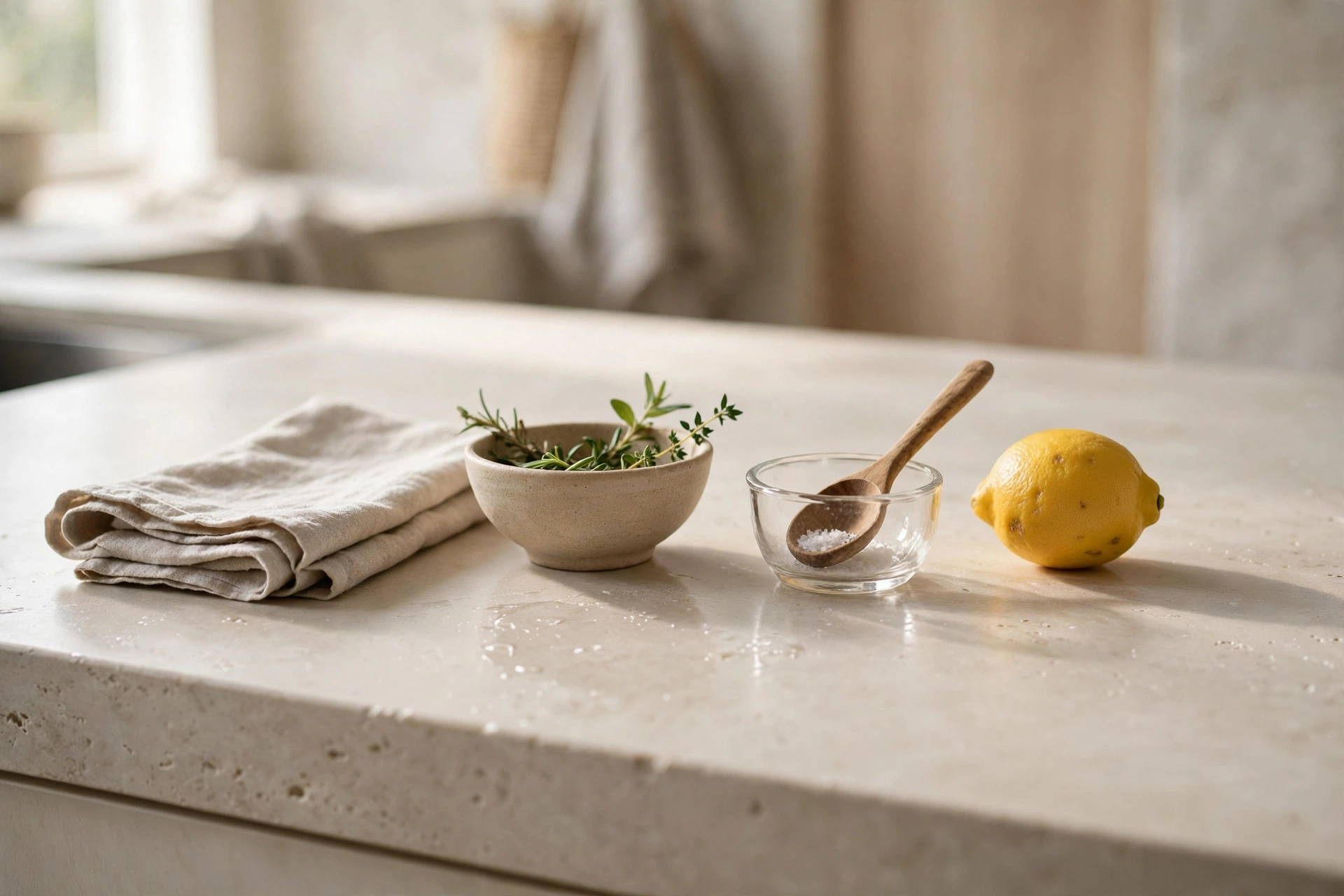
To clean a stovetop daily, wipe it once it has cooled, using a damp cloth and a little dish soap, and remove any spills before they bake on during the next use. Daily wiping prevents the thick, burnt layer that makes stovetop cleaning feel like a large job.
For gas stovetops, wipe around the burners and remove loose crumbs, but do not soak burner parts unless the maker allows it. For electric or ceramic tops, use a soft, non-scratch cloth and a cleaner made for that surface, and avoid dragging grit across the glass. For induction tops, a damp cloth is usually enough for daily care, followed by drying.
If a spill has already dried, dampen it with warm soapy water for a few minutes before wiping, rather than scrubbing hard. Daily care means you rarely need strong degreasers, because grease never gets a chance to build up into a stubborn layer.
| Daily kitchen task | Time needed | Best simple tool |
|---|---|---|
| Wipe stovetop after cooking | 2 minutes | Damp cloth, dish soap |
| Wipe counters and table | 3 minutes | Warm soapy water, cloth |
| Wash dishes or load dishwasher | 5 minutes | Dish soap, rack |
| Wipe sink and taps | 2 minutes | Cloth, dry towel |
| Sweep kitchen floor | 3 minutes | Broom, dustpan |
| Quick fridge check | 2 minutes | Cloth, bin bag |

Do a Quick Fridge and Food Check
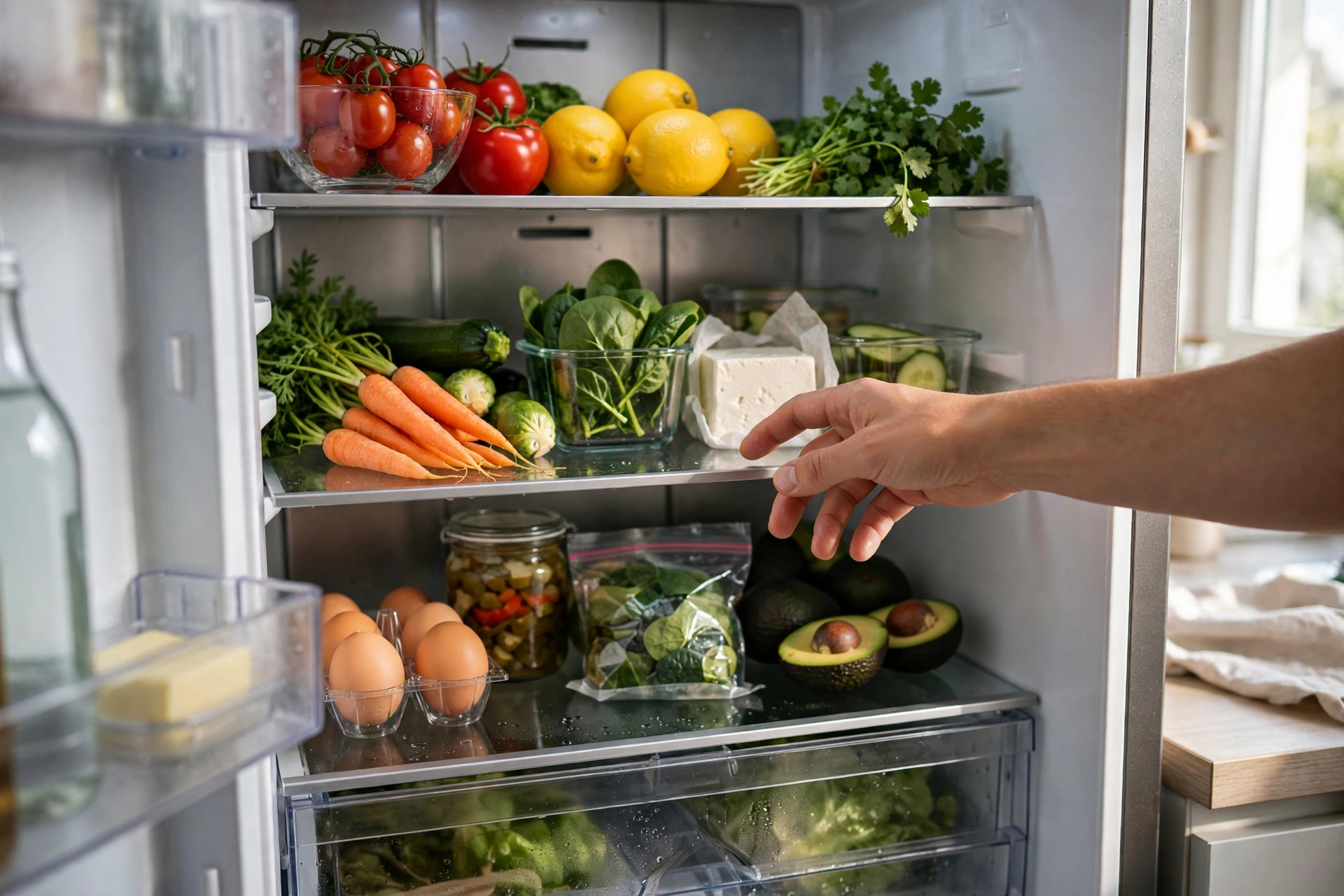
A daily kitchen routine should include a quick fridge check: look for leftovers to use, food past its date, and any spills on shelves, and wipe them promptly. This short check prevents smells, wasted food, and sticky shelves that need a full clean later.
Open the fridge once a day, ideally before cooking, and scan the front rows, where leftovers and opened items sit. Move items that need using soon to the front, and throw away anything that is clearly spoiled, following food safety guidance for your household. Wipe a spill at once with warm soapy water, rather than leaving it to dry on a shelf.
Check the freezer door seal and the fridge door handle too, because both collect grime from hands. A quick wipe keeps them clean without a full fridge clean, which is a deeper job for another day. This daily check takes about two minutes and keeps the fridge pleasant to open.
Sweep the Floor and Spot-Clean Spills
To keep a kitchen floor clean daily, sweep high-traffic areas and around the sink and stove, spot-clean spills at once, and mop only the dirty spots rather than the whole floor every day. A full mop is a weekly or deeper task; daily care is about crumbs and spills.
Start by sweeping under the table, in front of the sink, and around the stove, where crumbs and water collect. Use a dustpan for corners and edges, and check under mats, where dirt hides. If a spill lands on the floor, wipe it at once with a damp cloth, because sticky spills attract dirt and become hard to remove when dry.
For a quick mop of a dirty spot, use a lightly damp mop or cloth with a cleaner suited to your floor type, and dry the area afterwards. For wood or laminate floors, avoid standing water and dry promptly. A daily sweep takes only a few minutes and keeps the floor from feeling gritty underfoot.

Handle Rubbish, Recycling, and Smells Daily
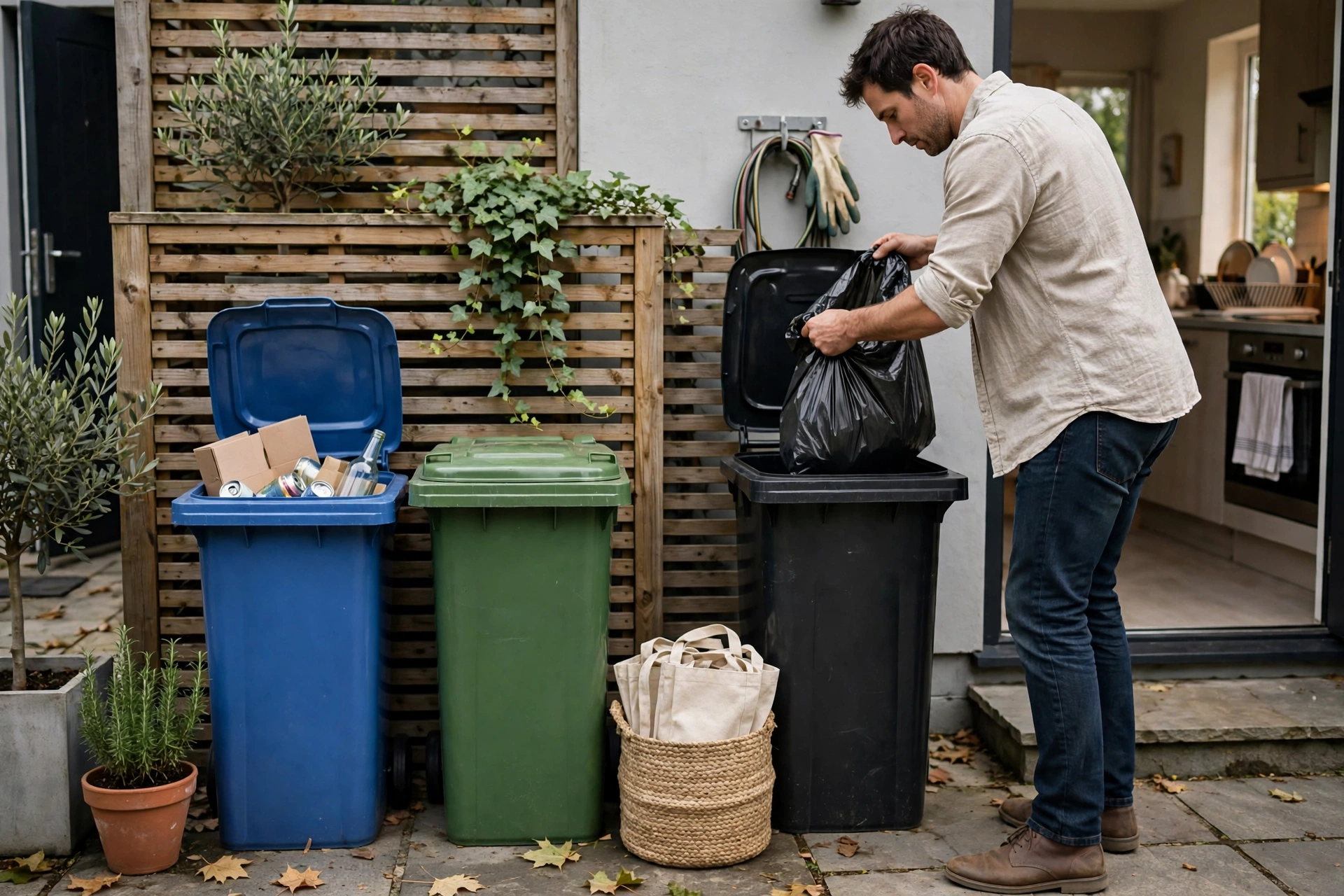
Rubbish and recycling are part of daily kitchen cleaning, because a full bin smells, attracts pests, and makes the kitchen feel untidy even when counters are clean. Empty the main bin when it is full, tie bags securely, and wipe the bin lid and rim if they are sticky.
Sort recycling as you go, rather than letting it pile up on a counter. Rinse containers lightly if your local guidance asks for it, and keep recycling in a separate, clearly marked bin or bag. Wipe the area around the bins, because drips and crumbs collect there and are easy to miss.
To prevent smells, keep the bin dry, replace liners regularly, and clean the bin itself weekly with warm soapy water, which is a weekly task, not a daily one. A quick daily check, such as sniffing for a smell and checking for leaks, is enough to catch problems early.
Morning and Evening Kitchen Resets
A simple daily kitchen routine works best as two short resets: a morning reset and an evening reset. In the morning, clear the sink, wipe counters, and check the fridge before cooking. In the evening, after the last meal, wash dishes, wipe the stovetop, and sweep the floor.
The morning reset takes about five minutes and sets up the day. Clear any dishes left overnight, wipe the table, and put away items left out. The evening reset takes about ten minutes and closes the kitchen for the night, so you wake up to a clean room instead of yesterday’s mess.
Link each reset to an existing habit, such as making coffee in the morning or loading the dishwasher after dinner. Habits tied to events are easier to keep than habits tied to a clock, because you do not need to remember a time, only a trigger.
Weekly Mini-Tasks That Support Daily Cleaning
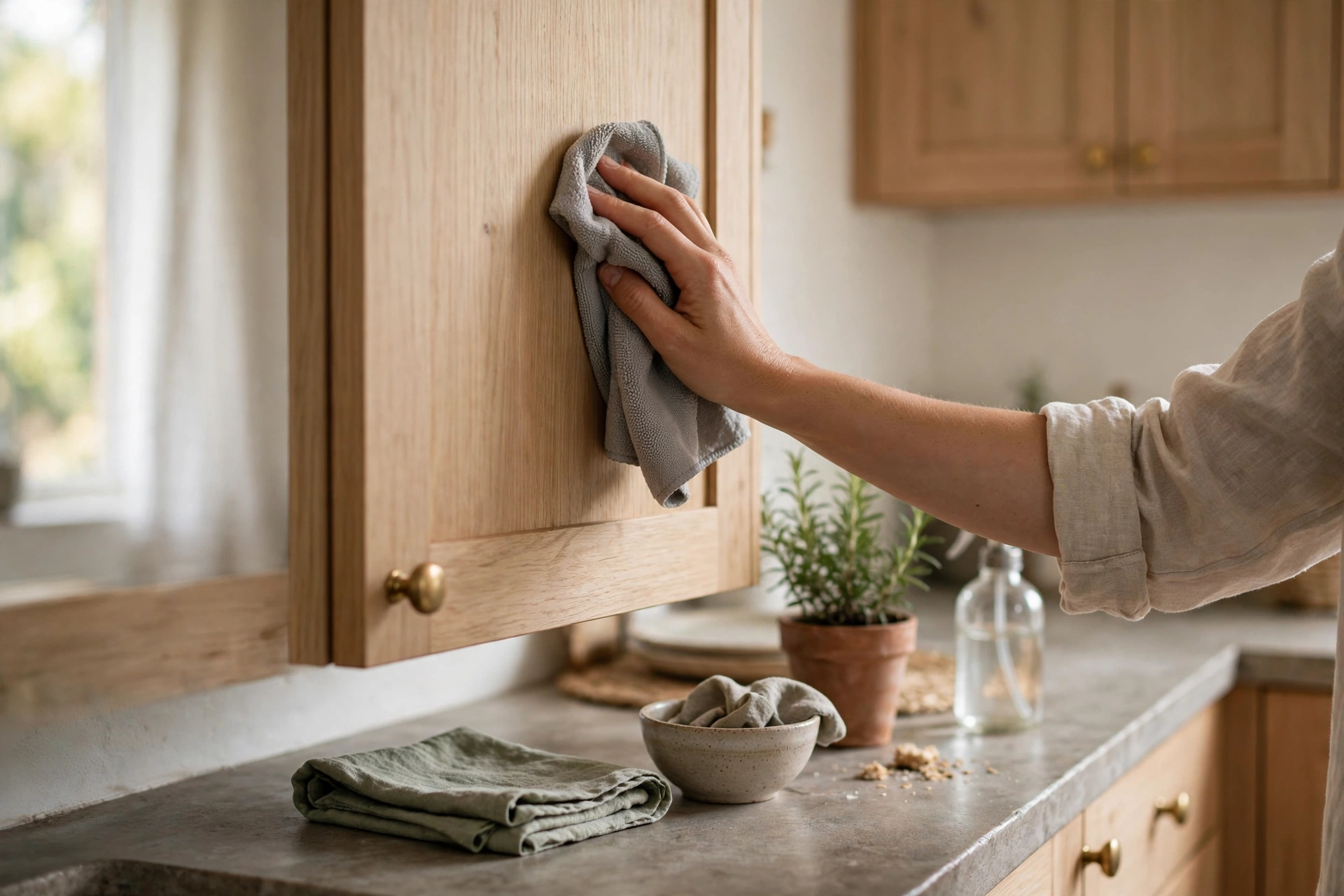
Daily cleaning works better when a few small weekly tasks support it, such as wiping cabinet fronts, cleaning the microwave, wiping the kettle and toaster, and mopping the whole floor. These are mini-tasks, not a deep clean, and each takes only a few minutes.
Pick one or two mini-tasks each week, rather than trying to do them all at once. For example, wipe cabinet fronts on Monday, clean the microwave on Wednesday, and mop the floor on Saturday. Spreading tasks keeps the kitchen clean without a long cleaning session.
Keep a simple list on the fridge or in a phone note, so you can see what is due and what is done. When a mini-task is missed, do it the next day without guilt; the daily routine will still keep the kitchen in good shape. The goal is steady care, not perfection.
Mistakes That Make a Kitchen Feel Messy Again
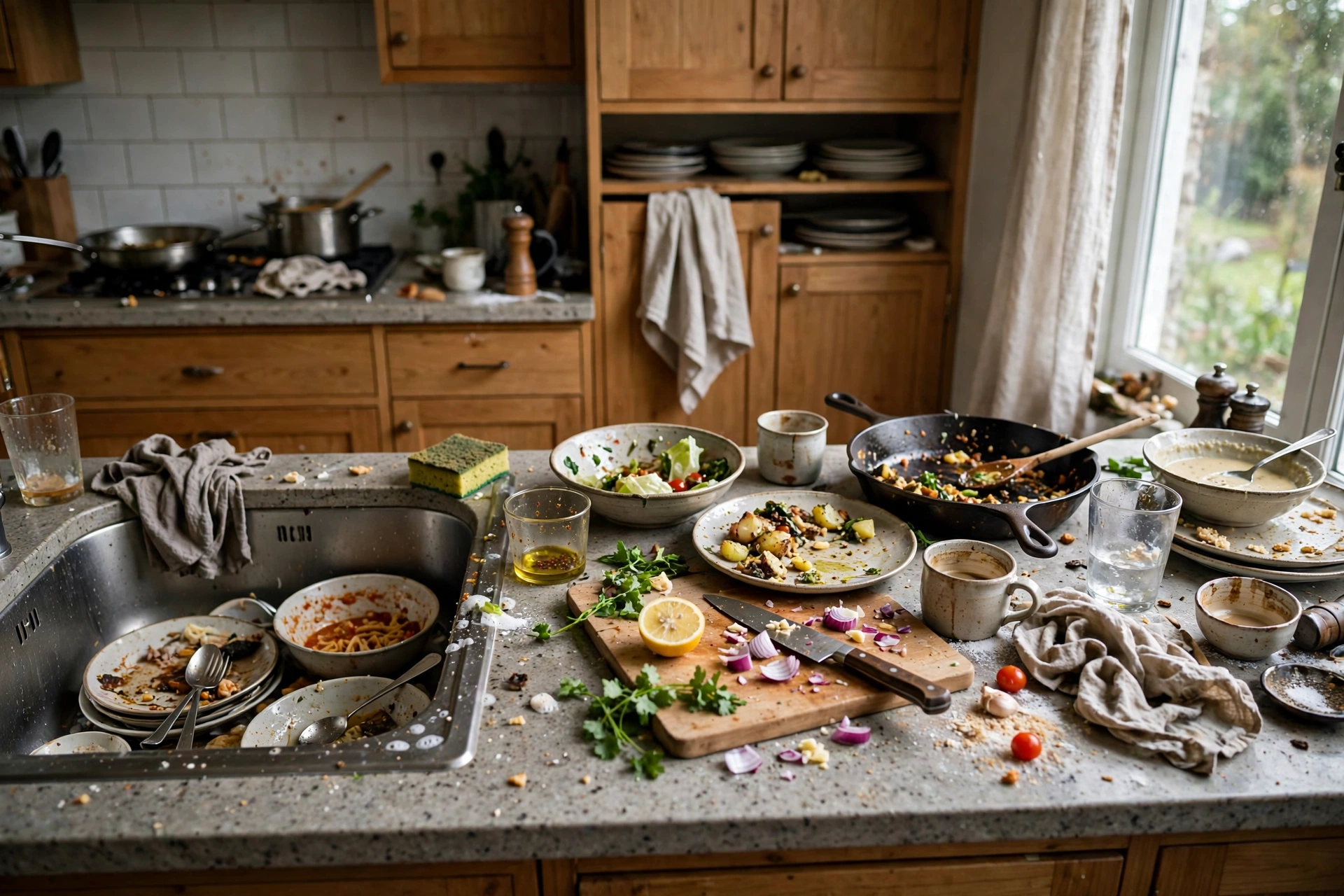
A kitchen can feel messy again quickly if a few common mistakes undo daily cleaning, such as leaving dishes in the sink, putting groceries away without checking the fridge, and wiping counters with a dirty cloth. Avoiding these mistakes is often more useful than adding new tasks.
Other mistakes include using too much cleaner, which leaves a sticky film, and storing cleaning products far from the kitchen, which makes a quick wipe feel like a project. Keep a cloth, dish soap, and a spray bottle in an easy spot, so a spill can be cleaned at once.
- Dirty cloth: rinse and wring cloths well, and replace them regularly
- Crowded counters: store items you rarely use elsewhere
- Ignored spills: wipe spills at once, before they dry and set
- Full bin: empty rubbish before it smells or overflows
- No routine: link cleaning to cooking and mealtimes, not to willpower
If the kitchen slips for a day, do not try to fix everything at once. Start with the sink, then counters, then the floor, and the room will feel clean again in about fifteen minutes.
Clean Small Appliances Daily
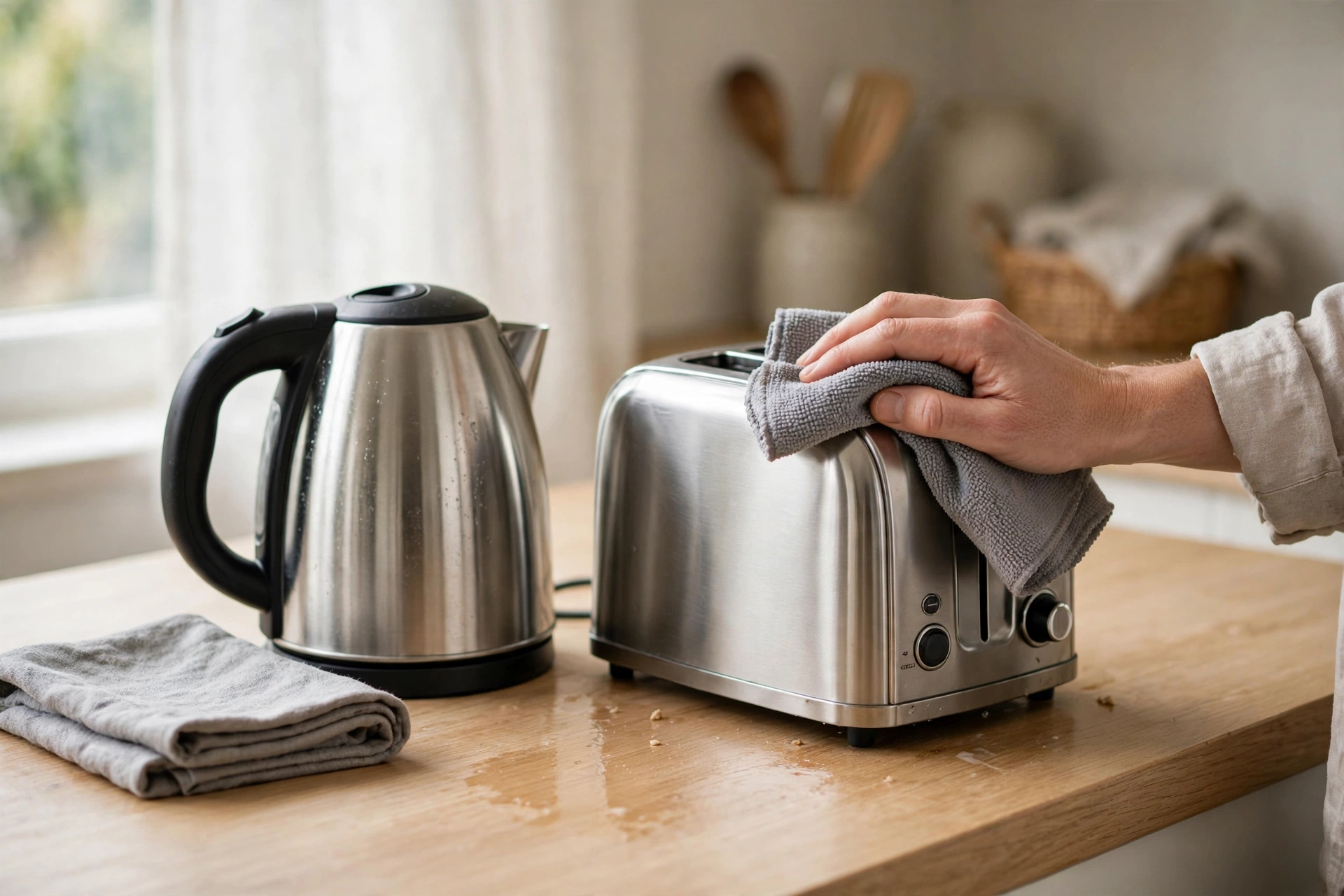
To keep small kitchen appliances clean daily, wipe the kettle, toaster, and coffee maker with a damp cloth after use, empty crumbs from the toaster tray, and dry surfaces before putting them back. Small appliances collect grease, crumbs, and water marks quickly, because they sit close to cooking areas.
Wipe the outside of the kettle and coffee maker after each use, paying attention to handles and lids, where hands leave marks. Empty the toaster crumb tray over the bin, wipe the outside, and check that no crumbs remain underneath. For a blender or food processor, wash removable parts promptly if the maker allows it, and wipe the base with a damp cloth, keeping water away from the motor. These quick wipes take only a minute each and stop sticky buildup that is much harder to remove later.
Conclusion
How to clean a kitchen daily is really about small, repeatable habits: wipe after cooking, wash dishes promptly, keep the sink clear, sweep the floor, and do a short morning and evening reset. With those habits, the kitchen stays pleasant to use, and the next deep clean becomes much shorter and simpler.
FAQs
How long should daily kitchen cleaning take?
Daily kitchen cleaning usually takes about ten to fifteen minutes in total, split across the day. After-cooking wipes take two minutes, dishes take five, and a floor sweep takes three.
What should I clean in the kitchen every day?
Clean counters, the stovetop, the sink, and the table daily, plus dishes, rubbish, and a quick fridge check. Cabinets, appliances, and the whole floor are weekly or deeper tasks.
How is daily cleaning different from deep cleaning?
Daily cleaning keeps surfaces you use every day clean and dry, while deep cleaning resets the whole room, including inside cabinets and appliances. Daily care prevents buildup between deep cleans.
Can I keep a kitchen clean with a busy schedule?
Yes, if you link cleaning to cooking and mealtimes. A two-minute wipe after cooking and a ten-minute evening reset keep a kitchen tidy without a long daily session.
What is the best order for daily kitchen cleaning?
Wipe the stovetop and counters first, wash dishes, wipe the sink, then sweep the floor last. This order stops dirty water and crumbs from spoiling surfaces you have already cleaned.
Disclaimer: This article is for general information only and does not provide professional cleaning, food safety, or appliance repair advice. Always follow the instructions for your appliances, surfaces, and cleaning products, keep cleaning products away from children and pets, ventilate the room when using strong cleaners, and seek qualified help for electrical, gas, plumbing, or damaged appliance problems. Clearise Cleaning Services does not offer guest posting, paid promotion, or advertising through this article.
Thanks for visiting Clearise Cleaning Services! Discover more helpful tips and expert cleaning insights by exploring our related categories.


Pingback: How to Clean House: A Whole-Home Plan That Works