Sticker residue on pants is a common problem that almost everyone faces at some point. It can happen when a price tag is removed, when kids play with stickers, or even after buying new clothes. The sticky glue left behind often clings tightly to the fabric, making it look messy and feel uncomfortable. Many people try to rub it off quickly, but that can sometimes spread the residue even more or damage the fabric.
This issue becomes even more frustrating when the pants have already been washed or dried. Heat from the dryer can make the adhesive harder and more stubborn, turning a simple fix into a bigger problem. Even after washing, the sticky patch may still remain, attracting lint and dust.
The good news is that there are safe and effective ways to solve this problem. No matter what type of fabric you are dealing with, there are simple methods you can use at home. In this guide, you will learn how to get sticker residue off pants using easy and practical techniques that protect your clothes while removing the sticky mess.
Best Methods Based on Situation
| Situation / Fabric Type | Best Method | What to Use | Time Needed | Safety Level |
| Fresh residue (not washed) | Tape method | Duct tape / packing tape | 2–5 minutes | Very Safe |
| Cotton / Denim | Rubbing alcohol | Cotton ball + alcohol | 5–10 minutes | Safe |
| Synthetic fabrics | Vinegar soak | Warm white vinegar | 10–15 minutes | Safe |
| Delicate fabrics (silk/wool) | Freezer method | Plastic bag + freezer | 45 minutes | Very Safe |
| After dryer (baked-in) | Iron method | Paper towel + iron | 5–10 minutes | Moderate |
| No alcohol option | Dish soap method | Warm water + dish soap | 15–20 minutes | Very Safe |
Why Sticker Residue Sticks to Pants and Gets Worse After Washing or Drying
Sticker residue sticks to pants because of the way adhesives are designed. The glue used in stickers is made to bond quickly with surfaces, including fabric fibers. When a sticker is pressed onto clothing, the adhesive seeps into the tiny gaps between fibers, making it harder to remove completely.
When you wash pants with residue still on them, water alone usually does not break down the adhesive. Instead, the glue can spread slightly, making the sticky area larger. The real problem starts when the pants go into the dryer. Heat softens the adhesive first, allowing it to penetrate deeper into the fabric. As it cools, the glue hardens again, becoming tougher and more difficult to remove.
There is also a big difference between fresh residue and baked-in residue. Fresh residue is softer and easier to lift because it has not fully bonded with the fabric yet. On the other hand, residue that has been exposed to heat becomes firm and sticky at the same time, making it more stubborn. Understanding this difference helps you choose the right method for cleaning your pants effectively.
Start with the Quick Fix: Removing Fresh Sticker Residue Without Liquids
If the sticker residue is still fresh, you can often remove it without using any liquids. One of the easiest and quickest methods is the tape method. This technique works by lifting the sticky residue using another adhesive surface.
To try this, press a piece of strong tape, such as duct tape or packing tape, firmly onto the sticky area. Rub it gently so it sticks well, then pull it off quickly. The residue should begin to lift along with the tape. You may need to repeat this process several times with fresh pieces of tape until the area is clean.
This method works best when the residue has not been washed or dried yet. It is simple, fast, and does not involve any chemicals. However, it is not suitable for delicate fabrics like silk or wool, as the pulling action could damage the material. For stronger fabrics like denim or cotton, it is usually very effective.
How to Get Sticker Residue Off Pants at Home Using Simple Household Items
If the residue does not come off easily with tape, you can use common household items to remove it. These methods are safe, affordable, and easy to follow, making them ideal for everyday use.
Warm water and dish soap are often the first things to try. Dish soap is designed to break down grease, and it can also help loosen sticky residue. Mix a few drops of dish soap in warm water, apply it to the affected area, and let it sit for a few minutes. After that, gently rub the spot with your fingers or a soft cloth. This can help lift the glue without harming the fabric.
White vinegar is another useful option. Slightly warm the vinegar and apply it to the sticky area. Let it sit for several minutes so it can break down the adhesive. After that, gently scrape the residue using a dull edge like a spoon or a card. Vinegar is especially helpful for removing residue without using harsh chemicals.
These simple methods are great for anyone wondering how to get sticker residue off pants at home. They use items that are easy to find and are safe for most types of fabric.
Step-by-Step Quick Guide (Simple Process)
- Start by checking if the residue is fresh or dried
- Try the tape method first for quick removal
- Apply a suitable solution (vinegar, soap, or alcohol)
- Let it sit for a few minutes to break down the adhesive
- Gently scrape using a card or soft tool
- Wash the area and let it air dry
Best Methods for Natural Fabrics Like Cotton, Denim, and Linen
Natural fabrics like cotton, denim, and linen are generally stronger and can handle slightly stronger cleaning methods. One of the most effective solutions for these fabrics is rubbing alcohol. It works by dissolving the adhesive, making it easier to remove.
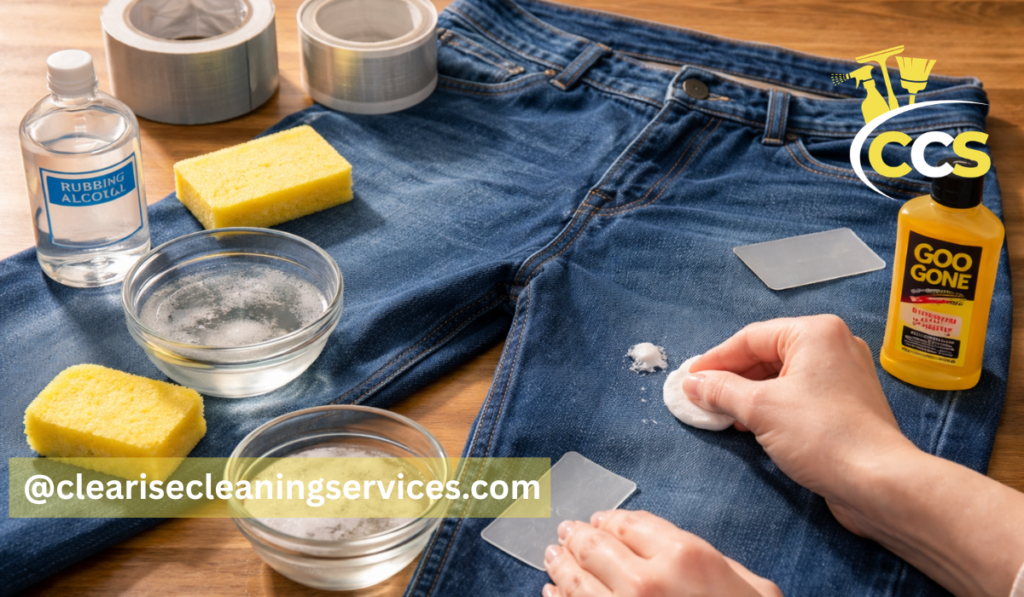
To use rubbing alcohol, apply a small amount to a cotton ball and dab it onto the sticky area. Let it sit for a minute or two, then gently scrape or rub the residue away. This method is highly effective for stubborn glue and works well on most natural fabrics.
Acetone, commonly found in nail polish remover, can also be used, but it should be handled carefully. It is best used on 100% cotton and should always be tested on a hidden area first. Apply a small amount and blot gently instead of rubbing. This helps avoid spreading the residue or damaging the fabric.
When removing residue, always use gentle scraping techniques. A dull knife or a plastic card works well for lifting the glue without cutting the fibers. Taking your time and working slowly will give better results and protect your pants from damage.
How to Remove Sticker Residue from Synthetic Fabrics Without Causing Damage
Synthetic fabrics like polyester, nylon, and spandex require a different approach because they can be sensitive to strong chemicals. Using the wrong method can damage the fabric or even cause it to melt.
Vinegar is a safe and effective choice for synthetic materials. Warm it slightly and apply it to the residue. Let it soak for about ten minutes, then gently scrape the area. This helps break down the adhesive without harming the fabric.
Another safe method is using dish soap with warm water. Apply the mixture to the sticky area and let it sit for a while. Then, gently scrub with a soft brush or cloth. This method is especially helpful for those looking for how to get sticker residue off clothes without rubbing alcohol.
Being gentle is key when working with synthetic fabrics. Avoid using strong solvents or high heat, as these can cause permanent damage.
Safe Techniques for Delicate Fabrics Like Silk and Wool
Delicate fabrics need extra care when removing sticker residue. Using harsh chemicals or strong scrubbing can easily ruin these materials.
One of the safest methods is the freezer technique. Place the pants in a plastic bag and put them in the freezer for about 45 minutes. The cold temperature makes the adhesive hard and brittle. Once frozen, you can gently pick or scrape off the residue without using any chemicals.
This method works well because it avoids the need for liquids that could stain or weaken delicate fibers. It also reduces the risk of stretching or tearing the fabric.
When handling delicate materials, always work slowly and carefully. If the residue does not come off easily, repeat the freezing process rather than forcing it.
How to Get Sticker Residue Off Pants After Washing or Dryer Exposure
Removing sticker residue after washing or drying can be more challenging. Heat changes the texture of the adhesive, making it more stubborn and deeply embedded in the fabric.
At this stage, simple methods may not be enough. You may need to combine techniques, such as using heat to soften the residue and then applying a cleaning solution to remove it. The key is to reverse the effect of the heat by softening the glue again.
Patience is important here. Avoid aggressive scrubbing, as it can damage the fabric. Instead, work gradually, allowing each method enough time to break down the adhesive.
Using Heat the Right Way: How to Remove Sticker from Clothing with Iron
Heat can be helpful if used correctly. The iron method is a popular way to deal with stubborn residue. Place a paper towel or cloth over the sticky area and press a warm iron on top for a few seconds. This softens the adhesive, making it easier to lift.
Once the glue is softened, quickly remove it using a cloth or a plastic edge. The paper towel helps absorb the sticky residue as it melts.
It is important to use moderate heat and avoid steam. Too much heat can damage the fabric or spread the adhesive further. Always test this method on a small area first to make sure it is safe for your pants.
How to Get Sticker Residue Off Clothes Without Rubbing Alcohol
If you prefer not to use rubbing alcohol, there are still many effective options available. Vinegar, dish soap, and freezing methods can all help remove residue without using strong chemicals.
These alternatives are especially useful for people with sensitive skin or for fabrics that cannot handle alcohol-based solutions. Vinegar works by breaking down the adhesive, while dish soap helps lift it away from the fibers. The freezer method, as mentioned earlier, is also a safe and chemical-free option.
Choosing alcohol-free methods is often a better choice for delicate or colored fabrics, as it reduces the risk of fading or damage.
Special Care Tips for Black Clothes and Dark Fabrics
Removing sticker residue from black clothes requires extra care. Dark fabrics can show marks more easily, and some cleaning methods may cause fading or discoloration.
When working with black or dark pants, always test the solution on a hidden area first. This helps ensure that the fabric will not lose its color. Avoid using strong chemicals unless necessary, and try gentler methods like soap or vinegar first.
After removing the residue, rinse the area well to prevent any marks from forming. Taking these precautions helps keep your clothes looking clean and fresh.
Common Mistakes That Make Sticker Residue Harder to Remove
Many people accidentally make the problem worse by using the wrong techniques. One common mistake is applying too much heat, which can set the adhesive deeper into the fabric. Another mistake is scrubbing too hard, which can damage the fibers and spread the residue.
Using the wrong cleaning solution for the fabric type can also cause problems. For example, acetone can damage synthetic fabrics, while strong chemicals can harm delicate materials.
Avoiding these mistakes makes it much easier to remove sticker residue safely and effectively.
Simple Tips to Prevent Sticker Residue on Pants in the Future
Preventing sticker residue is much easier than removing it later. Try to remove stickers as soon as possible before the adhesive has time to bond with the fabric.
When washing clothes, check for any remaining residue and treat it before putting the pants in the dryer. This simple step can save a lot of effort later.
Proper storage and careful handling of clothes can also help reduce the chances of getting sticky residue on your pants.
Conclusion
Learning how to get sticker residue off pants does not have to be difficult. With the right approach, you can remove even stubborn adhesive without damaging your clothes. The key is to choose the method that matches your fabric type and the condition of the residue.
Fresh residue is easier to handle with simple techniques like tape, while baked-in residue may require a combination of heat and cleaning solutions. By being patient and using gentle methods, you can restore your pants and keep them looking their best.
With these practical tips, you can handle sticky situations with confidence and keep your clothes clean, comfortable, and residue-free.
FAQs
How To Get Sticker Residue Off Pants Without Damaging Fabric?
Use gentle methods like tape, dish soap, or vinegar. Always test on a hidden area first and avoid strong chemicals on delicate fabrics to prevent damage or discoloration.
Can I Remove Sticker Residue After Pants Have Been Through The Dryer?
Yes, but it is harder. Use heat again with an iron or apply vinegar or alcohol to soften the adhesive before removing it gently.
How To Get Sticker Residue Off Clothes Without Rubbing Alcohol?
You can use warm vinegar, dish soap, or the freezer method. These are safe alternatives and work well on most fabrics without using harsh chemicals.
Does Vinegar Remove Sticker Residue From Pants?
Yes, vinegar helps break down adhesive. Warm it slightly, apply to the residue, and let it sit before gently scraping it off.
Is It Safe To Scrape Sticker Residue From Fabric?
Yes, but use a dull edge like a card or spoon. Avoid sharp tools and excessive force to prevent tearing or damaging the fabric fibers.
Disclaimer: This content is for general informational purposes only. Always test any method on a small hidden area of fabric first. Results may vary depending on fabric type and condition.
Thanks for visiting Clearise Cleaning Services! Discover more helpful tips and expert cleaning insights by exploring our related categories.