Sweat stains are a common problem that almost everyone deals with, especially on shirts worn regularly. These stains often appear as yellow marks under the arms or dull patches on fabric. They are not caused by sweat alone, but by a reaction between sweat and deodorant, which can leave behind stubborn residue over time.
If you are trying to learn how to get sweat stains out of shirts, it is important to understand that not all fabrics should be treated the same way. White shirts usually need stronger cleaning methods, while colored shirts require gentler care to avoid fading or damage.
The good news is that removing sweat stains does not have to be complicated. There are simple home remedies, quick fixes, and proven cleaning methods that work effectively when used correctly. Even if your shirt has already been washed and dried, there is still a chance to improve or remove the stain. With the right approach, you can restore your shirts and keep them looking fresh again.
Best Methods to Remove Sweat Stains
| Situation / Fabric Type | Best Method | Key Ingredients | Time Needed | Safe for Fabric | Notes |
| White Shirts (Yellow stains) | Baking soda + hydrogen peroxide paste | Baking soda, peroxide | 20–30 mins | Yes (whites only) | Strong stain remover |
| Colored Shirts | Vinegar soak + mild detergent | Vinegar, water | 30 mins | Yes | Prevents fading |
| Armpit Stains | Targeted scrubbing | Detergent, soft brush | 15–20 mins | Yes | Focus on buildup |
| Set-in Stains | Oxygen bleach soak | OxiClean | Overnight | Yes | Best for old stains |
| Quick Fix (No wash) | Vinegar spray/blotting | Vinegar, cloth | 5–10 mins | Yes | Temporary solution |
Why Sweat Stains Appear on Shirts (And Why They Get Worse Over Time)
Sweat stains form when sweat mixes with the ingredients in deodorants or antiperspirants, especially aluminum compounds. This reaction creates yellow or dark marks that cling to fabric fibers. Over time, these stains build up and become harder to remove.
The armpit area is the most affected because it produces the most sweat and comes into direct contact with deodorant. This constant exposure leads to thicker buildup compared to other parts of the shirt.
One of the biggest reasons stains become permanent is heat. When a shirt is placed in a dryer or ironed before the stain is fully removed, the heat locks the stain into the fabric. This makes future cleaning much more difficult.
Fresh stains are easier to treat because they have not yet bonded deeply with the fibers. On the other hand, old or set-in stains require more effort and stronger cleaning methods. Understanding this difference can help you choose the right approach and avoid making the problem worse.
Best Way to Get Sweat Stains Out of Shirts (Step-by-Step Basics)
The best way to get sweat stains out of shirts starts with acting quickly. As soon as you notice a stain, it is helpful to treat it before it has time to set. Even a simple rinse or light cleaning can make a big difference.
Soaking the stained area is an important step. It helps loosen the buildup and prepares the fabric for deeper cleaning. This can be done with water or a mild solution, depending on the fabric type.
Gentle scrubbing is often needed, especially for visible stains. Using a soft brush or even an old toothbrush can help work cleaning solutions into the fibers without damaging the fabric. It is important to avoid harsh scrubbing, as it can weaken the material.
After washing, always let the shirt air dry instead of using a dryer. Air drying allows you to check if the stain is completely gone. If any residue remains, you can repeat the treatment without the risk of setting the stain permanently.
Step-by-Step Quick Guide (Easy Method)
- Apply vinegar or mild detergent directly to the stain
- Let it soak for 20–30 minutes
- Gently scrub with a soft brush
- Wash according to fabric care label
- Air dry and check before using heat
How to Remove Yellow Sweat Stains from White Shirts Effectively
White shirts are more likely to show yellow sweat stains, but they are also easier to treat with stronger methods. One of the most effective ways is to start with a vinegar soak. A mixture of white vinegar and water can help break down mineral buildup and loosen the stain.
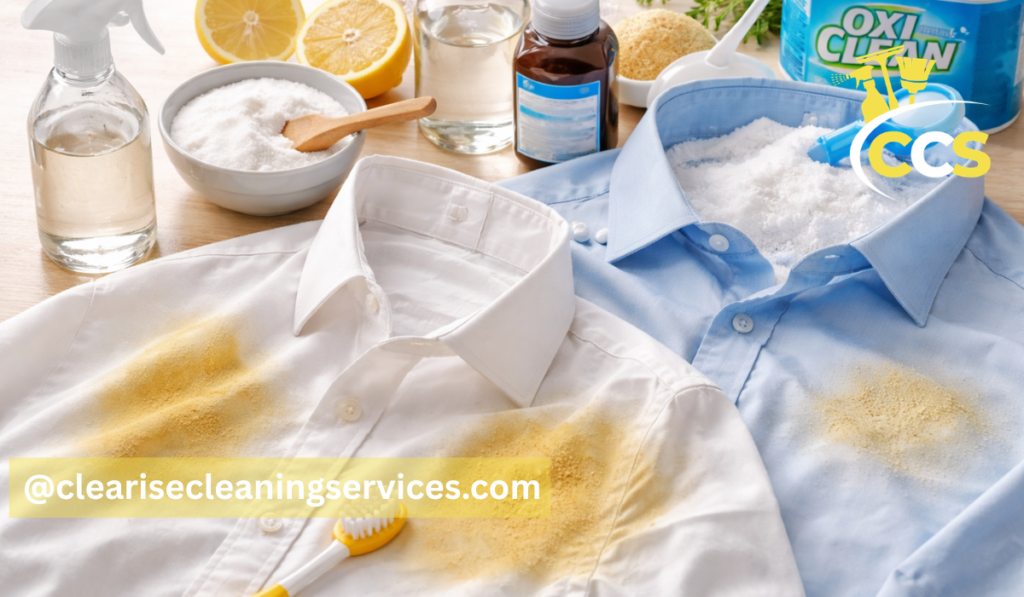
After soaking, applying a paste made from baking soda and hydrogen peroxide can provide deeper cleaning. This combination works well because it targets both the color and the residue causing the stain. Gently rubbing the paste into the fabric allows it to penetrate and lift the stain.
For tougher stains, oxygen-based cleaners such as OxiClean can be very helpful. These products are designed to remove stains without damaging white fabrics. They are safer than chlorine bleach and often produce better results.
When dealing with stubborn stains, patience is important. Sometimes more than one treatment is needed. Repeating the process carefully can gradually improve the appearance of the shirt without harming the fabric.
How to Remove Sweat Stains from Colored Shirts Without Fading
Colored shirts require a more careful approach because strong cleaning agents can cause fading or discoloration. A simple vinegar and water soak is a safe starting point. This helps loosen the stain without affecting the color of the fabric.
Using a mild liquid detergent is another effective option. It cleans the fabric gently while still targeting the stain. Applying a small amount directly to the affected area and rubbing lightly can improve results.
Salt-based solutions are also useful for colored fabrics. They help lift stains without damaging dyes. This makes them a good choice for treating sweat stains on darker shirts.
It is important to avoid harsh chemicals such as chlorine bleach, hydrogen peroxide, or lemon juice on colored shirts. These can cause permanent fading or uneven spots. Choosing gentle methods ensures the shirt stays both clean and vibrant.
How to Get Sweat Stains Out of Shirt Armpits (Targeted Cleaning)
Armpit stains are often the most stubborn because they build up over time. This area collects sweat, deodorant, and body oils, making it harder to clean with regular washing alone.
Targeted cleaning is the best approach. Applying a cleaning solution directly to the armpit area allows it to focus on the buildup. Using a soft brush or toothbrush helps work the solution into the fabric without causing damage.
For deeper stains, it may be necessary to repeat the process several times. Soaking and scrubbing in stages can gradually break down the layers of residue. This method is especially useful for older stains that have been left untreated for a long time.
How to Get Sweat Stains Out of Shirts Without Washing Immediately
Sometimes you may not have the chance to wash your shirt right away. In these situations, quick action can help prevent the stain from setting.
Blotting the area with a damp cloth can remove some of the sweat and reduce buildup. This simple step can stop the stain from becoming worse.
Using a light vinegar spray is another quick fix. It helps neutralize odor and break down residue until you are able to wash the shirt properly.
These temporary solutions are not a replacement for full cleaning, but they can make a big difference. They give you more time and reduce the chance of permanent staining.
How to Get Sweat Stains Out of Shirts After Washing (Set-In Stains Fix)
If you notice sweat stains after washing your shirt, it usually means the stain was not fully removed before being exposed to heat. This can make it more difficult to treat, but it is still possible to improve.
Re-treatment is necessary in this case. Applying a stronger cleaning solution and allowing it to soak longer can help break down the set-in stain.
Re-soaking the fabric is especially helpful for stubborn marks. This allows the cleaning agents to penetrate deeper into the fibers. In some cases, multiple treatments may be required to see noticeable results.
Patience is key when dealing with set-in stains. While they may not disappear instantly, consistent treatment can make them much less visible over time.
Using Hydrogen Peroxide, Baking Soda, and OxiClean the Right Way
Hydrogen peroxide is a powerful cleaning agent that works best on white fabrics. It helps remove yellow stains and brighten the material. However, it should be used carefully, as it can fade colored fabrics.
Baking soda is a natural and gentle option. It works well as a paste when combined with water or other ingredients. This makes it a safe choice for treating many types of stains.
Oxygen-based cleaners like OxiClean are popular because they are effective without being too harsh. They are safer than chlorine bleach and can be used on a wider range of fabrics.
Choosing the right method depends on the fabric type. White shirts can handle stronger treatments, while colored shirts require gentler care. Understanding this difference helps avoid damage and improves results.
Special Cases: Grey Shirts and Dark Armpit Stains
Grey shirts often show sweat stains in a different way. Instead of yellow marks, they may develop darker patches under the arms. These stains can be just as stubborn but require careful treatment.
Using mild cleaning solutions is important to prevent discoloration. Gentle scrubbing and soaking can help remove buildup without affecting the overall color of the shirt.
Dark armpit stains are usually caused by long-term buildup. Treating them may take more time, but consistent cleaning can gradually restore the fabric.
Quick Fixes People Swear By (Including Popular Reddit Methods)
Some simple home remedies have gained popularity for removing sweat stains. One well-known method involves dissolving aspirin in water and soaking the stained area. This approach can help break down residue and lighten the stain.
Other DIY methods include using baking soda pastes or vinegar solutions. These are widely used because they are easy to prepare and often effective.
While some methods work well, others may not deliver the same results for every fabric. It is important to test any new solution on a small area first. This helps avoid unexpected damage and ensures safe cleaning.
Common Mistakes That Make Sweat Stains Worse
One of the most common mistakes is using heat too early. Drying or ironing a shirt before the stain is gone can make it permanent.
Another mistake is using chlorine bleach. Instead of removing sweat stains, it can react with the residue and make the stain darker.
Scrubbing too hard can also damage the fabric and spread the stain further. Gentle cleaning is always more effective and safer.
Ignoring care labels is another issue. Each fabric has different requirements, and following these instructions helps prevent damage.
How to Prevent Sweat Stains from Coming Back
Preventing sweat stains is easier than removing them. One helpful step is switching to aluminum-free deodorants, which reduce the chemical reaction that causes yellow stains.
Wearing undershirts can also protect outer clothing by absorbing sweat before it reaches the fabric.
Regular washing and proper care habits make a big difference. Cleaning shirts soon after wearing them helps prevent buildup.
Quick rinsing after heavy sweating can also reduce the chances of stains forming. These simple habits can keep your shirts looking clean for longer.
Conclusion
Learning how to get sweat stains out of shirts is not as difficult as it may seem. With the right method and a bit of patience, most stains can be removed or significantly improved.
The key is choosing the correct approach based on the fabric. White shirts can handle stronger treatments, while colored shirts require more gentle care. Acting early and avoiding heat are also important steps in preventing permanent damage.
Even tough or set-in stains can be treated with consistent effort. By following the right techniques and maintaining good habits, you can keep your shirts fresh, clean, and free from sweat stains over time.
FAQs
How Do You Remove Sweat Stains From Shirts Quickly?
You can remove sweat stains quickly by applying vinegar or liquid detergent directly to the stain, letting it sit for 20–30 minutes, gently scrubbing, and then washing. Always air dry to ensure the stain is fully gone before using heat.
Can Sweat Stains Be Removed After Washing And Drying?
Yes, but it takes more effort. You need to re-treat the stain using stronger solutions like baking soda paste or oxygen bleach. Soaking the fabric again can help break down the set-in residue and improve results over time.
Is Hydrogen Peroxide Safe For All Shirts?
Hydrogen peroxide is safe for white shirts but should not be used on colored fabrics because it can cause fading. Always test on a small hidden area before applying it to a visible part of the shirt.
Why Do Sweat Stains Turn Yellow On White Shirts?
Yellow stains are caused by a reaction between sweat and aluminum in deodorants. Over time, this buildup sticks to fabric fibers and becomes more noticeable, especially if exposed to heat from dryers or ironing.
What is the best way to prevent sweat stains?
To prevent sweat stains, use aluminum-free deodorants, wash shirts regularly, and avoid letting sweat sit for long periods. Wearing undershirts can also help absorb moisture and protect outer clothing from stains.
Disclaimer: This article is for informational purposes only. Always check your garment care label before applying any cleaning method. Test solutions on a small area first to avoid damage, and use products responsibly based on fabric type.
Thanks for visiting Clearise Cleaning Services! Discover more helpful tips and expert cleaning insights by exploring our related categories.