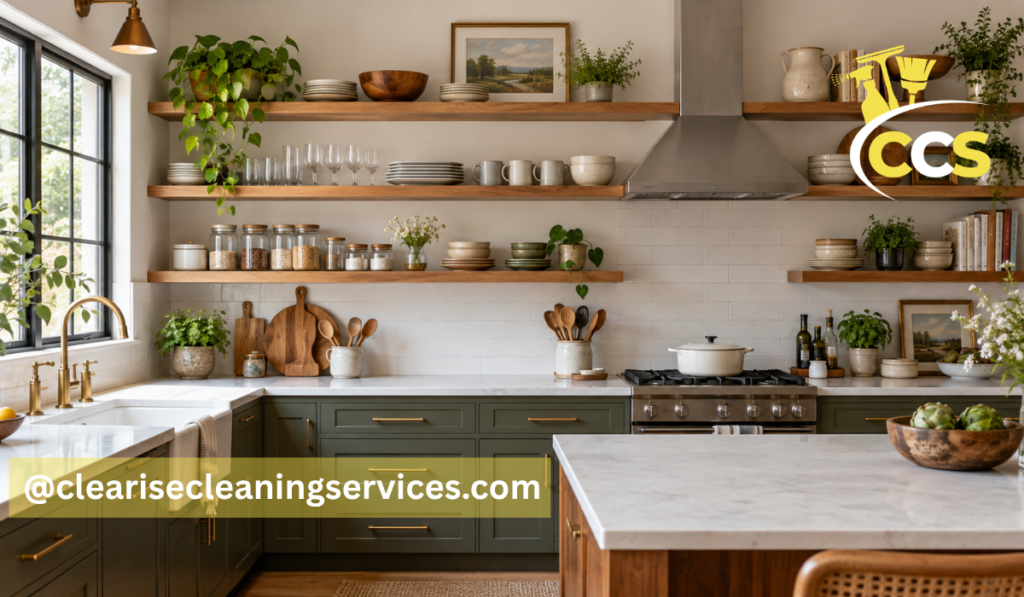
An open shelving kitchen uses visible shelves instead of some or all traditional upper wall cabinets. These shelves may be made from wood, metal, glass, stone, or other materials and are used for dishes, glasses, jars, cookbooks, and decorative pieces.
Unlike closed cabinets, open shelves keep stored items in sight and within easy reach. This can make a kitchen feel lighter and less crowded, especially where full upper cabinets would make the room feel boxed in. It also lets useful objects become part of the design.
However, open shelving is not only about appearance. It changes how storage works, how often surfaces need cleaning, and how organized the kitchen needs to be. It usually works best for households that use displayed items regularly and still have enough closed storage for bulky, messy, or occasional-use items. The best result balances style, accessibility, storage capacity, and everyday maintenance.
Snippet-Ready Definition:
An open shelving kitchen uses exposed shelves instead of some upper cabinets for accessible storage and display. clearisecleaningservices.com provides this information only to help readers understand open shelving kitchen ideas and practical considerations.
Quick Guide Table
| Feature | Best Use | Main Benefit | Consideration |
| Floating wood shelves | Modern, rustic, Japandi kitchens | Warm and visually light | Needs secure wall mounting |
| Metal shelving | Industrial-style kitchens | Strong and distinctive | Can look visually heavy |
| Glass shelves | Small or modern kitchens | Keeps the space feeling open | Requires frequent cleaning |
| Stone shelves | Contemporary kitchens | Seamless, premium appearance | Heavy and needs strong support |
| Mixed shelves and cabinets | Most kitchens | Balances display and hidden storage | Needs careful layout planning |
| Open pantry shelves | Pantry and food storage | Easy access to ingredients | Organization is important |
Simple Steps for Planning Open Kitchen Shelving
- Decide which everyday items you actually want to keep visible.
- Keep enough closed cabinets or drawers for bulky and untidy items.
- Choose shelving material that suits your kitchen and cleaning needs.
- Place frequently used dishes within comfortable reach.
- Check wall strength, shelf supports, and recommended weight limits.
- Avoid overcrowding shelves with unnecessary decorative items.
- Follow appliance-specific clearance instructions near ranges and cooktops.
- Clean shelves regularly to prevent dust and grease buildup.
Open Shelving Kitchen Designs in 2026
Open shelving remains part of kitchen design in 2026, but the look is becoming more restrained. Instead of filling an entire wall with several rows, designers are often using one carefully placed shelf, a recessed niche, or a smaller open section beside closed cabinetry. Recent design coverage also shows renewed interest in glazed cabinets for people who want visible storage with better protection from dust.
Floating shelves with hidden supports continue to suit clean, simple kitchens. Warm timber adds softness, while stone shelves can continue the look of a countertop or backsplash. Recessed shelves can look especially neat when planned into a suitable wall during renovation.
Under-shelf lighting is another useful addition because it can brighten the worktop below. Many kitchens now mix shelves, drawers, base cabinets, and selected upper cabinets instead of choosing a completely open layout. This gives the room visual breathing space without sacrificing practical storage.
Benefits and Drawbacks of Open Kitchen Shelving
The biggest advantage of open shelving is visual openness. Removing bulky upper cabinets can make a wall feel wider and allow more of the backsplash, wall color, or architectural details to remain visible. This can be especially helpful in smaller kitchens.
Open shelves also keep frequently used plates, bowls, mugs, and ingredients easy to reach. They can make good use of wall areas that are too narrow or awkward for a full cabinet.
The trade-off is that everything stays visible. Dust settles on exposed surfaces, while shelves near cooking areas can collect airborne grease. Clutter can also become noticeable quickly when too many items are displayed. Recent design coverage identifies these maintenance and storage limits as common drawbacks.
For households with many small appliances, food packets, plastic containers, or rarely used cookware, a mixed storage plan is often more practical than fully open walls.
Open Shelving Kitchen Ideas for Different Styles
Open shelving can fit many kitchen styles because the material and shape of the shelf can completely change the look. Warm wood works naturally in farmhouse, rustic, Scandinavian, and Japandi-inspired spaces. Visible grain brings warmth to plain walls and simple tile.
Modern kitchens often suit slim floating shelves with straight lines and concealed brackets. Metal-framed systems can add an industrial feel, while stone shelving can create a more built-in, architectural effect.
Painted shelves are useful when you want them to blend with the wall or cabinetry. Glass can keep a small area visually light, although fingerprints and dust may show more easily. Mixing wood with metal supports offers a balance between warmth and structure.
More shelving is not always better. One well-positioned statement shelf can hold everyday dishes or a few decorative objects while keeping the kitchen calm and uncluttered.
How to Plan the Best Open Shelving Kitchen Layout
Start by looking at what you actually need to store. Separate everyday items from things used only occasionally. Plates, glasses, mugs, bowls, spices, and a few cooking essentials usually suit open shelves better than large appliances or untidy packaging.
Next, decide how much concealed storage you still need. Drawers and base cabinets are useful for cookware, containers, cleaning supplies, and anything you prefer not to display. Keeping enough closed storage prevents open shelves from becoming overloaded.
Position shelves where everyday items are comfortable to reach. Avoid crowding windows, range hoods, or important work areas. Shelf depth should suit the items without projecting too far into the room.
Also consider weight. Stacks of dinnerware, large jars, cast iron, or thick stoneware can be heavy. The shelf, brackets, fixings, and wall construction all need to support the intended load safely.
Small Kitchen With Open Shelves and Cabinets
A small kitchen with open shelves and cabinets can feel more spacious without losing all its storage. Instead of removing every upper cabinet, open only part of the wall. A short shelf near a window, sink, or preparation area can break up solid cabinetry and make the room feel less enclosed.
Closed base cabinets and drawers can handle most of the bulky storage. Pots, pans, appliances, containers, and cleaning supplies stay hidden, while open shelves hold lighter items used every day.
Narrow wall areas are also useful for shallow shelves. They can hold mugs, tea, coffee, spices, or breakfast items without the visual weight of a deep cabinet.
The main rule is not to sacrifice valuable storage just for appearance. In a compact kitchen, open shelves should improve access and make the room feel lighter while still leaving enough practical storage for daily life.
Making the Most of an Open Shelving Kitchen Wall
The best open shelving kitchen wall usually has a clear purpose. A shelf above a preparation counter can hold bowls, oils, or everyday plates. A smaller section can become a coffee station with mugs and supplies. Shelves near a breakfast area may hold cups, cereal jars, or serving pieces.
Windows can help shape the layout. Short shelves beside a window can provide storage without blocking natural light. If the kitchen has an attractive backsplash, leave enough open space so shelves do not hide it completely.
Connect the shelf material with nearby finishes. Wood can echo flooring or an island, while stone can continue a countertop material. Under-shelf lighting may improve visibility on the work surface below.
Most importantly, leave some empty space. A shelf looks calmer and is easier to use when every inch is not packed with objects.
Materials and Shelf Types That Work Well in Kitchens
Solid wood is popular because it is warm, strong, and available in many finishes. Properly finished wood can handle normal kitchen use, although spills should still be wiped away. Engineered wood may cost less, but quality and moisture resistance vary.
Floating timber shelves hide most of their supports for a clean look. Metal shelves and framed systems suit stronger industrial designs, while glass keeps sightlines open and works well for lighter objects.
Stone shelving can create a seamless look when matched to a backsplash or worktop, but stone is heavy and requires suitable support. Recessed niches offer another option because they sit within the wall rather than projecting into the room, though they are best planned during renovation where the wall structure allows.
Choose a shelf material for durability, cleaning needs, weight, wall conditions, and the way the kitchen is actually used—not simply because the material is fashionable.
Open Shelving Kitchen Cabinet and Mixed-Storage Designs
An open shelving kitchen cabinet layout does not require removing every upper cabinet. In many homes, mixing open and closed storage works better. You might keep cabinets near the cooking area, add a floating shelf over a quieter counter, and use drawers below for heavier items.
Another option is removing the doors from one or two suitable upper cabinets. This creates an open section while keeping the existing cabinet frame. It works well for dishes or glassware if the interior is neat and finished properly.
Glass-front cabinets provide a useful middle ground. They keep attractive items visible while offering more protection from dust and cooking residue than completely open shelves. Their renewed popularity in 2026 reflects the wider move toward combining display with practical storage.
Asymmetric layouts can also work, provided the shelf size, materials, and spacing still relate to the rest of the kitchen.
Open Shelving Kitchen Corner Ideas
Corners can be difficult to use, and an open shelving kitchen corner may turn that space into practical storage. L-shaped shelves can continue across two adjoining walls, while shorter floating shelves can fit into a corner where a standard cabinet would feel bulky.
These areas work well for mugs, small bowls, tea supplies, cookbooks, jars, or a few decorative pieces. Keep frequently used items lower and easier to reach, while lighter or less-used objects can go higher.
Avoid making corner shelves too deep. Objects at the back may become difficult to reach, and oversized shelves can interfere with cabinet doors, refrigerator doors, appliances, or work surfaces. In many cases, a smaller corner arrangement is more useful than trying to fill every available inch.
Open Shelving Kitchen Pantry Ideas
An open shelving kitchen pantry can make ingredients easy to see and may help prevent forgotten food or duplicate purchases. Frequently used foods such as pasta, rice, baking ingredients, snacks, and breakfast items can be grouped by type or purpose.
Clear containers are useful but not essential. Original packaging can work well when it is organized sensibly. Baskets and simple bins can control loose packets and smaller items.
Keep heavy supplies on strong lower shelves where they are easier to lift. Lighter or less-used items can go higher. A pantry can also combine open shelves with drawers or closed cupboards for appliances, bulk purchases, or items you prefer to hide.
The 2026 U.S. Houzz Kitchen Trends Study shows that storage remains a major renovation priority and that open shelving is used in many upgraded butler’s pantries. The practical lesson is to plan pantry shelves around storage needs first and appearance second.
Open Shelving Kitchen IKEA and Ready-Made Options
Homeowners who do not need custom carpentry can consider modular or ready-made shelving. IKEA currently shows wall shelves, open-frame units, rail systems, and combinations intended to keep frequently used kitchen items accessible. Its kitchen storage guidance also presents wall-mounted shelving as a way to free worktop space.
Before choosing an open shelving kitchen IKEA option or another ready-made system, measure the wall carefully. Check shelf depth, total width, material, mounting method, and the manufacturer’s stated load limits. A shelf suitable for spices and mugs may not be suitable for stacks of heavy plates.
Rail-and-shelf combinations can add hanging storage for utensils. Open frames may provide useful capacity without the visual weight of solid cabinetry, while shallow shelves can work well in compact rooms.
Custom shelving gives more freedom over size and finish. Ready-made products can be simpler and more predictable. The best choice depends on budget, wall conditions, storage needs, and appearance.
Styling, Installation, Cleaning, and Everyday Maintenance
The easiest open shelves to live with are usually filled mostly with items that are actually used. Everyday plates, bowls, glasses, and mugs make sense because they move on and off the shelf regularly. A few cookbooks, pitchers, plants, or decorative objects can add personality without creating clutter.
Vary the height and shape of objects, but keep some connection between colors or materials for a calmer look. There is no need for every dish to match. More importantly, avoid displaying everything simply because the storage is open.
Installation deserves careful attention. Shelves should be fixed with hardware suitable for the wall and expected load. Heavy stone, long spans, uncertain wall framing, or electrical work for integrated lighting may be better handled by a qualified professional.
Be especially careful around ranges and cooktops. There is no universal clearance that applies to every appliance. Whirlpool and GE both advise following the installation instructions for the specific model because required distances vary.
For maintenance, wipe shelves regularly before dust and grease build up. Effective kitchen ventilation can also help reduce airborne cooking residue, especially around the cooking zone.
Conclusion
An open shelving kitchen can be attractive, practical, and flexible when it is designed around real daily habits. It can make a compact room feel lighter, keep everyday items easy to reach, and create space for materials and objects that add character.
However, open shelves also require more visible organization and regular cleaning. The strongest layouts usually combine open display with enough concealed storage for bulky, messy, or occasional-use items.
You do not need to remove every upper cabinet to enjoy the benefits. One shelf, a small pantry section, a corner arrangement, or a combination of shelves and glass-front cabinets may be enough.
The best open shelving kitchen is not the one that follows every trend. It is the one that gives your household useful storage, comfortable access, and a kitchen that continues to work well long after the styling is finished.
FAQs
Is Open Shelving Practical In A Kitchen?
Yes, open shelving can be practical for frequently used dishes, glasses, spices, and other everyday items. It works best when combined with enough closed storage for bulky or less attractive kitchen items.
Does Open Shelving Make A Small Kitchen Look Bigger?
Open shelving can make a small kitchen feel lighter because it creates less visual bulk than traditional upper cabinets. However, removing too many cabinets may reduce valuable storage space.
What Should I Put On Open Kitchen Shelves?
Frequently used plates, bowls, mugs, glasses, jars, and a few decorative pieces are good choices. Avoid overcrowding the shelves, and keep heavy items on properly supported lower shelves.
Are Open Kitchen Shelves Difficult To Keep Clean?
Open shelves usually require more cleaning than closed cabinets because dust and cooking residue can settle on exposed surfaces. Regular wiping and effective kitchen ventilation can make maintenance easier.
Are Open Shelves Better Than Kitchen Cabinets?
Neither option is automatically better. Open shelves offer visibility and easy access, while cabinets provide more concealed storage and protection from dust. Many kitchens benefit from combining both.
Disclaimer: This article on open shelving kitchen is provided by clearisecleaningservices.com purely for general informational and educational purposes. We are only sharing helpful information, design ideas, and practical considerations related to this topic. This content does not involve guest posting, paid promotion, sponsored placement, advertising, or endorsement of any brand or product. Readers should verify measurements, load limits, appliance clearances, and installation requirements with relevant manufacturers or qualified professionals before making changes to their kitchen.
Thanks for visiting Clearise Cleaning Services! Discover more helpful tips and expert cleaning insights by exploring our related categories.