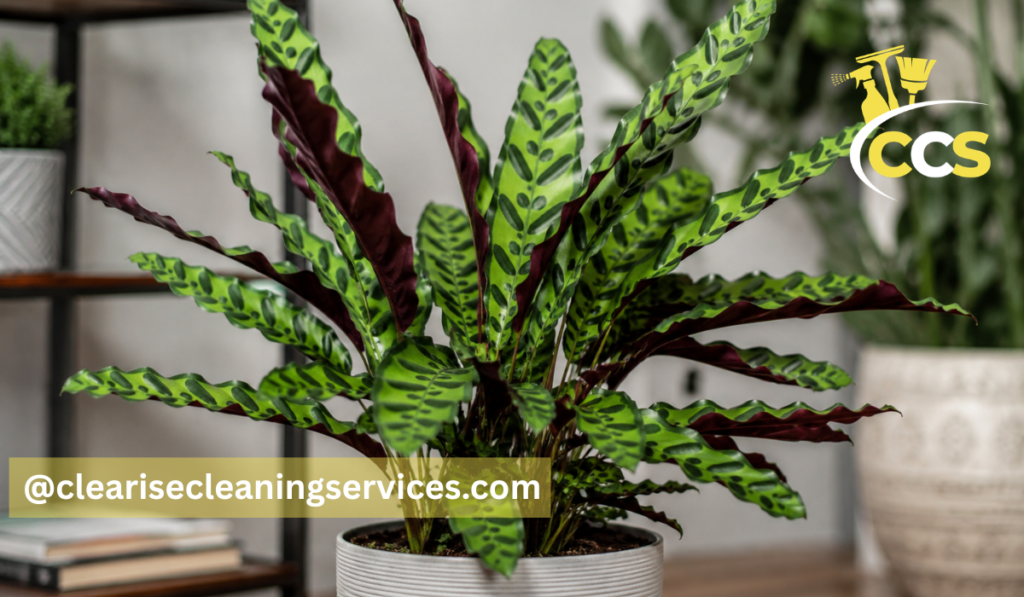
The rattlesnake plant is one of those houseplants that instantly catches attention. With long, narrow leaves, bold green markings, wavy edges, and deep purple undersides, it looks far more dramatic than many common indoor plants. It is grown mainly for its beautiful foliage, and it can make a quiet corner, desk, shelf, or plant stand feel more tropical and alive.
This plant is also known for its gentle daily movement. Like many prayer plants, its leaves may lift upward in the evening and open again during the day. This natural movement gives the plant a living, expressive look and makes it especially enjoyable for people who like plants with personality.
The rattlesnake plant is popular indoors because it offers strong visual appeal without needing direct sun. In fact, it prefers softer light, warm temperatures, and steady moisture. It is also considered a pet-safe choice, which makes it attractive for homes with cats or dogs. However, it is not the easiest plant for complete neglect. It likes conditions that are similar to its tropical home, especially higher humidity and careful watering.
In this guide, you will learn what the rattlesnake plant is, its scientific name, where it comes from, how to care for it, what benefits it offers, which problems to watch for, whether it flowers indoors, and what to check when looking for a rattlesnake plant for sale.
Quick Guide Table
| Feature | Rattlesnake Plant Quick Guide |
| Scientific Name | Goeppertia insignis |
| Former Name | Calathea lancifolia |
| Best Light | Bright, indirect light |
| Watering | Keep soil lightly moist, not soggy |
| Humidity | High humidity, ideally above 50% |
| Temperature | 65°F–80°F |
| Pet Safety | Non-toxic to cats and dogs |
| Main Appeal | Patterned leaves and purple undersides |
| Common Problems | Brown edges, curling leaves, yellow leaves |
| Best For | Indoor plant lovers who can provide humidity |
Short Care Checklist
- Place the rattlesnake plant in bright indirect light.
- Keep the soil slightly moist, but never waterlogged.
- Use filtered, distilled, or rainwater when possible.
- Maintain warm, stable room temperatures.
- Increase humidity with a humidifier or pebble tray.
- Avoid direct sun, cold drafts, heaters, and AC vents.
What Is a Rattlesnake Plant?
The rattlesnake plant is a tropical houseplant grown for its patterned leaves. Its leaves are usually long and slender, with soft waves along the edges. The top side of each leaf is bright to medium green, decorated with darker green oval markings that almost look painted on. The underside is often purple or burgundy, adding a strong contrast when the leaves move or curl slightly.
The name “rattlesnake plant” comes from its leaf pattern. The dark markings and long leaf shape can remind people of the skin pattern of a rattlesnake. Despite the dramatic name, this plant is not sharp, dangerous, or toxic. It is simply a decorative houseplant with a bold natural design.
A healthy rattlesnake plant usually grows upright and full. Indoors, it often reaches around 20 to 30 inches tall, depending on care, pot size, light, and age. Its growth is usually compact enough for indoor spaces but still large enough to become a noticeable feature in a room.
One of the most charming features of the rattlesnake plant is its movement. The leaves can shift position between day and night. This is common in prayer plants and happens as the plant responds to changes in light. It is one reason many plant lovers enjoy keeping it indoors.
Rattlesnake Plant Scientific Name and Classification
The accepted scientific name of the rattlesnake plant is Goeppertia insignis. Many people still know it by its older name, Calathea lancifolia. Because the older name was widely used for years, plant shops, blogs, labels, and casual plant owners may still call it a calathea.
This is why you may see names such as rattlesnake plant calathea, Calathea lancifolia, rattlesnake calathea, or Goeppertia insignis used for the same plant. For everyday plant care, these names usually point to the same familiar houseplant with narrow patterned leaves and purple undersides.
The rattlesnake plant belongs to the Marantaceae family, often called the prayer plant family. Plants in this family are known for their decorative leaves and, in many cases, their daily leaf movement. Understanding this helps explain why the rattlesnake plant prefers gentle indoor conditions. It is not a desert plant or a plant that enjoys harsh direct sunlight. It is a tropical foliage plant that performs best when its environment is warm, humid, and stable.
Where Is the Rattlesnake Plant Native?
The rattlesnake plant is native to tropical Brazil, where it grows in warm, moist, shaded environments. In its natural habitat, it is not usually exposed to strong direct sunlight all day. Instead, it grows under taller plants and trees, receiving filtered light through the canopy.
This background is important because it explains almost everything about rattlesnake plant care. The plant’s love for indirect light, steady moisture, humidity, and warmth comes from the conditions it naturally grows in. When kept indoors, it does best when those rainforest-like conditions are copied as closely as possible.
This does not mean you need to turn your home into a jungle. It simply means the rattlesnake plant should not be placed in a cold draft, dry air, or harsh afternoon sun. A warm room, bright indirect light, and regular attention to watering and humidity can make a big difference.
Because modern homes can be dry, especially when heating or air conditioning is running, humidity is often the biggest challenge. If the air is too dry, the plant may show brown tips or curled leaves. These symptoms are not always a sign that the plant is dying, but they do show that the environment needs adjusting.
Rattlesnake Plant Care Basics
Rattlesnake plant care is not difficult once you understand what the plant wants. The main goal is balance. It likes moisture, but not soggy soil. It likes light, but not direct sun. It likes warmth, but not hot dry air from a heater. It likes humidity, but still needs air movement and a well-draining pot.
For light, place the plant in bright indirect light or medium filtered light. A spot near an east-facing window, a few feet back from a bright window, or behind a sheer curtain can work well. Direct sunlight can burn the leaves and fade the markings.
For watering, keep the soil lightly and evenly moist. The plant does not like to dry out completely, but it also should never sit in standing water. Check the top layer of soil before watering. If it feels slightly dry, it is usually time to water.
Humidity is very important. The rattlesnake plant often looks better when indoor humidity stays above average. A humidifier is the most reliable option, but a pebble tray, grouping plants together, or placing the plant in a naturally humid room can also help.
Temperature should stay stable and comfortable. Most indoor temperatures that feel pleasant to people are also suitable for the plant, as long as the plant is kept away from cold drafts, heating vents, and air conditioners.
Best Light for a Healthy Rattlesnake Plant
The best light for a rattlesnake plant is bright, indirect light. This means the room should be naturally bright, but the sun should not hit the leaves directly for long periods. Direct sunlight is too strong and can cause faded patterns, brown patches, or crispy leaf edges.
Medium filtered light can also work. The rattlesnake plant is often more tolerant of lower light than many sun-loving houseplants, but it still needs enough brightness to keep its leaf color strong and growth healthy. In a very dark corner, the plant may grow slowly, lose some vibrancy, or become less full over time.
A good way to judge light is to look at the plant’s response. If the leaves look washed out or scorched, the light may be too intense. If growth is weak and the plant looks dull, it may need a brighter spot. Moving it slightly closer to a window, while still avoiding direct sun, can often help.
The plant also prefers stable placement. Constantly moving it from one light condition to another can stress it. Once you find a spot where the plant looks healthy, try to keep it there unless seasonal light changes make adjustment necessary.
How to Water a Rattlesnake Plant Properly
Watering is one of the most important parts of rattlesnake plant care. This plant prefers soil that stays lightly moist, but it does not like wet, heavy soil. The goal is to water before the plant becomes completely dry, while still allowing extra water to drain away.
A simple method is to touch the top inch of soil. If it feels slightly dry, water the plant thoroughly until water drains from the bottom of the pot. Then empty the saucer so the roots do not sit in water. If the soil still feels wet, wait a little longer before watering again.
The rattlesnake plant can be sensitive to minerals and chemicals in tap water. If your tap water is hard or heavily treated, the plant may develop brown tips or edges. Filtered water, distilled water, or rainwater can be gentler and may help the leaves stay cleaner and healthier.
Watering needs can change with the season. In warmer months, the plant may need water more often because it is actively growing and the soil dries faster. In cooler months, growth may slow, and the soil may stay wet longer. Always check the soil instead of watering on a fixed schedule.
Ideal Soil and Potting Mix
The ideal soil for a rattlesnake plant should hold some moisture but still drain well. Heavy soil that stays soggy can lead to root problems. Very loose soil that dries too quickly can also stress the plant. A balanced mix is best.
A good indoor potting mix can work if it is improved with drainage materials. Many growers use a mix that includes peat moss or coco coir with perlite. Peat or coco coir helps hold gentle moisture, while perlite helps air and water move through the soil more easily.
Drainage holes are essential. Even the best soil can become a problem if water has nowhere to go. A pot with drainage holes allows excess water to escape, reducing the risk of root rot. Decorative pots without holes can be used as outer covers, but the plant itself should sit in a nursery pot or inner pot that drains properly.
Repotting is usually needed only when the plant becomes root-bound or the soil quality has declined. Choose a pot only slightly larger than the current one. A pot that is too large can hold too much extra moisture, which may cause problems.
Humidity and Temperature Requirements
Humidity is one of the biggest keys to keeping a rattlesnake plant attractive. This plant prefers higher humidity than many homes naturally provide. When the air is too dry, the leaf tips may turn brown, edges may crisp, and leaves may curl.
A humidity level above 50 percent is helpful, and many rattlesnake plants look even better around 60 percent or higher. A small room humidifier is often the easiest and most effective solution. It provides steady moisture in the air without making the soil too wet.
A pebble tray can also help a little. Place pebbles in a tray, add water below the top of the pebbles, and set the pot on top so it is not sitting directly in water. As the water evaporates, it slightly raises humidity around the plant. Grouping plants together can also create a more humid microclimate.
Temperature should remain warm and steady. The rattlesnake plant generally prefers temperatures between about 65°F and 80°F. Keep it away from cold windows in winter, strong air conditioning, heaters, fireplaces, and drafty doors. Sudden temperature changes can cause stress even when the plant is otherwise well cared for.
Rattlesnake Plant Benefits
The rattlesnake plant offers several benefits as an indoor plant. Its biggest benefit is decorative value. The patterned leaves bring color, shape, and texture into a room without needing flowers. It can work well in modern, tropical, cozy, or minimalist spaces because the foliage is bold but still natural.
Another important benefit is that the rattlesnake plant is considered non-toxic to cats and dogs. This makes it a popular choice for pet owners who want attractive houseplants without choosing plants known to be harmful. Even so, it is still best to keep pets from chewing the leaves, because eating any plant material can upset a pet’s stomach.
The rattlesnake plant also adds a calming, living element to indoor spaces. Many people enjoy caring for plants because it creates a simple daily routine and makes the home feel softer and more peaceful. The plant’s leaf movement can make it feel especially interactive compared with more static houseplants.
It is also a good choice for people who do not have very sunny windows. Since it prefers indirect light, it can fit into rooms where direct sunlight is limited, as long as the space is still bright enough.
Common Rattlesnake Plant Problems
Rattlesnake plant problems are usually linked to water, humidity, light, or temperature. The plant often shows clear signs when something is wrong, and many issues can be corrected if noticed early.
Brown crispy leaf edges are commonly caused by dry air, inconsistent watering, or water quality issues. If the plant sits near a heater or in a dry room, increasing humidity may help. If you use hard tap water, switching to filtered or distilled water may improve new growth.
Curling leaves can mean the plant is too dry, too cold, or stressed by low humidity. Check the soil first. If it is dry, water the plant well and allow extra water to drain. If the soil is moist but leaves are still curling, look at humidity and temperature.
Yellow leaves often point to overwatering, poor drainage, or soil that stays wet too long. One yellow leaf is not always serious, especially if it is old. But several yellowing leaves may mean the roots are not getting enough air.
Limp stems or a soft base can be more serious and may suggest root rot. In that case, check the roots and soil. Healthy roots are usually firm and light-colored. Rotten roots may look dark, mushy, and smell unpleasant.
Leaf spots can be caused by water sitting on leaves, poor airflow, pests, or stress. Remove badly damaged leaves, avoid soaking the foliage, and inspect the undersides of leaves for pests.
Does the Rattlesnake Plant Flower Indoors?
The rattlesnake plant can flower, but flowering indoors is uncommon. When it does bloom, the flowers are usually small and not as showy as the leaves. They may appear near the base of the plant and can be pale, yellowish, or light-colored depending on growing conditions.
Most people do not grow the rattlesnake plant for flowers. Its foliage is the main attraction. The leaf pattern, purple undersides, and daily movement are much more noticeable than the blooms. For this reason, a rattlesnake plant that never flowers indoors can still be completely healthy.
If you want to encourage the best possible growth, focus on overall care rather than trying to force flowers. Good light, steady warmth, proper watering, and higher humidity will help the plant look its best. If flowers appear, treat them as a bonus.
It is also normal for indoor plants to behave differently from plants in their natural habitat or greenhouse conditions. A home environment may not provide the same humidity, warmth, and seasonal signals needed for flowering. This does not mean you are doing anything wrong.
Rattlesnake Plant for Sale: What to Check Before Buying
When looking for a rattlesnake plant for sale, choose a plant that looks full, firm, and fresh. The leaves should have clear green markings and healthy purple undersides. A few small imperfections are normal, but avoid plants with many crispy edges, large yellow patches, or limp stems.
Check the leaves carefully for pests. Look under the leaves and along the stems for small insects, webbing, sticky residue, or unusual spots. Bringing home a pest problem can affect other houseplants, so it is worth taking a minute to inspect the plant before buying.
The soil should be slightly moist but not soggy. If the pot feels extremely wet, smells bad, or has standing water, the plant may have been overwatered. Also check whether the pot has drainage holes. A rattlesnake plant kept in a pot without drainage may develop root problems more easily.
For beginners, a small to medium plant is often a good choice. Very large plants can be beautiful, but they may be more expensive and harder to adjust after moving into a new home. A younger healthy plant can adapt well if you place it in the right conditions from the start.
After buying, give the plant time to settle. It may need a short adjustment period as it gets used to new light, humidity, and watering. Avoid repotting immediately unless the soil is poor, the roots are crowded, or there is a clear problem.
Conclusion
The rattlesnake plant is a beautiful tropical houseplant that brings strong color, movement, and personality indoors. Its patterned green leaves, purple undersides, and prayer-like motion make it stand out from many common foliage plants. It is also a pet-safe choice, which adds to its appeal for many homes.
The key to growing a healthy rattlesnake plant is understanding its natural needs. It prefers bright indirect light, lightly moist soil, good drainage, warm temperatures, and higher humidity. It does not like harsh sun, dry air, cold drafts, soggy soil, or poor-quality water.
While it can be a little sensitive, the rattlesnake plant is very rewarding when its basic needs are met. If you enjoy plants with bold leaves and do not mind giving a little extra attention to humidity and watering, it can be a wonderful indoor plant. For readers looking for a tropical, decorative, and pet-friendly houseplant, the rattlesnake plant is definitely worth considering.
FAQs
Is The Rattlesnake Plant Easy To Care For?
The rattlesnake plant is moderately easy if you provide humidity, indirect light, and careful watering. It may struggle in dry air or soggy soil.
Is The Rattlesnake Plant Safe For Pets?
Yes, the rattlesnake plant is considered non-toxic to cats and dogs, making it a good houseplant choice for pet-friendly homes.
Why Are My Rattlesnake Plant Leaves Curling?
Curling leaves usually mean the plant is too dry, cold, or stressed by low humidity. Check soil moisture and move it away from drafts.
Does The Rattlesnake Plant Need Direct Sunlight?
No, direct sunlight can scorch the leaves and fade the markings. Bright indirect or filtered light is best for healthy growth.
Does A Rattlesnake Plant Flower Indoors?
It can flower indoors, but it is uncommon. Most people grow the rattlesnake plant for its beautiful patterned foliage, not its flowers.
Disclaimer: This article is for general houseplant care guidance only. Plant growth may vary depending on your home environment, climate, water quality, soil, and care routine.
Thanks for visiting Clearise Cleaning Services! Discover more helpful tips and expert cleaning insights by exploring our related categories.