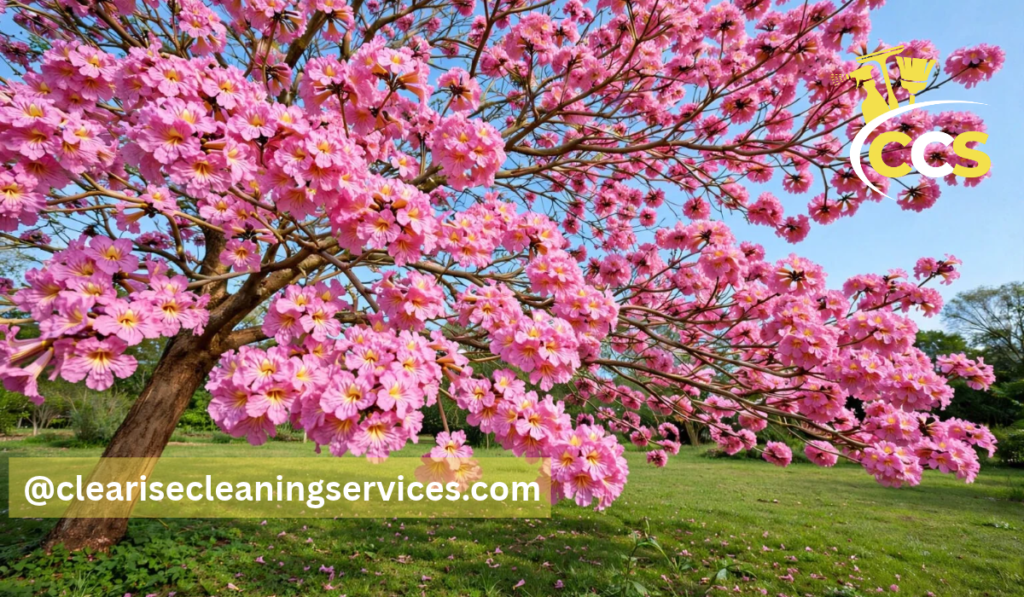
For a few weeks each year, some warm-climate streets turn almost entirely pink. The cause is usually a pink trumpet tree in full bloom, its bare branches covered in clusters of rosy, trumpet-shaped flowers. Tabebuia impetiginosa pink trumpet is one of the most showy flowering trees you can grow in a warm garden. This guide explains what it is, where it grows, how big it gets, and how to keep it flowering year after year.
What Is Tabebuia Impetiginosa Pink Trumpet?
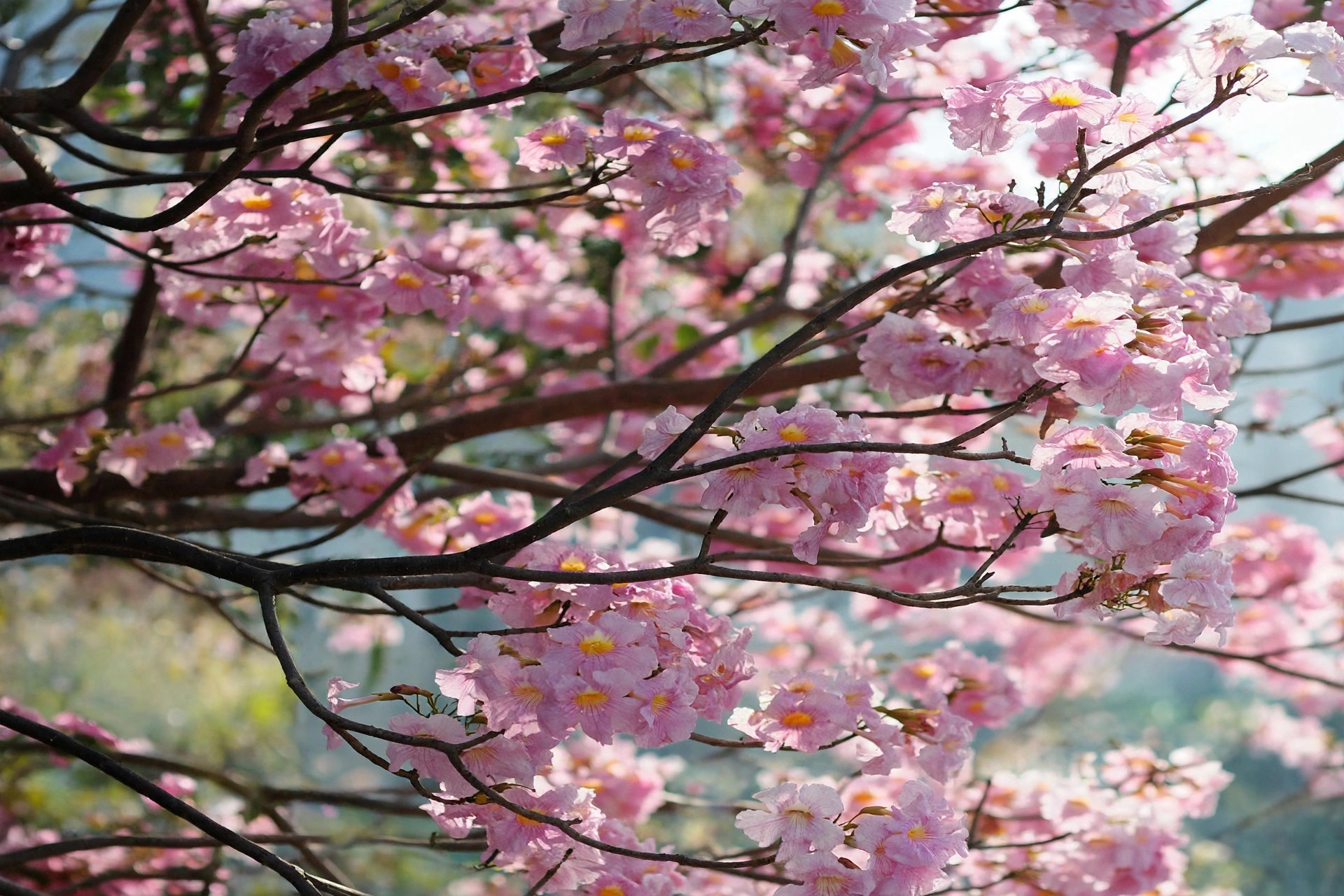
Tabebuia impetiginosa pink trumpet is a warm-climate flowering tree, also sold as Handroanthus impetiginosus and commonly called pink trumpet tree or pink lapacho, grown for its dense clusters of pink, trumpet-shaped flowers. It is a small to medium tree with dark green, hand-shaped leaves, and in many climates it drops most of its leaves just before it flowers, so the blooms show against bare branches.
The two botanical names cause a lot of confusion at nurseries. Botanists moved many Tabebuia species into the genus Handroanthus, so older books and labels say Tabebuia impetiginosa while newer ones say Handroanthus impetiginosus. They are the same tree, and it is not native to North America; it comes from tropical South America, which explains why it loves heat and dislikes frost.
Pink Trumpet Tree at a Glance
The pink trumpet tree is a deciduous to briefly deciduous flowering tree for USDA zones 9B through 11, needing full sun and well-drained soil, with pink trumpet blooms in late winter or early spring. The table below gives the quick facts most buyers want before they choose a planting spot.
| Feature | Detail |
|---|---|
| Botanical name | Tabebuia impetiginosa, also Handroanthus impetiginosus |
| Common names | Pink trumpet tree, pink lapacho, purple tabebuia |
| USDA hardiness zones | 9B through 11 |
| Mature height | 12 to 18 feet in most gardens; up to 30 feet in ideal warm conditions |
| Spread | 10 to 15 feet |
| Sun | Full sun, at least 6 hours a day |
| Soil | Almost any well-drained soil; rich soil gives the best growth |
| Water | Moderate while young; drought tolerant once established |
| Flower colour | Rose-pink to purple, trumpet-shaped, in dense clusters |
| Leaf habit | Briefly deciduous; leaves often drop before flowering |
Notice the height range in the table. The University of Florida IFAS Extension lists 12 to 18 feet tall with a 10 to 15 foot spread, while nursery listings in ideal warm climates describe trees reaching about 30 feet. Both are honest: the tree stays smaller in cooler or drier spots and grows larger where winters are warm and summers are long, so plan for the larger size when you pick a spot.
Where It Grows Best: Climate and Hardiness Zones
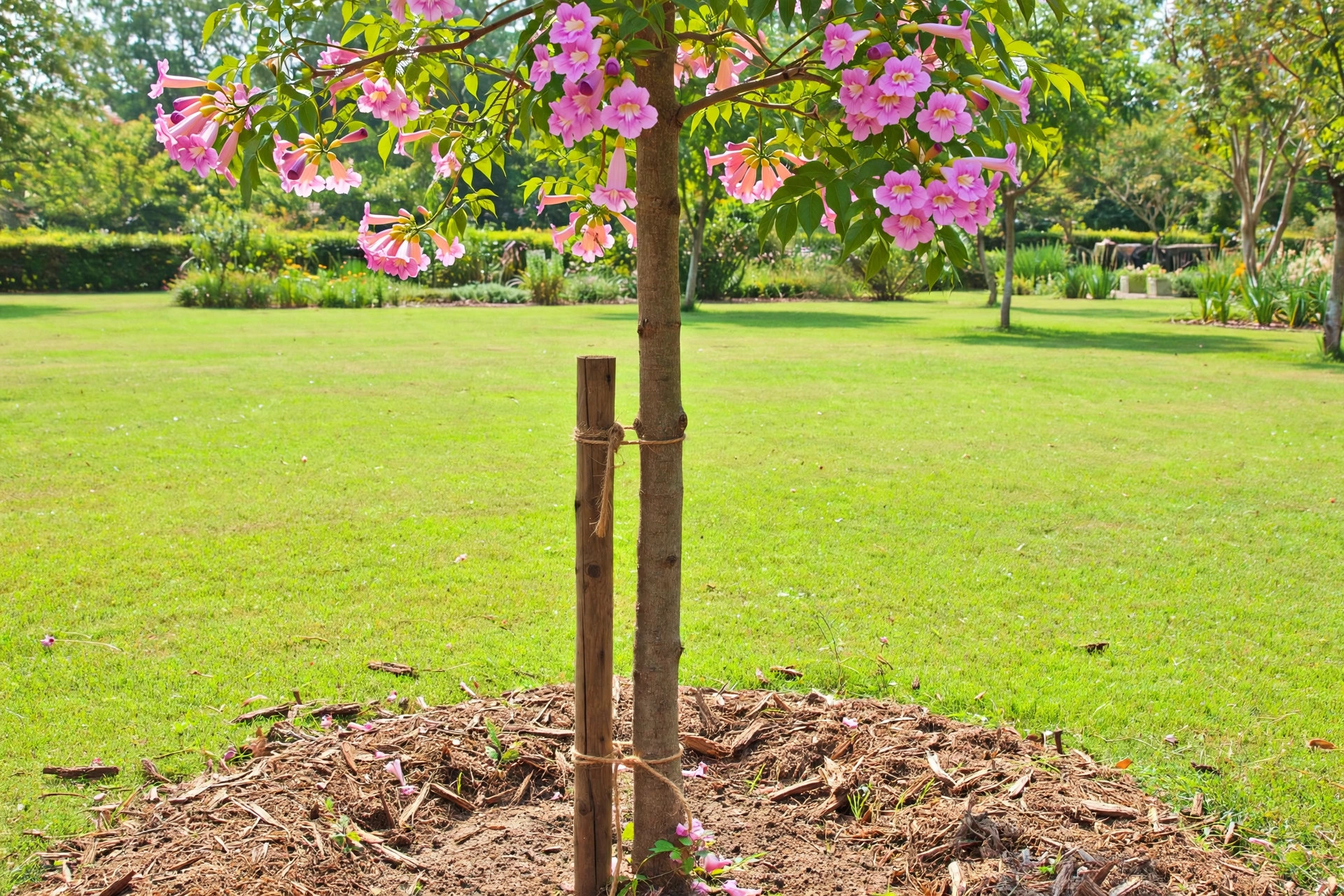
Tabebuia impetiginosa pink trumpet grows best in USDA zones 9B through 11, where winters stay mild and frost is rare or brief, because it is a tropical tree that is damaged by hard freezes. In the United States that means parts of Florida, southern Texas, southern California, Hawaii, and similar warm pockets, plus sheltered spots in zone 9A. If you buy plants online, check that the seller lists the hardiness zone before you order.
Cold is the one hard limit. The tree can handle a brief dip to around 25°F (-4°C), but longer or colder freezes can damage branches or kill a young tree outright. Mature trees recover better than young ones, so protect a new tree during its first two or three winters with frost cloth on cold nights. If you live outside zones 9B to 11, grow it in a large pot and move it into a bright greenhouse, conservatory, or sunny indoor spot before the first frost.
How Big Does It Get? Size and Growth Rate
A pink trumpet tree usually reaches 12 to 18 feet tall with a 10 to 15 foot spread, and it can reach about 30 feet tall in warm, ideal conditions, growing at a moderate rate once it is established. Its canopy is fairly open, so grass and sun-loving plants can still grow underneath it.
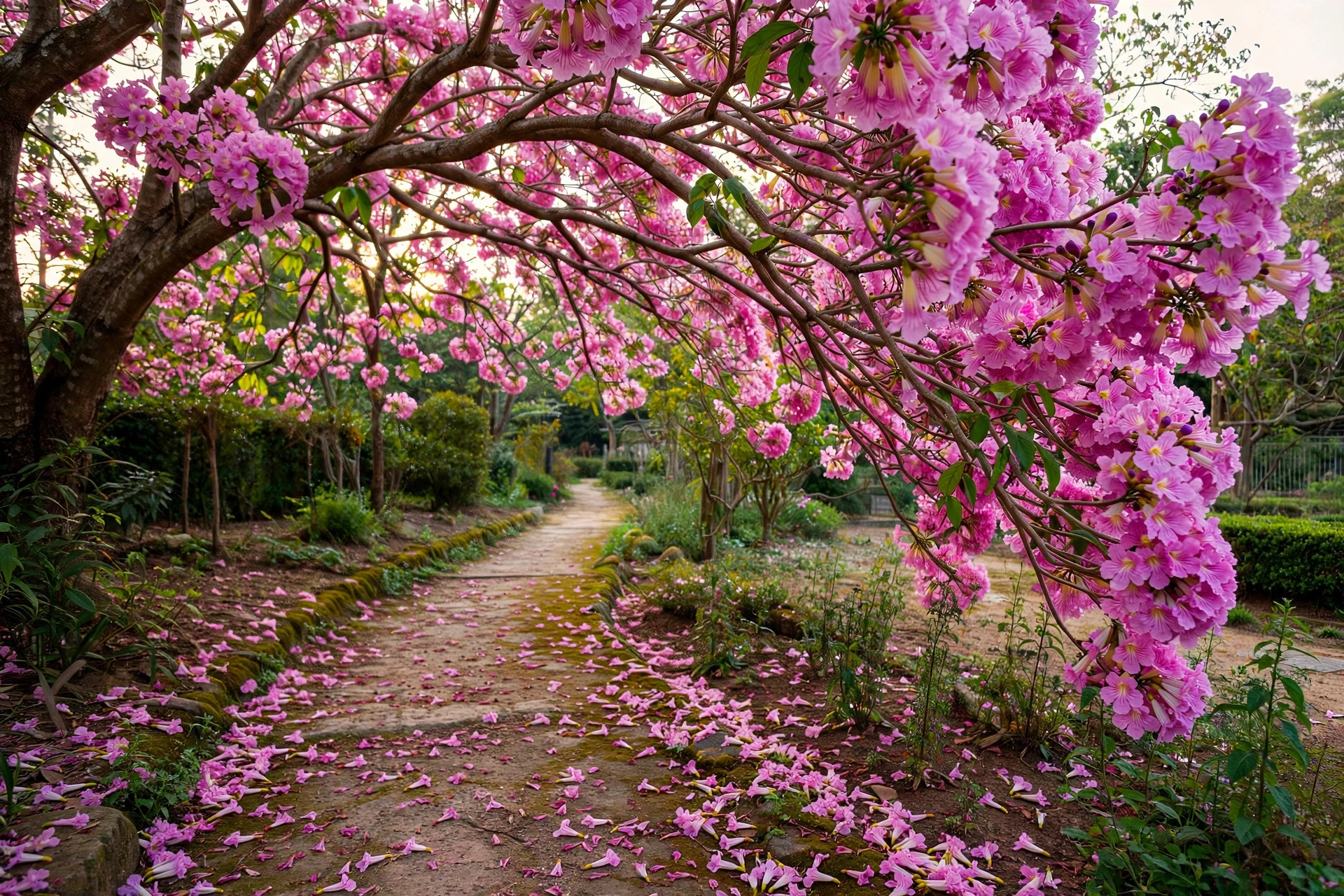
Young trees grow slowly at first while they build roots, then pick up speed in warm weather with full sun and steady water. Train a young tree to a single trunk and stake it until it is six to eight feet tall, as the University of Florida recommends, and you will get a stronger shape with a clear trunk. Give it room: keep it at least 10 to 15 feet from the house, paths, and other trees.
Sun, Soil and Water Needs
The pink trumpet tree needs full sun, well-drained soil, and moderate water while young, becoming highly drought tolerant once its roots are established. Sunlight is the fuel for its flowers, so shade is the most common reason for a healthy-looking tree that barely blooms.
Aim for at least six to eight hours of direct sun a day. In partial shade the tree will still grow, but flowering becomes weak and uneven. For soil, it is not fussy: it tolerates clay, sand, loam, and both acidic and alkaline soils, as long as water drains away. Rich soil gives the best growth, but soggy soil is the real enemy, because wet roots invite root rot. Water a new tree deeply once or twice a week for the first season, then cut back. The habit of checking the soil before watering, rather than watering on a fixed schedule, is the same one described in our guide on how to water houseplants. An established tree handles dry spells well, though a deep watering during a long drought keeps the canopy healthier. A layer of mulch around the base helps hold moisture, but keep it a few inches away from the trunk.
Planting a Pink Trumpet Tree Step by Step
To plant a pink trumpet tree, pick a sunny, well-drained spot, dig a hole twice as wide as the root ball, set the tree at the same depth it grew in its pot, backfill, water deeply, and mulch around the base. Spring is the best planting time in most warm climates, once the risk of frost has passed.
- Choose the spot first. Pick the sunniest place in your yard with room for a 15-foot spread, away from the house, fences, and underground pipes. Check that water does not pool there after rain. If your soil drains poorly, a raised garden bed approach with improved soil can help, though a tree needs a much larger planting area than a vegetable bed.
- Dig a wide hole. Make the hole twice as wide as the root ball but no deeper than the root ball itself. A wide hole lets young roots spread into loose soil quickly.
- Check the drainage. Fill the hole with water and watch it drain. If water still sits after a few hours, pick a higher spot or improve drainage before planting.
- Set the tree at the right depth. Place the tree so the top of the root ball sits level with the surrounding soil, not buried deeper. Planting too deep is a common cause of slow growth.
- Backfill and water deeply. Fill the hole with the soil you dug out, firm it gently, and water slowly until the whole root zone is soaked.
- Mulch and stake if needed. Spread two to three inches of mulch in a wide ring, keeping it away from the trunk, and stake a young tree loosely until it stands firm on its own.
- Water through the first season. Keep the soil moist but not soggy for the first year, then reduce watering as the tree establishes itself.
Flowering: When and Why It Blooms
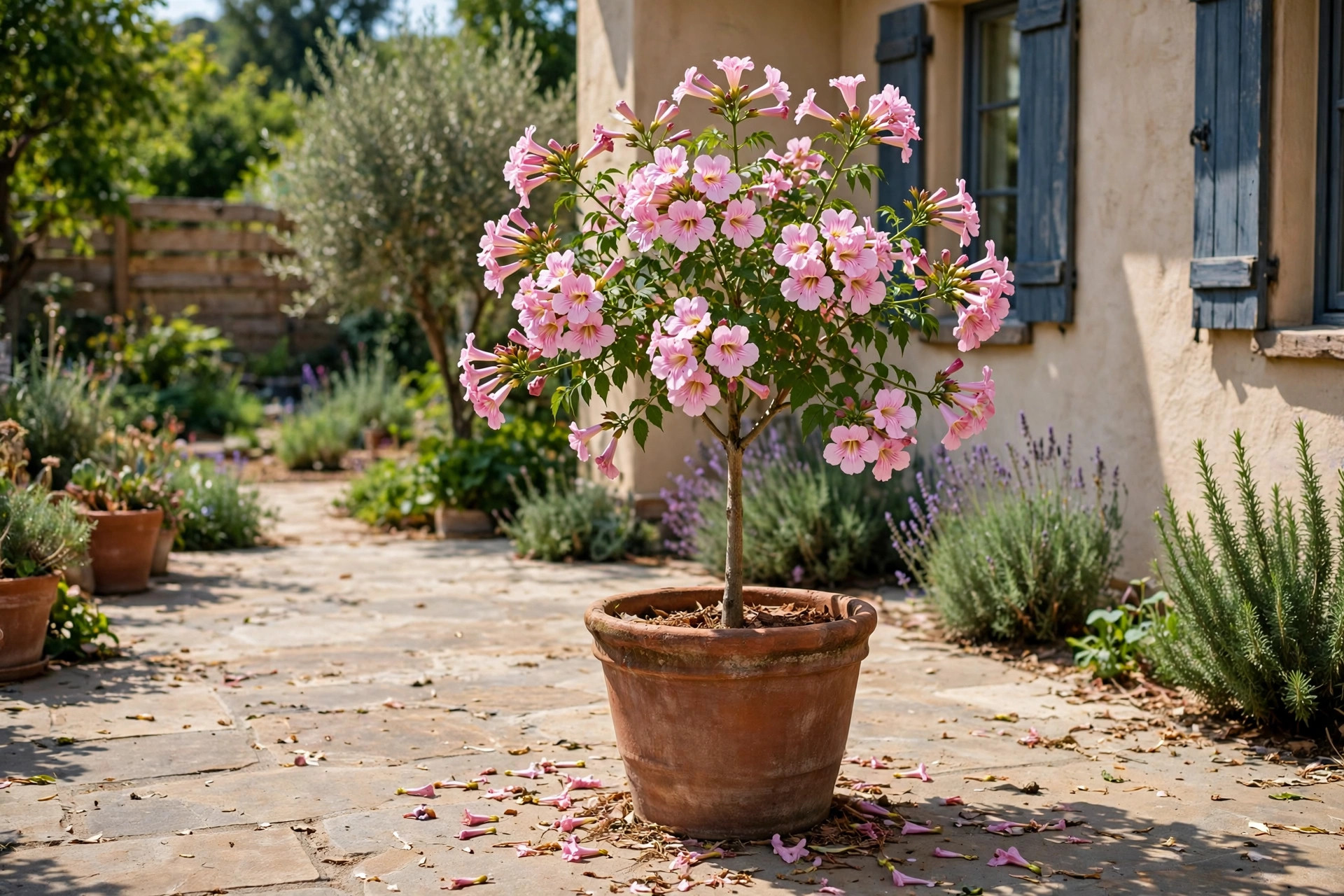
The pink trumpet tree flowers in late winter or early spring, when dense clusters of rose-pink to purple trumpet-shaped blooms open on mostly bare branches, creating its most dramatic display of the year. Each flower is roughly 8 cm long, and the clusters sit at the ends of the branches where they are easy to see from a distance.
The leaf drop before flowering is normal and not a sign of sickness. In many climates the tree sheds most of its leaves in the dry or cool season, then flowers, then leafs out again. If your tree does not flower, check the causes in order: too little sun is the most common, followed by too much nitrogen fertiliser, which pushes leafy growth instead of blooms, and a tree that is simply too young, since flowering improves as the tree matures. A dry spell before flowering can actually help, because the tree responds to the change of season. Do not overwater in winter, and do not prune just before bloom season, or you may cut off the flowering wood.
Pruning and Seasonal Care
Prune a pink trumpet tree lightly after flowering, removing dead, crossing, or damaged branches, and train young trees to a single trunk for the strongest shape. Heavy pruning is rarely needed, and the tree keeps a pleasant shape largely on its own.
The best time to prune is just after the flowers fade, so you do not remove next season’s buds. Cut out dead wood first, then any branches that rub against each other, and step back often to check the shape. Young trees benefit from removing low side branches to build a clear trunk, and staking until they reach six to eight feet tall keeps them straight in wind. Feed lightly if growth is poor: a balanced, slow-release fertiliser in spring is enough. Avoid heavy feeding, which grows soft leaves at the expense of flowers. In autumn, clear fallen leaves from the base to reduce hiding places for pests.
Common Problems and How to Fix Them
The most common pink trumpet tree problems are weak flowering from too little sun, root rot from soggy soil, frost damage on young trees, and slow growth from planting too deep. Most of these are fixed by changing the conditions, not by spraying anything.
Weak flowering almost always points to shade or excess nitrogen, so move a container tree into more sun or skip the fertiliser for a season. Yellowing leaves with wet soil point to root rot: let the soil dry out, improve drainage, and water less often. Frost damage shows as blackened or limp branch tips after a cold night; wait until spring to prune, because some branches that look dead may sprout again, and only cut back to healthy wood. Pests are rarely a serious problem, but watch for scale insects on the stems and treat a small outbreak by wiping them off or pruning the affected twigs. If growth is slow in the first year, check the planting depth and whether the root ball is still wrapped or pot-bound.
Pink Trumpet Tree in Containers and Small Gardens
A pink trumpet tree can grow in a large container in a sunny spot, staying much smaller, usually between 2 and 3 metres tall, which makes it a good choice for patios and for gardeners outside its hardiness zones. In a pot it needs more attention to watering and feeding than a tree in the ground.
Choose the largest pot you can move, with drainage holes, and use a free-draining potting mix rather than heavy garden soil. Water when the top few inches of mix feel dry, and feed lightly in spring and summer. Move the pot to a sheltered spot or indoors before frost, and give it the brightest place you have through winter. Container trees flower well if they get full sun in the growing season, though they will never reach the size of a tree in open ground.
Is It the Right Tree for Your Home?
The pink trumpet tree is right for your home if you live in USDA zones 9B to 11, have a sunny spot with well-drained soil and room for a 15-foot canopy, and want a short but spectacular spring flower display. It is a poor choice for cold climates, small shady yards, or anyone who wants flowers all year round.
| Your situation | In the ground | In a container |
|---|---|---|
| Best for | Warm-climate yards in zones 9B–11 with full sun | Patios, small gardens, and colder zones with winter shelter |
| Size | 12 to 18 feet, up to 30 feet in ideal conditions | Usually 2 to 3 metres tall |
| Flowering | Strongest display, late winter to early spring | Good in full sun, smaller display |
| Watering | Moderate when young, drought tolerant later | Regular checks; pots dry out faster |
| Winter care | Protect young trees from frost | Move under cover before first frost |
| Effort | Low once established | Medium; watering, feeding, moving |
Think about the neighbours too. The flowers drop and can stain pale paving for a week or two, so avoid planting it over a light-coloured driveway or pool deck if that would bother you. If you want year-round colour, pair it with evergreen shrubs and summer-flowering plants, and let the pink trumpet tree carry the late-winter show on its own.
Conclusion
Tabebuia impetiginosa pink trumpet earns its place in a warm garden with one unforgettable spring display and very little fuss for the rest of the year. Give it full sun, well-drained soil, and room to grow, protect it from frost while young, and prune lightly after flowering. In return you get a small to medium tree with rose-pink trumpet blooms that can stop passers-by in their tracks. If your climate suits it, it is one of the easiest showpiece trees you can plant.
Frequently Asked Questions
How tall does tabebuia impetiginosa pink trumpet grow?
Tabebuia impetiginosa pink trumpet usually grows 12 to 18 feet tall with a 10 to 15 foot spread. In warm, ideal conditions it can reach about 30 feet, while container trees stay much smaller.
What USDA zones can a pink trumpet tree grow in?
It grows best in USDA zones 9B through 11, where winters are mild. It can survive a brief dip to about 25°F, but hard freezes can damage or kill young trees.
Does a pink trumpet tree lose its leaves before flowering?
Yes, in many climates it drops most of its leaves just before flowering, so the pink trumpet blooms open on bare branches. New leaves grow back after the flowers fade.
Why is my pink trumpet tree not flowering?
The most common causes are too little sun, too much nitrogen fertiliser, pruning at the wrong time, or a tree that is still young. Give it full sun and avoid heavy feeding.
Can I grow a pink trumpet tree in a pot?
Yes, in a large pot with drainage holes and free-draining mix it stays around 2 to 3 metres tall. Move it under cover before frost and give it full sun in summer.
Disclaimer: This article is provided purely for informational purposes. clearisecleaningservices.com only provides information about the tabebuia impetiginosa pink trumpet tree and does not offer tree planting, landscaping, or gardening services, guest posting, paid promotion, or advertising. Growing conditions vary by climate and soil, so check your local hardiness zone and, for planting near buildings, pipes, or power lines, ask a local nursery or arborist before you plant.
Thanks for visiting Clearise Cleaning Services! Discover more helpful tips and expert cleaning insights by exploring our related categories.