
You plant a hedge and wait five years for privacy. Or you plant a hybrid willow tree and watch it grow six to ten feet in a single year. That speed is why this tree is one of the most popular privacy trees in the United States, and it is also why it causes the most regret.
A hybrid willow tree is a fast-growing cross of willow species, bred for screens and windbreaks, and it does that job better than almost any other tree. But it grows into a very large tree, it drinks a lot of water, and its roots seek out pipes and septic systems. This guide gives you both sides: how to grow it well, and how to decide whether your garden is big enough for it at all.
What a Hybrid Willow Tree Is
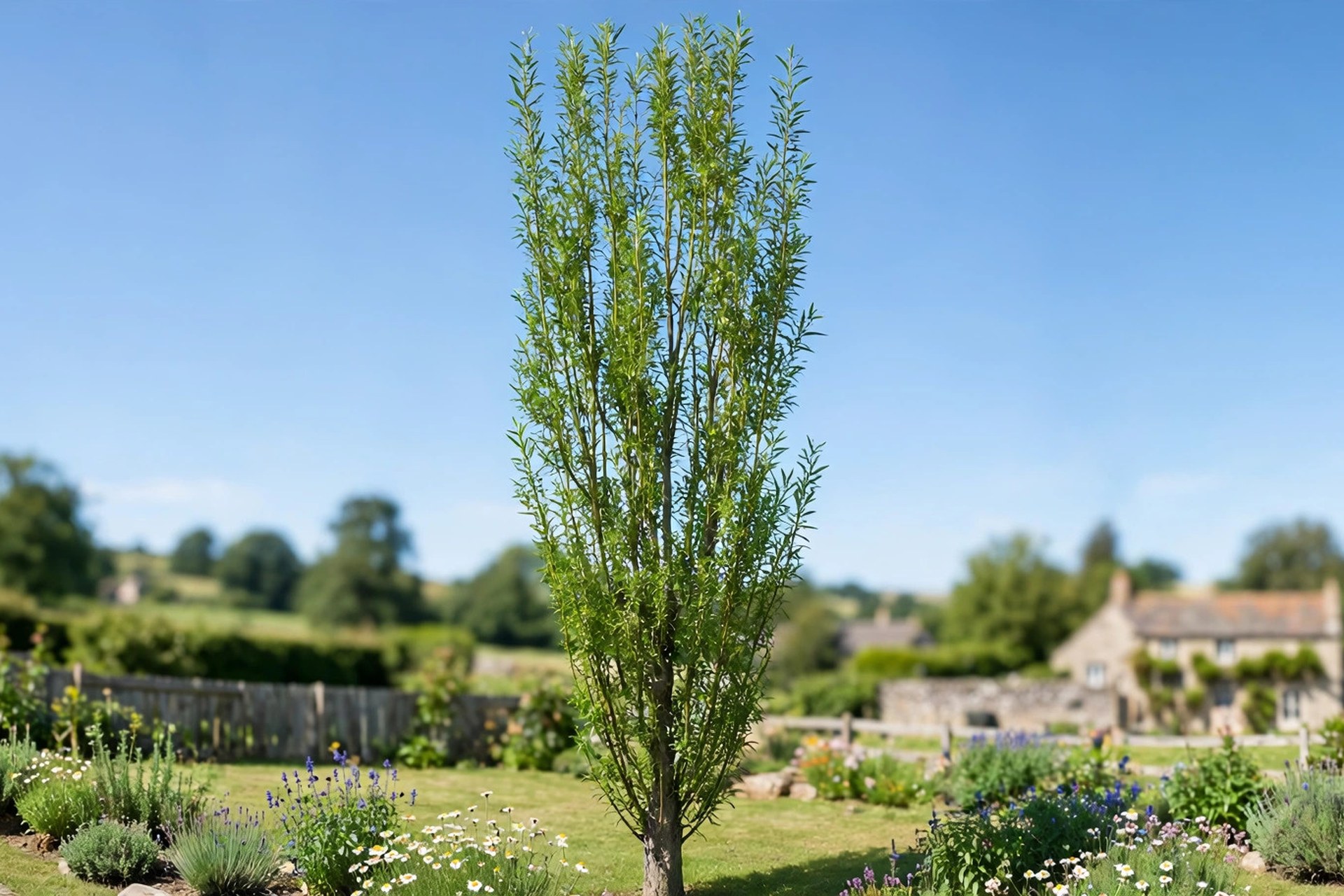
A hybrid willow tree is a fast-growing deciduous tree, usually sold as Salix x ‘Austree’, a cross between the corkscrew willow (Salix matsudana) and the white willow (Salix alba), bred in New Zealand for rapid growth and dense screening. It is also called the Austree willow, and it is grown for privacy screens, windbreaks, and shade, not for ornamental flowers or autumn colour.
It is worth knowing what it is not. It is not a weeping willow, though the two are often confused. A weeping willow has long, drooping branches and a broad, rounded crown, while a hybrid willow grows upright and narrow.
How Fast Does a Hybrid Willow Tree Grow?
A hybrid willow tree grows 6 to 10 feet per year in good conditions, with plenty of water and full sun, and it can reach its full height within six to seven years, which makes it one of the fastest-growing privacy trees available. That rate is verified across nursery and garden sources, and it is the tree’s main selling point.
That speed has a cost. Fast growth means soft wood, and soft wood means branches that break in storms and a tree that needs regular pruning to stay sound. It also means the tree reaches its mature size quickly, so a planting mistake becomes a large problem within a few years rather than within a few decades. Plant it where it has room to grow, and the speed is a gift. Plant it in a small garden, and the speed is the problem.
How Big Does a Hybrid Willow Tree Get?
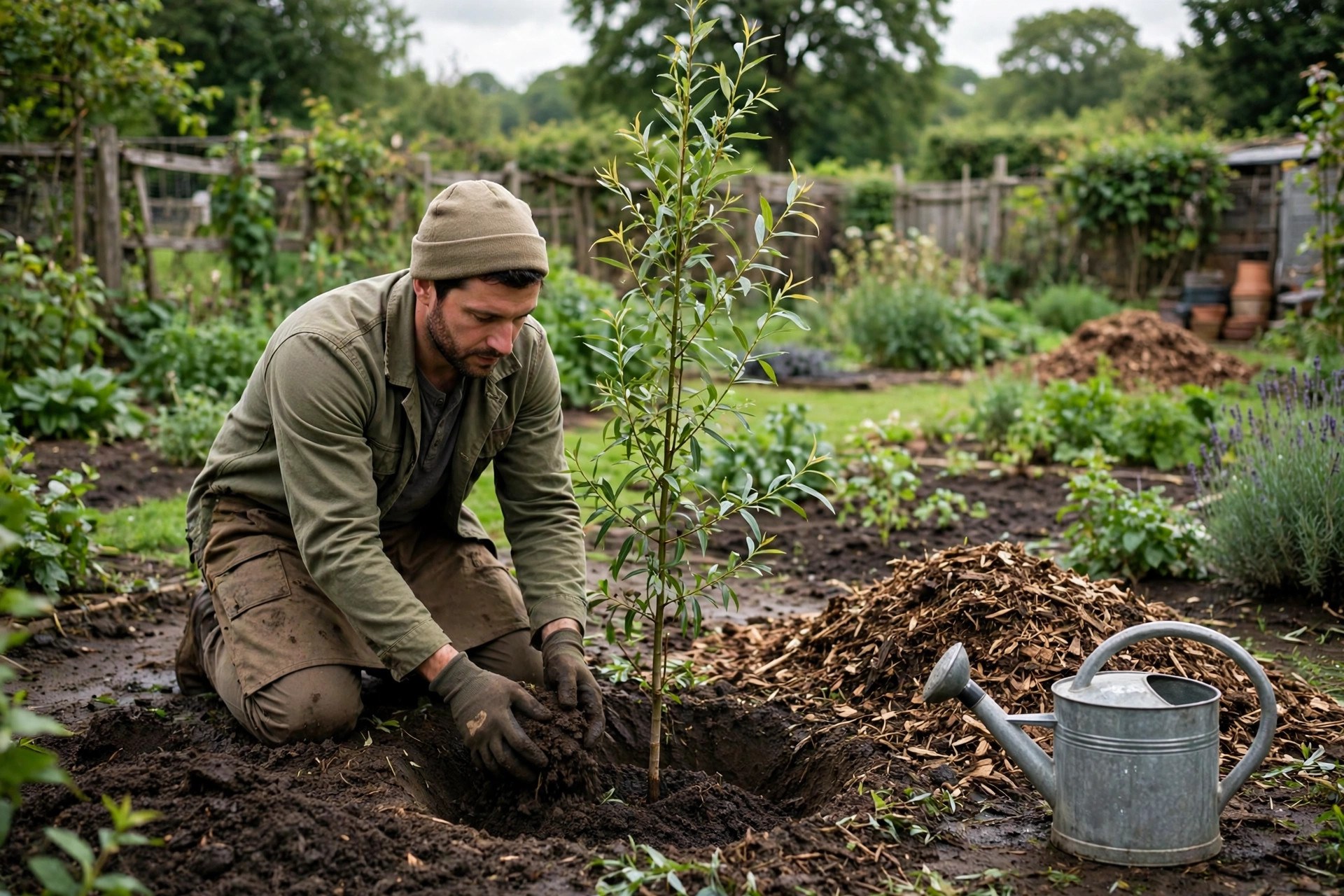
A hybrid willow tree typically reaches 50 to 70 feet tall and 15 to 30 feet wide at maturity, though some sources list 30 to 45 feet, so plan for the larger figure and give the tree the space a large tree needs. The range in sources is wide, and the safe choice is to believe the bigger number.
Before you buy, measure the space and imagine the mature tree in it. A hybrid willow needs room for a trunk that thickens every year, a canopy that spreads 15 to 30 feet, and roots that spread further than the canopy. If your garden is smaller than a tennis court, a row of hybrid willows will outgrow it. If you have a large property, a boundary, or a field edge, the size is exactly what makes it useful. For a smaller boundary, read our guide to how to choose the right fence for your home, which covers options that fit a small garden.
Where Hybrid Willow Trees Grow Best
Hybrid willow trees grow best in full sun, in moist, well-drained soil, in USDA hardiness zones 4 through 9, where they tolerate winter temperatures down to minus 30 degrees Fahrenheit. They are tough in cold weather, but they are not drought-tolerant, and they suffer in dry soil.
That love of water is also a warning. A hybrid willow planted in a dry garden will need regular watering to reach its famous growth rate, and in a drought it will drop leaves early and grow slowly. If your soil is dry and you cannot water deeply and often, choose a drought-tolerant tree instead. The zones are broad, covering most of the United States, but the tree still needs water within those zones. A cold-hardy tree in dry soil is still a thirsty tree.
Planting a Hybrid Willow Tree Step by Step
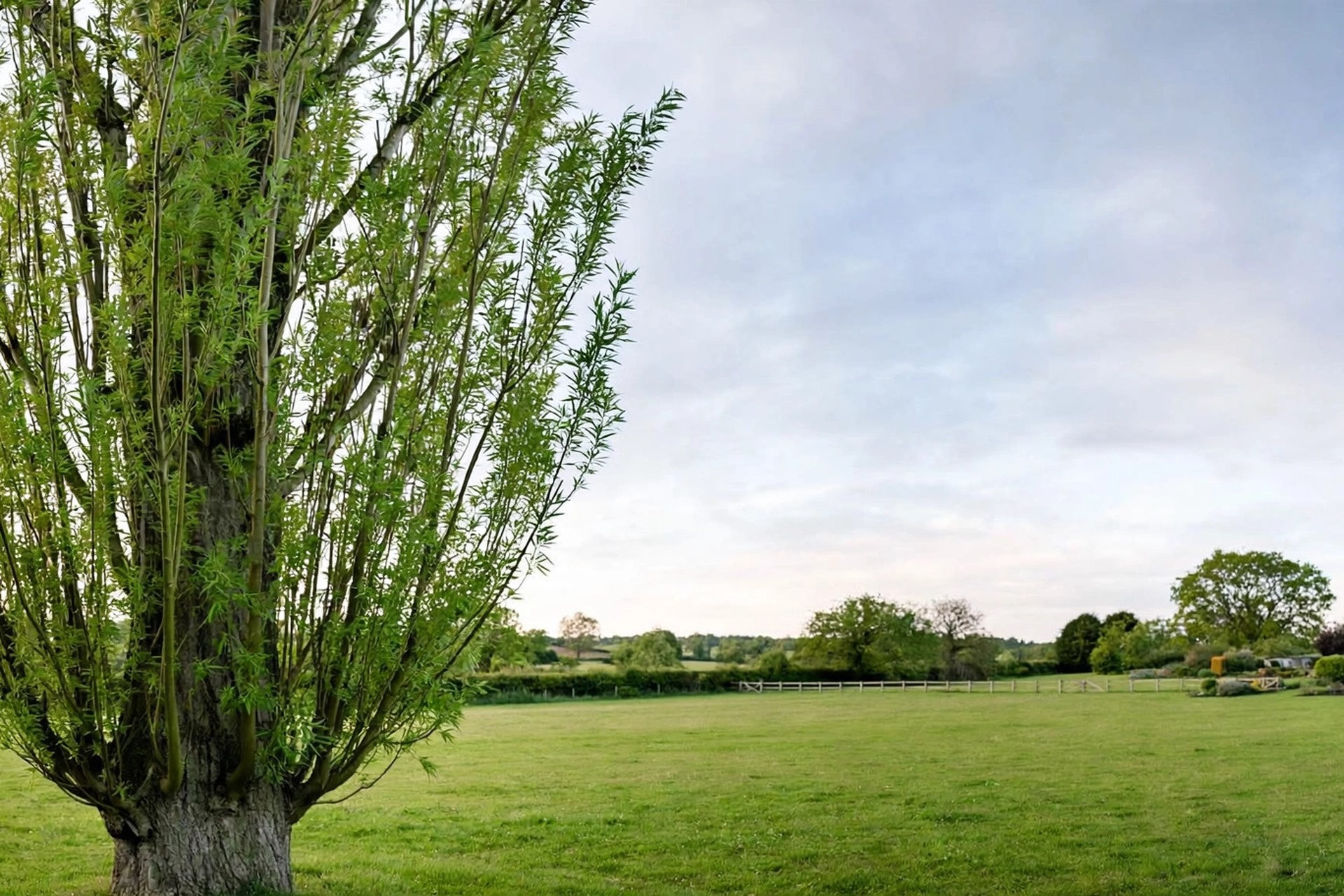
To plant a hybrid willow tree, dig a hole twice as wide as the root ball, set the tree level with the ground, backfill with native soil, water deeply, mulch around the base, and space trees 20 to 30 feet apart for a screen, further from houses, pipes, and septic systems. Plant in spring or autumn, when the soil is moist and the tree has time to root before summer heat or winter cold.
- Pick a large, sunny, moist spot. Check the distance to the house, to pipes, and to the septic system before you dig anything.
- Dig a wide hole. Make it twice as wide as the root ball and the same depth, so the roots spread into loose soil.
- Set the tree at the right depth. The top of the root ball should sit level with the surrounding ground.
- Backfill and water deeply. Fill with the soil you dug out, firm it gently, and soak the root zone slowly.
- Mulch around the base. Spread mulch a few inches deep, keeping it away from the trunk, to hold moisture in the soil.
- Water often in the first year. Water deeply whenever the top few inches of soil dry out, and more often in hot, dry weather.
- Stake only if needed. Stake a young tree in a windy site, and remove the stake after the first season.
Young trees need the most water in their first year, while their roots are still shallow. A deep soak once or twice a week in dry weather is better than a light sprinkle every day, because it teaches the roots to grow down. As the tree grows, its roots reach deeper and it needs less help, but it will always grow fastest where the soil stays moist.
Watering, Feeding, and Pruning
Water a hybrid willow tree deeply and often, especially in its first years and in dry spells, feed it lightly if growth is poor, and prune it in late winter to remove dead, crossing, or storm-damaged branches. Water is the care that matters most, and pruning is the care that keeps the tree safe.
Watering is not optional for this tree. Hybrid willows need consistent, abundant water to reach their 6 to 10 feet of annual growth, and they show drought stress quickly, with yellowing leaves and early leaf drop. In a dry summer, water deeply once a week or more, soaking the soil well beyond the trunk. If you cannot water a large tree deeply, do not plant one.
Hybrid Willow Tree Roots, Pipes, and Septic Systems
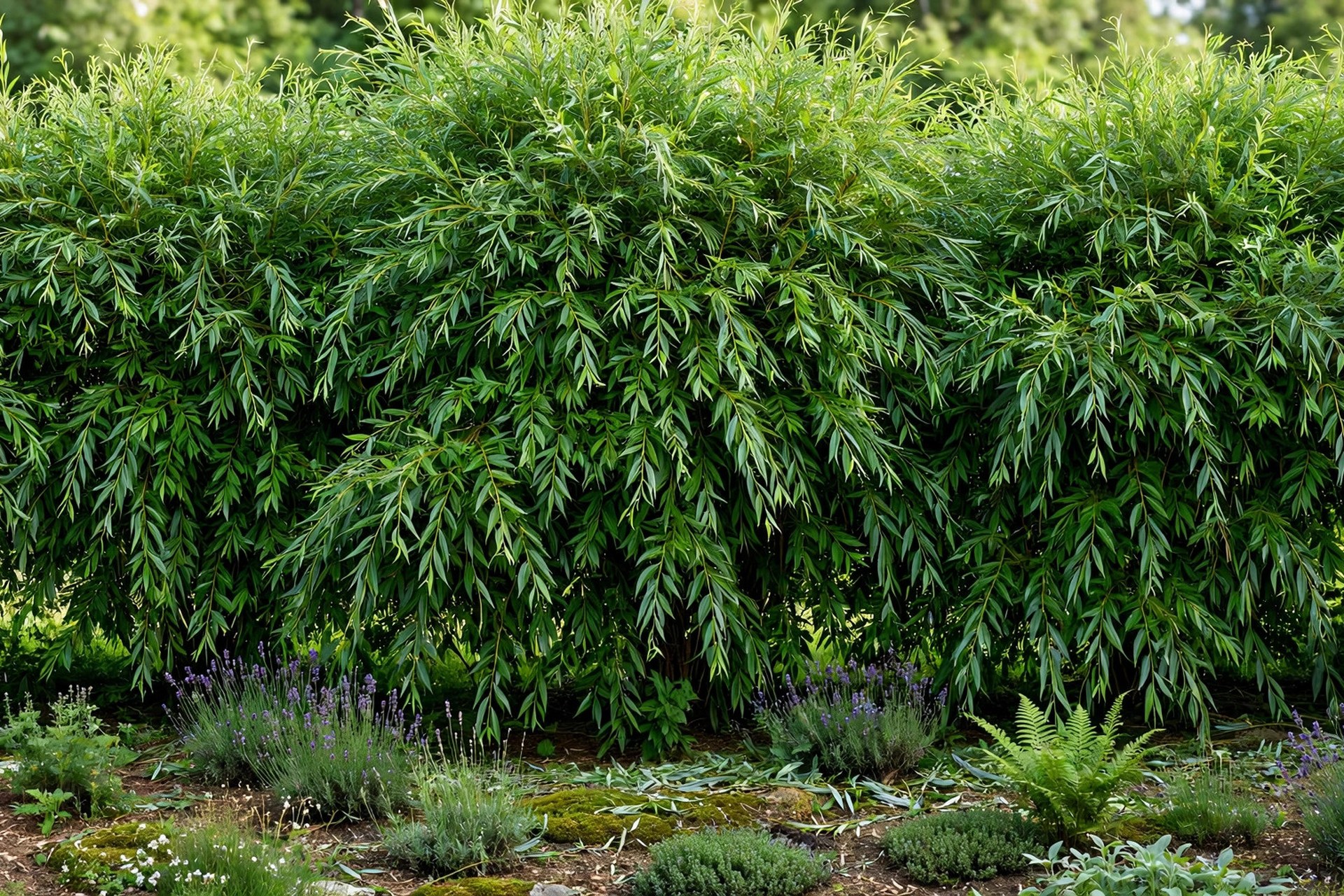
Hybrid willow tree roots are aggressive and seek water, so plant the tree at least 50 feet from a septic system, drain field, water line, or sewer pipe, and further from a house foundation, because roots can grow into small cracks and clog pipes. This is the most important warning in this guide, and the one most often ignored.
The same caution applies to water lines, sewer pipes, and house foundations. Roots can lift paving, crack a shallow pipe, and find their way into a damp foundation. Before you plant, find out where your pipes and your septic system are, and measure the distance honestly. A tree planted 20 feet from a drain field may look fine for five years and cause a costly repair in year ten. If your lot is small, the honest answer is that a hybrid willow does not fit, and a smaller tree or a fence is the better screen. Water in the wrong place causes other problems too, and our guide to water in crawl space explains what happens when moisture reaches a house.
Hybrid Willow Tree as a Privacy Screen
As a privacy screen, a hybrid willow tree works best on a large property, planted in a row 20 to 30 feet apart in full sun and moist soil, where it forms a dense green wall within one or two growing seasons. No other common tree gives privacy as fast, but no other common tree outgrows its space as fast either.
Plan the row for the mature trees, not for the young ones. A row that looks sparse in year one will be solid by year three, and crowded by year ten if the spacing was too tight. Water the row well in its first two years, because a screen of young trees dries out faster than a single tree. Keep the ground under the row clear of weeds that compete for water, and our guide to how to get rid of weeds covers methods that will not harm young trees.
Common Problems: Breakage, Pests, and Leaf Drop
The most common problems for a hybrid willow tree are brittle branches that break in storms, leaf drop in dry weather, and pests such as aphids and willow beetles, plus the mess of fallen leaves and small branches through the year. Fast growth and soft wood are two sides of the same coin.
Branch breakage is the most frequent complaint. The wood is soft and fast-grown, so a heavy storm, a load of wet snow, or a strong wind can snap branches, especially long, weak ones that were never pruned. Regular pruning in late winter, removing weak and crossing branches, reduces the risk, but it does not remove it. A willow near a house, a car, or a power line needs more attention than one in an open field.
Hybrid Willow Tree vs Weeping Willow and Leyland Cypress
Compared with a weeping willow and Leyland cypress, a hybrid willow tree grows faster than both, stays narrower than a weeping willow, and gives quicker privacy than cypress, but it is deciduous, shorter-lived, and messier than either. The right choice depends on whether you need speed, year-round cover, or a tidy tree.
| Feature | Hybrid willow | Weeping willow | Leyland cypress |
|---|---|---|---|
| Growth rate | 6 to 10 feet a year | Rapid, 2 to 3 feet a year or more | 3 to 4 feet a year |
| Mature height | 50 to 70 feet | 30 to 40 feet | 40 to 60 feet |
| Mature width | 15 to 30 feet | 30 to 50 feet | 10 to 15 feet |
| Evergreen | No, deciduous | No, deciduous | Yes, evergreen |
| Hardiness zones | Zones 4 to 9 | Zones 5 to 9 | Zones 6 to 10 |
| Water needs | Very high | High | Moderate |
| Root risk | High, seeks water | High, seeks water | Lower |
| Best use | Fast summer screen, large land | Specimen by water, large land | Year-round screen, smaller land |
The table shows the trade-off clearly. If you need privacy this year on a large property, the hybrid willow is unmatched. If you need privacy in winter too, Leyland cypress is the better screen, because it keeps its foliage all year and needs less water. If you want a beautiful specimen tree by a pond, a weeping willow is the classic choice, but it needs even more width than a hybrid willow. Choose the tree that fits your land, your climate, and your patience, not just the one with the fastest growth rate.
Is a Hybrid Willow Tree Right for Your Garden?
A hybrid willow tree is right for your garden if you have a large property, moist soil, full sun, and at least 50 feet between the planting spot and any septic system, pipe, or house foundation, and it is wrong for a small lot, a dry garden, or a spot near underground services. The checklist below turns that into a yes-or-no decision.
| Question | If yes | If no |
|---|---|---|
| Is your land large, with room for a 50 to 70 foot tree? | Good, the tree fits | Choose a smaller tree or a fence |
| Is the soil moist, or can you water deeply? | Good, growth will be fast | Choose a drought-tolerant tree |
| Is the spot in full sun? | Good, growth will be dense | Choose a shade-tolerant plant |
| Is it at least 50 feet from septic, pipes, and foundations? | Good, root risk is lower | Do not plant a willow there |
| Do you need privacy in winter too? | Add evergreens as well | A willow screen is enough in summer |
| Can you clear fallen branches and leaves? | Good, the mess is manageable | Choose a tidier tree |
Be honest with the checklist, especially the distance question. A tree that is planted too close to a house or a septic system is not a mistake you can fix by pruning. The roots keep growing, the canopy keeps spreading, and the only fix is removal, which is expensive for a large tree. A smaller tree, a fence, or a mixed hedge may give you the privacy you want without the risk. If the ground around your house stays damp, read our guide to foundation settling before you plant anything large near the house, because water and foundations need care together.
Conclusion
A hybrid willow tree is the fastest way to build a living privacy screen, growing 6 to 10 feet a year and reaching 50 to 70 feet tall in zones 4 to 9. That speed is real, and so are the risks that come with it: a very large mature tree, a thirst for water, soft wood that breaks in storms, and roots that seek out pipes and septic systems. Plant it only where it has room, water, and sun, and at least 50 feet from anything underground that water can damage. Chosen for the right land, a hybrid willow tree gives you privacy in a season or two. Chosen for the wrong land, it gives you a problem that grows as fast as the tree.
Frequently Asked Questions
How fast does a hybrid willow tree grow?
A hybrid willow tree grows 6 to 10 feet per year in good conditions, with full sun and plenty of water. It can reach its full height within six to seven years.
How tall does a hybrid willow tree get?
A hybrid willow tree typically reaches 50 to 70 feet tall and 15 to 30 feet wide at maturity. Some sources list 30 to 45 feet, so plan for the larger size.
How far apart should I plant hybrid willow trees?
For a privacy screen, plant hybrid willow trees 20 to 30 feet apart. This spacing lets each tree spread fully without crowding its neighbours as they mature.
Can I plant a hybrid willow tree near a septic system?
No, do not plant a hybrid willow tree near a septic system. Keep it at least 50 feet away, because willow roots seek water and can grow into pipes and clog the system.
Is a hybrid willow tree evergreen?
No, a hybrid willow tree is deciduous, so it loses its leaves in winter. It gives a dense privacy screen in summer, but the view opens up when the branches are bare.
Disclaimer: This article is provided purely for informational purposes. clearisecleaningservices.com only provides information about hybrid willow trees and does not sell trees, offer landscaping services, guest posting, paid promotion, or advertising. Willow roots can damage pipes and septic systems, so check the location of all underground services before planting.
Thanks for visiting Clearise Cleaning Services! Discover more helpful tips and expert cleaning insights by exploring our related categories.